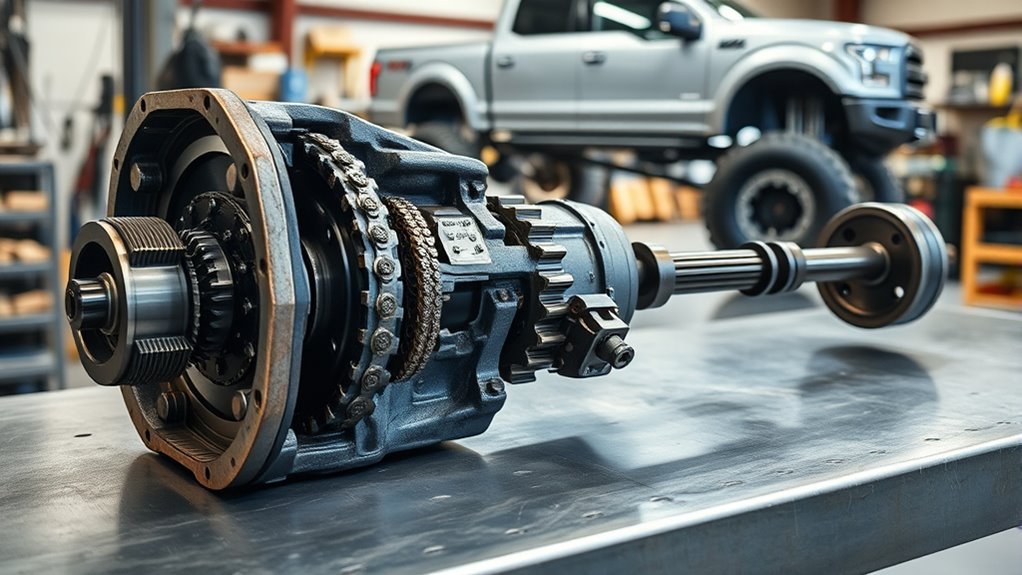
You’re looking at a dependable, comfortable Land Cruiser that handles serious off‑road work without fuss. The 100 Series/LX470 gives you a torquey 4.7L V8, spacious interior, proven factory lockers and strong aftermarket support for customization. Before buying, inspect for rust, cooling and transmission issues, worn ball joints and differential corrosion. Keep up oil, trans and diff service, fit proper tires and skid plates, and prioritize dual batteries for trips — continue for detailed checks, maintenance and mod guidance.
Who the 100 Series / LX470 Is Right For

Who’s the 100 Series / LX470 for? You’re ideal if you want a dependable, luxurious off-road rig that doesn’t compromise comfort. The robust 4.7L V8 delivers roughly 230–235 hp, giving you confident highway merges and steady power on trails. You’ll appreciate the spacious interior and optional rear-seat entertainment for family adventures and long hauls, while available side and curtain shield airbags add peace of mind. If you crave exploration, the factory lockers, durable build, and proven off-road systems let you push into rough terrain without guessing. You’ll also value later-model tech like GPS with voice recognition for smoother navigation. For those seeking freedom through personalization, the 100 Series offers strong aftermarket support and extensive customization options, so you can tailor suspension, protection, and comfort to your goals. In short, you’re the driver who wants reliability, capability, and room to make the vehicle truly yours.
How to Inspect a Used 100 Series Before You Buy
Before you buy a 100 Series, walk the exterior and frame looking for rust, overspray, misaligned panels, and altered VIN stickers that can signal past body work. Check the drivetrain and fluids for leaks, inspect the radiator for overheating signs, and verify even tire wear. Then test-drive the truck to feel for vibrations and confirm the automatic transmission shifts smoothly.
Exterior And Frame
A thorough exterior and frame inspection tells you a lot about a 100 Series’ history and remaining life, so start by visually scanning body panels, seams, and the undercarriage for mismatched paint, overspray, or missing VIN stickers that could indicate repairs or replaced parts. You’ll want to perform a focused paint inspection and check panel gaps and body alignment; use a magnet to find hidden filler. Assess rust assessment areas under the chassis, around spring perches and trailing arm mounts. Confirm mud flaps and bumpers are properly mounted for off-road durability. Your inspection frees you from surprises and empowers confident negotiation.
- Check for overspray and VIN sticker matching
- Use a magnet for filler detection
- Evaluate panel gaps and body alignment
- Inspect rear chassis and mount rust
- Verify mud flaps and bumper installation
Drivetrain And Fluids
Once you’ve checked the body and frame, move on to the drivetrain and fluids—this is where mechanical history shows up as stains, sounds, and feel. For a focused drivetrain inspection, scan the head/block interface and steering knuckles for leaks; fresh stains or crusted grime reveal past failures or neglected seals. Inspect tires for uneven wear and consistent brands—mismatches or cupping often point to alignment or differential issues. Open the transmission, differential, and transfer case to perform a basic fluid analysis: color, smell, and metal particles tell you maintenance history. On a test drive, note vibrations, clunks, or slipping that indicate drivetrain or transmission trouble. Finally, check frame rails for proper trailer wiring installation; sloppy wiring can signal careless ownership.
Common Mechanical & Electrical Issues (100 Series / LX470)
Although the 100 Series Land Cruiser and LX470 are generally durable, you should be aware of several recurring mechanical and electrical issues that can affect longevity and performance. You’ll want to watch for signs of engine overheating tied to cracked heads on older 1KZ-TE engines; that can escalate quickly. Automatic transmission cooling system failures also crop up, so monitor fluid and look for leaks to avoid transmission issues. Electrical failures can be intermittent; inspect connectors and grounds. Regular inspections and clear maintenance tips will help you keep freedom on the road.
- engine overheating from cracked heads and cooling system faults
- transmission issues related to cooler failures and leaks
- oil leaks from seals and gaskets—check frequently
- ball joint wear affecting steering—replace when worn
- differential corrosion or seizure—inspect for rust and lubrication needs
You’ll gain independence by addressing these objectively and promptly, preserving the vehicle’s rugged capability without unnecessary dependence.
DIY Maintenance & Fluid Schedule for 100 Series
You should follow a clear fluid schedule—engine oil every 5,000–7,500 miles, transmission fluid every 30,000–60,000 miles, coolant every 30,000 miles or five years, and brake fluid every two years or 20,000 miles—to keep the 100 Series running reliably. You can handle many tasks yourself, like replacing the air filter every 15,000 miles and changing engine oil and filters with basic tools. Be sure to use the correct drivetrain fluid types specified for the Land Cruiser to protect the transmission, transfer case, and differentials.
[Products Worth Considering]

These TPE door anti‑kick pads provide durable, water‑resistant protection for Toyota Tundra doors from 2022 to 2026. They fit precisely, are easy to install with double‑sided tape, and can be cleaned simply with water. The pads guard against scuffs and impacts while preserving the door's appearance and smooth operation.

The Pigenius windshield sunshade protects your Tundra's interior from heat and UV damage while keeping the cabin cool. Its accordion design folds easily for storage and quick setup, and the triple‑laminate construction provides durable, reflective protection. Ideal for long trips and daily commutes, it guards dashboards, seats, and steering wheels from sun‑related wear.

Upgrade your Toyota's front bumper with this premium license plate bracket that fits US and Canada plates perfectly. Made from heavy‑duty, rust‑proof plastic, it protects your paint and stays street legal. The kit includes six unique screws and a wrench for quick, tool‑free installation, ensuring a secure mount without scratches.
Regular Fluid Change Intervals
When you keep to a regular fluid-change schedule for your 100 Series Land Cruiser, you’ll preserve performance and cut down on costly repairs; follow clear fluid maintenance tips and set firm scheduling reminders so you stay free from unexpected failures. You’ll plan service around these intervals and keep the vehicle reliable for adventures.
- Engine oil: every 5,000 miles or 6 months to retain performance.
- Transmission fluid: replace every 30,000–60,000 miles (driving conditions dependent).
- Differential fluid: change every 30,000 miles to protect gears.
- Brake fluid: replace every 2 years to prevent moisture contamination.
- Coolant: flush every 100,000 miles or 5 years to avoid overheating and corrosion.
Stick to this schedule to maintain control and long-term independence on the road.
DIY Filter Replacement
Keeping a strict fluid schedule is only part of routine care; swapping filters on the same timetable keeps contaminants from undoing that work. You’ll follow clear intervals: oil filter every 5,000 miles or 6 months, transmission filter every 30,000 miles, fuel filter every 30,000–50,000 miles, and air filter inspected/replaced about every 15,000–30,000 miles. Use OEM or high-quality aftermarket filter types to preserve compatibility and performance in your 100 Series Land Cruiser. Prepare replacement tools—wrenches, filter wrench, drain pan, jack stands, gloves—and work methodically: lift safely, relieve pressure where needed, drain fluids only when required, swap filters, and torque to spec. Regular, disciplined filter care frees you from preventable failures and maintains reliable, liberated ownership.
Drivetrain Fluid Types
Fluids are the lifeblood of the 100 Series drivetrain, and knowing which types to use and when to change them keeps your Land Cruiser reliable and responsive. You’ll practice consistent drivetrain maintenance by matching fluids to function and schedule, freeing yourself from unexpected failures.
- Automatic transmission: Dexron III ATF — change every 30,000 miles or per manual.
- Engine oil: 5W-30 or 10W-30 high-quality oil — change every 5,000 miles or 6 months.
- Differentials (front/rear): 75W-90 gear oil — change every 30,000–50,000 miles based on use.
- Transfer case: 75W-90 gear oil — check and change around 30,000 miles.
- Brake fluid: DOT 3 or DOT 4 — replace every 2 years or when contaminated.
Confirm fluid compatibility and follow the owner’s manual.
Tires, Suspension & Drivetrain: What to Fit and Why
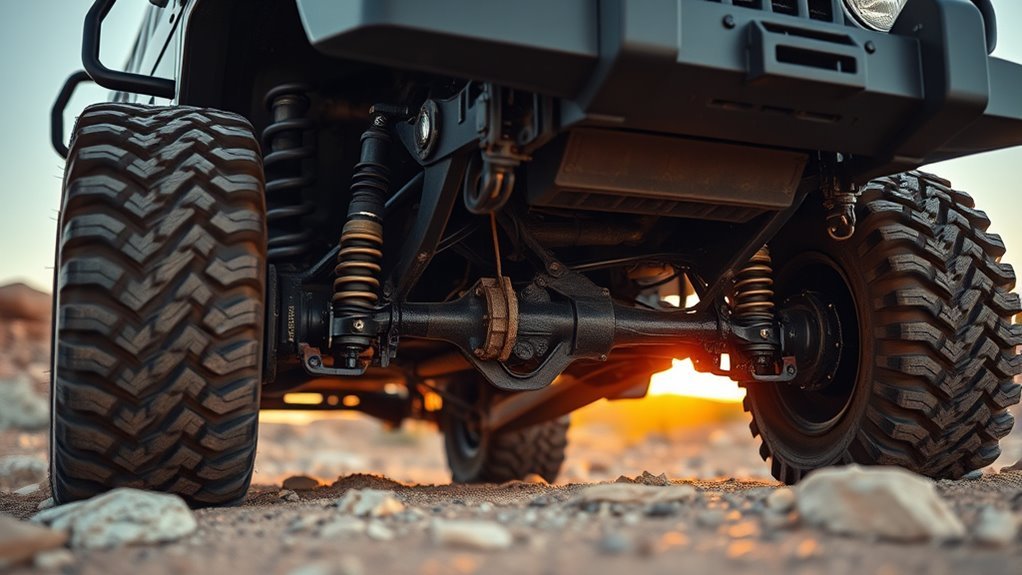
Because your Land Cruiser needs to perform both on pavement and off the beaten track, choosing the right tires, suspension and drivetrain upgrades comes down to matching parts to terrain, load and driving style. For tire selection, pick all-terrain tires for balanced on/off-road use; choose mud-terrain if you spend most time in soft, muddy conditions. Keep pressure between about 28–36 PSI, adjusting for load and tire type, and monitor pressures regularly to preserve fuel economy and longevity.
The stock suspension balances comfort and capability, but suspension upgrades like adjustable coilovers let you tune ride height and damping to your preferences and cargo needs. For traction, consider a locking differential—factory locker options greatly improve control in low-traction scenarios. Inspect drivetrain components routinely: check differentials and transfer case fluids and change them about every 20,000 km to prevent wear. These choices free you to explore farther while keeping the Cruiser reliable and responsive.
[Products Worth Considering]

Upgrade your vehicle's cargo capacity with these heavy‑duty aluminum roof crossbars that lock securely and reduce wind noise. The aerodynamic design and adjustable width provide a quiet, stable platform for luggage up to 260 lb, while the easy‑install kit and labeled front and rear bars simplify setup. Ideal for Toyota Grand Highlander and Lexus TX models from 2024‑2026 with flush side rails.

Upgrade your RAV4 roof rack with these heavy‑duty aluminum crossbars featuring an anti‑theft lock and tie‑down loops for secure cargo transport. The matte‑powder‑coated bars resist corrosion and reduce wind noise, while easy installation fits existing rails without drilling. Ideal for bike mounts, roof boxes, kayaks and more.
Best Mods for Reliability and Off‑Roading (What to Prioritize)
If you want a Land Cruiser that stays dependable on long trips and capable when the trail gets rough, prioritize mods that protect core systems and guarantee power and traction under load. You’ll start by fitting suspension upgrades like an Old Man Emu setup to smooth rough trails and control load. Next, install dual battery systems so accessories run without killing your starter battery; that freedom keeps you moving.
- suspension upgrades for ride quality and load control
- battery systems (dual setups) to power accessories and preserve starting battery
- skid plates to shield transmission, transfer case, and fuel tank
- locking differentials to maximize traction in mud, sand, and rock
- tire options: all-terrain or mud-terrain for grip and durability
Focus on rugged, proven parts that reduce failure risk. Prioritize protection, reliable power, and traction in that order. That approach lets you explore farther with confidence and fewer forced returns to civilization.
100 Series Manuals, Warranties, Communities & Support
While you’re planning mods and maintenance, don’t overlook the documentation, warranties, and owner networks that keep a Land Cruiser reliable over time. You’ll find digital manual resources with downloadable owner’s manuals that cover features, maintenance tips, and troubleshooting steps—use them before you start any modification. New Toyotas include warranty benefits: 36 months/36,000 miles for components and 60 months/60,000 miles for the powertrain, plus ToyotaCare’s no-cost maintenance and 24-hour roadside assistance to protect your freedom on remote roads. If you’re buying used, Toyota Certified vehicles add confidence with a 160-point inspection and a 12-month/12,000-mile limited warranty. For real-world advice, prioritize community engagement—forums and owner groups share practical maintenance tips, upgrade experiences, and troubleshooting strategies you won’t find in a manual. Combine official documentation, warranty coverage, and peer knowledge to maintain autonomy, reduce risk, and keep your Land Cruiser performing reliably for every expedition.
Frequently Asked Questions
Is It Difficult to Drive a Land Cruiser?
No, it isn’t hard; your driving experience feels confident thanks to the high seating, responsive steering, and robust engine. You’ll appreciate the off road capabilities and suspension, so you’ll navigate varied terrain with liberating control.
What Are the Disadvantages of the Land Cruiser?
You’ll face high purchase price, poor fuel efficiency, bulky city handling, and hefty maintenance costs; the rugged setup sacrifices on-road comfort, so you’ll trade convenience and economy for capable off-road freedom.
Conclusion
You’ve got the tools now to decide if a 100 Series/LX470 fits your needs: inspect it thoroughly, mind common issues, follow a simple DIY service plan, and prioritize suspensions, tires, and reliability mods. Treat the truck like a reliable partner—listen, maintain, and upgrade wisely—and it’ll repay you in miles and memories. Join the community for support; knowledge and patience turn a great vehicle into a lifelong companion.