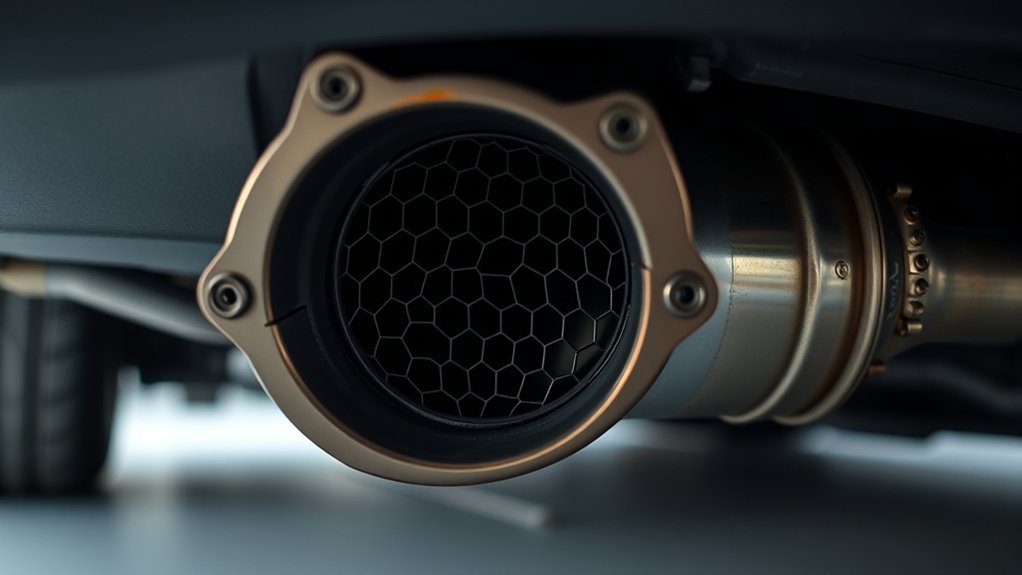
The catalytic converter in your Hyundai Sonata is one of the most important parts of the exhaust and emissions system. It helps convert harmful exhaust gases into less harmful byproducts, supports legal emissions compliance, and can affect drivability when it becomes clogged, damaged, or contaminated. If your Sonata has poor acceleration, reduced fuel economy, a sulfur-like exhaust smell, or a persistent check engine light, the converter should be diagnosed before you replace it.
Quick Answer
A Hyundai Sonata catalytic converter reduces emissions by converting carbon monoxide, nitrogen oxides, and unburned hydrocarbons into less harmful exhaust gases. Replace it only after proper diagnosis, and choose an EPA-compliant or CARB-approved converter that matches your Sonata’s year, engine, emissions label, and local regulations.
Key Takeaways
- The catalytic converter helps your Sonata meet emissions standards by changing harmful exhaust pollutants into less harmful gases.
- Common failure signs include a check engine light, sluggish acceleration, poor fuel economy, rattling, failed emissions testing, and a sulfur or rotten-egg smell.
- For 2015–2017 Hyundai Sonata 2.4L models, fitment depends on the exact year, engine, emissions certification, exhaust layout, and VIN—not just a generic listing.
- California and CARB-regulated states require a CARB-approved replacement converter with a valid Executive Order number.
- A new converter can fail quickly if you do not fix the root cause, such as misfires, oil burning, coolant leaks, rich fuel mixture, or faulty oxygen sensors.
The Essential Role of the Catalytic Converter in Your Hyundai Sonata
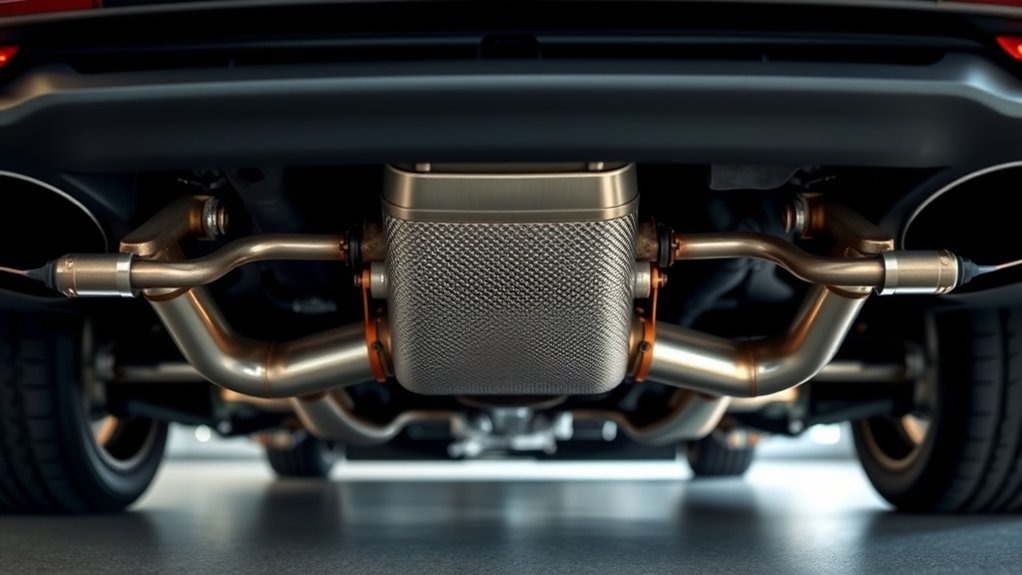
The catalytic converter is part of your Hyundai Sonata’s exhaust system. Its job is to reduce harmful tailpipe emissions before they leave the vehicle. In a gasoline-powered Sonata, the converter works with the engine computer, oxygen sensors, and exhaust system to keep emissions within legal limits.
When it is working properly, a catalytic converter helps control three major pollutants: carbon monoxide (CO), nitrogen oxides (NOx), and unburned hydrocarbons (HC). The U.S. Environmental Protection Agency regulates these vehicle emissions at the federal level, while the California Air Resources Board has stricter requirements for replacement converters sold or installed in California and CARB-regulated areas.
A healthy converter does not “add power” by itself, but it helps the exhaust system flow as designed. A clogged or damaged converter can create excessive backpressure, which may cause sluggish acceleration, higher fuel use, overheating, or repeated check engine light warnings.
Note: Before buying a replacement converter, check your Sonata’s emissions label under the hood, VIN, engine size, and local emissions rules. A part that fits physically may still be illegal or incorrect for your vehicle’s certification.
How the Catalytic Converter Works to Reduce Emissions
A catalytic converter uses a coated honeycomb structure inside a metal housing. The coating contains precious metals such as platinum, palladium, and rhodium. These materials act as catalysts, which means they help chemical reactions happen without being consumed in the process.
Chemical Conversion Process
Most modern gasoline vehicles use a three-way catalytic converter. It performs three main emissions-control functions:
- Oxidizes carbon monoxide into carbon dioxide.
- Oxidizes unburned hydrocarbons into carbon dioxide and water vapor.
- Reduces nitrogen oxides into nitrogen and oxygen.
These reactions occur only when the converter reaches high operating temperature. That is why short trips, repeated misfires, oil burning, coolant contamination, or an overly rich fuel mixture can damage the converter or prevent it from working efficiently.
A catalytic converter is not just a muffler-like exhaust part. It is an emissions-control device that depends on correct engine operation, oxygen sensor feedback, and clean exhaust chemistry.
Emission Reduction Techniques
The Sonata’s engine control system constantly adjusts the air-fuel mixture using oxygen sensor data. This is important because the converter works best when the exhaust mixture stays near the correct balance. If the engine runs too rich, too lean, or misfires, the converter can overheat or become contaminated.
For this reason, replacing the converter without fixing the original engine problem can waste money. A new converter may fail again if the cause is a bad ignition coil, worn spark plug, leaking injector, faulty oxygen sensor, exhaust leak, oil consumption, or coolant entering the combustion chamber.
Role in Air Quality
Because catalytic converters reduce pollutants that contribute to smog and poor air quality, they are required emissions components on modern vehicles. The U.S. Department of Energy notes that catalytic converters have played a major role in reducing vehicle emissions by converting carbon monoxide, hydrocarbons, and nitrogen oxides into less harmful byproducts.
Keeping the converter functional is not only about avoiding a failed inspection. It also helps protect air quality and keeps your Hyundai Sonata operating as its emissions system was designed to operate.
What You Need to Know About EPA and CARB Standards
When buying a replacement catalytic converter, the most important choice is not simply “cheap vs. expensive.” It is whether the part is legal and correct for your vehicle.
EPA-compliant converters are designed for vehicles in areas that follow federal emissions rules. CARB-approved converters meet California’s stricter aftermarket converter requirements and must have a valid CARB Executive Order number for the specific vehicle application. CARB also provides an aftermarket catalytic converter database for checking approved applications.
Warning: Do not install a “49-state” or EPA-only converter on a vehicle that requires a CARB-approved converter. It may fit the exhaust, but it can fail inspection and may not be legal for sale or installation in your area.
You should also check whether the original catalytic converter is still covered under an emissions warranty. Federal emissions warranty rules include extended coverage for certain major emissions components, including catalytic converters, up to 8 years or 80,000 miles in many cases. Because most 2015–2017 Sonata models are now outside the time portion of that warranty, coverage is unlikely for many vehicles, but the in-service date and mileage still matter. Use Hyundai’s manuals and warranties resources or contact a Hyundai dealer with your VIN before paying out of pocket.
Signs You Need a New Catalytic Converter
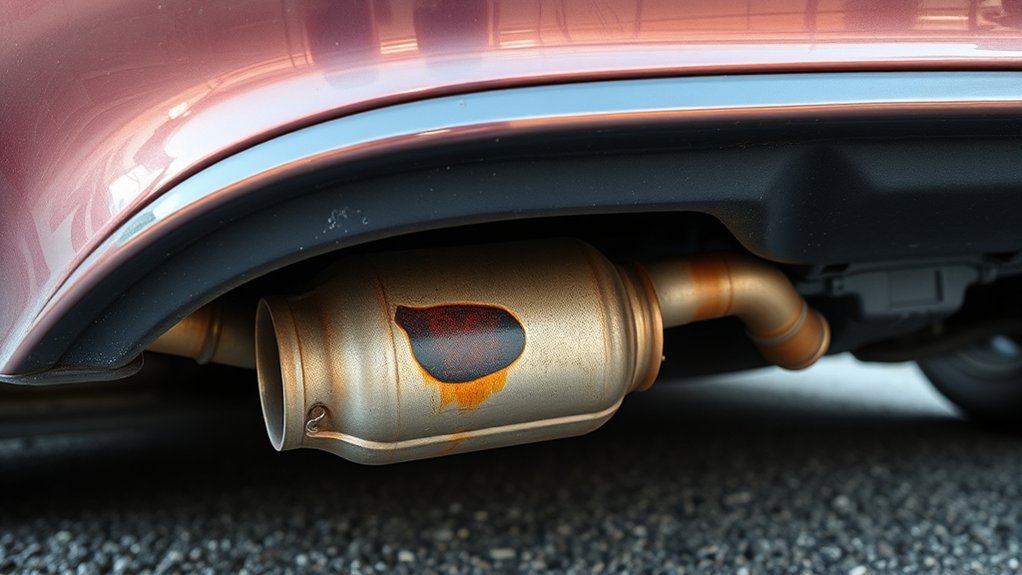
A failing converter can create drivability problems, emissions problems, or both. However, the symptoms can overlap with ignition, fuel, oxygen sensor, and exhaust leak issues. That is why diagnosis matters before replacement.
Common Symptoms Experienced
Watch for these common catalytic converter failure signs in a Hyundai Sonata:
- Check engine light: Codes such as P0420 often point to catalyst efficiency issues, but oxygen sensors, exhaust leaks, and fuel trim problems must still be checked.
- Sluggish acceleration: A clogged converter can restrict exhaust flow and make the car feel weak, especially at higher speeds.
- Poor fuel economy: Higher fuel use may occur when exhaust restriction or engine-management issues affect efficiency.
- Rotten-egg or sulfur smell: This can indicate converter overheating, fuel mixture problems, or sulfur compounds in the exhaust.
- Rattling from under the vehicle: A broken internal honeycomb can rattle, especially during startup or acceleration.
- Failed emissions test: High CO, HC, or NOx readings can indicate converter or upstream engine-control problems.
- Excessive heat under the vehicle: A severely overheated converter can become a safety risk.
Diagnostic Tools Available
The right diagnostic tools can prevent unnecessary replacement. A mechanic may use:
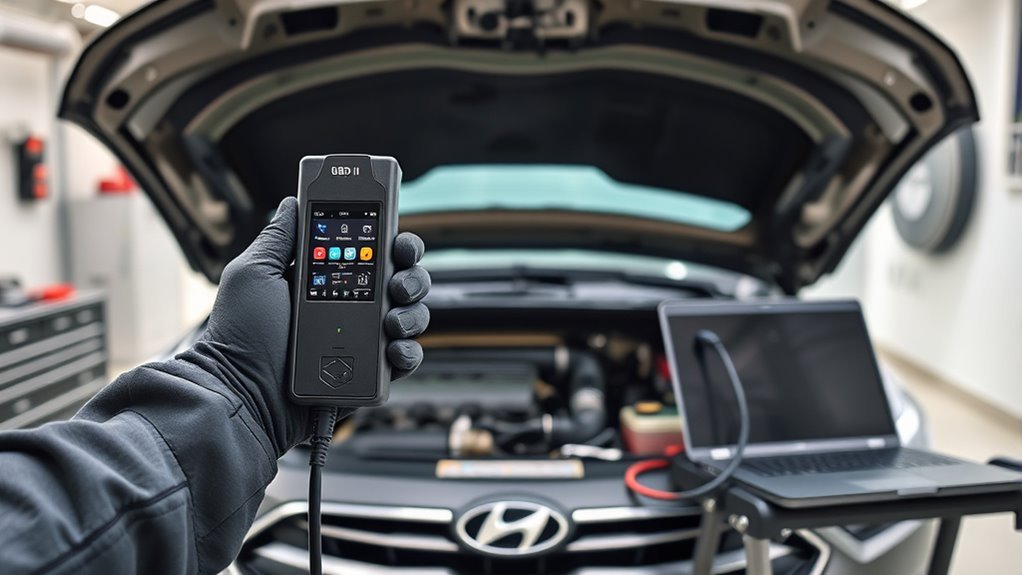
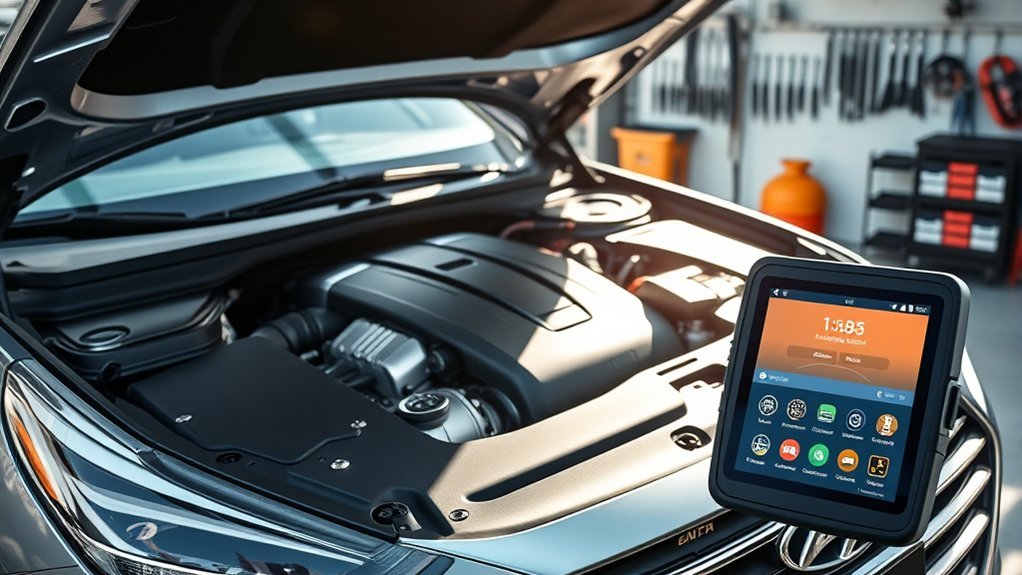
- OBD-II scan tool: Reads stored codes, pending codes, freeze-frame data, and catalyst monitor status.
- Live oxygen sensor data: Compares upstream and downstream sensor activity to evaluate catalyst efficiency.
- Infrared thermometer or thermal camera: Checks converter temperature behavior during operation.
- Backpressure gauge: Tests for exhaust restriction from a clogged converter.
- Smoke machine: Finds exhaust leaks that can mimic catalyst efficiency problems.
- Exhaust gas analyzer: Measures tailpipe emissions when deeper testing is needed.
Pro Tip: If the only symptom is a P0420 code, do not assume the converter is automatically bad. Check for exhaust leaks, oxygen sensor issues, misfires, fuel trim problems, and software or warranty information first.
Factors to Consider When Selecting a Replacement Catalytic Converter
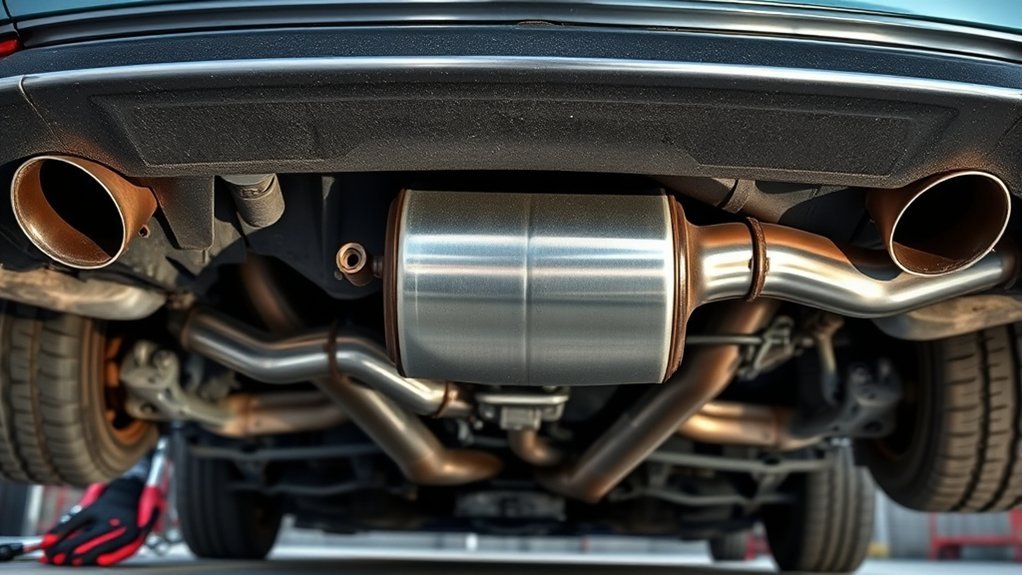
For a 2015–2017 Hyundai Sonata with the 2.4L engine, compatibility is critical. Do not rely only on a marketplace listing that says “fits Sonata.” Verify the part against your VIN, emissions label, engine, model year, and whether your vehicle is certified to federal or California emissions standards.
Some catalogs may reference part numbers such as 28600C2400 or 28600C2560, but part numbers can vary by production date, emissions certification, market, and exhaust layout. Treat any number as a starting point, not final proof of fitment.
EPA vs. CARB Replacement Options
Choose the converter type based on where the car is registered and what your state inspection program requires:
- EPA-compliant converter: Suitable for many states that follow federal emissions rules.
- CARB-approved converter: Required in California and in states or areas that require CARB-approved aftermarket converters.
- OEM Hyundai converter: Often the most expensive option, but it is designed for the original vehicle application.
- Aftermarket direct-fit converter: Usually easier to install than a universal converter and may include the correct flanges, sensor bungs, and pipe routing.
- Universal converter: May require cutting and welding, and it must still be legal and correctly matched to the vehicle.
Quality, Materials, and Warranty
Look for durable stainless-steel construction, correct oxygen sensor locations, proper flange alignment, and a clear emissions certification label. For aftermarket converters, review the warranty terms before purchase. EPA and CARB requirements differ, and a seller’s “one-year warranty” does not automatically mean the part is legal for your vehicle.
How to Install a New Catalytic Converter Safely
At a Glance
| Time Required | About 2–4 hours for an experienced DIYer; less for a professional shop |
| Difficulty | Intermediate to advanced |
| Tools Needed | Jack stands or lift, socket set, penetrating oil, oxygen sensor socket, torque wrench, safety glasses, gloves, scan tool, new gaskets and hardware |
| Cost | Varies widely; professional Hyundai Sonata replacement estimates can exceed $2,000 depending on part type, labor, location, and emissions certification |
Installing a catalytic converter can be straightforward on some vehicles and frustrating on others. Rusted bolts, seized oxygen sensors, tight access, and emissions rules can make the job harder than it looks.
Warning: Never work under a vehicle supported only by a jack. Use properly rated jack stands on a level surface, let the exhaust cool completely, and wear eye protection. Catalytic converters can become extremely hot during operation.
Basic Installation Steps
- Confirm the diagnosis. Repair any misfires, fuel trim problems, oxygen sensor faults, oil burning, or exhaust leaks before replacing the converter.
- Verify the replacement part. Match the converter to the Sonata’s year, engine, VIN, emissions label, and state requirements.
- Prepare the vehicle safely. Park on a level surface, let the exhaust cool, disconnect the negative battery cable if required by your service procedure, and raise the vehicle securely.
- Apply penetrating oil. Spray exhaust fasteners and oxygen sensor threads before removal, especially on older or rust-prone vehicles.
- Remove oxygen sensors carefully. Label connectors if needed and avoid twisting the wiring.
- Unbolt the old converter. Support the exhaust so nearby pipes are not stressed. If bolts break or the converter is welded in place, professional repair may be needed.
- Clean the mating surfaces. Remove old gasket material and rust scale so the new converter seals correctly.
- Install new gaskets and hardware. Align the converter without forcing it, then tighten fasteners evenly to the service-spec torque.
- Reinstall oxygen sensors. Use sensor-safe anti-seize only if recommended, and never contaminate the sensor tip.
- Check for leaks and codes. Start the engine, listen for exhaust leaks, check live data, and confirm the check engine light does not return after the drive cycle completes.
EPA guidance for aftermarket converters also places responsibilities on professional installers, including proper documentation and avoiding illegal replacement of a functioning converter. If you are unsure about emissions compliance, use a licensed repair facility.
How to Maintain Your Catalytic Converter After Installation
A new catalytic converter can last a long time when the engine is running correctly. The best way to protect it is to prevent the problems that cause converter overheating or contamination.
- Fix misfires immediately. Unburned fuel entering the converter can overheat and damage the catalyst.
- Use the correct spark plugs and ignition parts. Weak ignition can cause repeated misfire codes and converter stress.
- Repair oil or coolant consumption. Oil ash or coolant contamination can coat the catalyst and reduce efficiency.
- Address oxygen sensor and fuel trim codes. A rich mixture can overheat the converter; a lean condition can raise NOx emissions.
- Keep up with air filter and maintenance intervals. Good airflow and proper combustion help protect the emissions system.
- Avoid ignoring the check engine light. Small engine problems can become expensive converter failures.
- Do not use fuel additives as a substitute for diagnosis. Some cleaners may help with minor deposits, but they cannot repair a melted, broken, or contaminated catalyst.
Note: Short trips do not always let the exhaust system reach full operating temperature. Occasional longer drives can help the emissions system complete readiness monitors, but they will not fix a mechanically damaged converter.
Environmental Impact: Why a Functional Catalytic Converter Matters
A properly working catalytic converter helps reduce pollutants that affect air quality and public health. It lowers emissions of carbon monoxide, hydrocarbons, and nitrogen oxides—pollutants linked to smog formation and respiratory irritation.
Keeping the converter functional also helps your Hyundai Sonata pass emissions inspections where required. A failed or missing converter can increase tailpipe pollution, trigger check engine light codes, and lead to inspection failure or penalties depending on local laws.
The converter works best as part of a complete system. That means the engine, sensors, exhaust pipes, gaskets, and onboard diagnostics all need to be in good condition. A clean, legal, properly fitted converter is better for your vehicle and better for the air around it.
Frequently Asked Questions
How much does it cost to replace a catalytic converter on a Hyundai Sonata?
The cost depends on the model year, engine, converter location, labor rate, emissions certification, and whether you choose OEM or aftermarket parts. Current national estimates for Hyundai Sonata catalytic converter replacement can exceed $2,000 at professional repair shops, while some aftermarket or universal options may cost less before labor and fabrication. Always compare the installed price, warranty, and legal emissions compliance before choosing the cheapest option.
Can I drive my Hyundai Sonata with a bad catalytic converter?
You may be able to drive short distances if the car still runs normally, but it is not a good idea to ignore the problem. A clogged converter can reduce power, overheat, damage nearby parts, and create a safety risk. A failed converter can also cause your Sonata to fail emissions testing.
What code means the catalytic converter is bad?
P0420 is the common catalyst efficiency code on many four-cylinder vehicles, including many Sonata applications. However, the code does not prove the converter is bad by itself. Exhaust leaks, oxygen sensor issues, fuel trim problems, misfires, or engine software issues can also contribute to catalyst efficiency codes.
Do I need an EPA or CARB catalytic converter?
You need the converter type required by the state or area where the vehicle is registered and inspected. Many states allow EPA-compliant converters, while California and CARB-regulated areas require a CARB-approved converter with a valid Executive Order number for your exact vehicle application.
Will a new catalytic converter improve fuel economy?
A new converter can restore lost performance and fuel economy if the old converter was clogged or damaged. It will not create extra fuel savings if the original converter was working correctly. If fuel economy is still poor after replacement, check for engine, sensor, tire, brake, or fuel-system problems.
Can I install a catalytic converter myself?
An experienced DIYer with the right tools may be able to install a direct-fit converter, but rusted fasteners, oxygen sensors, welding, and emissions rules can make the job difficult. If the converter is welded in, if the vehicle is in a CARB-regulated area, or if the cause of failure is unclear, professional installation is the safer choice.
Conclusion
Your Hyundai Sonata’s catalytic converter is a key emissions-control component, not just another exhaust part. It helps convert harmful gases into less harmful byproducts, supports cleaner air, and keeps the vehicle within emissions requirements when the rest of the engine system is working correctly.
If you suspect converter failure, start with proper diagnosis. A check engine light, poor acceleration, sulfur smell, or failed emissions test can point to a converter problem, but the root cause may be upstream. Choose an EPA-compliant or CARB-approved replacement that matches your Sonata’s exact configuration, repair the cause of failure, and maintain the engine so the new converter lasts.
Sources
- U.S. EPA — Emission Standards Reference Guide for On-road Vehicles — supports federal emissions-standard context and regulated pollutants.
- U.S. EPA — Aftermarket Catalytic Converter Guidance — supports replacement and installation compliance considerations.
- California Air Resources Board — Aftermarket Catalytic Converters — supports CARB aftermarket converter requirements.
- California Air Resources Board — Aftermarket Catalytic Converter Database — supports checking approved converter applications and Executive Order information.
- eCFR — 40 CFR § 85.2103 Emission Warranty — supports federal emissions warranty timing for major emissions components.
- RepairPal — Hyundai Sonata Catalytic Converter Replacement Cost Estimate — supports current national repair-cost estimate context.