In the Hyundai Sonata Hybrid, regenerative braking helps turn normal slowing and coasting into useful battery charge. Instead of relying only on the friction brakes, the hybrid system uses the electric motor as a generator during deceleration. That recovered electricity is stored in the high-voltage battery and can later help power the vehicle, especially in city driving.
Quick Answer
Regenerative braking in the Hyundai Sonata Hybrid captures energy while you coast or brake, converts it into electricity through the electric motor, and stores it in the hybrid battery. Drivers can adjust the braking feel with the paddle shifters, while the regular brake pedal is still needed for full, safe stopping.
Key Takeaways
- Regenerative braking recovers energy that would otherwise be lost as heat during braking.
- The Sonata Hybrid uses paddle shifters to increase or decrease regenerative braking intensity.
- Higher regen levels are most useful in city traffic, rolling hills, and downhill driving.
- The system can reduce friction-brake use, but it does not replace the brake pedal in every situation.
- Smart Regeneration and One Pedal Driving features may vary by model year, trim, and market.
What Is Regenerative Braking in the Hyundai Sonata?
Regenerative braking is the hybrid system’s way of recovering energy while the car slows down. In a conventional gasoline car, much of that motion energy is turned into heat by the brake pads and rotors. In a hybrid, the electric motor can help slow the vehicle and act as a generator, sending electricity back to the battery.
According to the U.S. Department of Energy’s Alternative Fuels Data Center, hybrid electric vehicles use regenerative braking and the gasoline engine to charge the battery because standard hybrids do not plug in to an outside charger. The Hyundai Sonata Hybrid follows that same basic principle.
This is why regenerative braking is most noticeable in everyday situations such as:
- Slowing for traffic lights
- Coasting downhill
- Driving in stop-and-go city traffic
- Reducing speed gradually before a turn
- Following traffic where you can ease off the accelerator early
Note: Regenerative braking helps improve efficiency, but the exact amount of energy recovered depends on speed, battery charge level, road grade, temperature, driving style, and how much braking is needed.
How Does the Regenerative Braking System Operate?
When you lift off the accelerator or press the brake pedal, the Sonata Hybrid can use its electric motor to create resistance at the wheels. That resistance slows the vehicle while generating electricity. The system then sends that electricity to the high-voltage hybrid battery.
In simple terms, the process works like this:
- You slow down: You release the accelerator, coast, drive downhill, or press the brake pedal.
- The motor-generator activates: The electric motor helps resist wheel motion and works like a generator.
- Electricity is created: Motion energy is converted into electrical energy.
- The battery receives charge: The recovered electricity is stored in the hybrid battery.
- The car reuses that energy: The battery can later assist acceleration, low-speed driving, and accessory loads.
The U.S. Department of Energy and EPA’s FuelEconomy.gov explains that regenerative braking in hybrids recaptures energy during coasting or braking and uses wheel motion to turn the motor, generating electricity while helping slow the vehicle.
Energy Conversion Process
The energy conversion process is the heart of the system. The Sonata Hybrid’s electric motor does two jobs: it can help move the car forward, and it can help recover energy while slowing down. During regeneration, the motor’s role changes from propulsion to generation.
This is different from traditional friction braking. Friction brakes use brake pads and rotors to slow the vehicle by creating heat. Regenerative braking captures some of that energy before it is lost as heat. However, the Sonata Hybrid still uses friction brakes when stronger braking is needed, when the battery cannot accept much charge, at very low speeds, or during emergency stops.
Driver Engagement Techniques
Hyundai lets drivers adjust the regenerative braking feel with paddle shifters on equipped Sonata Hybrid models. Hyundai’s owner information says the left paddle increases regenerative braking intensity by one level, while the right paddle decreases it by one level. The selected level appears in the instrument cluster.
In practical driving, that means you can choose a lighter coasting feel on open roads or a stronger slowing feel in city traffic. A higher regenerative level can make the car slow more quickly when you lift off the accelerator, while a lower level allows more natural coasting.
Pro Tip: Use a stronger regenerative setting when traffic is slowing ahead, then reduce it on steady highways where smooth coasting may feel more natural.
Benefits of Regenerative Braking in the Hyundai Sonata
Regenerative braking improves the Sonata Hybrid driving experience in several ways. It supports fuel efficiency, helps recharge the battery during normal driving, and may reduce how often the friction brakes are used.
Enhanced Energy Efficiency
The biggest benefit is energy recovery. Instead of wasting all braking energy as heat, the Sonata Hybrid can send some of it back to the battery. That stored energy can help the electric motor assist the gasoline engine later.
This is one reason hybrids often perform especially well in city driving. There are more chances to slow down, stop, and recover energy. For reference, the official 2026 Hyundai Sonata Hybrid listing on FuelEconomy.gov shows an EPA estimate of 47 mpg combined, with city and highway ratings that reflect the benefits of hybrid system design and regenerative braking opportunities.
Reduced Brake Wear
Because regenerative braking can do some of the slowing, the friction brakes may not have to work as hard during gentle deceleration. Over time, that can help reduce wear on brake pads and rotors, especially for drivers who anticipate stops and avoid harsh braking.
The actual maintenance benefit varies. Someone who drives mostly in heavy city traffic and uses regen smoothly may see more brake-life benefit than someone who regularly makes hard stops or drives mostly at highway speeds.
Improved Driving Experience
Once you get used to the system, regenerative braking can make the Sonata Hybrid feel smoother and more controlled. The paddle shifters let you fine-tune the slowing force without constantly moving your foot between the accelerator and brake pedal.
| Benefit | What It Means | Driver Impact |
|---|---|---|
| Energy Recovery | Captures energy during slowing and coasting | Supports better hybrid efficiency |
| Adjustable Feel | Paddle shifters change regen intensity | More control in traffic and hills |
| Less Brake Use | Friction brakes are used less during gentle slowing | May reduce brake wear over time |
| Smoother Driving | Encourages earlier, more gradual deceleration | Can make daily driving calmer |
How to Adjust Regenerative Braking Levels
At a Glance
| Time Required | Less than 1 minute once you know the controls |
| Difficulty | Easy |
| Tools Needed | No tools; use the steering-wheel paddle shifters |
| Cost | Free |
On equipped Sonata Hybrid models, the paddle shifters control regenerative braking intensity instead of traditional gear shifting in normal hybrid driving. Hyundai’s official how-to information notes that the Sonata Hybrid offers four regenerative braking levels and that the paddle shifters can be used to customize the braking feel.
- Pull the left paddle shifter: This increases regenerative braking intensity by one level.
- Pull the right paddle shifter: This decreases regenerative braking intensity by one level.
- Watch the instrument cluster: The selected regenerative braking level is shown on the display.
- Use higher levels in traffic: Stronger regen can help slow the car with less brake-pedal use.
- Use lower levels for coasting: Lighter regen can feel smoother on open roads.
Hyundai’s owner information also notes that if the regenerative braking level is lowered to 0 and the vehicle is turned off and on again, the level changes to 1. That helps ensure the vehicle starts with some regenerative braking active.
Maximizing Regenerative Braking Efficiency
To get the most from regenerative braking, the goal is to slow down earlier and more smoothly. Regeneration works best when the vehicle has time to recover energy instead of making a sudden hard stop.
- Look farther ahead: When you see traffic slowing, release the accelerator early.
- Use gentle braking: Light, steady braking gives the hybrid system more opportunity to recover energy.
- Choose the right regen level: Higher levels are useful in traffic and downhill stretches; lower levels are smoother for cruising.
- Avoid last-second stops: Hard braking relies more heavily on friction brakes and leaves less time for energy recovery.
- Use Smart Regeneration if equipped: Hyundai says Smart Regeneration can recognize vehicle distance and road gradient to help control regenerative braking while coasting.
- Keep the vehicle maintained: Proper tire pressure, good tires, and routine service help the whole hybrid system work efficiently.
The smoothest regenerative braking usually starts before you touch the brake pedal: lift early, coast smartly, and let the hybrid system recover energy gradually.
Common Challenges With Regenerative Braking Systems
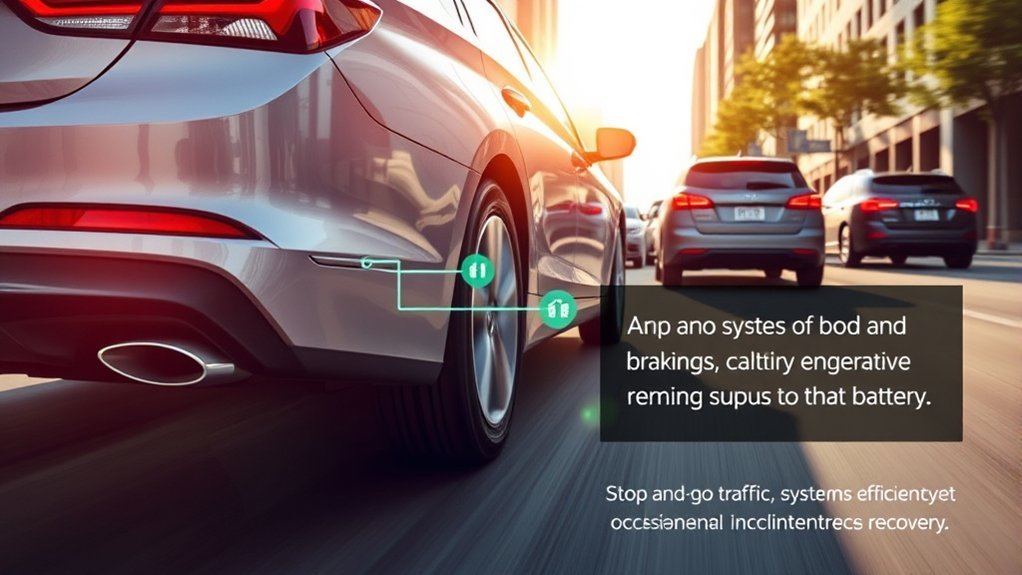
Regenerative braking is useful, but it can feel different if you are used to a traditional gasoline vehicle. The main adjustment is learning how much the car slows when you lift off the accelerator at each regen level.
| Challenge | What You May Notice | Best Fix |
|---|---|---|
| Different Brake Feel | The car may slow more strongly when you lift off the accelerator | Practice using different regen levels in light traffic |
| Very Low-Speed Limits | Regen may reduce as the vehicle nears a crawl | Use the brake pedal when you need a full stop |
| Battery Charge Limits | Regen may feel reduced when the battery is already full or cold | Drive normally and let the system manage charging |
| Slippery Roads | Strong deceleration may feel less predictable on ice, rain, or mud | Use smoother inputs and rely on the brake pedal as needed |
| Emergency Braking | Regen alone is not enough for urgent stops | Press the brake pedal firmly and keep control of the vehicle |
Warning: Do not depend on regenerative braking alone to stop the vehicle. Hyundai’s owner information says the vehicle may not always come to a stop with One Pedal Driving active, depending on road and vehicle conditions. Always be ready to press the brake pedal.
One Pedal Driving and Smart Regeneration
Some Sonata Hybrid models include additional regenerative braking functions, such as One Pedal Driving and Smart Regeneration. These features can make the car easier to manage in traffic, but they should still be treated as driver-assist functions rather than substitutes for safe braking.
One Pedal Driving
Hyundai’s owner information says One Pedal Driving operates the paddle shifter while coasting to control regenerative braking intensity and assist the driver in stopping the vehicle without pressing the brake pedal. To use it, pull and hold the left paddle shifter while coasting.
However, there are limits. The system may not bring the car to a complete stop in every condition, including slopes, slippery roads, heavy vehicle load, worn tires, wheel slip, or other situations. The safest habit is to use One Pedal Driving as a convenience feature and keep your foot ready for the brake pedal.
Smart Regeneration
Smart Regeneration, when equipped, can adjust regenerative braking while coasting based on factors such as vehicle-to-vehicle distance and road gradient. This helps reduce unnecessary pedal use and can make coasting feel more natural in traffic.
Availability and operation can vary by model year, trim, and market, so check your Sonata Hybrid owner’s manual or Hyundai’s official owner resources for your exact vehicle.
Best Settings for Different Driving Conditions
There is no single best regenerative braking level for every trip. The right setting depends on traffic, road grade, and how smooth you want the car to feel.
| Driving Condition | Suggested Regen Use | Why It Helps |
|---|---|---|
| Stop-and-Go City Traffic | Medium to high level | More frequent slowing creates more recovery opportunities |
| Downhill Roads | Higher level | Helps control speed while sending energy to the battery |
| Open Highway | Low to medium level | Allows smoother coasting with less speed loss |
| Rain, Ice, or Mud | Lower level and gentle inputs | Smoother deceleration helps maintain stability |
| Heavy Traffic With Smart Regeneration | Use Smart Regeneration if equipped | The system can help adjust slowing based on traffic and grade |
Frequently Asked Questions
Does the Hyundai Sonata Hybrid have regenerative braking?
Yes. The Hyundai Sonata Hybrid uses regenerative braking to recover energy while coasting or braking. On equipped models, you can adjust the regenerative braking level with the steering-wheel paddle shifters.
Can a Hyundai Sonata Hybrid run without gas?
The Sonata Hybrid can use electric power in certain low-speed or light-load conditions when the hybrid battery has enough charge, but it is not a plug-in hybrid or a fully electric car. The gasoline engine will start whenever the system needs more power, heat, speed, or battery charging.
Do the paddle shifters change gears in the Sonata Hybrid?
In normal hybrid driving on equipped Sonata Hybrid models, the paddle shifters are used to adjust regenerative braking intensity. The left paddle increases regenerative braking, and the right paddle decreases it.
Does regenerative braking stop the Sonata Hybrid completely?
Regenerative braking levels alone may not bring the vehicle to a complete stop. Hyundai’s owner information says One Pedal Driving can assist with stopping when you pull and hold the left paddle, but the vehicle may still fail to stop in some conditions. Always use the brake pedal when needed.
Is a higher regenerative braking level always better?
Not always. A higher level can recover more energy during frequent slowing, but it can also reduce smooth coasting on open roads. Use higher levels in traffic and downhill areas, and lower levels when you want smoother cruising.
Conclusion
Regenerative braking in the Hyundai Sonata Hybrid is a practical efficiency feature, not just a technical extra. It helps recover energy during coasting and braking, stores that electricity in the hybrid battery, and can reduce the need for friction braking during gentle stops.
For the best results, learn how the paddle shifters change the braking feel, anticipate traffic early, and use the brake pedal whenever a full or urgent stop is needed. Once you understand the system, regenerative braking can make the Sonata Hybrid feel smoother, more efficient, and easier to drive in everyday traffic.
Sources
- Hyundai Owner’s Manual: Using Regenerative Braking System — paddle shifter operation and regenerative braking level display
- Hyundai Owner’s Manual: One Pedal Driving — operation, limitations, and brake-pedal safety guidance
- Hyundai Owner’s Manual: Smart Regeneration System — smart regeneration function and energy recovery description
- Hyundai How-To: Sonata Hybrid Regenerative Braking — four regenerative braking levels, paddle shifters, and Smart Regeneration overview
- U.S. Department of Energy Alternative Fuels Data Center: Hybrid Electric Vehicles — how hybrids use regenerative braking and the engine to charge the battery
- FuelEconomy.gov: How Hybrids Work — regenerative braking and hybrid efficiency basics