Toyota RAV4 Hybrid DC-DC Converter Guide: Issues, Safety, and Troubleshooting
What’s in This Article
- Understanding the Role of the DC-DC Converter in Hybrid Vehicles
- Common DC-DC Converter Issues in RAV4 Hybrids
- How to Address Common DC-DC Converter Issues
- Critical Components in the RAV4 Hybrid’s DC-DC Converter
- The Importance of Temperature Management in the DC-DC Converter
- Maintenance Tips for the RAV4 Hybrid’s DC-DC Converter
- Replacing or Updating Your RAV4 Hybrid’s DC-DC Converter
- How the DC-DC Converter Affects Vehicle Efficiency
- Future Developments in RAV4 Hybrid DC-DC Converter Technology
- How to Troubleshoot Your RAV4 Hybrid’s DC-DC Converter
- Frequently Asked Questions
Your RAV4 Hybrid depends on the DC-DC converter every time the vehicle enters READY mode. This part takes power from the high-voltage hybrid battery and steps it down so the 12V system can run lights, computers, locks, wipers, audio, and many control modules.
The exact layout depends on your model. The standard RAV4 Hybrid uses a high-voltage system rated at about 244.8V, while the RAV4 Prime plug-in hybrid uses a higher-voltage lithium-ion system. This guide explains what the converter does, what symptoms to watch for, and when you should stop troubleshooting and call a qualified Toyota hybrid technician.
Quick Answer
The DC-DC converter in your Toyota RAV4 Hybrid lowers high-voltage battery power to about 14V for the 12V electrical system. If it fails, you may notice repeated 12V battery drain, warning lights, weak accessory power, or heat-related electrical faults. Don’t open or repair the converter yourself because it connects to dangerous high-voltage systems.
Key Takeaways
- The DC-DC converter replaces the charging role that an alternator handles in a regular gasoline vehicle.
- A weak 12V battery can mimic converter failure, so test the battery before blaming the converter.
- Certain 2021-2022 RAV4 Prime models have NHTSA recall 23V-478 for a DC-DC converter fire risk.
- High-voltage converter work requires trained technicians, insulated tools, and Toyota repair procedures.
- Aftermarket upgrades can create warranty, safety, and compatibility problems unless Toyota approves the part.
Warning: Never remove DC-DC converter covers or touch orange high-voltage cables unless you have Toyota hybrid training and the correct protective equipment.
Important safety and model note: This guide covers both the standard Toyota RAV4 Hybrid and the Toyota RAV4 Prime plug-in hybrid. Toyota recall records show that certain 2021-2022 RAV4 Prime vehicles fall under NHTSA recall 23V-478 because a rectifying module inside the DC-DC converter may short and overheat. Check your Vehicle Identification Number (VIN) through Toyota or NHTSA before you charge or service an affected vehicle.
Understanding the Role of the DC-DC Converter in Hybrid Vehicles
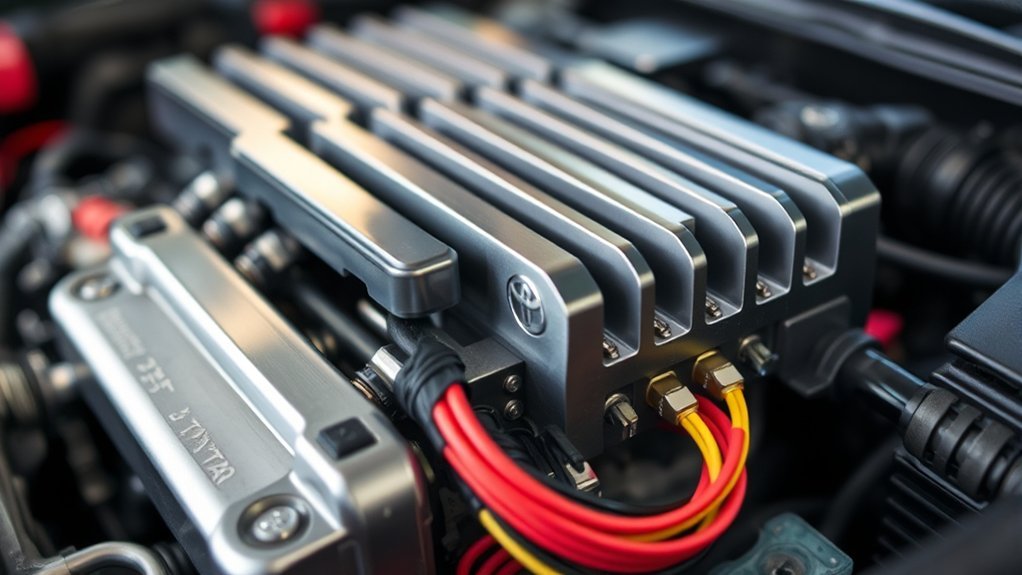
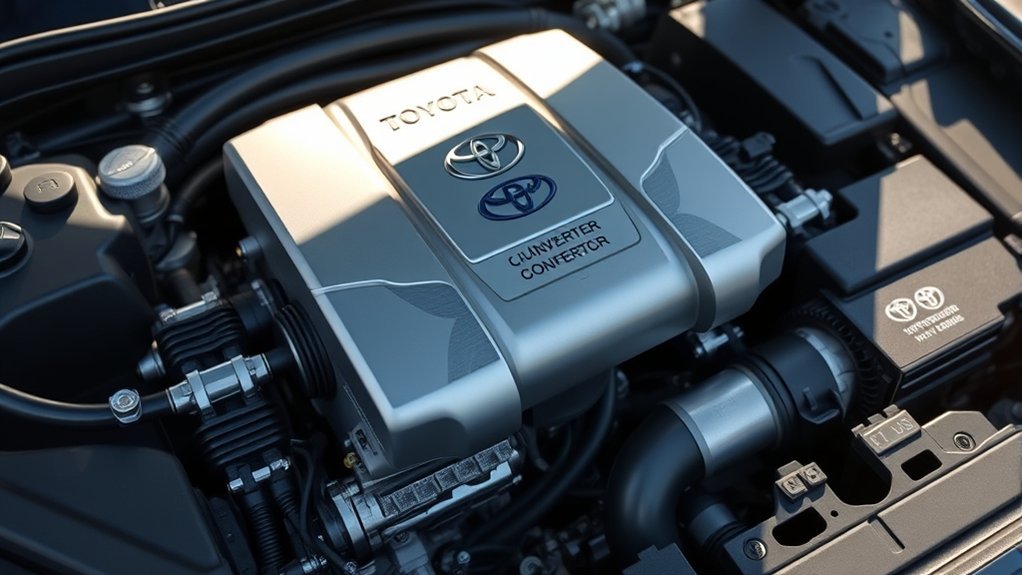
In a Toyota RAV4 Hybrid, the DC-DC converter lowers high-voltage direct current from the hybrid battery to low-voltage direct current for the 12V system. Toyota Industries describes this type of converter as the part that lowers hybrid battery voltage so on-board equipment, such as lights and wipers, can use it.
The converter also helps charge the 12V auxiliary battery while the vehicle runs in READY mode. In that way, it performs the job that an alternator handles in many non-hybrid vehicles.
The RAV4 Hybrid dismantling guide states that high voltage powers parts such as the electric motor, generator, A/C compressor, and inverter/converter. It also states that regular electrical devices use a separate 12V auxiliary battery.
This design lets your hybrid system power key vehicle electronics without adding a belt-driven alternator. It also keeps the low-voltage side stable while the hybrid system starts, stops, regenerates, and changes load.
Common DC-DC Converter Issues in RAV4 Hybrids
DC-DC converter problems can look like normal 12V battery trouble at first. You may see slow accessory response, warning lights, repeated low-battery messages, or a 12V battery that goes flat after you replace it.
Some RAV4 Prime owners also need to think about the DC-DC converter recall. NHTSA recall 23V-478 covers certain 2021-2022 RAV4 Prime vehicles and certain 2022 Lexus NX450h+ vehicles because a damaged rectifying module can short, create heat, and raise fire risk.
Voltage Regulation Problems
Voltage regulation problems happen when the converter cannot keep the 12V system within a healthy charging range. Your vehicle may show low-voltage codes, dim lights, weak accessory power, or repeated 12V battery drain.
Don’t assume the converter has failed just because your battery reads low. A weak 12V battery, corroded terminals, loose ground, parasitic draw, or software-related charging behavior can create similar symptoms.
A technician can test converter output with the vehicle in READY mode and compare that result with Toyota service data. You should not probe high-voltage circuits at home.
Overheating Issues
Heat can damage converter electronics and nearby parts. In the RAV4 Prime recall, Toyota and NHTSA describe a failure pattern where a rectifying module may short and generate excessive heat.
Transport Canada also warns that the DC-DC converter under the rear seat in certain plug-in hybrid vehicles can overheat and create a fire risk. Toyota’s remedy directs dealers to replace the converter on affected vehicles.
Watch for warning lights, unusual burning smells, repeated converter-related codes, or recall notices. If you suspect overheating, park safely, turn the vehicle off, and contact a Toyota dealer.
Component Failure Symptoms
A failing DC-DC converter can affect comfort, lighting, electronics, and starting readiness because the 12V system powers many control modules. The most common owner-level clue involves a 12V battery that keeps losing charge.
You may also see hybrid system warnings, low-voltage diagnostic trouble codes, electrical accessories that behave oddly, or a vehicle that will not enter READY mode. These signs do not prove converter failure by themselves.
A trained technician should check the 12V battery, charging output, ground points, fuses, wiring, and active recalls before replacing parts. Skip old RAV4 EV resistance values because they do not apply to 2019 and newer RAV4 Hybrid or RAV4 Prime models.
How to Address Common DC-DC Converter Issues
You can handle simple checks around the 12V battery, but you should leave converter testing and replacement to a hybrid-qualified technician. The converter links to high-voltage systems, so unsafe probing can cause shock, fire, or costly damage.
Start with the simple items. Check for an open recall, inspect the 12V battery age and terminals, note any warning messages, and record when the problem happens.
Common Symptoms to Watch
Pay attention to symptoms that repeat after you install or charge a healthy 12V battery. A one-time dead battery after storage does not always point to the DC-DC converter.
- Repeated 12V battery drain after normal driving
- Hybrid system warning lights or charging-related fault codes
- Dim lights or weak accessory power in READY mode
- Electrical burning smell near the rear seat area on affected Prime models
- Recall notice for NHTSA 23V-478 or Toyota campaign 23TA07
If you notice heat, smoke, or a burning smell, stop driving and move away from the vehicle. Call roadside assistance or your Toyota dealer for the next safe step.
Diagnostic Testing Methods
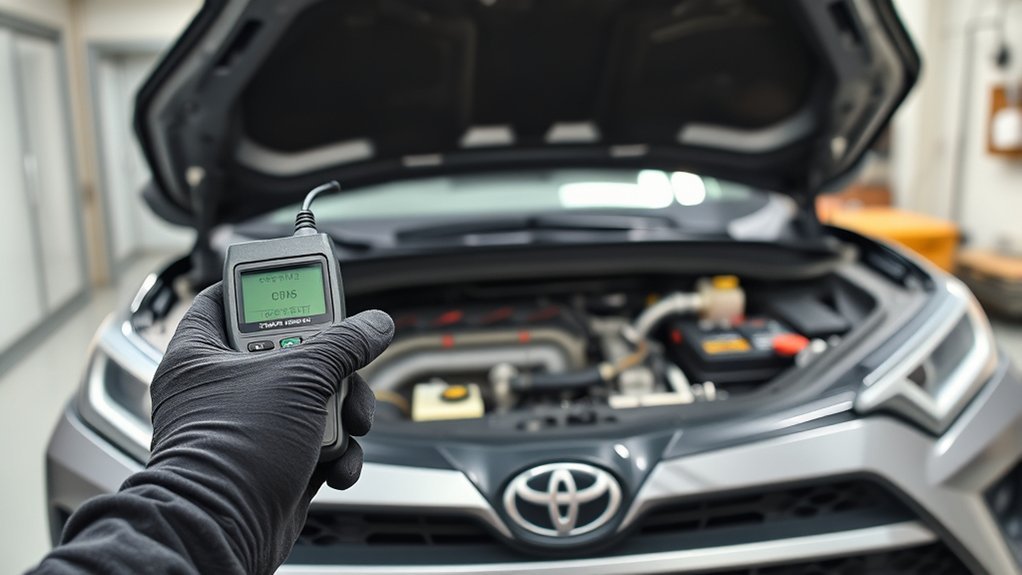
A safe diagnosis starts on the low-voltage side. Test the 12V battery with a proper load test, clean the terminals, check ground connections, and scan all modules for diagnostic trouble codes.
With the vehicle in READY mode, a technician can measure 12V system charging behavior at safe test points. The service manual and scan tool data help separate a bad 12V battery from a converter, wiring, or control issue.
Do not open the DC-DC converter to inspect internal fuses, rectifiers, or circuit boards. Toyota’s recall technical instructions require trained technicians, insulated gloves, insulated tools, service plug procedures, and a wait time before high-voltage work starts.
Repair and Replacement Tips
For a standard RAV4 Hybrid, start with battery and wiring checks before you price a converter replacement. Many low-voltage problems come from the 12V battery, corrosion, storage drain, or accessory load.
For a 2021-2022 RAV4 Prime, check your VIN for recall 23V-478 or Toyota campaign 23TA07. If your vehicle qualifies, an authorized dealer should replace the DC-DC converter with the improved part under the recall.
Avoid used or unknown converters for safety-critical hybrid repairs. Matching part numbers, software compatibility, sealing, cooling ducts, torque specs, and post-repair scans matter.
Critical Components in the RAV4 Hybrid’s DC-DC Converter
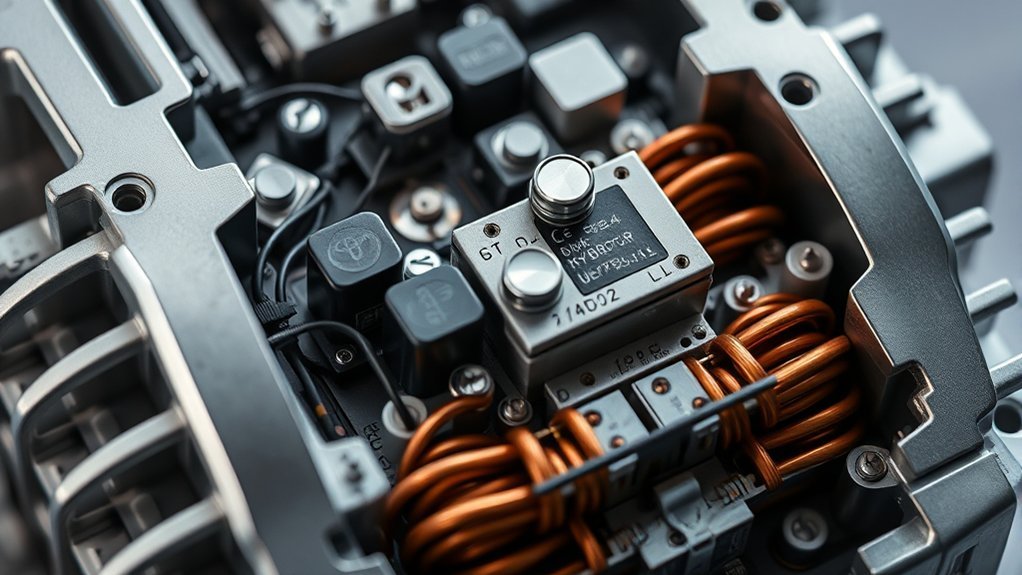
The DC-DC converter uses power electronics to lower high-voltage battery power to the low-voltage system. In broad terms, it uses switching components, rectifying parts, protection circuits, cooling parts, connectors, and control logic.
On the standard RAV4 Hybrid, Toyota’s dismantling guide lists the inverter/converter among the components powered by the high-voltage battery. It also lists the DC-DC converter function for the 12V auxiliary battery.
On affected RAV4 Prime vehicles, the recall focuses on the converter’s electric current rectifying module. NHTSA states that some modules may have production damage and may short instead of failing open.
Fuses and protection circuits can open when a fault or overload occurs, but they do not explain every converter problem. Treat a blown fuse as a symptom until a technician finds the root cause.
The Importance of Temperature Management in the DC-DC Converter
Temperature control matters because power conversion creates heat. When the converter, wiring, cooling path, or related module cannot manage that heat, electrical parts can fail faster.
In the RAV4 Prime recall, the safety concern centers on excess heat after a short circuit in the converter. Transport Canada also notes that Toyota advised owners not to charge affected vehicles below 5°C until they completed the recall repair.
| Factor | Impact on Performance |
|---|---|
| Cooling airflow or coolant flow | Helps move heat away from converter electronics |
| Electrical load | Higher accessory demand can raise converter heat |
| Faulted rectifying parts | Can create excess heat in affected Prime recall vehicles |
| Regular inspection | Helps catch battery, wiring, and cooling issues early |
Maintenance Tips for the RAV4 Hybrid’s DC-DC Converter
You cannot maintain the sealed internal electronics of the DC-DC converter like a normal wear item. You can still reduce stress on the 12V system and catch warning signs early.
- Check your VIN for open Toyota or NHTSA recalls.
- Test the 12V battery if it has aged, sat unused, or gone flat.
- Keep 12V battery terminals clean and tight.
- Repair water leaks before moisture reaches electrical parts.
- Keep cargo and debris away from hybrid cooling vents on models that use cabin airflow.
- Scan warning lights with a capable diagnostic tool instead of guessing.
Limit high-draw aftermarket accessories unless a professional confirms that your vehicle can support them. Large inverters, audio amplifiers, or power stations can overload the 12V system if you connect them without proper planning.
Replacing or Updating Your RAV4 Hybrid’s DC-DC Converter
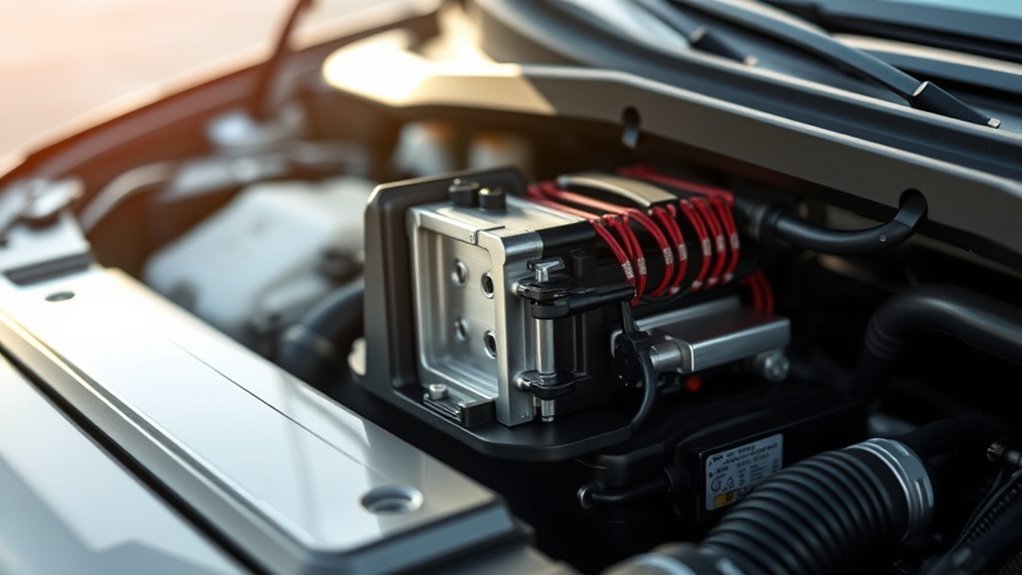
Most RAV4 Hybrid owners should not treat the DC-DC converter as an upgrade part. Toyota engineers the converter, wiring, cooling, software, fuses, and hybrid control system to work together.
If your converter fails, focus on correct diagnosis and approved replacement. If your RAV4 Prime falls under recall 23V-478, the proper update comes through an authorized Toyota dealer using the improved part.
When Replacement Makes Sense
Replacement makes sense when a qualified diagnosis confirms converter failure, when Toyota issues a recall remedy, or when collision damage affects the converter or its wiring. A new correct part can restore 12V charging and reduce the chance of repeat low-voltage faults.
Aftermarket upgrades rarely help a stock RAV4 Hybrid. They can create safety risks, compatibility faults, warranty issues, and new diagnostic trouble codes.
Installation Process Overview
DC-DC converter replacement requires high-voltage safety steps. Toyota’s recall technical instructions tell technicians to disconnect the auxiliary battery, remove the service plug grip, wait for capacitor discharge, use insulated tools, and wear insulated gloves around orange high-voltage cables.
The RAV4 Prime recall repair also involves rear-seat and trim work. Toyota’s instructions warn technicians to avoid seat, body, and interior damage while removing and reinstalling parts.
This job does not fit a home driveway repair. Let a Toyota dealer or a hybrid-qualified repair shop handle the work.
Performance Improvement Factors
A correct converter repair can improve reliability when the old unit cannot charge the 12V system well. You should judge success by stable charging behavior, no repeat diagnostic trouble codes, and normal accessory function.
- Stable 12V charging: The converter supports computers, lights, locks, and other low-voltage systems.
- Correct cooling: Clean ducts, coolant paths, or mounting points help the converter manage heat.
- Proper software checks: Post-repair scans help confirm that related hybrid modules communicate correctly.
How the DC-DC Converter Affects Vehicle Efficiency
The DC-DC converter supports vehicle efficiency by removing the need for a belt-driven alternator. It lets the hybrid system manage 12V charging through the high-voltage battery and vehicle control logic.
Good converter operation also supports comfort features. Lights, fans, infotainment, control modules, and safety systems all need steady low-voltage power.
| Feature | Specification or Role |
|---|---|
| Standard RAV4 Hybrid HV battery | About 244.8V, based on Toyota RAV4 Hybrid dismantling data |
| RAV4 Prime HV system | Higher-voltage lithium-ion plug-in hybrid system |
| Low-voltage output role | Charges and supports the 12V auxiliary system |
| Main benefit | Supports accessories without a traditional alternator |
If the converter output drops, efficiency becomes less important than reliability. A weak 12V system can stop modules from waking up, logging data, or letting the vehicle enter READY mode.
Future Developments in RAV4 Hybrid DC-DC Converter Technology
Toyota has not announced a public owner upgrade path for the RAV4 Hybrid DC-DC converter. Future changes will likely come through new vehicle designs, updated service parts, or recall remedies when Toyota identifies a safety need.
Across the auto industry, power electronics keep improving through better cooling, smarter diagnostics, and more efficient semiconductor designs. For an owner, the practical step remains simple: use the correct OEM part and keep the 12V system healthy.
- Better diagnostics: Future systems may give technicians clearer fault data before parts fail.
- Improved thermal control: New designs may manage heat with less size and weight.
- More efficient electronics: Better power components can reduce conversion losses.
Treat these as design trends, not promised upgrades for your current RAV4. Your safest choice still comes from Toyota service information and approved replacement parts.
How to Troubleshoot Your RAV4 Hybrid’s DC-DC Converter?
Start your troubleshooting with items you can check safely. Confirm your 12V battery condition, inspect terminals, check for obvious corrosion, and write down all warning messages.
Next, check for open recalls. If you own a 2021-2022 RAV4 Prime, search your VIN for NHTSA 23V-478 or Toyota campaign 23TA07 before you continue.
Use this safe owner-level order:
- Check the recall status: Use your VIN through Toyota, Lexus, or NHTSA recall tools.
- Test the 12V battery: A weak battery can cause many low-voltage symptoms.
- Inspect visible 12V connections: Look for loose terminals, corrosion, or damaged ground wires.
- Record the symptoms: Note weather, charging habits, warning lights, and how often the issue returns.
- Book a hybrid diagnostic: Ask the shop to test converter output and scan all hybrid modules.
Do not use resistance values from older RAV4 EV guides for a modern RAV4 Hybrid or RAV4 Prime. Those vehicles use different systems, parts, and test procedures.
When to Seek Professional Help
Call a Toyota dealer or hybrid-qualified shop if your RAV4 will not enter READY mode, keeps draining a good 12V battery, shows hybrid system warnings, or has an open DC-DC converter recall. These symptoms need scan data and Toyota service procedures.
Stop driving if you smell burning plastic, see smoke, or suspect heat near high-voltage components. Move to a safe place, turn off the vehicle, and keep people away until a professional checks it.
Safety Disclaimer: This article is for informational purposes only and does not replace Toyota service information or professional hybrid repair advice. Always consult a qualified Toyota hybrid technician before servicing high-voltage or safety-related electrical parts.
Frequently Asked Questions
What Is the Purpose of a DC-DC Converter in a Hybrid Vehicle?
The DC-DC converter lowers high-voltage battery power to a level the 12V system can use. It powers low-voltage electronics and helps charge the 12V auxiliary battery while the hybrid system operates.
How Does a DC-DC Converter Work?
A DC-DC converter uses power electronics to change one direct-current voltage level into another. In your RAV4 Hybrid, it steps down high-voltage battery power to support the 12V electrical system.
How Does a DC-DC Converter Work in an EV or Plug-In Hybrid?
In an EV or plug-in hybrid, the DC-DC converter supports the low-voltage system without a traditional alternator. It lets the high-voltage battery feed lights, control modules, locks, and other 12V equipment through a safer low-voltage circuit.
How Does a Toyota RAV4 Hybrid Charge the 12V Battery?
The RAV4 Hybrid charges the 12V battery through the DC-DC converter when the vehicle operates in READY mode. The gasoline engine and regenerative braking charge the hybrid battery, and the converter then supports the 12V side as needed.
Does the RAV4 Prime DC-DC Converter Recall Affect Every RAV4 Hybrid?
No. NHTSA recall 23V-478 applies to certain 2021-2022 Toyota RAV4 Prime vehicles and certain 2022 Lexus NX450h+ vehicles. Check your VIN because model year alone does not prove that your vehicle has an open recall.
Conclusion
The DC-DC converter keeps your RAV4 Hybrid’s 12V system alive, so converter problems can affect far more than one accessory. Start with a 12V battery test, check your recall status, and avoid high-voltage DIY work.
If symptoms repeat after basic low-voltage checks, book a hybrid diagnostic with a qualified Toyota technician. A careful diagnosis protects your vehicle, your warranty, and your safety.
References
- Part 573 Safety Recall Report 23V-478, National Highway Traffic Safety Administration, 2024
- Technical Instructions for 23TA07 DC/DC Converter Assembly Replacement, Toyota via NHTSA, 2024
- Toyota Safety Recall Involving Certain Toyota and Lexus Vehicles, Toyota Canada, 2023
- Transport Canada Recall 2023382, Transport Canada, 2023
- RAV4 Hybrid Dismantling Manual, Toyota Motor Corporation, 2018
- DC-DC Converter Overview, Toyota Industries Corporation
- Vehicle Safety Recall Lookup, National Highway Traffic Safety Administration