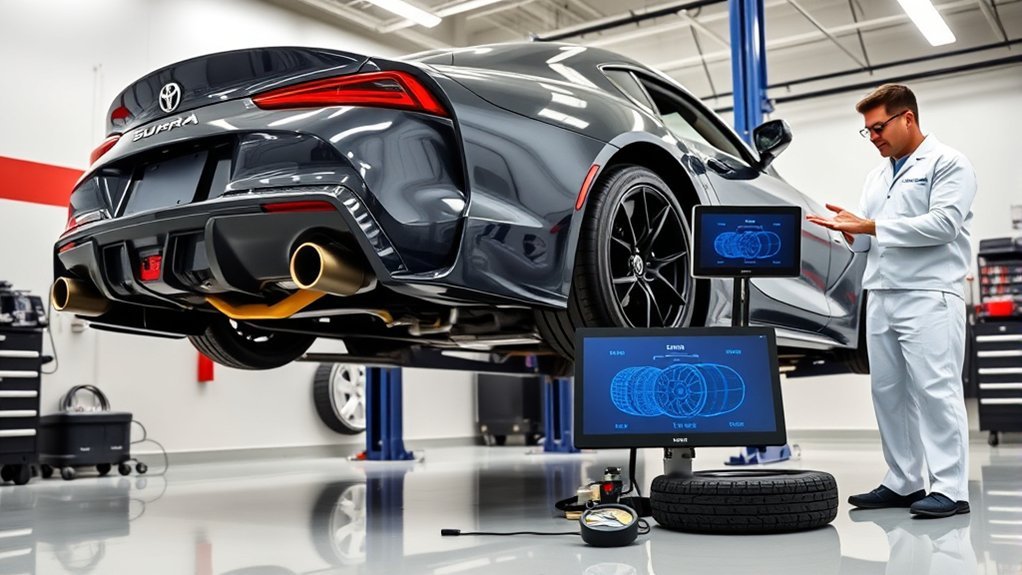
To maintain your Toyota GR Supra’s performance, rotate your tires every 5,000 to 7,500 miles and check alignment at least once a year. Misalignment can cause uneven wear and affect handling, so watch for signs like steering pulls or uneven tread. If you hit a pothole or notice drift without input, get an alignment check. Regular maintenance keeps you safe and enhances your driving experience. There’s more to explore regarding tire health and costs associated with these services.
Understanding the Importance of Tire Rotation and Alignment for Your Supra

Understanding the importance of tire rotation and alignment for your Supra is fundamental if you want to maintain peak performance. Regular tire rotation is one of the key tire maintenance tips to guarantee even tread wear and extend tire life, essential for performance vehicles. Misalignment can lead to uneven tire wear and diminished handling, so checking your alignment at least once a year is imperative. Don’t fall for alignment myths; even minor misalignments can greatly affect your Supra’s performance. Proper alignment settings, adjusted to OEM specifications, can enhance fuel efficiency by reducing rolling resistance. By combining tire rotations with alignment checks, you’ll prevent traction control issues and maintain ideal handling characteristics, making sure your Supra remains responsive and thrilling to drive.
How Often to Rotate and Align Your Tires?
To keep your Supra performing at its best, rotate your tires every 5,000 to 7,500 miles. This practice promotes even tire wear, extending the life of your tires and enhancing performance. Additionally, have your four-wheel alignment checked at least once a year or whenever you notice handling issues or after suspension repairs. Impacts from potholes can misalign your suspension, affecting driving stability. Using proper alignment tools guarantees precise adjustments, improving fuel efficiency by reducing rolling resistance. Documenting your tire rotation and alignment service is essential for maintaining warranty requirements and securing optimal handling. By staying proactive with these schedules, you empower your driving experience and maintain safety on the road.
Why Regular Alignment Matters for Your 2025 Supra
Regular alignment is essential for your 2025 Supra, as it greatly enhances tire longevity and improves vehicle handling. By ensuring your wheels are properly aligned, you minimize uneven tire wear and maintain precise steering control. This proactive maintenance not only boosts performance but also saves you money on tire replacements in the long run.
Enhanced Tire Longevity
Maintaining the alignment of your 2025 Toyota GR Supra is essential for enhancing tire longevity and overall vehicle performance. Proper alignment not only prevents premature tire wear but also maximizes the alignment benefits for your driving experience. Here’s why regular alignment matters for tire maintenance:
- Reduces uneven tire wear, extending tire life
- Enhances fuel efficiency by lowering rolling resistance
- Guarantees your vehicle tracks straight at highway speeds
- Preserves handling characteristics with OEM specifications
- Recommended check at least once a year or after significant driving events
Improved Vehicle Handling
When your 2025 Toyota GR Supra is properly aligned, you’ll notice a significant improvement in vehicle handling and safety. This alignment guarantees your vehicle tracks straighter at highway speeds, enhancing your driving performance. Regular alignment checks are vital, especially after suspension upgrades or tire changes, to maintain that precision. A well-aligned vehicle reduces uneven tire wear, extending tire life and minimizing replacement costs. Additionally, improved alignment lowers rolling resistance, boosting fuel efficiency—fundamental for performance enthusiasts. Certified service adheres to OEM specifications, optimizing adjustments to camber, caster, and toe for the best handling characteristics. Prioritize alignment to fully enjoy the capabilities of your Supra while safeguarding your investment.
How to Identify When Your Supra Needs a Wheel Alignment
Identifying when your Supra needs a wheel alignment is essential for ideal performance and tire longevity. Pay attention to these alignment symptoms that signal a necessary check:
- Your steering behavior feels off, pulling to one side.
- You notice uneven tire wear, especially on the inner edges.
- After hitting a pothole, the handling seems compromised.
- The vehicle drifts without steering input, indicating misalignment.
- You haven’t checked the alignment in over a year.
Regularly inspecting your alignment can prevent costly tire replacements and guarantee your Supra maintains peak performance. If you experience any of these issues, schedule an alignment service promptly to protect your investment and enhance your driving experience.
What Happens During a Tire Alignment Service?

During a tire alignment service, technicians conduct a thorough multi-point inspection of your steering and suspension components to confirm everything functions correctly and safely. They use computerized systems to perform precise steering adjustments, aligning camber, caster, and toe settings to OEM specifications. This meticulous process enhances vehicle handling and extends tire life.
| Task | Purpose |
|---|---|
| Multi-Point Inspection | Confirm proper function and safety |
| Steering Adjustments | Improve handling |
| Suspension Checks | Verify stability |
| Final Road Test | Validate alignment accuracy |
Typically lasting 60 to 90 minutes, this service may also include corner-weight checks for performance vehicles. Proper alignment prevents uneven tire wear and improves fuel efficiency, saving you money on replacements.
Understanding the Costs of Tire Alignment for Your Supra
Understanding the costs of tire alignment for your 2025 Toyota GR Supra involves several factors that can influence your overall expenses. Here are some key cost factors to take into account:
- Location: Prices vary by region; dealerships often offer competitive rates.
- Vehicle Condition: A well-maintained Supra may require less adjustment.
- Alignment Frequency: Regular checks, ideally annually, prevent costly issues.
- Service Specials: Look for promotions or financing options to ease costs.
- Multi-Point Inspections: Thorough services guarantee all alignment angles meet OEM specifications.
Investing in accurate diagnostics during your alignment can save you money by preventing uneven tire wear. By staying on top of your alignment schedule, you’ll maintain performance and potentially enhance your Supra’s longevity.
Easy DIY Checks for Tire Health and Alignment Status
To maintain ideal tire health and alignment, start by regularly inspecting your tire tread depth with a gauge; tread below 2/32 of an inch means it’s time for replacement. Next, check your tire pressure monthly and keep it at the manufacturer’s recommended levels to prevent uneven wear. Finally, watch for any uneven wear patterns, as these can signal alignment issues that need professional attention.
Inspect Tire Tread Depth
Regularly inspecting your tire tread depth is essential for maintaining safety and peak vehicle performance. You can easily check tread wear using a penny or a tread depth gauge. If your depth measurement shows 2/32 inch or less, it’s time to replace your tires. Keep an eye out for uneven tread wear, which can indicate alignment issues. Here’s what to look for:
- Use a penny to gauge tread depth.
- Inspect inner and outer edges for wear discrepancies.
- Look for signs of cupping or scalloping.
- Rotate your tires every 5,000 to 7,500 miles.
- Monitor tread wear regularly to maintain optimal handling.
Check Tire Pressure Regularly
After ensuring your tire tread depth is adequate, checking tire pressure is another essential step in maintaining tire health and alignment. You should check your tire pressure at least once a month and before long trips. Under-inflated tires lead to increased rolling resistance, decreased fuel efficiency, and uneven wear. Use a reliable pressure gauge to perform this DIY check, ensuring your tires stay within the manufacturer’s recommended specifications for ideal performance.
| Condition | Recommended Pressure | Action Needed |
|---|---|---|
| Under-inflated | Below recommended | Inflate to proper level |
| Over-inflated | Above recommended | Release some air |
| Ideal | As specified | No action needed |
| Temperature Change | Varies | Re-check pressure |
| Monthly Check | Regularly | Maintain consistency |
Observe Uneven Wear Patterns
Observing uneven wear patterns on your tires is essential for maintaining ideal vehicle performance and safety. Regular checks can help you catch alignment issues early. Look for these tire wear indicators:
- Excessive wear on inner edges, signaling misalignment like toe-in.
- Scalloped or cupped wear, indicating suspension problems.
- Flat spots from braking or acceleration, affecting traction.
- Uneven tread wear across the tire, pointing to pressure issues.
- Unexpected traction control activation, suggesting alignment troubleshooting is needed.
To assess alignment, use a tape measure to check tire distances and verify they match. Don’t forget to rotate your tires every 5,000 to 7,500 miles to promote even wear and extend their life. Your safety and performance depend on it!
Finding the Best Alignment Services for Your Toyota GR Supra

When it comes to maintaining your Toyota GR Supra, finding the best alignment services is essential for peak performance. Seek out certified technicians who utilize alignment technology advancements and adhere to OEM specifications for superior results. Regular alignment checks are recommended at least once a year or following significant events, like tire changes or suspension repairs, to enhance tire life and handling. Most four-wheel alignment services for your Supra can be completed in just 60 to 90 minutes, including a full suspension inspection and road test. Competitive pricing often surpasses that of independent shops, so check for current offers to save money. Utilizing online booking options can further minimize wait times, ensuring timely alignment checks for your vehicle.
Frequently Asked Questions
How Often Does Toyota Recommend Rotating Tires?
Toyota recommends you rotate your tires every 5,000 to 7,500 miles. This practice guarantees even tire wear and alignment benefits, enhancing traction, handling, and ultimately extending your tire life for cost-effective performance.
How Often Should You Do Tire Rotation and Alignment?
You should rotate your tires every 5,000 to 7,500 miles and align them annually. This practice promotes even tire wear and enhances handling performance, ensuring your vehicle operates efficiently and safely on the road.
Do You Get an Alignment Before or After Rotating Tires?
You should get an alignment after rotating tires. This guarantees proper steering sensitivity and minimizes tire wear. Regular alignments help maintain your vehicle’s performance, keeping your tires in prime condition for a smoother, safer ride.
Conclusion
In summary, keeping up with your Supra’s tire rotation and alignment is vital for peak performance and safety. Did you know that regular alignment can improve tire life by up to 30%? By adhering to the recommended schedule and monitoring your tires’ health, you’ll not only enhance your driving experience but also save on long-term costs. Stay proactive, and your Supra will reward you with smoother rides and better handling. Don’t overlook these essential maintenance steps!