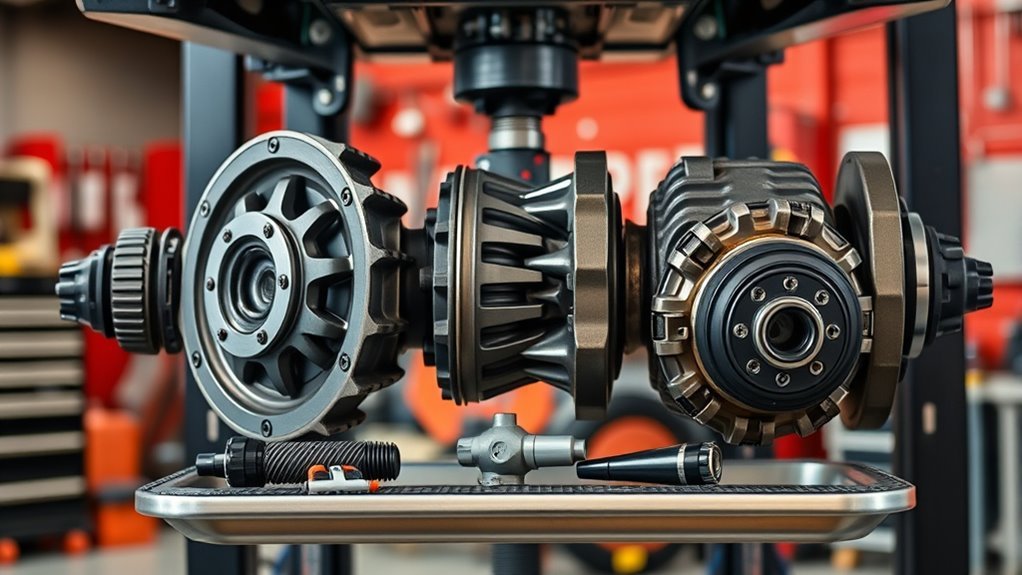
Toyota 4Runner differentials are simple once you separate the hardware from the electronic traction aids. Depending on the year, trim, axle, and previous owner modifications, a 4Runner may use an open differential, a mechanical limited-slip setup, Toyota’s brake-based Auto LSD or A-TRAC systems, a selectable rear locker, or a locking center differential on full-time 4WD models. Use this guide to identify what you have, understand how it works, and choose the right upgrade without guessing.
Quick Answer
Most Toyota 4Runners use open differentials supported by electronic traction control, while off-road-focused trims may add a selectable rear locker. Older models vary by generation, axle, engine, and package. The safest way to identify yours is to check the axle code, inspect the housing, verify locker wiring or switches, and confirm the gear ratio before ordering parts.
Key Takeaways
- A-TRAC and Auto LSD are electronic traction aids, not the same thing as a mechanical limited-slip differential.
- A rear locker gives the most traction off-road, but it should not be used on high-traction pavement.
- Toyota generation ranges matter: 4th gen is 2003–2009, 5th gen is 2010–2024, and 6th gen starts with 2025.
- Before any differential swap, confirm front and rear gear ratios match on 4WD models.
- Follow your model-year maintenance guide for fluid service, and shorten inspection intervals after towing, heavy loads, water crossings, or frequent off-road use.
Who This Guide Is For and How to Use It
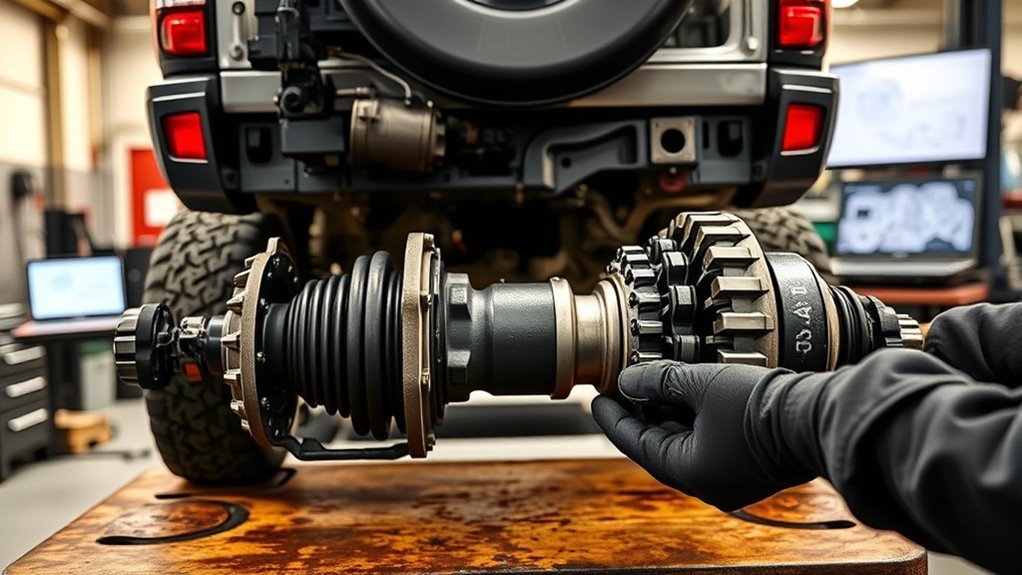
This guide is for 4Runner owners who want to know what differential they have, how Toyota traction systems behave, and which upgrade makes sense for daily driving, towing, snow, sand, mud, rocks, or overlanding.
Start with the generation table, then move to the identification checklist before buying gears, axle assemblies, third members, lockers, or limited-slip units. Toyota changed drivetrains across model years, and many used 4Runners have already been modified, so the badge on the liftgate is not enough.
At a Glance
| Time Required | 10–20 minutes for basic ID; longer if removing a cover or counting gear teeth |
| Difficulty | Easy for axle-code and visual checks; moderate for spin tests and gear-ratio verification |
| Tools Needed | Flashlight, gloves, wheel chocks, jack stands, VIN/build plate, service manual, and basic hand tools if inspecting internally |
| Cost | Free for identification; fluid service, gears, lockers, bearings, and labor vary widely by generation and axle |
Warning: Never crawl under a 4Runner supported only by a jack. Use wheel chocks and rated jack stands on level ground. On 4WD models, never install mismatched front and rear gear ratios; drivetrain bind can damage the transfer case, axles, or tires.
How Open, LSD, Locking Differentials, Auto LSD, and A-TRAC Work
The easiest way to understand 4Runner traction is to separate the mechanical differential from the electronic brake and stability systems.
| System | What It Does | Best Use | Main Limitation |
|---|---|---|---|
| Open differential | Allows left and right wheels to turn at different speeds. | Daily driving, reliability, low cost. | A spinning wheel can take most of the usable torque. |
| Mechanical LSD | Biases torque toward the tire with more grip using clutch, gear, or torque-biasing mechanisms. | Snow, rain, dirt roads, mixed street/trail use. | Less absolute traction than a locked axle. |
| Auto LSD / A-TRAC | Uses brake and traction-control logic to slow a spinning wheel and help send torque to the wheel with grip. | Factory traction support without mechanical changes. | Can build brake heat and is not the same as a locked axle. |
| Rear locking differential | Mechanically locks both rear axle shafts together so both rear wheels turn at the same speed. | Rocks, ruts, deep mud, cross-axle obstacles. | Poor turning manners on high-grip surfaces; use only when needed. |
| Center locking differential | Locks or controls torque split between front and rear axles on full-time 4WD systems. | Full-time 4WD models, slippery roads, off-road use depending on mode. | Not the same as locking the front or rear axle side-to-side. |
Open differentials are smooth and dependable on pavement because they let the inside and outside wheels rotate at different speeds while turning. Their weakness appears when one tire is unloaded or slick; that tire can spin while the tire with grip receives little useful drive.
Mechanical limited-slip differentials reduce that problem by biasing torque toward the tire with traction. Some LSDs use clutch packs, while others use gear-type torque-biasing designs. Because 4Runners vary by generation and trim, do not assume every “LSD” label means the same hardware.
Locking differentials are the strongest traction tool because they mechanically connect both wheels on an axle. That helps when one rear tire is in the air or on slick rock, but it also makes the vehicle resist turning on high-traction surfaces. Use a locker deliberately, not as an all-the-time traction mode.
A-TRAC and Auto LSD are Toyota electronic traction aids. Toyota’s 2025 4Runner information lists Auto LSD for 2WD models and A-TRAC with Auto LSD for 4WD models, while TRD Off-Road, TRD Pro, and Trailhunter grades add a standard electronic locking rear differential. Toyota’s 2025 4Runner release also notes available Multi-Terrain Select, Crawl Control, and a locking center differential on certain full-time 4WD models.
Which Differentials Toyota Fits by 4Runner Generation and Axle
Exact differential hardware depends on market, engine, trim, 2WD/4WD configuration, package, and previous owner swaps. Use this table as a starting point, then verify your own axle code and housing before buying parts.
| Generation | Model Years | What to Know |
|---|---|---|
| 1st Gen | 1984–1989 | Early 4WD models are known for solid-front-axle desirability, while later first-gen models moved to Toyota’s Hi-Trac independent front suspension. Verify by year and visual inspection. |
| 2nd Gen | 1990–1995 | IFS front suspension and rear axle variations by engine and drivetrain. Many are open-diff trucks unless modified or equipped with specific options. |
| 3rd Gen | 1996–2002 | Popular for factory rear e-locker swaps on select models. Always confirm the axle code and look for the locker motor and wiring on the rear differential housing. |
| 4th Gen | 2003–2009 | Truck-based chassis with more electronic traction support. Some models use full-time 4WD/center-differential systems, and select packages offered added off-road traction features. |
| 5th Gen | 2010–2024 | Commonly uses open differentials with Toyota traction aids; off-road trims may include a selectable rear locker. Limited models use a full-time 4WD system with a center differential setup. |
| 6th Gen | 2025+ | Toyota lists Auto LSD on 2WD models, A-TRAC and Auto LSD on 4WD models, a standard electronic rear locker on TRD Off-Road, TRD Pro, and Trailhunter, and a center locking differential on certain full-time 4WD Limited/Platinum configurations. |
Note: Axle assemblies are often swapped on older 4Runners. A 1998 body does not guarantee a 1998 differential, and a factory-looking axle may have aftermarket gears or a locker inside.
How A-TRAC and Traction Electronics Interact With Differentials
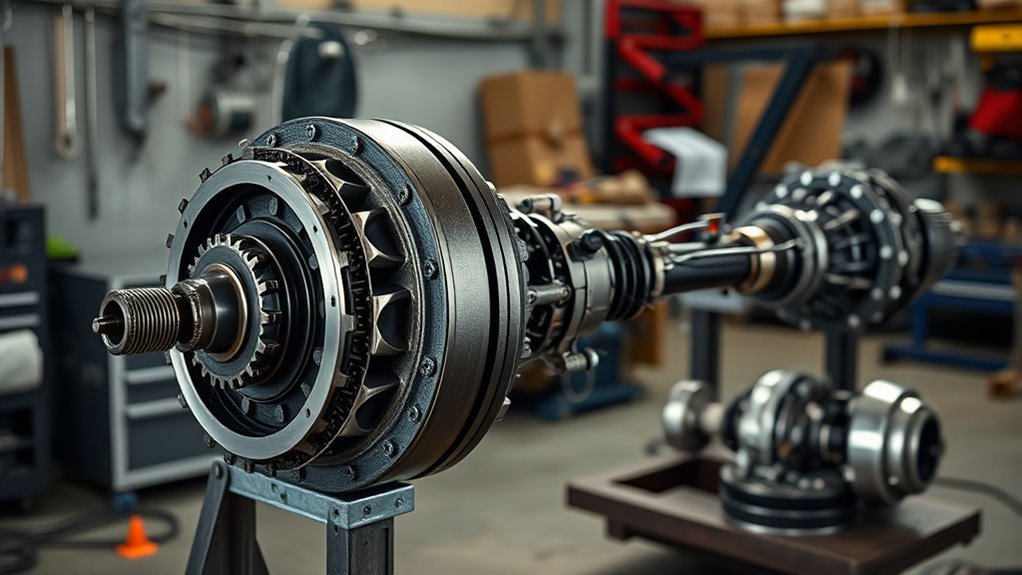
A-TRAC and Auto LSD are helpful because they let an open differential behave more like a traction-aided system when one wheel slips. Instead of mechanically locking the axle, the vehicle uses brake pressure and engine/traction-control logic to reduce wheelspin and help the tire with grip do more work.
A-TRAC Brake-Based Intervention
When the system detects wheelspin, it can apply braking to the slipping wheel. That braking resistance helps redirect usable torque through the differential to the wheel that still has traction. This is why a 4Runner with open differentials can still move through loose or uneven terrain better than an old open-diff vehicle with no electronic help.
- Wheel-speed sensors detect a tire spinning faster than the others.
- The brake system slows the spinning wheel.
- Torque is encouraged toward the tire with better grip.
- The driver maintains momentum without manually locking an axle.
This system is useful on dirt, snow, sand, and moderate trail obstacles. It is not a substitute for a mechanical locker when a tire is fully unloaded for long periods or when the trail requires steady locked-axle traction.
Electronic Traction Versus Lockers
Electronic traction aids are smooth, automatic, and friendly for daily driving. Lockers are stronger but more specialized. A selectable locker is best when you need predictable equal wheel speed across an axle, such as climbing ledges, crossing deep ruts, or moving through slow technical terrain.
| Choose This | When You Want | Avoid It When |
|---|---|---|
| A-TRAC / Auto LSD | Factory simplicity, low maintenance, better traction than a plain open diff. | You need repeated locked-axle traction in rocks or deep ruts. |
| Mechanical LSD | Improved street, snow, and dirt-road traction without a harsh lock. | You need full lockup or maximum rock-crawling control. |
| Selectable locker | Maximum control off-road while keeping normal manners when unlocked. | You mostly drive pavement and light gravel. |
Pro Tip: If your 4Runner already has A-TRAC and a factory rear locker, learn when to use each before buying more parts. Good tire pressure, line choice, and steady throttle often matter more than another drivetrain upgrade.
Identify Your 4Runner’s Front and Rear Differential: Codes, Visual IDs, and Gear Ratios
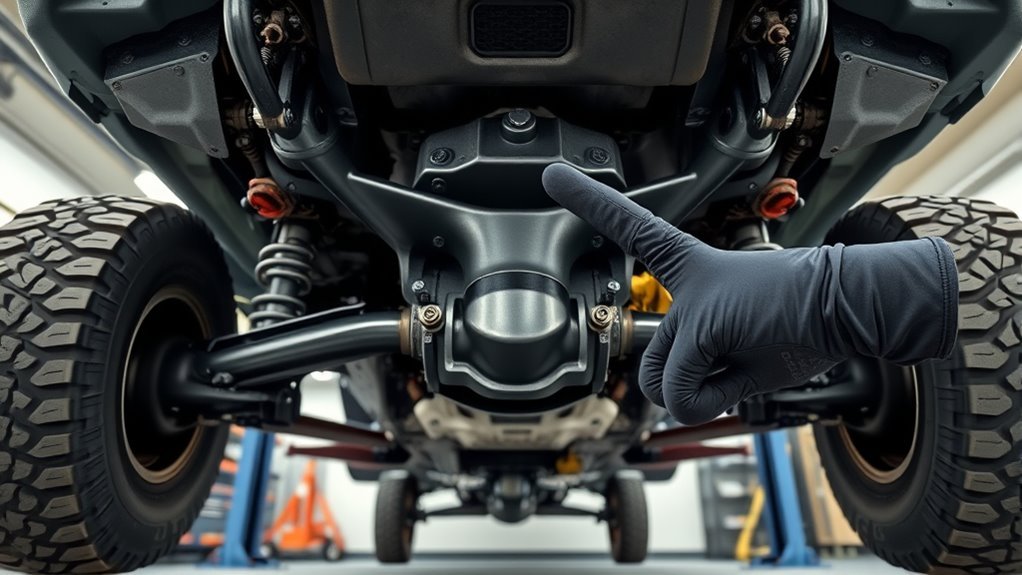
Use more than one clue. Axle codes, housing shape, e-locker wiring, driveshaft rotation, and service records together give a much better answer than any single forum chart.
Step 1: Check the Axle Code and Build Information
Start with the driver-side door jamb label, VIN/build plate, owner records, or Toyota service information. The axle code can help identify the original gear ratio and differential family, but it only confirms how the vehicle was built. It does not prove what is installed today if the axle was swapped.
For older trucks, also compare the axle code with the engine, transmission, and 2WD/4WD configuration. For newer 4Runners, use the trim and drivetrain information to confirm whether the vehicle should have Auto LSD, A-TRAC, a rear e-locker, or a center locking differential.
Step 2: Inspect the Rear Housing
Look at the rear differential from behind the vehicle. Note the cover shape, housing ribs, third-member style, actuator wiring, and any evidence of a previous swap. Factory electronic lockers usually have a visible motor/actuator and wiring on the differential housing.
Also inspect for leaks around the pinion seal, axle seals, drain plug, and fill plug. A wet housing does not identify the differential type, but it tells you service is needed before hard off-road use.
Step 3: Confirm the Gear Ratio
Gear ratio matters most when swapping axles, third members, or differentials on 4WD models. The front and rear ratios must match.
- Best method: Read the axle code and confirm it against factory service information for your exact year and drivetrain.
- Most accurate physical method: Count ring gear teeth and pinion gear teeth, then divide ring teeth by pinion teeth.
- Open-diff spin check: With proper safety support, rotate one raised tire two full turns and count driveshaft rotations for an approximate ratio.
- LSD or locked/both-wheel check: If both tires rotate together, rotate the tire one full turn and count driveshaft rotations.
Warning: Spin tests are only approximate. If you are buying gears, installing a locker, or swapping a third member, verify the ratio directly or through reliable service records before driving in 4WD.
Maintenance: Fluid, Leaks, and Warning Signs
Differentials last a long time when the oil is clean, the seals are dry, and the bearings are healthy. They fail faster when water, heat, metal particles, or low fluid are ignored.
Differential Maintenance Checklist
- Check for leaks: Look at the pinion seal, axle seals, drain plug, fill plug, and third-member gasket area.
- Listen for noise: Gear whine on acceleration or deceleration can point to bearing, gear mesh, or fluid issues.
- Inspect after water crossings: Milky fluid means water contamination and should be changed promptly.
- Use the right oil: Follow your model-year owner’s manual or warranty and maintenance guide. For example, Toyota lists differential gear oil specifications in the 2025 4Runner Hybrid owner information.
- Shorten service after hard use: Towing, heavy loading, dusty roads, repeated off-road use, and water crossings justify more frequent inspection and fluid service.
Toyota’s model-year maintenance guides are the best source for exact intervals. The 2024 4Runner Warranty & Maintenance Guide, for example, lists front and rear differential oil replacement under special operating conditions such as towing, using a car-top carrier, or heavy vehicle loading. The practical takeaway: do not use one universal mileage number for every 4Runner. Match the service interval to your year and how you drive.
Upgrades: When to Pick a Locker, LSD, Re-Gear, or Stock Swap
The right differential upgrade depends on the terrain, tire size, budget, and how much pavement the 4Runner still sees. More traction is not always better if it adds noise, binding, cost, or maintenance you do not need.
| Goal | Best Choice | Why |
|---|---|---|
| Daily driving and light trails | Stock open diff with Toyota traction aids | Reliable, simple, smooth, and usually enough with good tires. |
| Snow, gravel, and mixed use | Mechanical LSD or factory electronic traction aids | Better traction without full locker behavior. |
| Rocks, ruts, and slow technical trails | Selectable rear locker | Maximum rear traction when one tire is unloaded. |
| Large tires or lost power after tire upgrade | Re-gear front and rear together | Restores drivability and crawl control more directly than a locker alone. |
| Budget repair or factory reliability | Stock replacement third member or axle assembly | Often cheaper and more predictable than a custom build. |
A locker helps traction; it does not increase payload, towing capacity, axle weight rating, or braking capacity.
If you tow, keep the factory tow rating in mind. Toyota lists the 2025 4Runner with a maximum towing capacity of 6,000 pounds, but towing limits still depend on the model, equipment, load, hitch setup, brakes, cooling, and the owner’s manual for your exact vehicle.
Common Mistakes to Avoid
- Buying parts by generation only: Always verify axle code, ratio, housing, and trim.
- Assuming A-TRAC is a locker: It helps, but it does not mechanically lock an axle.
- Using a locker on dry pavement: A locked axle can bind, skip tires, and stress parts.
- Ignoring gear ratio after a swap: 4WD systems need matching front and rear ratios.
- Skipping fluid after water crossings: Water-contaminated gear oil can quickly damage bearings and gears.
- Overbuilding for light trails: Tires, recovery gear, skid plates, and driver skill may help more than an expensive differential change.
Frequently Asked Questions
Can I tow heavier loads with a locking differential installed?
No. A locking differential can improve traction on loose or uneven surfaces, but it does not increase the 4Runner’s tow rating. Towing capacity is based on the frame, brakes, cooling system, powertrain, hitch equipment, axle ratings, tires, and Toyota’s published limits for your model year.
Do differentials affect fuel economy significantly?
The differential itself usually has a modest effect compared with tire size, tire weight, roof racks, gearing, speed, and driving habits. Re-gearing, larger tires, heavy armor, or a poorly set up differential can affect fuel economy more noticeably than simply having a factory locker that is disengaged.
How often should I change differential fluid on a 4Runner?
Follow the warranty and maintenance guide for your model year. Inspect more often if you tow, carry heavy loads, drive dusty roads, off-road frequently, or cross water. Change the fluid promptly if it looks milky, smells burnt, contains heavy metal debris, or if the differential was submerged.
Will aftermarket diff lockers void my warranty?
Not automatically. In the United States, simply using an aftermarket part does not void the entire vehicle warranty. However, a warranty claim can be denied for damage or failure caused by the aftermarket locker, installation, wiring, gearing setup, or related modification. Keep receipts, setup notes, and installer documentation.
Can electronic traction systems be retrofitted to older 4Runners?
It may be technically possible with extensive donor electronics, ABS hardware, sensors, wiring, ECU integration, and calibration work, but it is rarely practical or cost-effective. For most older 4Runners, a mechanical LSD, selectable locker, proper tires, or a complete axle swap is simpler and more reliable.
How do I know if my 4Runner has a rear locker?
Look for a factory locker switch, check the axle code and trim, then inspect the rear differential housing for an actuator motor and wiring. On older trucks, do not rely on the switch alone; previous owners may have swapped axles, removed wiring, or installed aftermarket parts.
Should I install a front locker before a rear locker?
Usually no. Most 4Runner builds benefit from a rear locker first because it gives strong traction gains with fewer steering and drivetrain side effects. A front locker is a specialized upgrade for more difficult trails and should be matched to axle strength, steering components, tire size, and driver experience.
Conclusion
The best 4Runner differential setup is the one that matches your actual use. Keep the stock setup if you drive mostly pavement and light trails. Use Toyota’s electronic traction aids before assuming you need more hardware. Choose an LSD for smooth mixed-condition traction, a selectable rear locker for technical off-road control, and a re-gear when larger tires have changed the way the truck drives. Most important, verify your axle code, gear ratio, and housing before buying parts.
Sources
- Toyota USA Newsroom: 4Runner First and Second Generations — supports 1984–1989 and 1990–1995 generation ranges and first-generation suspension history.
- Toyota USA Newsroom: 4Runner Third and Fourth Generations — supports 1996–2002 and 2003–2009 generation ranges.
- Toyota USA Newsroom: 4Runner Fifth and Sixth Generations — supports 2010–2024 and 2025+ generation ranges.
- Toyota USA Newsroom: 2025 4Runner Release — supports 2025 Auto LSD, A-TRAC, rear locker, center locking differential, Multi-Terrain Select, Crawl Control, and towing information.
- Toyota 2024 4Runner Warranty & Maintenance Guide — supports maintenance schedule and differential oil service under special operating conditions.
- FTC/GovInfo: Auto Warranties, Routine Maintenance, and Repairs — supports the warranty clarification that aftermarket parts do not automatically void warranty coverage.