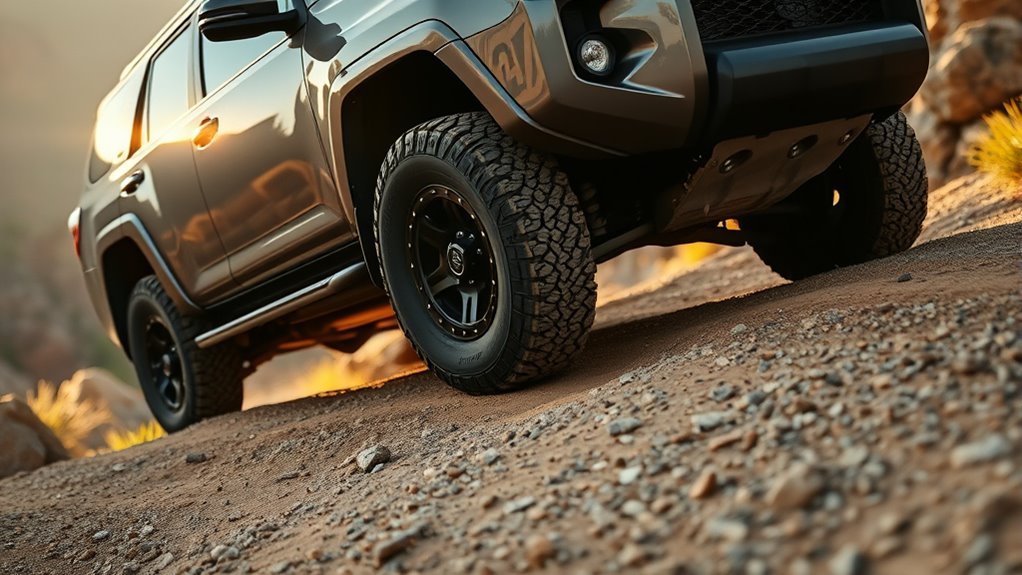
You’ll use Downhill Assist Control (DAC) to maintain a controlled low-speed descent by holding throttle and transmission inputs while using engine braking and ABS modulation. Engage it in 4Lo or 4Hi below about 15 mph; it cancels with brake or accelerator pressure. DAC works with TRAC and VSC to prevent wheelspin and manage yaw, letting you focus on line choice and conserving brake life. Keep consistent foot placement; continue for setup, limits, and troubleshooting.
Quick: How to Use DAC Now (Steps & Conditions)

Start by placing the 4Runner in low range (4Lo or 4Hi) and removing your foot from both the brake and gas pedals; DAC will engage automatically when you descend under about 15 mph, using engine braking to control speed and reduce brake heat. You’ll feel the system apply controlled deceleration—this is one of the primary DAC benefits: consistent, hands-off speed regulation on steep grades. Confirm engagement visually on the instrument cluster, then maintain a steady foot position; pressing brake or accelerator cancels DAC. If terrain or load demands a different pace, override by manually selecting a lower gear to regain direct engine control. Note operating conditions: DAC is optimized for low-speed descents and requires low-range selection; it’s not a substitute for driver judgment on mixed surfaces. Practice in safe environments to build confidence. Use DAC as a liberation tool—delegate monotony to the system so you can focus on line choice and situational awareness.
What DAC Does: Engine Braking for Steep Descents
When you engage Downhill Assist Control in low range and descend below about 15 mph, the system uses engine braking to hold a steady, controlled speed so you don’t rely solely on the service brakes and risk overheating; DAC modulates throttle and transmission inputs to maintain retarding force, and you can override it at any time by selecting a gear or pressing the accelerator or brake. You’ll feel the engine’s resistance take over primary deceleration on steep descents, preserving braking efficiency by reducing continuous frictional load on the brake system. DAC optimizes engine performance to supply predictable, sustained retardation rather than intermittent braking, which helps you maintain composure and freedom of movement on technical terrain. If you need more direct control, selecting a gear immediately cancels the automatic retarding profile; a brake tap triggers a transmission downshift independent of DAC. Tested in both 4Lo and 4Hi, the feature enhances downhill control so you can choose risk-managed routes without sacrificing momentum or safety.
How DAC Works With TRAC, VSC, and the Transmission
Although DAC controls descent speed independently of the transmission, it coordinates closely with TRAC and VSC to keep the vehicle stable on steep declines: you’ll rely on DAC functionality to hold a steady crawl using engine braking, while TRAC integration prevents wheelspin and VSC interaction maintains yaw and roll stability. You can select gears manually; DAC stays active below 15 mph. Tap the brake and the transmission coordination may downshift to add braking torque regardless of DAC state. TRAC can be momentarily disabled for recovery without cancelling DAC, letting you extract the vehicle while still controlling descent rate. Both DAC and TRAC feed inputs to VSC, forming an integrated stability loop that adapts to surface conditions and driver commands. This layered control preserves momentum freedom and safety, so you can descend deliberately while retaining tactical control over power distribution and braking.
| System | Role | Driver control |
|---|---|---|
| DAC | Descent control | Manual gears allowed |
| TRAC | Traction management | Can be disabled |
| VSC | Stability governance | Integrates inputs |
When DAC Helps : Real-World Strengths and Limits
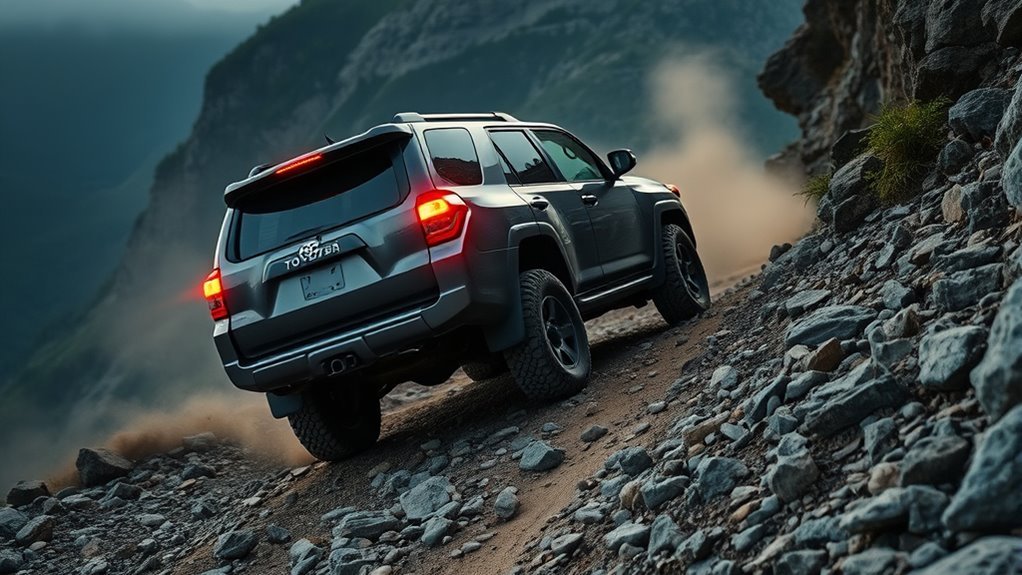
If you’re tackling steep, technical descents under about 15 mph, DAC gives reliable engine-braking control that prevents brake fade and lets you focus on line choice rather than continuous modulation of the brake pedal. In real world scenarios, DAC shines on sustained, steep runs where controlled, low-speed progress matters more than speed. You’ll notice it can sometimes only crawl—effectiveness depends on terrain challenges, tire grip, and vehicle setup. DAC works independently of the transmission, so you can select gears manually to optimize engine braking while the system holds speed. Activation requires you to release both brake and gas; pressing either pedal cancels DAC, so consistent foot placement is essential. Practice in 4Hi and 4Lo builds the muscle memory and confidence to exploit DAC’s strengths. Recognize limits: it’s a low-speed, brake-protection aid, not a substitute for proper line selection, momentum management, or driver judgment when terrain complexity exceeds system capability.
Troubleshooting, Overrides, and Safer Descent Tips
Because DAC disengages the moment you touch the brake or throttle, you should first verify pedal release and correct indicator illumination before assuming a fault; check that you’re in an appropriate drive mode (4Hi/4Lo) and that the system warning lamp isn’t signaling a sensor or ABS issue. If indicators and mode are correct, replicate the condition in a safe area to confirm behavior. Common issues reported in user experiences include unintended disengagement from pedal contact, sensor faults, and confusion over manual overrides.
| Symptom | Quick Action |
|---|---|
| DAC won’t engage | Confirm pedals released; select 4Hi/4Lo |
| DAC disengages | Check for brake/gas contact |
| Warning lamp on | Scan ABS/sensor codes |
| Need slower descent | Manually select lower gear |
You can override DAC by choosing a gear for engine braking; tapping the brakes forces a downshift to aid descent. Read the owner’s manual, practice in controlled terrain, and trust technical cues rather than habit—liberate your control with disciplined technique.
Frequently Asked Questions
Should Hill Descent Control Be on or Off?
You should turn Hill Descent Control on for steep, technical descents; it gives safety benefits by using engine braking. Consider terrain considerations and override manually if you want more control—practice first to gain confident liberation.
How Does Toyota Downhill Assist Work?
About 15% slower descent speeds: you engage DAC, it uses engine braking, ABS modulation and low-range gearing to control speed, improving off road performance and safety features, and you can override by braking or gear selection.
Should Downhill Brake Control Be on or Off?
You should turn downhill brake control on for steep descents; it enhances safety features and engine braking. You’ll release pedals to engage it, match driving conditions, and stay liberated by trusting controlled, technical assistance.
Conclusion
You’ll use Downhill Assist Control (DAC) when descending steep, rough slopes to maintain controlled, low-speed braking without constant pedal input. It’s precise: DAC holds speeds typically between 1–7 mph using engine braking and brake modulation, reducing driver workload. Notably, studies show steep-gradient incidents drop up to 40% when electronic hill-control systems are used. Know DAC’s limits—it won’t replace good judgment—and disable it for towing, deep water, or when wheelspin occurs.