Warming up your turbo engine in a Toyota Supra is essential for performance and longevity. Start by idling for 20-120 seconds, then drive gently for the first 2-3 miles to allow oil temperature to reach at least 70°C. Avoid high RPMs and turbo boost until the engine’s fully warmed up—preferably above 90°C. This guarantees ideal lubrication and reduces wear on critical components. Stick around, and you’ll discover more tips for maintaining your engine’s health!
The Importance of Warming Up Your Turbo Engine

When you start your Toyota Supra, warming up the turbo engine is essential for its longevity and performance. This process allows the engine oil to reach ideal temperature, ensuring proper lubrication and reducing wear on critical components. Idling for 20-120 seconds before you drive gently for the first 2-3 miles helps the oil temperature rise above 70°C, which is critical for turbo longevity. Engaging turbo boost before this temperature can lead to increased wear and potential damage. After spirited driving, remember to cool down by cruising gently for the last 2-4 miles. Monitoring the temperature gauge is important; driving at low temperatures can greatly decrease engine efficiency and accelerate wear, compromising your Supra’s performance.
Driving Techniques During Warm-Up
When warming up your turbo engine in a Toyota Supra, start with gentle acceleration to allow the oil to circulate properly. Keep your RPMs below 3,000 for the first few miles to avoid stressing the engine while it reaches ideal temperature. This careful approach helps guarantee long-term performance and reliability of your turbo setup.
Gentle Acceleration Recommendations
To guarantee your turbo engine warms up effectively, limit your acceleration to under 3,000 RPM during the initial miles of driving. This gentle approach for the first 2-3 miles allows the engine and oil to reach ideal temperatures gradually, promoting engine longevity. Avoid using turbo boost until the oil temperature hits at least 70°C, ideally waiting for it to exceed 90°C for full boost usage. Keep a close eye on the temperature gauge; gentle driving warms the engine more efficiently than idling. As the oil temperature stabilizes, you can gradually increase speed and engine load, ensuring performance enhancement while reducing wear. Embrace this mindful driving technique for a healthier, more powerful ride.
RPM Limitations While Driving
As you start your drive, keeping your RPMs below 3,000 is crucial for preserving engine health during the warm-up phase. Following these RPM guidelines guarantees ideal oil temperature and minimizes engine wear. For the first 5-10 minutes, accelerate gradually to allow both the engine and turbo to warm up properly, avoiding wide-open throttle (WOT). Cold oil lacks adequate lubrication, which can lead to damage. Monitor your temperature gauges closely; refrain from engaging turbo boost until the oil temperature exceeds 70°C. This gentle approach not only protects your turbo bearings but also contributes to overall engine longevity. By respecting these RPM limitations, you empower your Supra for a long and thriving life on the road.
How Long Should You Idle Before Driving?
When you start your Toyota Supra, give it a quick idle of 20-120 seconds to let the oil circulate properly. If it’s cold outside, extending that to 3-5 minutes guarantees the oil heats up adequately. Always keep an eye on the temperature gauge; begin driving gently once it’s above the C (cold) mark to keep your engine and oil warming effectively.
Idle Time Recommendations
Idle for 20 to 120 seconds after starting your Toyota Supra’s turbo engine to guarantee proper oil circulation before hitting the road. This idle time is essential for engine longevity, ensuring that oil reaches critical components. While you can drive gently after this brief wait, aim to let the oil temperature rise to 70°C before applying turbo boost. During the first 2-3 miles, keep your driving smooth to warm up the engine and oil efficiently. Some drivers recommend a gentle 5-10 minute drive to fully warm all fluids. Always keep an eye on the temperature gauge; you should only start driving once it climbs above the cold mark. This practice optimizes performance and prolongs your engine’s life.
Temperature Monitoring Importance
Monitoring your temperature gauge is vital for maintaining your Toyota Supra’s turbo engine health. Start by idling for 20-120 seconds, allowing oil to circulate and reduce engine wear. As you watch the gauge readings, wait until the needle moves above the cold mark. For ideal protection, aim for the oil temperature to reach around 70°C before you drive. This temperature awareness helps guarantee that cold, thick oil doesn’t compromise your engine’s performance. Once you hit the road, keep it gentle for the first 2-3 miles. This approach helps all fluids warm up efficiently, promoting longevity and overall performance. Remember, high RPMs and boost should wait until your engine’s properly warmed up.
Gentle Driving Practices
Before you hit the road, it’s important to give your Toyota Supra’s turbo engine a proper warm-up. This guarantees effective oil circulation and enhances engine longevity. Aim to idle for 20-120 seconds during a cold start, allowing the oil to flow before you drive. For the first 2-3 miles, practice gentle driving by keeping RPMs under 3,000 until the oil reaches about 70°C.
- Monitor the temperature gauge closely; start driving once the oil temperature surpasses the cold mark.
- Avoid using turbo boost during the initial warm-up period.
- Delay full boost usage until the oil temperature exceeds 90°C for peak turbo efficiency and performance enhancement.
These warm-up benefits are vital for your Supra’s health and performance.
How Oil and Water Temperature Affect Engine Performance
As your Toyota Supra warms up, understanding the interplay between oil and water temperatures becomes vital for engine performance. Oil viscosity is significant; it takes longer to reach ideal temperatures than water. Aim for at least 70°C (158°F) before pushing your engine, as cold oil can lead to increased wear and turbo damage. Gently driving for the first 5-10 minutes helps both oil and coolant stabilize, promoting proper lubrication. High RPMs should wait until water temperature hits 150°F; this indicates engine stability. Most importantly, avoid engaging turbo boost until oil temperature exceeds 90°C (194°F) to guarantee turbo longevity and protect your bearings from inadequate lubrication. Your engine’s health depends on respecting these temperature thresholds.
When Is It Safe to Engage Turbo Boost?
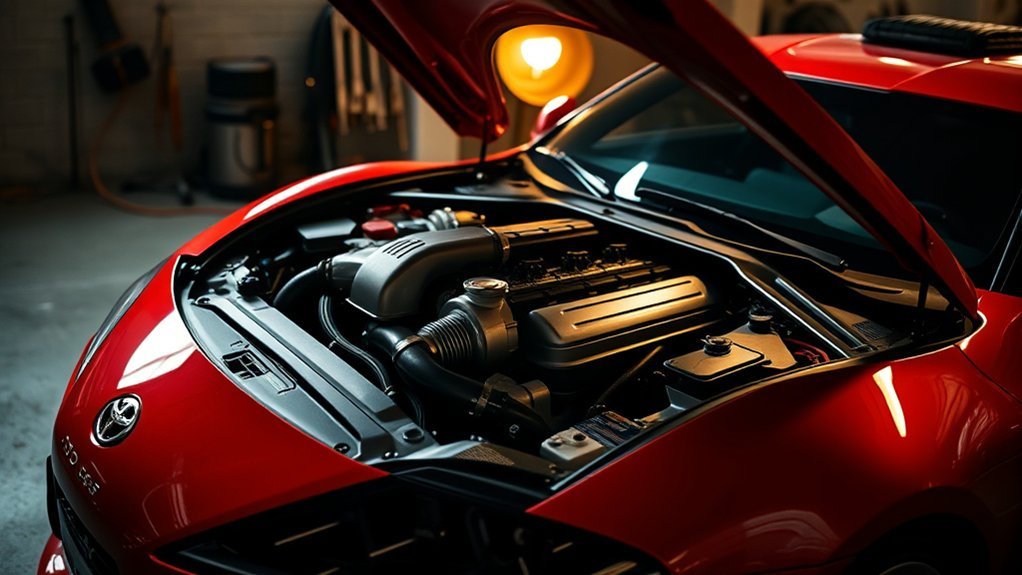
Engaging turbo boost in your Toyota Supra requires careful timing to guarantee engine health and performance. To ascertain ideal turbo boost timing, follow these guidelines:
- Wait until the oil temperature reaches at least 70°C for initial boost.
- Utilize full boost only after the oil temperature exceeds 90°C to shield turbo components from wear.
- Drive gently for 5-6 miles before introducing significant boost, allowing proper warm-up.
Monitoring the temperature gauge is essential. Avoid engaging turbo boost during the initial warm-up period since cold oil lacks adequate lubrication. By respecting these temperature thresholds, you’ll not only enhance your driving experience but also prolong the life of your turbocharged engine. Remember, patience pays off in performance!
How to Cool Down Your Engine After a Good Drive
After enjoying a spirited drive in your Toyota Supra, it’s important to give your engine the proper cooldown it deserves. Using effective cooling techniques can guarantee peak turbo maintenance and longevity. Here’s a simple routine to follow:
| Technique | Description | Benefits |
|---|---|---|
| Idling | Allow the engine to idle for 30-120 seconds. | Cools turbo, prevents oil cooking. |
| Gentle Driving | Drive without boost for 2-4 miles before stopping. | Gradually lowers temperatures. |
| Turbo Timer | Use a turbo timer to manage cooldown time. | Automatically idles after driving. |
Manufacturer Recommendations for Warm-Up and Cool Down
While it might be tempting to jump into high-rev driving, it’s crucial to follow manufacturer recommendations for warming up and cooling down your turbocharged Toyota Supra. Proper adherence to these guidelines enhances engine lifespan and supports performance enhancement.
- Start with 20-120 seconds of idling to guarantee oil circulation before driving.
- Drive gently for the first 2-3 miles to reach ideal oil temperature, ideally around 70°C.
- After spirited driving, idle for 30-120 seconds to prevent turbo oil cooking.
Following these steps minimizes engine wear and promotes overall vehicle health, particularly important for turbocharged models like yours. Embracing this approach not only protects your engine but also maximizes your driving experience.
Common Myths About Engine Idling and Warm-Up

Many drivers mistakenly believe that idling their turbo engine is the best way to warm it up, but this approach can actually do more harm than good. Gentle driving is often more effective for achieving ideal oil temperatures quickly. Extended idling can lead to engine wear due to poor oil circulation, especially in modern turbo engines.
Here’s a breakdown of common engine myths and turbo misconceptions:
| Myth | Truth | Impact on Engine |
|---|---|---|
| Idling warms the engine best | Gentle driving warms it faster | Reduced wear and better performance |
| Turbo timers eliminate need for warm-up | They only manage cooling | Misleading, can cause damage |
| Low RPMs during idling are safe | Driving gently is safer | Minimizes wear |
Key Indicators for Monitoring Engine Health
Understanding how to monitor your engine’s health is essential for maintaining performance and longevity, especially in a turbocharged Toyota Supra. Regular engine diagnostics can help you identify potential issues before they escalate. Here are key indicators to watch:
- Oil Temperature: Confirm it reaches 70°C before introducing turbo boost for ideal lubrication.
- Coolant Temperature: Aim for around 150°F to prevent excessive wear during demanding driving.
- Oil Pressure: A stable pressure shortly after starting indicates proper circulation; keep an eye on RPM, too—around 1,000 RPM at idle signals readiness for performance tuning.
Frequently Asked Questions
What Not to Do in a Turbo Car?
Don’t engage turbo boost too soon; it’ll hurt engine longevity. Avoid aggressive driving and high RPMs until oil warms. Monitor temperatures closely—neglecting these can lead to serious damage and costly repairs down the road.
Conclusion
In the world of turbo engines, patience is indeed a virtue. By warming up your Toyota Supra properly, you’re not just preserving engine health; you’re enhancing performance. Remember, a little time spent idling pays off in the long run. Keep an eye on oil and water temperatures, let your turbo take its time, and enjoy your drive. With these practices, you’ll guarantee your Supra runs smoothly for years to come.