Tire inflators and air compressors each serve unique purposes. Tire inflators are compact and powered by 12-volt outlets, making them perfect for quick tire inflation on the go. They typically cost less and are portable. Air compressors, however, are bulkier, designed for heavy-duty tasks, and can power tools. They provide continuous air supply but at a higher cost. To make the best choice for your needs, let’s explore more about their features and applications.
Understanding Tire Inflators: Key Features and Benefits

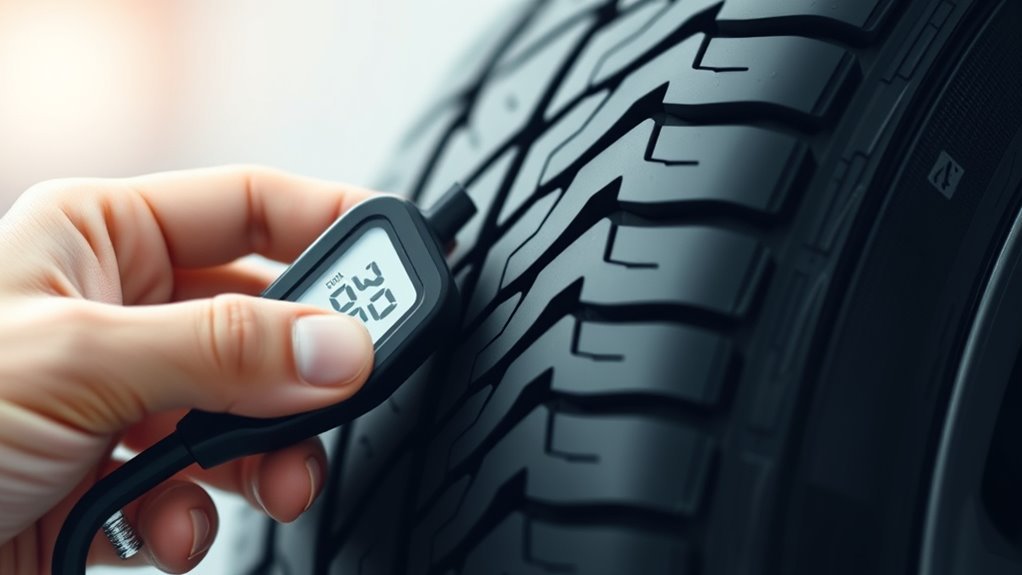
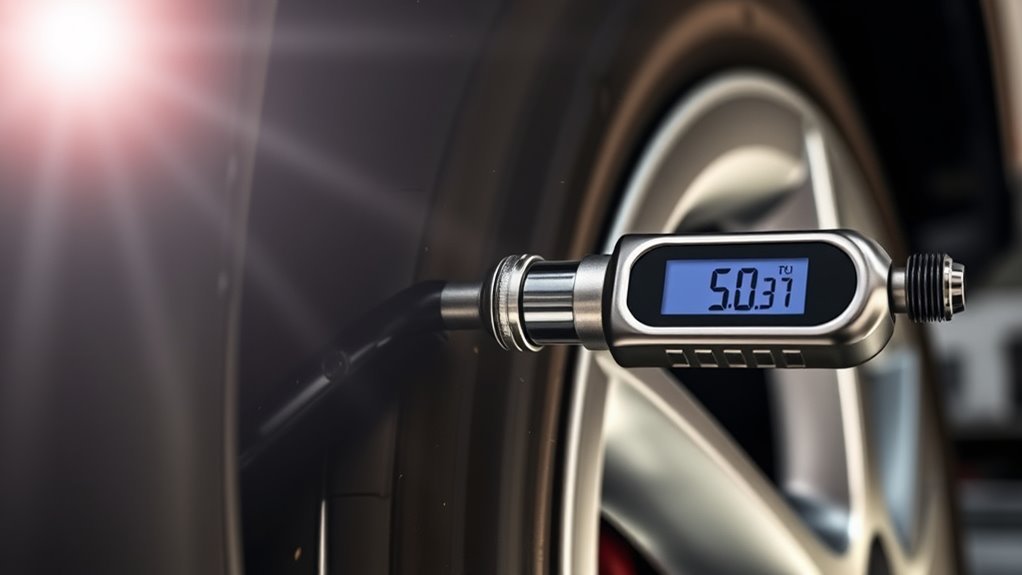
Tire inflators are essential tools for anyone who wants to maintain ideal tire pressure with ease. Unlike air compressors, these compact devices deliver air directly into your tires without needing a storage tank. Many tire inflators come equipped with automatic shut-off features, allowing you to set your desired pressure and walk away, ensuring excellent inflation without constant monitoring. A standout model, the Fanttik X8 Apex Tire Inflator, offers a digital display for accurate pressure readings and its lightweight design enhances portability. Operating on battery power or via your car’s 12-volt outlet, these inflators are perfect for emergencies. Plus, they’re generally more affordable than air compressors, making them a smart choice for vehicle owners focused on tire maintenance.
What Is an Air Compressor and How Does It Work?
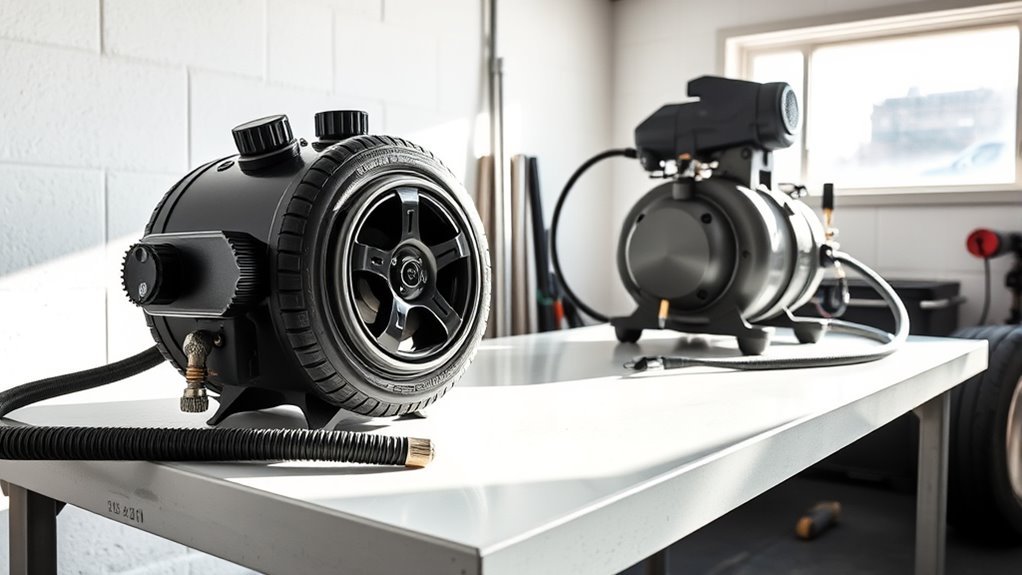
An air compressor is a powerful tool that generates compressed air by using a motor to drive a piston or rotary screw, effectively increasing air pressure. You’ll find various types of air compressors, each suited for different tasks, from heavy-duty applications to simple DIY projects. Understanding how these machines work and their applications can help you choose the right one for your needs.
Basic Functionality Explained
While many people associate air compressors primarily with tire inflation, their functionality extends far beyond that. Air compressors generate and store compressed air in a tank, making them ideal for various applications like powering pneumatic tools. They typically run on electric or gasoline power, delivering high airflow and pressure measured in CFM.
| Feature | Air Compressors |
|---|---|
| Power Source | Electric or Gasoline |
| Tank Capacity | Larger for continuous use |
| Duty Cycle | Indicates operational time |
| Noise Level | Typically louder than inflators |
Understanding the key differences enhances your ability to choose the right tool for your needs. Whether you’re inflating tires or tackling heavy-duty tasks, air compressors offer versatility that goes beyond simple inflation.
Types of Air Compressors
Air compressors come in various types, each designed to meet specific needs and applications. The most common types of air compressors include piston (reciprocating) compressors, rotary screw compressors, and diaphragm compressors. Piston compressors generate compressed air through a reciprocating motion, making them ideal for home and workshop use. Rotary screw compressors, on the other hand, provide continuous compressed air for industrial applications due to their efficient operation. Diaphragm compressors are perfect for low-volume, high-pressure tasks. All these types vary in power sources, with electric models being prevalent for residential use. When choosing an air compressor, consider the maximum PSI and CFM ratings, as these numbers indicate the compressor’s performance and suitability for your specific tasks.
Applications and Uses
Compressed air plays an essential role in a wide range of applications, from inflating tires to powering pneumatic tools. When you use an air compressor, it generates and stores compressed air, allowing you to tackle various tasks efficiently. Whether you’re inflating tires with precision or engaging in DIY projects, air compressors provide a continuous airflow essential for performance. The effectiveness of these machines is often measured in CFM, influencing their capacity for different jobs. With the capability to operate at higher PSI levels, air compressors excel in heavy-duty applications. You’ll find various types, such as direct and belt drive models, each tailored for specific needs, ensuring you have the right tool for every project.
Portability: Tire Inflators vs. Air Compressors
When it comes to portability, tire inflators offer a significant advantage over air compressors. Their compact size and lightweight design make them easy to stash in your trunk or glove compartment, while air compressors often need dedicated space due to their bulk. Additionally, tire inflators typically draw power from your car’s 12-volt outlet, enabling quick access during emergencies, whereas air compressors require a stationary power source.
Size And Weight
Tire inflators typically weigh between 1.6 to 6.5 pounds, making them incredibly portable and convenient for quick use. Their compact size means you can easily stash one in your car’s trunk or glove compartment, ensuring you’re always prepared for emergencies. In contrast, air compressors often exceed 20 pounds and are bulkier, requiring more dedicated storage space. Their larger size makes them less suited for on-the-go tasks and more appropriate for garages or workshops. While tire inflators offer unparalleled mobility, air compressors demand a stable power source, limiting their versatility. If you value portability and convenience, tire inflators are the clear winner in the size and weight category, allowing you to tackle tire issues wherever you are.
Power Source Options
Although air compressors deliver powerful performance, tire inflators often take the lead regarding power source versatility. Tire inflators typically plug into 12-volt car outlets or wall outlets, making them incredibly portable for travel or emergency situations. You can even find battery-powered options, allowing you to tackle outdoor activities without worrying about an external power source. On the other hand, air compressors usually need a constant power source, like a wall outlet or a gasoline engine, which can limit their mobility. While compressors may offer more power, their bulkiness and weight make them less convenient for on-the-go use. If you prioritize portability and ease of access, tire inflators are the clear winner in the power source department.
Maximum PSI Ratings: Which Inflates Better?
How do maximum PSI ratings influence your choice between a tire inflator and an air compressor? When it comes to inflating tires, understanding maximum PSI is vital. Tire inflators typically range from 30 to 150 PSI, making them perfect for standard passenger vehicles. For instance, the Fanttik X8 Apex Tire Inflator maxes out at 150 PSI, effectively handling most car tires. In contrast, air compressors can exceed 150 PSI, often reaching up to 250 PSI, which is necessary for heavy-duty tasks like inflating larger truck tires or powering pneumatic tools. So, when choosing between the two, assess your specific needs—higher PSI ratings offer versatility and power for more demanding applications, while tire inflators suffice for everyday use.
Versatility of Use: Air Tools and Beyond

When it comes to versatility, air compressors truly shine, thanks to their ability to power a wide range of air tools. Whether you’re tackling a DIY project or working in a professional shop, these machines can handle tasks like using nail guns, paint sprayers, or impact wrenches. With higher CFM ratings, air compressors deliver stronger airflow, allowing you to take on demanding jobs with ease. Plus, many models feature larger tanks for continuous use without constant refilling. You can also adjust pressure settings, making them suitable for everything from inflating tires to running pneumatic equipment. In contrast, tire inflators are convenient for quick inflation but lack the power and versatility needed for heavier tasks.
Cost Analysis: Tire Inflators vs. Air Compressors
When comparing costs, tire inflators typically range from $50 to $130, making them a budget-friendly choice for quick, basic inflation. In contrast, air compressors can set you back anywhere from $100 to $300, reflecting their added power and versatility for various tasks. If your primary need is tire inflation, investing in a tire inflator often offers better value, while air compressors might be worth the extra cost for those tackling more demanding projects.
Price Comparison Overview
While both tire inflators and air compressors serve the purpose of inflating tires, their price points reveal distinct advantages depending on your needs. Tire inflators are generally more budget-friendly, with models like the Fanttik X8 Apex priced around $129.97, often dropping to $89.97 during sales. This makes them an excellent choice for casual users focused solely on tire inflation. In contrast, air compressors, such as the CRAFTSMAN model, start at $184, reflecting their higher power and versatility for diverse tasks. If you’re seeking quick tire repairs without the bulk of extensive features, tire inflators offer superior cost efficiency. Ultimately, this price comparison emphasizes that tire inflators cater well to occasional users, while air compressors suit more frequent, heavy-duty needs.
Value for Specific Needs
How do you determine the best value between a tire inflator and an air compressor for your specific needs? If you’re primarily focused on quick tire inflation, tire inflators are your best bet. Models like the Fanttik X8 Apex range from $89.97 to $129.97, providing excellent value for casual users. However, if you need versatility and the capability to power air tools, investing in an air compressor, like the CRAFTSMAN model at around $184, might be worth it. While more expensive, air compressors deliver high efficiency for heavy-duty applications. Ultimately, tire inflators shine in portability and ease of use, whereas air compressors cater to DIY enthusiasts demanding robust performance and higher PSI capabilities. Choose based on your specific requirements.
User Experiences With Tire Inflators and Air Compressors
What makes tire inflators and air compressors stand out in user experiences? Tire inflators are praised for their convenience and portability, perfect for quick tire inflation on the go. Features like automatic shut-off, seen in models like the Fanttik X8 Apex, enhance usability without the worry of over-inflation. Conversely, air compressors shine in versatility, ideal for powering tools and inflating larger items, despite their noise levels. Users often express a preference for tire inflators during casual outings, while DIY enthusiasts lean toward air compressors for heavy-duty tasks.
| Feature | Tire Inflators | Air Compressors |
|---|---|---|
| Portability | Highly portable | Less portable |
| Noise Level | Quiet | Noisy |
| Versatility | Limited | Highly versatile |
| Use Case | Casual and emergency | DIY and heavy-duty tasks |
| Ease of Use | User-friendly | Requires some setup |
Ideal Use Cases: When to Choose Which Tool
Choosing between a tire inflator and an air compressor often hinges on the specific tasks you need to accomplish. If you’re looking for quick, convenient inflation during emergencies or road trips, tire inflators are your best bet. Their lightweight, portable design makes them perfect for vehicles and outdoor activities. On the other hand, if you frequently tackle heavy-duty projects, air compressors excel at inflating high PSI tires and powering pneumatic tools. For occasional needs—like inflating sports equipment—a tire inflator suffices without the bulk or cost of an air compressor. Ultimately, assess your routine: tire inflators offer affordability and convenience, while air compressors deliver sustained power and versatility for those demanding tasks.
Warranty and Longevity: What to Expect?

When considering the longevity and warranty of tire inflators versus air compressors, it’s essential to understand the differences in their construction and intended use. Tire inflators usually come with shorter warranties, often one to two years, while air compressors can offer warranties up to five years.
- Tire inflators are great for occasional needs.
- Air compressors support demanding tasks.
- Regular maintenance extends air compressor longevity.
- Higher investment often means better durability.
- Choosing wisely means peace of mind.
If you’re a serious user, investing in an air compressor is likely to serve you better in the long run. With proper care, it’ll last greatly longer, making it a wiser choice for those who value both warranty and longevity.
Making the Right Choice: Key Factors to Consider
Investing in the right tool for tire inflation can greatly impact your experience, especially with the differences between tire inflators and air compressors. Consider your primary use: if you need quick, portable inflation, tire inflators are perfect. However, if versatility is essential, air compressors can power tools and handle higher PSI levels for heavy-duty tires. Portability matters too; tire inflators are lightweight and fit easily in vehicles, while air compressors are bulkier and need dedicated space. Don’t forget the power source—tire inflators often plug into 12-volt outlets, making them handy during emergencies. Finally, price is significant; tire inflators are generally more affordable than air compressors, which can impact your budget. Choose wisely to meet your needs!
Frequently Asked Questions
Is an Inflator Better Than a Compressor for Tires?
For quick tire inflation, an inflator’s efficiency shines, especially in emergencies. However, if you need compressor versatility for various tasks, a compressor is your best bet. Choose based on your specific needs and usage.
Can a Tire Inflator Be Used as an Air Compressor?
A tire inflator can’t replace an air compressor. Think of it as a quick spark in a dark room—useful for tire inflation, but lacking the power and versatility for broader, demanding air compressor capabilities.
What Is the Difference Between an Air Pump and an Air Compressor?
An air pump focuses on direct inflation, typically lightweight with various air pump types available for specific needs. In contrast, a compressor features a storage tank, offering versatility for multiple high-pressure applications and heavy-duty tasks.
Is It Worth Buying a Tire Inflator?
Absolutely, buying a tire inflator is worth it. Imagine you’re on a road trip, and a quick tire maintenance becomes effortless. The convenience factor guarantees you’re always prepared, avoiding stress and delays on your journey.
Conclusion
In the battle of tire inflators versus air compressors, choosing the right tool can feel like a monumental task. Tire inflators are perfect for quick fixes, while air compressors release a world of versatility for various tasks. Consider your needs, whether it’s portability or power, and you’ll find the ideal solution. Remember, opting for the right tool can save you from the frustration of flat tires and make your life easier than winning the lottery!