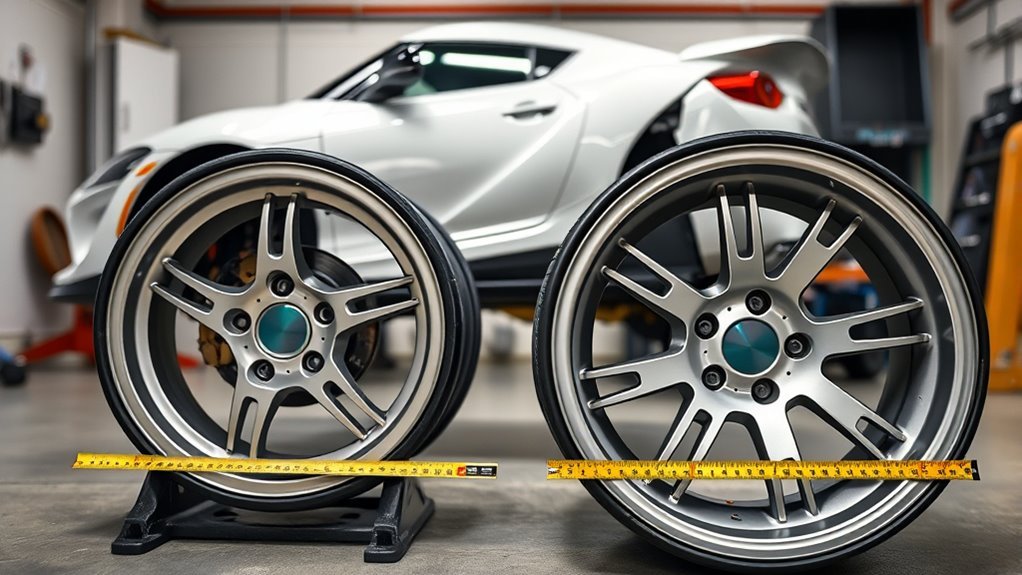
You need to know that offset is the millimeter distance from the wheel’s mounting face to its centerline, while backspacing is the inch distance from the rear lip to that mounting face; both control how far the tire sits inboard or outboard and clear brakes, control arms, and fenders. For Supras, start with 19×9.5″ at about +30mm (~5.8″ backspacing) front and +35–45mm rear for staggered 19×10″ setups; keep mock-fit and suspension travel checks for final clearance and more specifics follow.
Quick Answer for Supra Owners: Recommended Offsets & Backspace
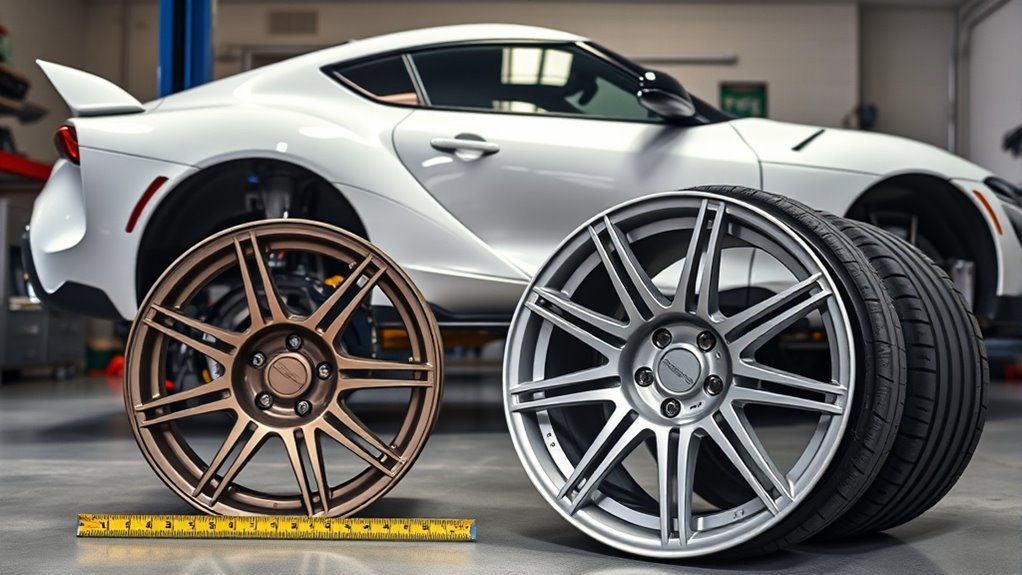
If you’re fitting aftermarket wheels on a Toyota Supra, target offsets and backspacing matter: you’ll aim front 19×9 wheels at +22 to +30 mm and staggered rears 19×10 at +35 to +45 mm to preserve suspension clearance and alignment. For a 19×9.5 with +30 mm offset expect roughly 5.8 inches backspacing; at +22 mm it’s nearer 5.6 inches. If you lower the car, prefer +24 to +34 mm on 19×9.5 to avoid rubbing while keeping a purposeful stance. Select values that balance wheel aesthetics and tire compatibility: wider tires demand more careful clearance planning. Use these ranges as controlled parameters to free your setup from compromise while maintaining safe, predictable fitment.
Offset vs Backspacing: Definitions and How to Measure Them
Understanding offset and backspacing starts with precise definitions: offset is the millimeter distance between the wheel’s mounting surface and its centerline (positive when the mounting face sits toward the wheel’s exterior, negative when it’s toward the hub), while backspacing is the inch measurement from the wheel’s rear lip to the mounting surface and indicates how far the wheel tucks inward relative to suspension and bodywork. You’ll measure offset by locating the centerline, then using a ruler or caliper to record the mounting surface distance in millimeters. For backspacing, mount the wheel flat, press a straight edge against the rear lip, and measure to the mounting surface in inches. Use accurate measuring tools to avoid fitment issues; precise metrics free you to choose stance and clearance confidently.
Factory Supra Specs: Common Offsets and Backspace by Generation
Having measured offset and backspacing, you can now compare how Toyota specified those dimensions across Supra generations to guide wheel selection. You’ll use factory wheel specifications and generation differences to choose wheels that free you from fitment guesswork. MK3: rear offset ~+35mm, front +30–+36mm; 17×9 rear backspacing ≈7.25″. MK4: rear +50mm, front +45mm; 18×10 rear backspacing ≈7.5″. MK5: front +45mm, rear +40mm, optimized for performance and aesthetics.
- You’ll appreciate MK3’s moderate offsets for classic balance.
- You’ll respect MK4’s larger offsets for aggressive, wider setups.
- You’ll value MK5’s tuned offsets for liberated handling.
Use these precise figures to avoid rubbing and guarantee compatible aftermarket choices.
How Offset and Backspace Affect Supra Fitment: Clearance, Stance, Brakes

While offset and backspacing might seem like interchangeable specs, they play distinct, measurable roles in Supra fitment: offset shifts the wheel centerline relative to the hub—moving the tire toward or away from the fender—whereas backspacing determines how much wheel face sits inward toward suspension and brakes. You’ll use offset to tune stance and visual impact; lower (more negative) offsets push wheels outward for a flush look, higher positive offsets recess wheels. Backspacing prevents clearance issues with control arms and brake calipers, critical when upgrading brakes. Combine both to preserve handling and freedom from rub.
| Parameter | Effect |
|---|---|
| Offset | Changes tire-to-fender position, stance |
| Backspacing | Controls wheel-to-suspension/brake clearance |
| Result | Balance visual impact and mechanical clearance |
Choosing 18–19 Wheels and Staggered Setups for Supra Fit and Look
Now that you’ve seen how offset and backspacing govern clearance and stance, choosing 18–19″ wheels and a staggered layout becomes a matter of matching target offsets, widths, and wheel backspacing to the Supra’s suspension geometry and fender limits. You’ll aim for an 18×9 front at +36mm and a 19×10 rear at +37mm for ideal balance between wheel aesthetics and performance enhancement. Consider alternatives like a 19×9.5 rear with +34mm when you want extra width without rubbing. Wider 19x10s may require fender rolling; factor that into installation plans.
- Embrace: wider rears for liberated traction and aggressive silhouette.
- Calculate: offsets/backspacing to preserve turning clearance and brake clearance.
- Execute: fender work only if analytics show interference.
Converting Offset and Backspace (+ Calculator Tips)
If you need to translate offsets into backspacing for precise Supra fitment, use a simple, unit-aware calculation so you avoid clearance errors: convert the offset from millimeters to inches, add it to half the wheel width (in inches), and the result is the backspacing. Apply Backspacing = (Wheel Width / 2) + Offset(mm→in). For example, an 8″ wheel with +30mm (~1.181″) yields ~5.181″ backspacing. Remember higher positive offset shifts the mounting surface outward relative to centerline, reducing available backspacing and altering suspension clearance. Use offset calculators to eliminate conversion mistakes and verify multiple wheel widths quickly. These backspacing tips empower you to make confident, liberated choices while maintaining tight tolerances and preventing interference with brakes or control arms.
Practical Fitment Checklist and When to Consult a Pro
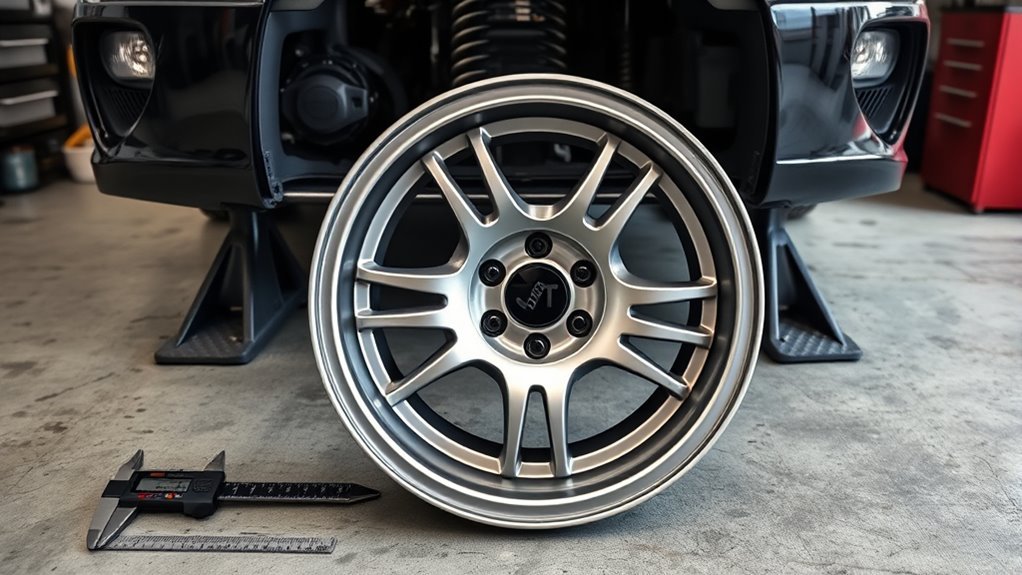
Having converted offsets into backspacing and checked calculated values against wheel widths, you’ll want a concise fitment checklist to verify clearance, handling, and safety before finalizing wheel choices. Measure actual offset/backspacing, wheel width, and tire + suspension clearances; confirm brake caliper and spoke design clearance to prevent fitment issues. Mock-fit with spacers or a template, then run “Will They Fit” visuals to judge stance and handling shifts. Verify recommended staggered offset range (+22 to +35) aligns with your targets and calculate backspacing per width.
- Physically test clearance and rubbing under full lock and suspension travel.
- Confirm wheel alignment tolerances and scrub radius impact on handling.
- Consult a pro if deviating from stock specs or uncertainty remains—safety depends on it.
Frequently Asked Questions
What Is the Offset on GR Supra Wheels?
Factory GR Supra offsets are typically +39 front and +50 rear; aftermarket 19×9.5 wheels often run +22 to +30. You’ll assess wheel design and fitment issues precisely to free your car’s stance and handling.
Conclusion
You’ve got the tools to dial in Supra wheel fitment precisely: offset and backspacing control clearance, stance, and brake contact, so measure twice and pick offsets that preserve brake and suspension room. When mixing 18–19 staggered wheels, use the conversion formula to compare specs and keep tire width within fender limits. Treat fitment like machining tolerance—small changes have big effects—and consult a pro for extreme offsets or suspension mods to avoid costly interference.