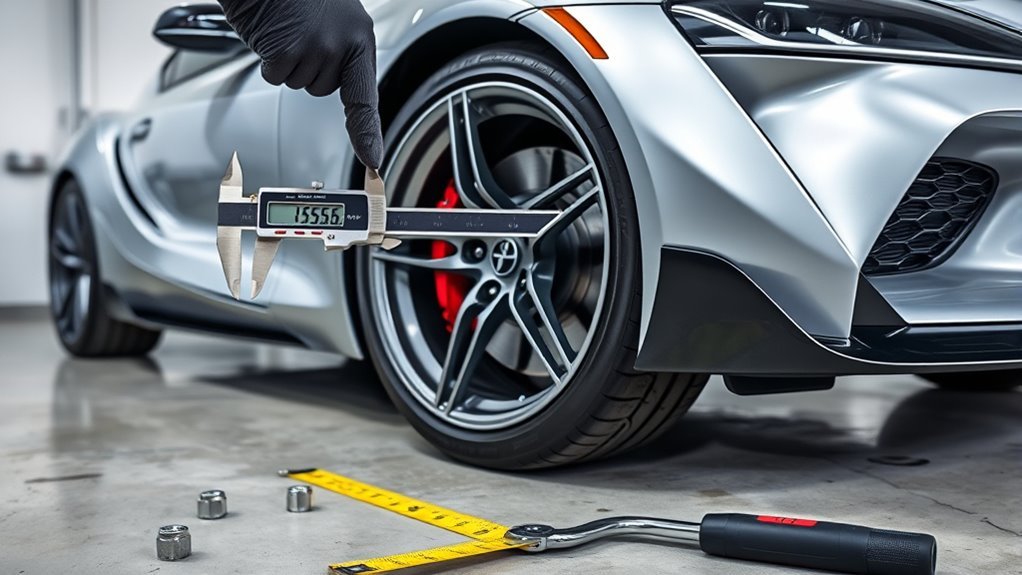
You’ll measure Supra wheel offset, backspacing, and clearances to fit wider rims and avoid caliper or fender rub by balancing offset, brake clearance, and tire width. Use +22–+40 as a safe offset band, drop ~10–20mm from stock for flush wider setups, and verify 66.5 mm center bore. Check 3–5 mm spoke-to-caliper, 10 mm inner-to-suspension, and 5–10 mm outer-to-fender gaps. Follow adjustment rules for lowering, spacers, and camber to finalize fitment—keep going to get specific sizes and fixes.
How This Guide Helps You Pick the Right Supra Wheel Offset
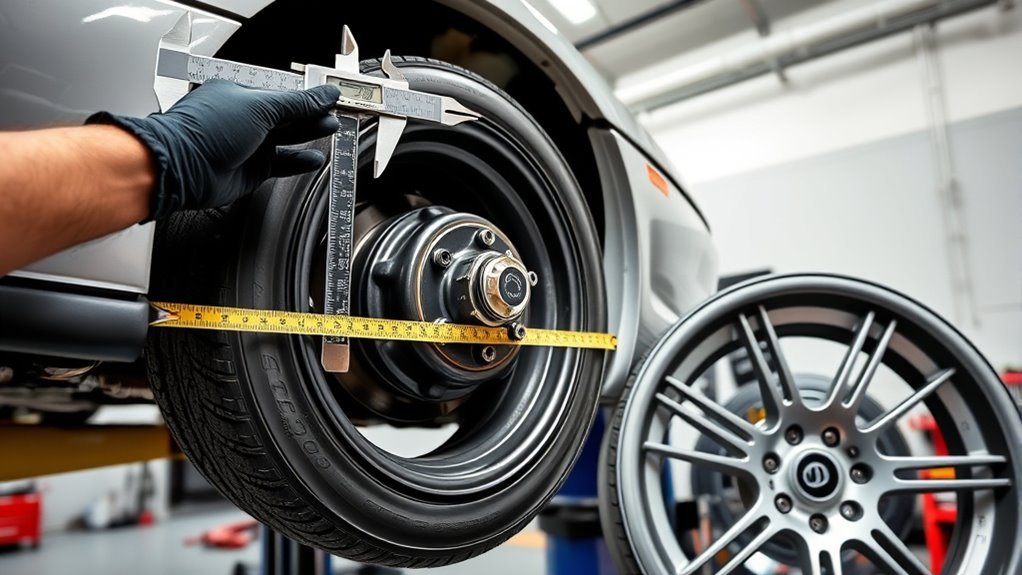
Choosing the right wheel offset is about balancing fitment, handling, and brake clearance, and this guide gives you the exact parameters and procedures to do that. You’ll use supplied ranges—typically +22 to +40 for the GR Supra—to narrow offset selection by wheel width and diameter. You’ll see how reducing stock offset 10–20mm alters track width and allows wider tires without rubbing. For staggered setups the guide recommends examples like +22 front, +30 rear to preserve balance and wheel aesthetics. You’ll measure brake caliper clearance and consult visualization tools such as “Will They Fit” to validate choices before buying. The process frees you to specify offsets confidently, ensuring functional fitment and the stance you want.
How Wheel Offset, Backspacing & Center Bore Affect Supra Fitment
You’ll need to balance offset, backspacing, and center bore to get correct wheel placement and avoid rubbing. Offset shifts the tire relative to the fender and directly affects tire clearance, while backspacing determines how close the wheel sits to suspension components. Verify the 66.5 mm center bore (or properly sized hub-centric rings) for the GR Supra to prevent vibration and guarantee proper load transfer.
Offset Vs Tire Clearance
While changing wheel offset might seem like a simple cosmetic choice, it directly alters how the rim and tire sit relative to your Supra’s fenders, brakes, and suspension; higher positive offset pushes the wheel inward toward calipers and struts, while lower offset moves it outward and risks fender rub. You’ll balance tire profile and wheel aesthetics against mechanical realities: offset controls lateral placement, backspacing aligns with suspension clearance, and the 66.5 mm center bore guarantees concentric mount to avoid vibration. Use visualization tools like “Will They Fit” before committing. Act to liberate your design choices, but prioritize measured fitment.
| Component | Effect |
|---|---|
| Offset | Lateral wheel position |
| Backspacing | Inner clearance |
| Center bore | Hub concentricity |
| Tire profile | Outer clearance |
Backspacing And Fitment
After balancing offset, tire profile, and center bore for aesthetic and mechanical goals, you should quantify backspacing to confirm true fitment. Measure backspacing from the mounting pad to the rear lip; GR Supra stock sits around 6–7 inches. Combine that with offset (stock +32/+40 mm) to predict wheel position relative to the hub and inner suspension. Reducing offset 10–20 mm can improve wheel aesthetics by creating a flush stance, but you’ll need to verify backspacing to avoid rubbing on control arms or fenders. The 66.5 mm center bore must seat correctly to prevent vibration that undermines handling dynamics. You’ll act deliberately: measure, simulate, and, if needed, modify fenders or select spacers to achieve liberated, precise fitment.
Center Bore Importance
Fitment starts at the hub: the GR Supra’s 66.5 mm center bore must seat precisely to eliminate runout and vibration that can compromise steering feel and wheel bearing life. You’ll prioritize hub alignment and center bore effects when selecting wheels; a loose bore or poor alignment transfers load to lugs, induces vibration, and shortens component life. Match center bore, offset, and backspacing to maintain clearance and intended stance.
- A correctly centered wheel keeps bearings calm and steering sharp.
- Excessive positive offset moves the tire inward; check brake and suspension clearance.
- Negative offset pushes wheels outward; monitor fender and track width limits.
- Using hub-centric rings restores hub alignment if bore is oversized.
Measure precisely, act decisively, gain freedom from compromise.
Measure Wheel and Brake Clearances on Your Supra (No Tools)
Anyone can quickly check wheel and brake clearances on your Supra without special tools by visually inspecting gaps and confirming key dimensions with a simple ruler or tape measure. You’ll verify caliper spacing and wheel alignment visually: guarantee 3–5 mm between caliper and spokes, 10 mm minimum from inner wheel edge to suspension, and 5–10 mm outer fender gap. Note backspacing from mounting surface to inner edge for offset adjustments; wider wheels need more clearance and may require fender rolling.
| Location | Minimum Gap | Purpose |
|---|---|---|
| Caliper to spoke | 3–5 mm | Prevent contact |
| Inner edge to suspension | 10 mm | Avoid interference |
| Outer edge to fender lip | 5–10 mm | Prevent rub during travel |
Pick the Right Offset for 18″, 19″, and 20″ Supras (Staggered vs. Square)
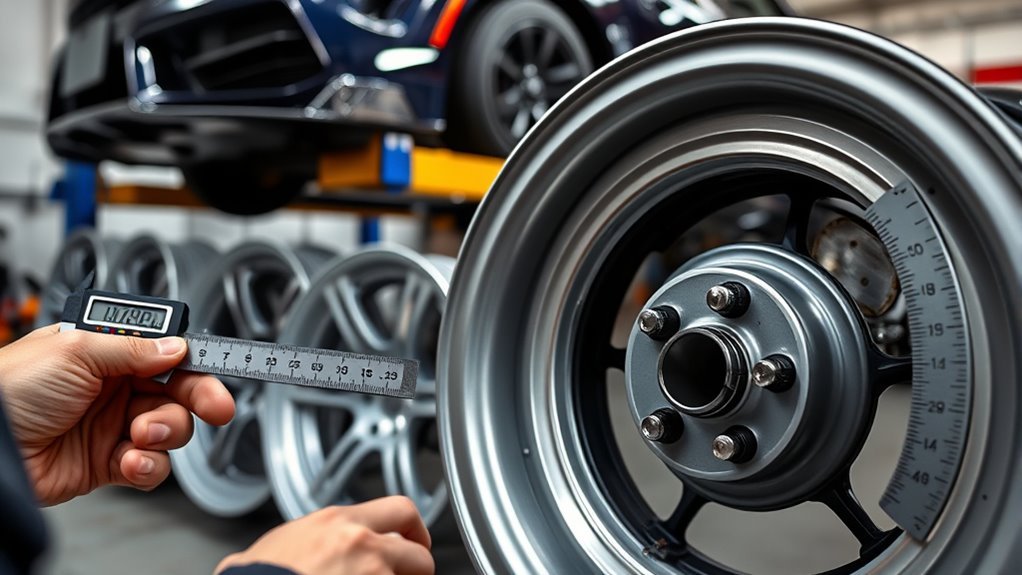
Now that you’ve checked caliper, inner, and fender clearances, pick wheel offsets that sit the tire flush without causing rub or brake interference. For 18″ Supras, consider a staggered setups baseline: 18×9.5 +22 front and 18×10.5 +30 rear for grip and stance. For 19″, target +22 to +35; a common staggered choice is 19×9.5 +22 front and 19×10.5 +35 rear. For 20″, use lower profile tires (30 series) with roughly 20×10 +28.5 front and 20×11 +32 rear. If you prefer interchangeability and track resilience, choose square setups like 19×9.5 +22 all around. Reduce offset ~10–20mm from stock (+32/+40) to achieve flush fitment while keeping brake clearance.
- Front clearance and caliper gap
- Rear track width and poke
- Tire sidewall support
- Rotation and serviceability
How Lowering, Spacers, and Camber Change Ideal Offset and Tire Size
When you lower your GR Supra, add spacers, or dial in more negative camber, the ideal offset and tire width shift together and must be recalculated to preserve clearance, fender coverage, and effective tire contact patch. With lowered suspension you often need 10–20mm less offset than stock (+32/+40), commonly targeting +22–+30 on 19s to avoid inner rub and maintain stance. Adding wheel spacers pushes the track outward and can require a more positive offset or thinner spacer to keep the wheel flush without contacting suspension. Increasing negative camber improves cornering but concentrates tire wear on the inner shoulder, so you’ll often move to wider tires (275–295) to regain contact patch. Reassess offset, camber, and tire size together for safe, liberated setups.
Real-World Supra Wheel and Tire Examples With Safe Offset Ranges
Although everyone’s build differs, these real-world examples show safe offset ranges you can reference when planning wheel and tire combos for a Supra. You’ll use offsets to control stance, manage wheel aesthetics, and minimize fitment challenges while retaining freedom to modify.
These real-world offset ranges help you dial stance, aesthetics, and fitment while leaving room for mods.
- 19×9.5 at +22 to +30 — flush fit on GR Supra; ideal if you want crisp wheel aesthetics without spacers.
- Staggered 19×10.5 at +30 to +35 — balanced front/rear look; keeps track width moderate.
- Wide 19×11 at +35 to +40 — aggressive stance; expect potential fender modification for full clearance.
- 18×10.7 (Titan 7 TS-5) at +38 or 20×10/+28.5 front and 20×11/+32 rear — lowers gap, often paired with lowering for liberated stance.
Troubleshooting Fitment: Rubbing, Caliper Contact, and Fixes
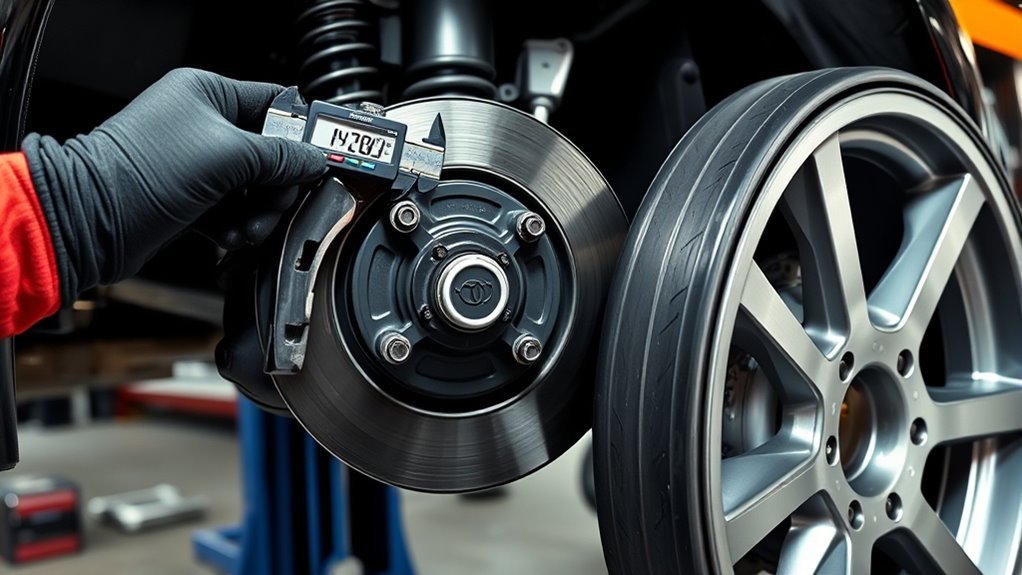
If you’re dealing with rubbing or caliper contact, start by verifying wheel offset and spoke clearance against the stock +32/+40 benchmarks—dropping offset 10–20mm can give a flush look without immediate interference, but check caliper clearance because some spoke designs expose rotors more and invite contact. Measure inner lip-to-strut and outer lip-to-fender under static and full lock conditions. Use adjustable coilovers to tune ride height; lower cautiously, monitor tire sidewall wear, and re-check clearances. For rubbing solutions, fit hub-centric spacers only after confirming overall offset stays within safe range; thin spacers can resolve strut/fender rub but may provoke caliper contact if excessive. Inspect regularly and prioritize hub centricity, torque, and spoke clearance to maintain safe, liberated fitment.
Frequently Asked Questions
What Is the Offset on the mk4 Supra Wheels?
MK4 Supra stock offsets are typically +25 to +50mm (front often +35, rear +45). You’ll evaluate wheel compatibility and performance impact when choosing aftermarket offsets (+10 to +30 for a wider, flush stance).
What Does +30 Offset Mean?
+30 means the wheel’s mounting face sits 30mm toward the vehicle from centerline. You’ll gain clearance but alter wheel alignment, tire compatibility and track width; you’ll need precise fitment to preserve handling and freedom on the road.
What Does +40 Offset Mean?
A +40 offset means the wheel’s mounting surface sits 40 mm toward the car from centerline, so you’ll gain OEM-like stance, improved tire clearance, and predictable wheel alignment, aiding compatibility with brakes and suspension.
What Does +35 Offset Mean?
A +35 offset means the wheel’s mounting surface sits 35 mm outward from centerline, so you’ll gain inward positioning that affects wheel alignment and tire compatibility, helping avoid rubbing while preserving brake and suspension clearance.
Conclusion
You’ve learned how offset, backspacing and center bore shape fitment—so pick parts with precision. Consider that 60% of Supra owners run staggered setups: that trend highlights front clearance limits versus rear track gains. Measure brake and wheel clearances with the method shown, then choose offsets within the safe ranges for 18″, 19″, or 20″ wheels. If you lower the car or add camber/spacers, recalculate offsets to avoid rubbing and caliper contact.