To guarantee your Toyota Camry is ready for emissions testing, start by turning off the check engine light and clearing any diagnostic codes. Maintain your fuel level between 35% and 85% and perform a cold soak overnight. Drive for about a week, mixing city and highway conditions, and complete an OBD-II drive cycle. Monitor the readiness status of your emissions systems, as unresolved issues can prevent passing. There’s more to explore about specific troubleshooting techniques and community support.
Essential Steps to Prepare Your Camry for Emissions Testing

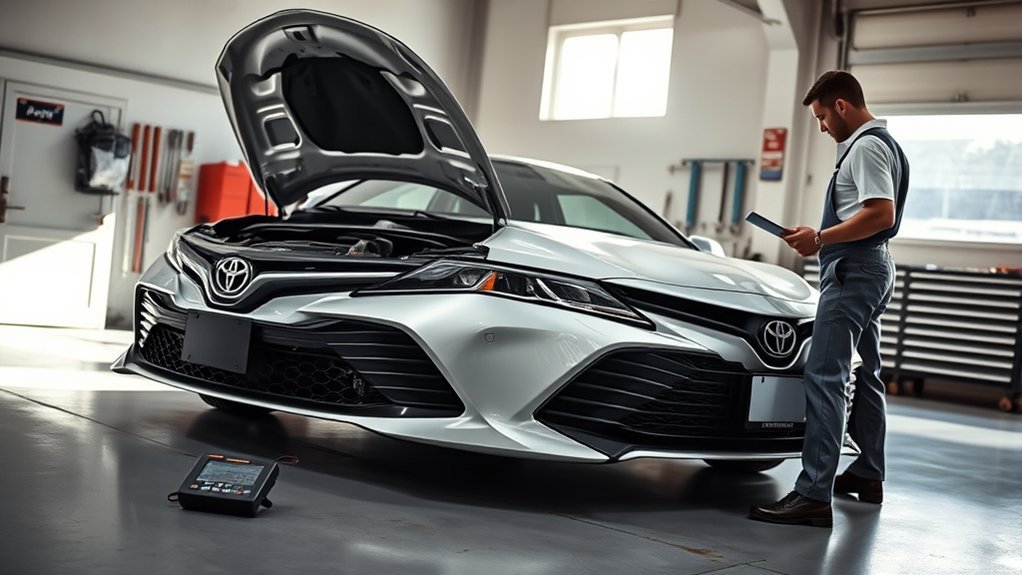
To prepare your Toyota Camry for emissions testing, start by verifying that the check engine light is off and any pending diagnostic codes are cleared. Using diagnostic tools, confirm that all systems are functioning correctly to meet emissions regulations. Next, maintain your fuel level between 35% and 85% to optimize monitor readiness during the drive cycle.
Perform a cold soak by allowing your vehicle to sit overnight for at least eight hours, guaranteeing accurate diagnostics upon startup. Follow the OBD-II drive cycle steps, including a cold start and driving at speeds of 40-55 mph, to effectively reset the monitors.
After this initial preparation, allow for approximately one week of normal driving conditions that include a mix of city and highway driving. This ensures all monitors are set and ready for inspection, giving you confidence that your Camry complies with emissions requirements.
Key Driving Conditions for Monitor Readiness
To guarantee your Camry’s emissions monitors are ready, you need to follow specific driving patterns. Start with a cold engine, allowing it to idle for at least 2.5 minutes before driving, and maintain speeds between 40-55 mph for effective diagnostics. Additionally, normal acceleration and deceleration are essential for monitor functionality during this process.
Normal Driving Patterns
Normal driving patterns play an essential role in ensuring emissions monitors reset effectively, as varied conditions like city and highway driving stimulate necessary diagnostic checks. To facilitate this process, consider the following reset strategies:
- Drive a minimum of 30 km over mixed conditions for ideal monitor performance.
- Keep your fuel level between 35% and 85% for accurate diagnostic readings.
- Avoid excessive idling and maintain consistent speeds to enhance readiness status.
Cold Start Requirements
Achieving ideal emissions monitor readiness hinges on specific cold start requirements. To begin, confirm your engine temperature is at ambient levels after being off for at least eight hours. Start with a cold start by idling the engine in drive for 2.5 minutes with the A/C on, allowing the onboard computer to perform essential diagnostics. Next, maintain a speed of 90 km/h (55 mph) for three minutes; this is vital for monitor readiness verification. After the initial phase, accelerate to 90-100 km/h (55-60 mph) for five minutes to complete diagnostic checks for various monitors. Following these precise driving patterns greatly impacts the successful reset of emission monitors, confirming your Toyota Camry meets emissions standards effectively.
Follow These OBD-II Drive Cycle Procedures
When you want to guarantee your Toyota Camry’s emissions system is functioning correctly, following the OBD-II drive cycle procedures is essential. This structured approach helps confirm your vehicle is ready for emissions testing without complications.
- Start with a cold engine, idling for at least nine minutes. Avoid using cruise control or air conditioning.
- Accelerate to 40-55 mph, maintaining that speed for at least five minutes to set the monitors.
- Gradually decelerate to under 20 mph without using brakes, come to a complete stop, and then idle in gear for one minute.
After completing the drive cycle, shift to park and idle for an additional minute. Finally, use an OBD-II reader to check for diagnostic trouble codes and confirm all monitors are set. This systematic method enhances your chance of passing emissions testing and confirms your Camry runs efficiently.
Understanding OBD-II Monitors for Emissions Testing
Understanding OBD-II monitors is crucial for making sure your Toyota Camry meets emissions standards. These monitors assess critical systems like the oxygen sensor, EGR, catalytic converter, and EVAP for readiness before testing. A status of “Ready” indicates all systems have passed diagnostics, while “Incomplete” means some haven’t yet been evaluated.
To achieve accurate monitor diagnostics, verify the check engine light (CEL) is off and clear any pending diagnostic trouble codes (DTC). Proper driving conditions—approximately 30 km of varied driving—are important for resetting monitors. Each monitor, including the EGR and catalyst, has specific procedures you should follow.
After your drive, using an OBD-II reader can help you check the monitor status. Ideally, you want zero codes, four complete monitors, and possibly two incomplete monitors for older models. Monitoring OBD II functionality is key to making sure your Camry’s emissions systems are functioning correctly before inspection.
Common Causes of Emissions Monitor Readiness Failures
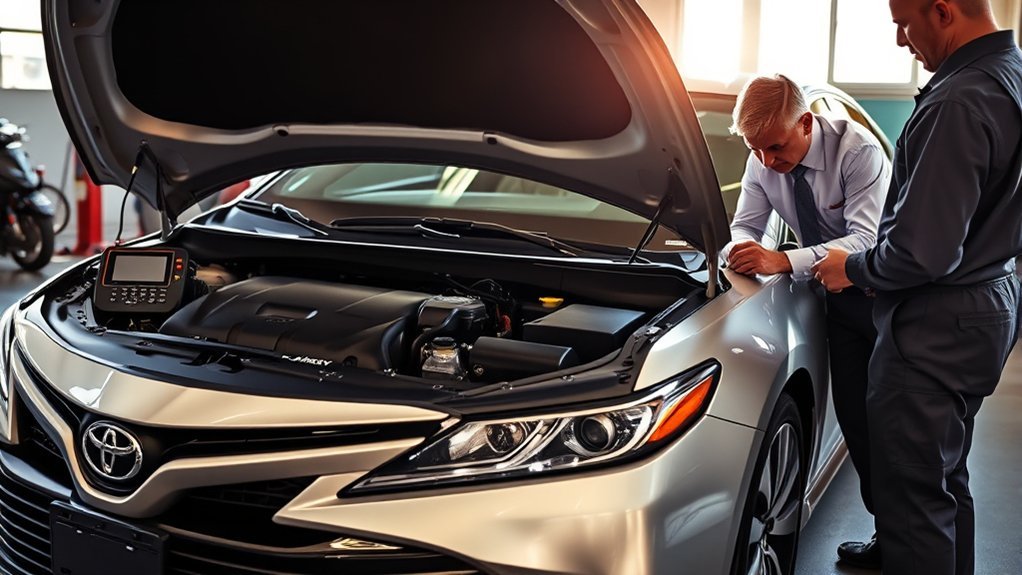
Several factors can lead to emissions monitor readiness failures in your Toyota Camry, and it’s essential to address them for successful testing. Understanding these causes can help you avoid inspection issues:
Emissions monitor readiness failures in your Toyota Camry can be addressed by understanding key causes to ensure successful testing.
- Catalytic converter issues: Even after replacing components like oxygen sensors, these problems can prevent monitors from resetting.
- Malfunction Indicator Light (MIL): The MIL must be off, and any stored diagnostic trouble codes need to be cleared before monitors can reset.
- Driving conditions: A mix of city and highway driving for about a week is often necessary for monitors to complete their reset process.
If your monitors remain unset after following drive cycle procedures, further investigation into related sensor issues or maintenance history may be needed to identify underlying problems. Addressing these common causes is vital in ensuring your emissions system is ready for inspection.
Quick Fixes for Unset Monitors After Drive Cycles
To resolve unset monitors after completing the drive cycles, start by ensuring the check engine light is off and that any pending codes are cleared. This initial step is essential for effective monitor troubleshooting. Maintain your fuel level between 35% and 85% during testing, as it greatly impacts the EVAP monitor’s readiness. Follow specific OBD-II drive cycle steps, including a cold start and appropriate acceleration and deceleration patterns, to maximize the chances of resetting unset monitors. If monitors remain unset, investigate potential issues, such as the catalytic converter or oxygen sensors, and perform necessary repairs. Additionally, engage in normal driving conditions for up to one week, incorporating a mix of city and highway driving. This approach enhances the effectiveness of your reset techniques, ensuring all monitors reset successfully and preparing your Toyota Camry for emissions inspection.
Importance of Regular Maintenance for Emissions Systems
Regular maintenance of your emissions systems is vital for keeping your Toyota Camry running efficiently and meeting environmental standards. By adhering to maintenance schedules and conducting routine emissions diagnostics, you can prevent costly repairs and guarantee peak performance. Here’s what you should focus on:
- Oxygen Sensors: Verify they function correctly; replacing them as needed can enhance fuel efficiency and emissions readiness.
- Catalytic Converter: A well-maintained unit is essential for minimizing harmful emissions. Neglect can lead to decreased performance and failure during inspections.
- Tire Pressure: Keeping tires at recommended levels improves gas mileage and reduces stress on emissions components, extending their lifespan.
Get Help From Community Resources for OBD-II Support
When facing OBD-II readiness challenges with your Toyota Camry, tapping into community resources can be invaluable. Engaging with the ToyotaNation forum lets you connect with other owners who share similar experiences. You’ll find OBD II troubleshooting tips specific to your model, enhancing your understanding of potential issues like oxygen sensor replacements. Community success stories often illustrate effective strategies for resetting monitors, essential for passing emissions testing.
Additionally, active participation in discussions provides real-time support tailored to your specific needs. You can even discover affiliate links offering products aimed at improving OBD-II readiness. These resources not only empower you with knowledge but also foster a sense of community, where shared insights lead to individual liberation from the complexities of vehicle maintenance. Leveraging these connections can greatly ease your path to achieving emissions compliance and maintaining your Camry’s performance.
Frequently Asked Questions
How Do I Get My Monitor Ready for Emissions?
To prepare for emissions testing, you’ll need to guarantee monitor readiness. Drive for at least 30 km, maintaining fuel levels between 35% and 85%, and follow the OBD-II drive cycle for ideal results.
How Long Is a Drive Cycle for Emissions?
A drive cycle for emissions testing typically spans about 30 kilometers. You’ll need to mix city and highway driving, ensuring your engine’s cold and the Malfunction Indicator Light is off for effective monitor readiness.
How Can I Turn off My Check Engine Light to Pass Emissions?
To turn off your check engine light and pass emissions testing, use an OBD-II scanner to clear codes, drive a mix of city and highway for a week, and guarantee proper fuel levels during the process.
Conclusion
Getting your Toyota Camry ready for emissions testing isn’t just important—it’s essential. By following the right drive cycles and monitoring your OBD-II systems, you can guarantee your vehicle meets standards without a hitch. Regular maintenance can’t be overstated; it’s the lifeblood of your emissions system. If you encounter issues, don’t hesitate to tap into community resources. With the right preparation, you’ll breeze through inspection like you’re gliding on air.