
When your Camry’s low tire pressure warning lights up, don’t ignore it. Check your tire pressure immediately using a reliable gauge; it’s best to do this when the tires are cold. If the pressure is low, inflate your tires to the recommended levels found on the tire placard. You might also need to reset the TPMS. If the warning persists, there could be other underlying issues. There’s more you can do to guarantee your tires stay in top shape.
Understanding the Importance of Tire Pressure for Safety and Performance

Understanding the importance of tire pressure is essential for your safety and your vehicle’s performance. Proper tire pressure directly impacts driving safety, as under-inflated tires can increase your stopping distance by up to 30% in emergencies. This means every second counts when it comes to avoiding accidents.
Moreover, maintaining the recommended tire pressure enhances fuel efficiency, potentially improving your gas mileage by up to 3%. You’ll save money while driving more responsibly. Under-inflated tires also wear out faster, which can lead to blowouts—something no driver wants to experience.
Check your tire pressure at least once a month and before long trips, as temperature changes can affect it. Properly inflated tires provide better traction and stability, especially in adverse weather, ensuring a safer driving experience. So, take control and keep your tires in check for peak performance on the road.
Common Symptoms of Low Tire Pressure
When your tire pressure drops, you’ll likely see a warning light pop up on your dashboard, signaling immediate attention is needed. You might also notice uneven tire wear and a dip in handling performance, making your drive feel less stable. Recognizing these symptoms early can help prevent more serious issues down the road.
Warning Light Activation
A sudden illumination of the low tire pressure warning light can be alarming, but it’s an essential signal that shouldn’t be ignored. When this light activates, it means tire pressure has dropped 25% below the manufacturer’s recommended levels. This drop can lead to noticeable symptoms like decreased vehicle handling, longer braking distances, and rougher rides due to reduced tire flexibility. You might also notice decreased fuel efficiency. To keep safe, follow these safety tips: regularly check your tire pressure, especially during temperature changes, and address any issues immediately. If the TPMS light blinks initially and then stays solid, it indicates a malfunction that needs attention. Don’t let low tire pressure compromise your driving experience!
Uneven Tire Wear
Uneven tire wear is a telltale sign of low tire pressure that can greatly impact your vehicle’s performance. When your tires are under-inflated, the edges wear down faster than the center, leading to bald spots and excessive scalloping. A mere 10% drop in pressure can reduce the tire’s lifespan by up to 25%. Regular tire rotation and checking tread depth are vital to prevent this uneven wear. Keep an eye on your tire pressure, as recommended on the tire placard, to maintain ideal performance and safety. If you notice any unusual wear patterns, it’s important to assess both your tire pressure and alignment. Taking these steps will help you enjoy a smoother, safer ride.
Poor Handling Performance
Low tire pressure can greatly impact your vehicle’s handling performance, making it feel less stable and responsive on the road. When your tires are under-inflated, you’ll notice a decrease in tire responsiveness, which affects your steering sensitivity. Maneuvering becomes trickier, increasing the risk of skidding or hydroplaning, particularly in wet conditions. You’ll also face longer stopping distances, which compromises your safety during emergencies. Additionally, uneven tire wear can lead to reduced grip while cornering, making your drive feel less secure. As a bonus, low pressure creates higher rolling resistance, decreasing your fuel efficiency. Keep your tires properly inflated to maintain ideal handling and guarantee a safer, more enjoyable driving experience.
How to Check Your Tire Pressure Accurately
When it comes to maintaining your Camry’s performance, checking tire pressure accurately is essential. Start by using a reliable tire pressure gauge, ensuring its gauge calibration is correct for precise readings. It’s best to measure tire pressure when the tires are cold; heat from driving can inflate the pressure and lead to misleading results.
Refer to the tire placard located on the driver’s side door jamb for the manufacturer’s recommended tire pressure specific to your Camry model. Make it a habit to check your tire pressure at least once a month and before long trips to optimize performance and safety.
For easier reading and enhanced accuracy, consider investing in a digital tire pressure gauge over older analog models. Keeping your tires properly inflated not only improves your vehicle’s handling but also contributes to better fuel efficiency.
How to Reset TPMS for 2007-2017 Camry Models

Resetting the TPMS on your 2007-2017 Toyota Camry is a straightforward process, especially after you’ve adjusted the tire pressure to the recommended levels. First, make certain your cold tire pressure aligns with the specifications on the tire placard. Next, turn the ignition key to the “arm” position, but don’t start the engine just yet to prepare for the reset procedure.
Locate the tire reset button near the glove box and press it until the TPMS indicator blinks slowly three times. Once you see the indicator blinking, wait a few minutes for the system to effectively record the new tire pressures. Regularly checking and maintaining proper tire pressure is essential for your vehicle’s safety and performance, so make it a habit to stay on top of your tire inflation. Taking these simple steps will guarantee your Camry stays in top shape!
Easily Reset Your TPMS for 2018-2024 Camrys
If you need to reset the TPMS on your 2018-2024 Toyota Camry, it’s a simple process that guarantees your tire pressures are accurately monitored. Start by ensuring all tires are inflated to the recommended pressure listed on the tire placard. Next, turn on your vehicle and navigate to the settings menu using the dashboard navigation button. Access the vehicle settings and select the TPWS (Tire Pressure Warning System) option. Hold the “okay” button on the set pressure option until the system confirms the reset is complete; this may take a few moments. Regular tire pressure maintenance is essential for safety and fuel efficiency, so don’t forget to reset the TPMS whenever you adjust your tire pressures. By utilizing these TPMS features, you can enjoy a smoother, safer driving experience while staying in control of your vehicle’s performance.
Troubleshooting Persistent TPMS Warning Light Issues
If your TPMS warning light keeps shining even after a reset, it’s time to investigate further. Start by checking tire pressures and inspecting the sensors for any malfunctions. Understanding the common causes and knowing how to reset the system can help you resolve these persistent issues quickly.
Common Causes Explained
While driving your Camry, seeing that persistent TPMS warning light can be frustrating, but understanding its common causes can help you troubleshoot effectively. Here are some typical reasons for that warning:
- Tire pressure may be considerably under-inflated, often below the recommended levels.
- Temperature effects can lower tire pressure; expect about a 1 PSI drop for every 10°F decrease.
- Sensor issues might keep the warning light on, even if tire pressures are correct, indicating potential sensor failure.
- Air loss from tire wear or damage, like punctures, can necessitate immediate attention to guarantee vehicle safety.
Regular maintenance tips, like checking tire pressure, are essential for safe driving conditions and peak vehicle performance.
Sensor Malfunction Solutions
After checking tire pressures and ruling out common causes, a persistent TPMS warning light may indicate a sensor malfunction. Start by inspecting each tire’s valve stem for damage, as a broken or corroded stem can trigger false readings. Using a TPMS diagnostic tool can help you read sensor data and identify specific issues.
| Issue Type | Possible Solution | Next Steps |
|---|---|---|
| Malfunctioning Sensor | Sensor Replacement | Contact a professional |
| Damaged Valve Stem | Replace Valve | Inspect all stems |
| Need for Recalibration | Recalibration Methods | Follow manufacturer’s guidelines |
| Persistent Light | Professional Inspection | Diagnose deeper issues |
Regular maintenance of tire pressure can prevent these sensor issues, ensuring your TPMS operates at peak performance.
Manual Reset Steps
Resetting your TPMS (Tire Pressure Monitoring System) can often resolve the persistent warning light issue you’re facing. Here’s how to perform a manual reset based on your Camry model:
- 2007-2017 Models: Press the tire set button near the glove box until the indicator blinks slowly three times.
- 2018-2024 Models: Navigate to vehicle settings, select TPWS, and hold “okay” on set pressure until the reset completes.
- Check Tire Pressures: Confirm all tires are inflated to the recommended levels on the placard.
- Inspect for Damage: Look for sidewall bulges or punctures that could cause slow leaks.
If the warning light persists, consider consulting a professional for further tire maintenance or sensor checks.
Essential Tips for Maintaining Proper Tire Pressure and TPMS
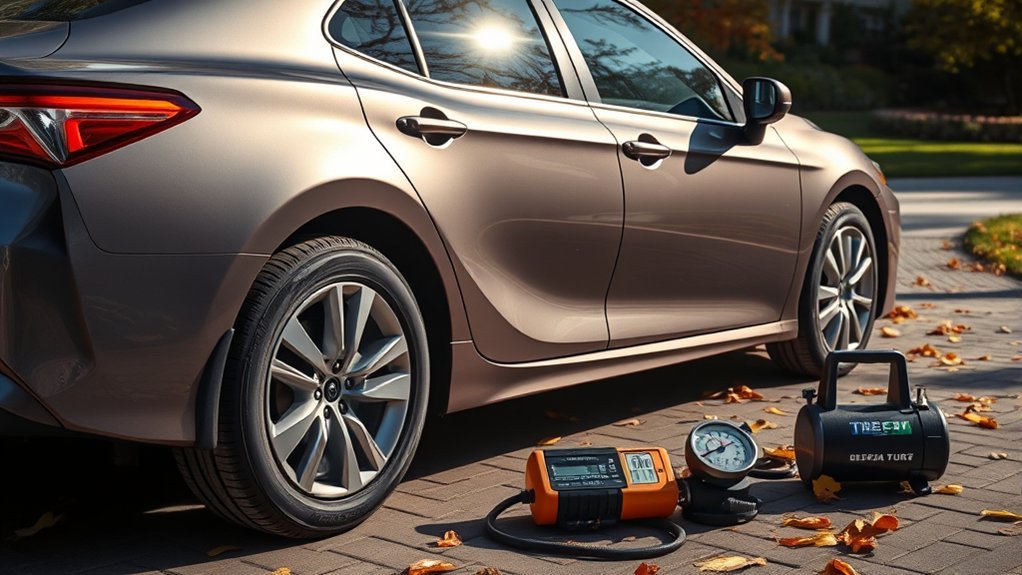
Maintaining proper tire pressure is vital not just for your vehicle’s performance but also for your safety on the road. Regularly check your tire pressure at least once a month and before long trips, confirming it matches the recommended levels on the tire placard, usually found on the driver’s side door jamb. Under-inflated tires can lead to decreased fuel efficiency, increased tire wear, and impaired handling, so this tire maintenance is essential.
When you see the Tire Pressure Monitoring System (TPMS) warning light, act immediately. Check and adjust the pressure to avoid potential blowouts. Remember, tires should be inflated when cold, as driving generates heat that can mask under-inflation issues. Familiarize yourself with your vehicle’s TPMS reset procedure to quickly address any warnings. By staying proactive, you keep your tires healthy and maintain safety on every journey.
Answers to Common TPMS Questions
Have you ever wondered how your TPMS really works? This essential TPMS technology alerts you when tire pressure drops below a safe threshold, typically around 25% less than recommended. Here are some common questions you might have:
Curious about how your TPMS functions? It alerts you when tire pressure falls significantly below safe levels, keeping you informed and safe.
- What triggers a low tire pressure warning? Changes in temperature, punctures, or normal air loss can all cause this.
- How often should I check my tire pressure? Ideally, do it monthly and before long trips.
- Why does the TPMS light blink? In many Camry models, it blinks for about a minute before staying on, indicating a potential issue.
- Do reset procedures differ by model? Yes, understanding specific reset steps for your Camry (2007-2024) is vital for effective TPMS maintenance.
Regular tire maintenance not only keeps your TPMS functioning but also enhances fuel efficiency and extends tire life. Stay proactive, and your Camry will thank you!
Frequently Asked Questions
How to Get Rid of Low Tire Pressure Light on Toyota Camry?
To get rid of the low tire pressure light on your Toyota Camry, guarantee proper tire maintenance by checking pressure regularly. If the light persists, reset the system using your model’s specific method to maintain safety.
Do I Need to Fix Low Tire Pressure Immediately?
Yes, you should fix low tire pressure immediately. Use pressure measurement tools to check levels regularly, and follow tire maintenance tips to enhance safety, improve performance, and save on repairs and fuel costs in the long run.
What Should I Do if I Get a Low Tire Pressure Warning?
When you get a low tire pressure warning light, pull over safely, check each tire’s pressure, inflate as needed, and reset the system. Regular checks keep your tires safe and your drive smooth.
Conclusion
In the journey of driving, your tires are the unsung heroes, keeping you grounded and safe. When that low tire pressure warning lights up, don’t ignore it—take action! Check your tire pressure, reset the TPMS, and keep those tires in top shape. Just like a well-tuned engine, proper tire care guarantees a smoother ride and longer life for your Camry. Stay vigilant, and remember: a little maintenance goes a long way in keeping your road adventures safe and enjoyable.



[…] TPMS light signals low tire pressure or a faulty sensor. Stop and inspect all four tires. Check the pressure with an accurate gauge and […]