You’ll torque your Toyota Tundra lug nuts to the OEM values: 97 ft‑lb (131 Nm) for 2007–2025 models and aluminum wheels, and 81 ft‑lb (110 Nm) for 1999–2006 models; steel spare wheels are often tightened higher. Use a calibrated torque wrench, finger‑start nuts, and a star pattern, tightening in stages and rechecking after the initial drive. Socket size is typically 13/16″ (22 mm). Continue for guidance on aftermarket wheels, tool care, and symptom checks.
Tundra Lug Nut Torque: The Quick Answer
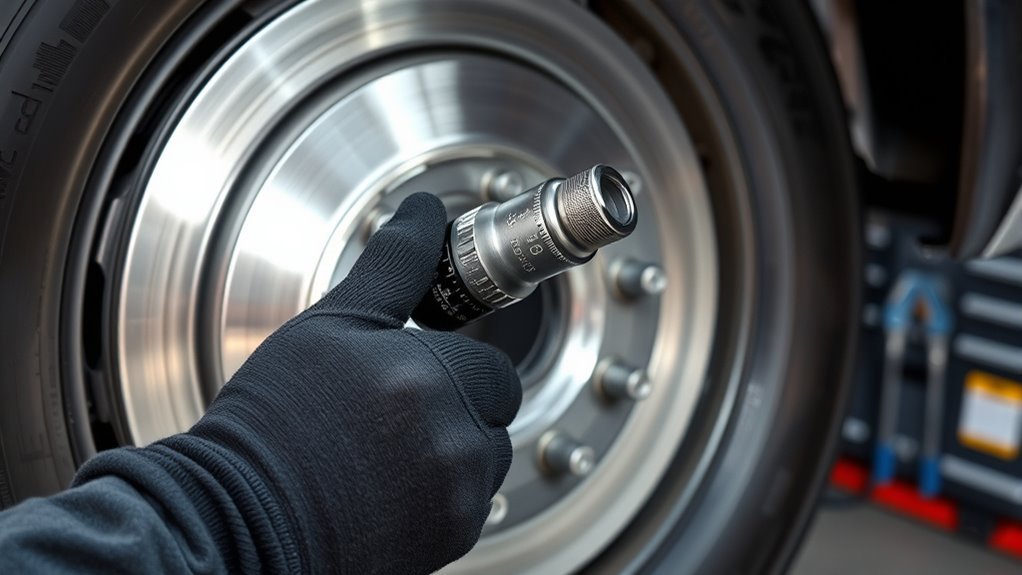
If your Tundra is a 2007–2025 model, torque each lug nut to 97 ft‑lb (131 Nm); for 1999–2006 models use 81 ft‑lb (110 Nm). You’ll use a 13/16″ (22 mm) socket on most stock hex lug nuts from 2000–2025, but verify fit before applying force. Regularly check torque to maintain wheel safety; under‑torque risks loosening, over‑torque can warp rotors and complicate removal. When you install wheels, seat lug nuts by hand, tighten in a star pattern, then finish with calibrated torque tools to the specified value. Aftermarket wheels may require different specs, so consult the wheel manufacturer and adjust your procedure. Proper torque guarantees a secure mechanical connection to the hub and prevents wheel‑related failure, giving you the control and freedom to drive without needless constraints. Use a quality torque wrench, follow manufacturer intervals, and document readings so your liberation from uncertainty is mechanical and repeatable.
Which Years/Wheels Use 97 Ft‑Lb Vs 81 Ft‑Lb?
Check the model year: 1999–2006 Tundras require 81 ft‑lb (110 Nm) for their lug nuts, while 2007–2025 models specify 97 ft‑lb (131 Nm) for aluminum wheels. The split reflects wheel material and design differences—older models used steel or different wheel seats, newer models use aluminum that needs the lower 97 ft‑lb setting. You should follow the year-specific spec and recheck torque after installation to avoid wheel or stud damage.
Model Years Breakdown
For Toyota Tundra owners, knowing which model years use 97 ft‑lb versus 81 ft‑lb is essential: consult model history and respect torque importance when servicing wheels. From 2007 through 2025, you’ll use 97 ft‑lb (131 Nm) on lug nuts — that’s the standard for newer hubs and wheel-stud designs. For models built between 1999 and 2006, you’ll apply 81 ft‑lb (110 Nm); older studs and wheels require the reduced spec. These torque values guarantee a secure mechanical connection to the hub and help prevent wheel-related failures. Don’t guess: over-tightening risks damage, under-tightening risks loosening. After installation or any tire service, check lug nut torque to preserve safety and maintain your vehicle’s functional freedom.
Wheel Type Differences
When you’re selecting or servicing Tundra wheels, match the torque to both the model year and wheel type: 2007–2025 models and most aluminum wheels use 97 ft‑lb (131 Nm), while 1999–2006 models require 81 ft‑lb (110 Nm), and steel spare wheels are tightened to 154 ft‑lb. You should apply these specs because wheel materials change the torque impact on studs and hubs; aluminum alloys clamp differently than steel and are more vulnerable to over‑torque. If you drive liberation through DIY maintenance, respect OEM values and check aftermarket wheel documentation—some non‑OEM wheels specify different torques. Use a calibrated torque wrench, tighten in a star pattern, and recheck after 50–100 miles. Correct torque prevents stud fatigue, wheel distortion, and safety failures.
How to Torque Tundra Lug Nuts Correctly?
Before you tighten anything, grab a calibrated torque wrench and set it to the correct spec for your Tundra—97 ft‑lb (131 Nm) for 2007–2025 models or 81 ft‑lb (110 Nm) for 1999–2006—unless the wheel maker specifies otherwise. Position the wheel, finger‑start lug nuts, and use a star or crisscross pattern to seat the wheel evenly. Tighten in stages: snug, half‑torque, then final torque. Recheck each lug once at full torque.
- Use a calibrated torque wrench and verify zero before use.
- Follow a star pattern to prevent warping and guarantee true seating.
- After initial drive, re‑torque lug nuts to confirm retention.
- When changing to aftermarket wheels, get the maker’s torque spec.
- Maintain tire rotation and confirm wheel alignment when servicing wheels.
You’re reclaiming control of safety: precise torque prevents loosening, avoids over‑stress, and sustains freedom on the road. Check torque every few months to stay liberated and secure.
Socket Size and Lug Nut Styles for Tundra
A 13/16″ (22 mm) socket fits the vast majority of 2000–2025 Tundra lug nuts, so grab that size first and confirm by visual inspection before proceeding. You’ll most often encounter hex-head lug nuts; some Tundras employ spline-drive or heptagon (7-sided) anti-theft designs, so verify engagement before applying torque. Use open-end lug nuts when running spacers—those let studs pass through—while close-end lug nuts fully cover studs to block debris and water, reducing corrosion risk.
Check lug nut materials: OEMs are steel; aftermarket options like BONOSS forged 50BV30 steel improve durability and appearance. Match socket geometry to the lug nut style to avoid rounding. Compare lug nut finishes—chrome, black oxide, or machined—to confirm corrosion resistance and compatibility with wheel clearances. You want reliable fastening and freedom from maintenance constraints; selecting the correct socket and lug nut type frees you from recurring repairs and seized hardware.
Aftermarket Wheels: Do Torque Values Change?
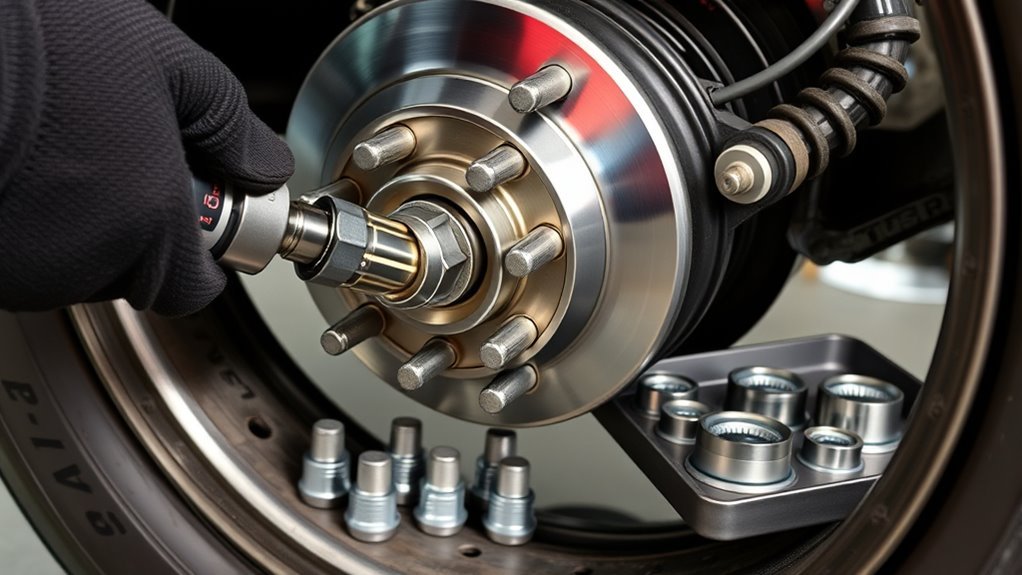
Wondering if aftermarket wheels change lug nut torque? You’ll find aftermarket variations can and do alter recommended values, so you must consult the wheel manufacturer. Torque importance stays central: wrong torque risks wheel loss or stud damage.
- Confirm manufacturer torque spec for each aftermarket wheel model.
- Note lug nut type (washered vs tapered seat) and match torque to seating style.
- Compare reported examples (e.g., 97 ft-lb for some aluminum wheels) to your spec, don’t assume.
- Treat wide online ranges (110–150 ft-lb) as starting points for verification, not final authority.
- Recheck torque after installation and after initial miles to verify safety and performance.
You’ll act with autonomy: validate specs, use a calibrated torque wrench, and prioritize safety over convenience. Aftermarket modifications free you to customize, but they demand disciplined verification. Follow precise values, document them, and re-torque as required to retain control and liberation on the road.
Signs of Over‑ or Under‑Torqued Lug Nuts
If you feel vibration, hear creaks, or notice a wheel rocking when lifted, you’re likely dealing with under‑torqued lug nuts—loose fasteners let the wheel shift and can lead to detachment. You’ll detect under‑torque as steering vibration, uneven tire wear, or audible clunks; the torque impact is immediate and dangerous. Over‑torque shows differently: warped rotors, difficulty removing nuts, and deformed aluminum wheels from excessive clamping force. Both conditions create clear safety concerns — under‑torque risks wheel loss, over‑torque complicates emergency repairs and damages components.
You want control and freedom; spotting these signs lets you act decisively. Know that OEM specs (97 ft‑lb for 2007–2025 Tundras, 81 ft‑lb for 1999–2006) exist to prevent these failures. Misunderstanding torque specs invites component damage or compromised driving liberty. Treat symptoms as warnings: vibrations, creaks, rotor warp, or seized nuts signal corrective action is required to restore safe, uncompromised operation.
Maintenance: Checking, Replacing, and Tool Tips
Check lug nut torque every few months using a calibrated torque wrench — 97 ft·lb (131 Nm) for 2007–2025 Tundras and 81 ft·lb (110 Nm) for 1999–2006 models — and confirm socket fit (13/16″ or 22 mm) before starting. Replace any swollen or corroded lug nuts immediately to prevent loosening or wheel loss, and get manufacturer torque specs if you fit aftermarket wheels. Don’t over-tighten; use the wrench to apply final torque and a breaker bar only for initial loosening.
Regular Torque Checks
Inspect your Tundra’s lug nut torque every few months and any time a wheel’s been removed or serviced to guarantee fasteners stay at spec. You’ll follow torque intervals and perform routine safety checks to prevent loose wheels. Use a calibrated torque wrench, set to OEM values (97 ft-lb/131 Nm for 2007–2025; 81 ft-lb/110 Nm for 1999–2006), and confirm aftermarket wheels’ specs before tightening. Avoid over-torquing to prevent warped rotors and stubborn fasteners. Log readings, recheck after short test drives, and act on deviations promptly. Your diligence frees you from roadside risk and mechanical uncertainty.
- Calibrated torque wrench only
- Verify OEM vs aftermarket specs
- Log torque readings and dates
- Recheck after 50–100 miles post-install
- Address deviations immediately
Replacing Swollen Nuts
When lug nuts show swelling, corrosion, or thread damage you should replace them immediately to prevent loosening and potential wheel loss; don’t attempt to reuse compromised fasteners. Inspect for swollen lugnut causes like rust buildup, electrochemical corrosion, or mechanical distortion. You’ll remove affected nuts, clean mating surfaces, and install new hardware that meets Toyota Tundra specifications. Replacement benefits include restored clamping integrity, consistent torque retention, and reduced wheel-separation risk. Choose corrosion-resistant options—BONOSS forged 50BV30 steel lug nuts are specified for longevity and resistance to environmental degradation. Regular inspection cadence prevents progressive failure. After replacement, you’ll torque each nut to the factory 97 ft-lb value to verify preload. This procedure preserves safety, performance, and your autonomy on the road.
Proper Tool Usage
Replacing damaged lug nuts restores clamping integrity, but you also need the right tools and habits to keep torque consistent. You’ll use a torque wrench for OEM aluminum wheels set to 97 ft-lb and avoid impact guns that risk over-tightening and damage. Check torque every few months and after any wheel change. When fitting aftermarket wheels, confirm their spec with the manufacturer. Document torque values and service actions to spot recurring issues and free yourself from guesswork. Maintain your torque wrench with periodic torque wrench calibration and store it properly.
- Use proper wrench techniques: steady, two-handed pull; no sudden snaps.
- Prefer a calibrated torque wrench over power tools.
- Verify aftermarket wheel specs before installation.
- Log torque checks and replacements.
- Recalibrate torque wrench per manufacturer schedule.
Frequently Asked Questions
What Is the Torque on the Lug Nuts on a Toyota Tundra?
For 2007–2025 Tundras you’ll torque OEM lug nuts to 97 ft‑lb (131 Nm); 1999–2006 models use 81 ft‑lb (110 Nm). You’ll perform lug nut maintenance with a calibrated torque wrench and follow wheel manufacturer guidance.
What Is the Torque Spec for Toyota Tundra Wheel Spacers?
You should torque Toyota Tundra wheel spacers to 97 ft·lb for OEM aluminum wheels. Picture a calibrated click as you tighten; during wheel spacer installation, use torque wrench usage precisely, then recheck regularly for safety.
Conclusion
Think of your Tundra as a precision-built bridge: those lug nuts are the bolts holding each span together. Torque them to the correct spec—97 ft‑lb or 81 ft‑lb depending on year/wheel—using the right socket and a calibrated torque wrench. Tighten in a star pattern and recheck after driving. Treat aftermarket wheels per manufacturer guidance. Regular inspections catch looseness or damage early, keeping your bridge safe and sound on every trip.