Toyota Tundra Fuel Tank Size: Complete Guide by Year and Trim
What’s in This Article
- What Fuel Tank Sizes Does the Toyota Tundra Have?
- Which Tundra Years and Trims Use Each Fuel Tank Size?
- How Much Usable Fuel Is in the Tank?
- Why Miles-to-Empty and Your Fuel Gauge Can Mislead
- Real-World Fill-Up Data: What Tundra Owners Actually Add
- How Driving Style and Payload Change Range and MPG
- Safe Fueling Practices to Protect the Pump and EVAP
- How to Test Your Truck’s True Tank Capacity and Gauge
- Aftermarket Long-Range Tanks and Replacement Options
Your Tundra’s fuel tank can change your whole trip plan. Depending on year and trim, your truck may have a 22.5-gallon, 26.4-gallon, 32.2-gallon, or 38-gallon factory tank. For 2026, Toyota made the 32.2-gallon tank standard on every Tundra grade. This guide explains each capacity, usable fuel, real-world range, safe fueling habits, and upgrade options.
Quick Answer
Toyota Tundra fuel tank size depends on model year and trim. For 2026, every Tundra grade uses a 32.2-gallon tank. From 2022 to 2025, SR and SR5 trims usually used a 22.5-gallon tank, while Limited, Platinum, 1794 Edition, TRD Pro, and Capstone trims used a 32.2-gallon tank. Second-generation trucks used a 26.4-gallon standard tank, with a 38-gallon tank on select 2016 to 2021 5.7L V8 trims and packages.
Key Takeaways
- Choose 2026 if you want a factory 32.2-gallon tank on every Tundra grade.
- Check 2022 to 2025 SR and SR5 trucks carefully because many use the smaller 22.5-gallon tank.
- Verify 2016 to 2021 trucks by trim, package, engine, and build sheet because 26.4-gallon and 38-gallon tanks both exist.
- Use real fill-up logs because rated tank size and usable fuel do not always match.
- Confirm emissions legality before buying an aftermarket tank, especially if your truck must meet California rules.
What Fuel Tank Sizes Does the Toyota Tundra Have?
Toyota Tundra fuel tank capacity varies by generation, year, trim, engine, and package. Third-generation models from 2022 to 2025 used two main sizes: 22.5 gallons on many SR and SR5 trucks, and 32.2 gallons on higher trims. Toyota changed that for 2026 by making the 32.2-gallon tank standard on every grade.
Second-generation models used a 26.4-gallon standard tank for many builds. Toyota added a 38-gallon tank for 2016 on Limited, Platinum, 1794 Edition, and TRD Pro models. Some 5.7L V8 SR5 trucks also received the 38-gallon tank through upgrade packages.
Your tank size affects your driving range, fuel-stop planning, and towing comfort. A 32.2-gallon tank at 20 miles per gallon (mpg) gives about 644 miles of simple math range. Real range will sit lower once you account for reserve fuel, terrain, speed, payload, and towing.
Pro tip: Check your window sticker, fuel-filler label, owner’s manual, or dealer build sheet before you trust a generic online spec.
[Products Worth Considering]
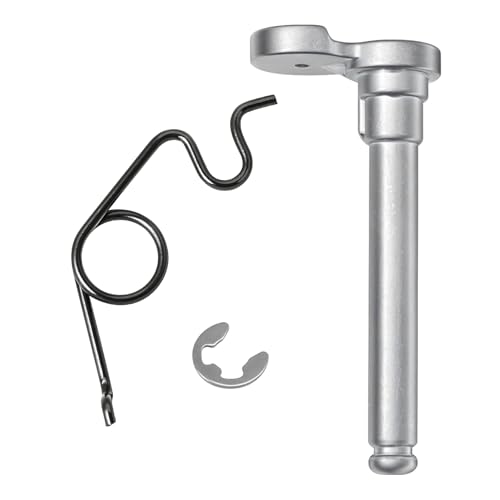
Gas door spring: Made of 304 stainless steel materials, also soaked the rust-proof zinc coating and oiled WD40 to prevent it from rusting

【COMPATIBLE WITH】Gas Cap, Fuel Cap Replaces 77300-06040, 7730006040, Gas Cap Is 100% Rigorously Tested Before Shipping. Check The Part Number To Confirm The Compatibility Before Purchase.

Which Tundra Years and Trims Use Each Fuel Tank Size?
The safest way to confirm your tank size starts with your model year. Toyota changed the 2026 lineup by giving every Tundra grade a 32.2-gallon tank. That matters because the 2022 to 2025 SR and SR5 trucks often used the smaller 22.5-gallon tank.
[Products Worth Considering]

Reference Numbers: 576-817; 770010C010; TO32A

[Vehicle Fitment]: Compatible with Toyota Tundra (Pickup) 2007 2008 2009 2010 2011 2012 2013 2014 2015 20016 2017 2018 2019 2020 --- It fits the model with Off-Road Package

[Vehicle Fitment]: Compatible with Toyota Tundra 3.4L 4.7L 2000 2001 2002 2003 2004 --- It fits the model with RWD(Rear Wheel Drive)
Model-Year and Trim Breakdown
For 2022 to 2025 models, SR and SR5 trims usually use a 22.5-gallon tank. Limited, Platinum, 1794 Edition, TRD Pro, and Capstone use a 32.2-gallon tank. Most i-FORCE MAX hybrid configurations also use the 32.2-gallon tank.
For 2026, Toyota says all Tundra models come with a 32.2-gallon tank. If you compare a 2025 SR5 against a 2026 SR5, this fuel tank change can make a big difference for towing and long highway trips.
Second-generation trucks need a closer look. The standard tank measures 26.4 gallons on many 2007 to 2021 builds. Toyota made the 38-gallon tank standard on several 2016 and newer premium trims, and it appeared in some SR5 upgrade packages with the 5.7L V8.
| Year Range | Trim Examples | Tank (gal) |
|---|---|---|
| 2007 to 2021 | Many 2nd-gen builds | 26.4 |
| 2016 to 2021 | Limited / Platinum / 1794 / TRD Pro / select SR5 5.7L packages | 38 |
| 2022 to 2025 | SR / many SR5 builds | 22.5 |
| 2022 to 2025 | Limited / Platinum / 1794 / TRD Pro / Capstone | 32.2 |
| 2026 | All grades | 32.2 |
How to Identify Your Tank Size
Start with the fuel-filler door and your owner’s manual. If you still need proof, ask a Toyota dealer to pull your vehicle identification number (VIN) build sheet. That sheet should show the exact factory configuration.
Confirm the number at the pump, too. Fill from a low but safe fuel level and record how many gallons you add. Repeat this for a few tanks, then compare your real fill pattern with the rated capacity.
How Much Usable Fuel Is in the Tank?
Rated capacity and usable fuel do not always match. Tank shape, baffling, pump placement, gauge calibration, and reserve strategy affect how much fuel you can use before refueling. You should treat the rated tank size as the maximum design capacity, not the amount you will add at every fill-up.
Usable Gallons vs. Rated Capacity
A Tundra with a 32.2-gallon tank may not take 32 gallons when the gauge reads low. Many drivers add less because the truck still keeps a fuel reserve. The nozzle may also shut off early because of vapor flow, pump angle, fuel temperature, or foaming near the end of the fill.
The reserve protects the pump and gives you a buffer. It also explains why you may see lower fill volumes than the rated size. Use your own records instead of one single fill-up to judge your truck.
Reserve Light and Reality
The low-fuel warning gives you a practical refuel signal, but it does not mean the tank has reached zero. Many Tundra owners report several gallons left after the warning appears. Your exact reserve can vary by year, trim, slope, and gauge calibration.
Do not try to prove the reserve by driving until the engine stalls. That test can overheat the pump and leave you stranded. A safer method uses the warning light, a prompt fill-up, and your trip odometer.
Why Miles-to-Empty and Your Fuel Gauge Can Mislead
Both the miles-to-empty display and the fuel gauge can change quickly when your driving conditions shift. You should use them as estimates, not exact measurements.
- Miles-to-empty changes fast: the truck calculates it from recent fuel use, so load, grade, speed, and towing can shift the number.
- Gauge readings can vary: tank shape and fuel movement can make the needle drop unevenly.
- The warning light helps: use it as a refuel reminder, not as permission to keep driving for hours.
- Fill volume can differ: nozzle shutoff, pump angle, and reserve fuel can change how much you add.
- Your log gives the best answer: miles driven divided by gallons added shows your real fuel economy.
Combine the low-fuel warning, manual tracking, and conservative refueling habits. That approach gives you a safer range plan than the dashboard estimate alone.
Real-World Fill-Up Data: What Tundra Owners Actually Add
Real-world fill-ups often look smaller than the rated tank capacity. For example, a driver with a 32.2-gallon Tundra may add about 25 to 28 gallons after the low-fuel warning, depending on how far they drove after the alert. That does not prove the truck has the wrong tank.
The gap usually points to reserve fuel, nozzle shutoff behavior, or gauge calibration. Sloped parking, high pump speed, and vapor recovery systems can also change fill volume. One fill-up tells you very little, but five fill-ups can show a clear pattern.
Track your gallons, odometer reading, driving conditions, and whether you towed or carried heavy cargo. Divide miles driven by gallons added to calculate your real mpg. Use that number to plan fuel stops with more confidence.
How Driving Style and Payload Change Range and MPG
Your actual range changes with how you drive and what you carry. Fuel economy shifts with acceleration, cruising speed, terrain, wind, tire choice, and payload. These factors often matter more than the tank size itself.
- Smooth acceleration and steady speeds help you use less fuel.
- Lower highway speeds can improve range on flat roads.
- Towing and heavy payloads increase engine load before a long trip.
- Lift kits and all-terrain tires can raise drag and rolling resistance.
- Trip logs help you spot patterns and plan better fuel stops.
Treat mpg as a number you can influence. Small habits, repeated every drive, can add real range over time.
Safe Fueling Practices to Protect the Pump and EVAP
Topping off after the nozzle clicks can push fuel into the evaporative emissions (EVAP) system. Running the tank very low too often can also stress the fuel pump. A few simple habits help you avoid both problems.
The in-tank pump uses fuel for cooling and lubrication. Try to refuel before the tank drops too low, especially before towing, off-road driving, or remote travel. Stop fueling when the pump nozzle clicks off the first time.
Use a steady fill pace near the end of the fill. This helps reduce splashback and vapor flow problems. If your truck starts to click off early on every fill, inspect the filler neck, vent line, and EVAP system.
Warning: Never run your Tundra until the engine stalls on purpose because the fuel pump needs gasoline for cooling and lubrication.
How to Test Your Truck’s True Tank Capacity and Gauge
You can find your truck’s practical fuel range without risky testing. Use the same pump style when possible, fill to the first click, and record each fill. This method gives you useful data without running the tank dry.
Follow these steps for a safe and consistent test:
- Fill the tank until the nozzle clicks off, then reset the trip odometer.
- Drive your normal routes until the low-fuel warning appears.
- Refuel soon after the warning instead of stretching the tank.
- Record the gallons added, miles driven, route type, and load.
- Divide miles driven by gallons added to calculate real mpg.
- Repeat the test during city driving, highway driving, and towing.
This data helps you plan fill-up stops and catch gauge problems early. If your fill pattern changes suddenly, inspect for leaks, sender faults, or venting issues.
Aftermarket Long-Range Tanks and Replacement Options
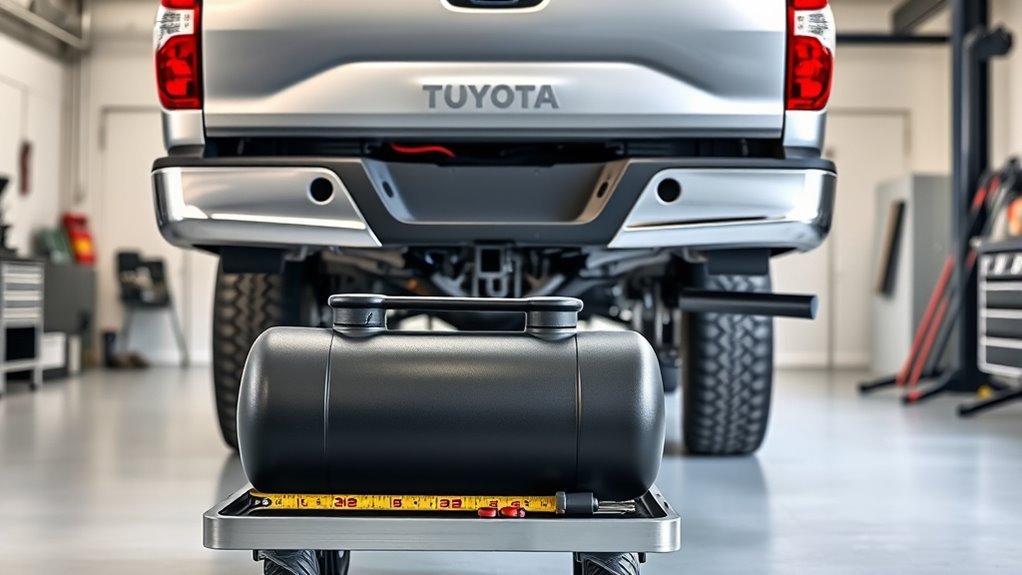
If the factory tank does not give you enough range, aftermarket replacement tanks may help some second-generation Tundra owners. Transfer Flow lists a 46-gallon replacement fuel tank for 2007 to 2021 Double Cab and CrewMax models. The company says the tank replaces the stock 26-gallon tank and fits short-bed and long-bed versions.
Long Range America also lists a 46-gallon replacement tank for 2007 to 2021 Tundras. Before you buy either option, confirm fitment with your exact cab, bed, engine, fuel type, and emissions requirements. Transfer Flow states that its system does not fit flex-fuel Tundras and only fits 2016 to 2021 models that came with the 26-gallon original equipment tank.
| Feature | Value | Impact |
|---|---|---|
| Capacity | 46 gal | Extended range |
| Compatibility | 2007 to 2021 Double Cab and CrewMax | Second-gen fitment only |
| Fuel type limits | Non-flex-fuel gasoline trucks | Fitment check required |
Emissions legality depends on the tank maker and product version. Transfer Flow says its 46-gallon system has California Air Resources Board (CARB) Executive Order approval and is 50-state legal. Confirm current legal status before purchase because fuel-system rules can change.
Use a qualified installer for any fuel tank replacement. After installation, confirm sender seating, strap torque, filler hose routing, vent hose routing, and leak-free operation before driving. Recheck the system after your first full tank.
[Products Worth Considering]

【Compatibility】For Toyota Tundra 2007-2014 V6 4.0L Petrol w/ Off-Road Package; For Toyota Tundra 2010-2019 V8 4.6L Petrol w/ Off-Road Package; For Toyota Tundra 2007-2010 V8 4.7L Petrol w/ Off-Road Package; For Toyota Tundra 2009-2019 V8 5.7L Flex w/ Off-Road Package; For Toyota Tundra 2007-2020 V8 5.7L Petrol w/ Off-Road Package.

Reference Numbers: 576-823; 770010C030; TO32B

FITMENT- Compatible with 2007 2008 2009 2010 2011 2012 2013 2014 2015 2016 2017 2018 2019 2020 for Toyota Tundra 4.0L 4.6L 4.7L 5.7L Warm Tips:It fits the model without Off Road Package
Frequently Asked Questions
How Many Gallons Is a Toyota Tundra Gas Tank?
It depends on your year and trim. The 2026 Tundra uses a 32.2-gallon tank on every grade. From 2022 to 2025, many SR and SR5 trucks used a 22.5-gallon tank, while higher trims used a 32.2-gallon tank. Many 2007 to 2021 trucks used a 26.4-gallon tank, with a 38-gallon tank on select 2016 to 2021 trims and packages.
How Far Can a Toyota Tundra Go on a Full Tank?
A 32.2-gallon Tundra at 20 mpg gives about 644 miles by simple math. Your real range will be lower because you should not plan to use every gallon. Towing, payload, tires, wind, terrain, and speed can cut range fast.
What Does the Tundra Low-Fuel Warning Light Mean?
The low-fuel warning means you should refuel soon. It does not mean the tank has reached zero. Use the warning as a safety cue, then track your gallons added to learn your truck’s real reserve behavior.
Can I Upgrade My Tundra to a Larger Fuel Tank?
Yes, some 2007 to 2021 Tundras can use a 46-gallon aftermarket replacement tank. You must confirm cab, bed, fuel type, original tank size, and emissions legality before you buy. As of May 2026, common 46-gallon replacement options target second-generation trucks, not 2022 and newer Tundras.
How Do I Tell If My 2026 Tundra Has the Large Tank?
Toyota announced the 32.2-gallon tank as standard on all 2026 Tundra grades. You should still confirm your exact truck through the window sticker, owner’s manual, or dealer build sheet. A fill-up log can also help you confirm how much fuel you use in real driving.
Conclusion
Your Tundra’s tank size shapes every long trip, tow route, and fuel stop. If you own a 2026 model, you get the 32.2-gallon tank across the lineup. If you own a 2022 to 2025 or second-generation truck, verify your exact tank before you plan range. Track a few fill-ups, refuel before the tank gets too low, and use your real mpg to plan every long drive with more confidence.
References
- 2026 Toyota Tundra: A Bold New Chapter in Full-Size Pickup Excellence, Toyota USA Newsroom, 2025
- Toyota Tundra: Big, Brawny and Brainy All-American Full-Size Pickup, Toyota USA Newsroom, 2015
- Toyota Tundra Specifications and Trim Levels, Toyota Motor North America
- Toyota Tundra Fuel Economy Ratings, U.S. Department of Energy / EPA, fueleconomy.gov
- 46 Gallon Toyota Tundra Midship Replacement Fuel Tank, Transfer Flow, 2026
- Long Range Automotive Fuel Tank Products for Toyota Tundra, Long Range America