You can extend your Toyota Tundra’s engine life by following a strict maintenance regimen: change oil every 5,000–10,000 miles with Toyota-approved 5W-30, replace air and spark plugs at recommended intervals, and service transmission and coolant around 60k–100k miles. Inspect timing components and valve clearances, fit a transmission cooler and high-capacity radiator for towing, and prevent rust with regular undercarriage cleaning and anti-corrosion treatments. Follow proper torque and driving habits, and keep detailed records to learn more.
Essential Tundra Maintenance Schedule (What to Do and When)
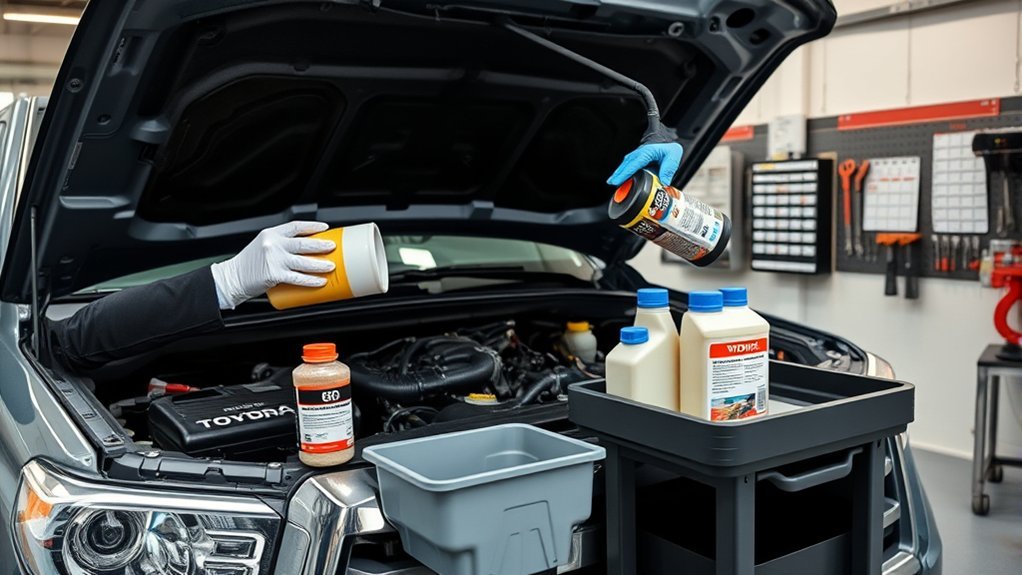
When you follow a strict maintenance schedule, your Tundra’s engine will stay cooler, cleaner, and more reliable over the long run. You’ll change engine oil every 5,000–10,000 miles to preserve internal tolerances and longevity, and you’ll replace air filters every 15,000–30,000 miles to maintain airflow and combustion efficiency. Inspect spark plugs around 100,000 miles to restore ideal ignition and fuel economy. Monitor transmission fluid between 60,000–100,000 miles to prevent overheating and guarantee crisp shifting. Check coolant condition and replace at roughly 100,000 miles to avoid thermal stress and head gasket failures.
Pair these interval tasks with routine tire rotation to balance load distribution and reduce drivetrain strain. Use approved fuel additives selectively to clean injectors and stabilize fuel, but don’t rely on them as a substitute for scheduled servicing. You’ll log dates and miles, act on deviations, and treat the schedule as a liberation tool—precision maintenance frees you from unexpected failure and downtime.
Oils & Fluids: What to Use and When to Change Them
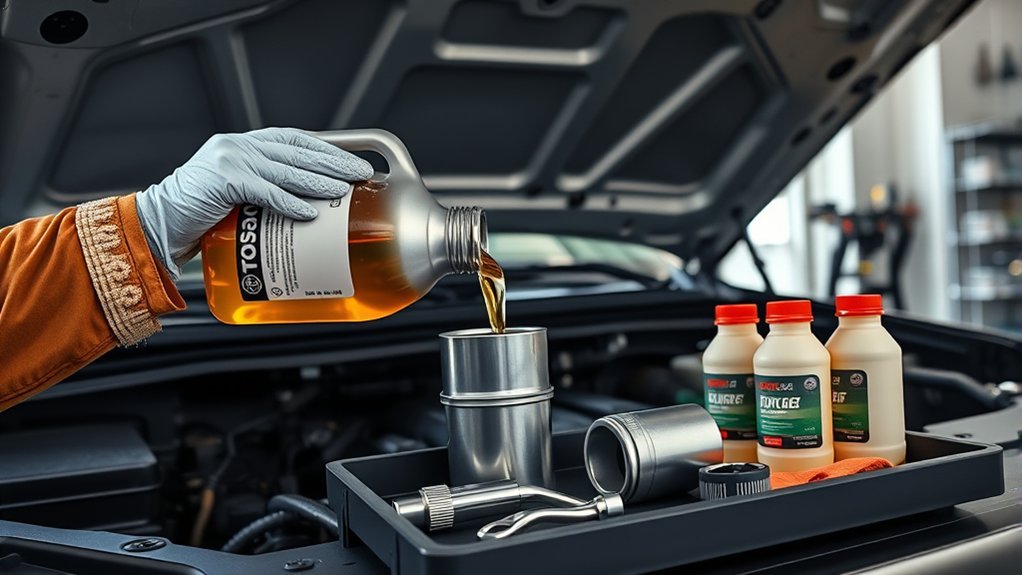
You’ve seen how a strict service rhythm keeps the Tundra running cooler and more reliably; now focus on the specific oils and fluids that make that possible. Use Toyota-approved 5W-30 engine oil to balance protection and cold-start flow — oil viscosity matters for wear control and fuel efficiency. Change engine oil every 5,000–10,000 miles based on duty cycle; don’t delay.
For the transmission, inspect and replace fluid every 60,000–100,000 miles with Toyota transmission fluid to preserve shift quality and prevent overheating. Confirm fluid compatibility when mixing or replacing; mismatched fluids erode seals and degrade performance.
Swap coolant with Toyota pink coolant at 100,000 miles to prevent corrosion and overheating. For the differential, use a quality synthetic like Lucas Full Synthetic 75W-90 and inspect/change as needed to protect gears and bearings.
Follow these specifications methodically; freedom on the road starts with disciplined fluid choices and timely changes.
Critical Service Intervals: Timing Belt, Spark Plugs, and Valves
Because these service items directly affect timing and combustion, you should treat the timing belt, spark plugs, and valve clearances as mission-critical maintenance. Replace the timing belt every 90,000 miles to avert catastrophic engine failure; don’t defer it. Change spark plugs near 100,000 miles to restore combustion efficiency, prevent misfires, and recover fuel economy. Inspect and perform valve adjustments where applicable to maintain correct valve timing and seating; this preserves compression and reduces wear.
Follow the manufacturer’s schedule strictly — consistent adherence is maintenance importance in practice. Keep records, set reminders, and use quality parts to assert control over longevity. Skipping these intervals invites costly repairs and shortens engine life, limiting your freedom to travel reliably. Treat each interval as a non-negotiable checkpoint: timing belt replacement, spark plug swap, valve adjustments. That disciplined approach yields predictable performance, extends service life, and keeps your Tundra ready for the miles you choose to claim.
Transmission and Cooling Upgrades to Prevent Overheating
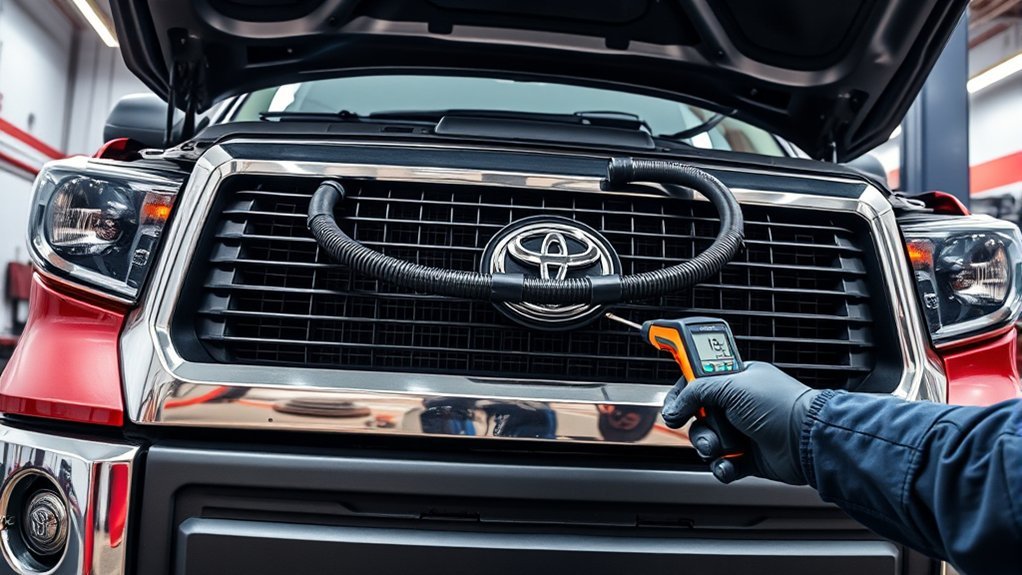
If you tow frequently or drive in hot climates, upgrading your Tundra’s transmission cooling and radiator capacity prevents the heat-related failures that shorten drivetrain and engine life. You’ll reduce thermal stress by adding a dedicated transmission cooler and choosing a higher-capacity radiator; both lower operating temperatures and extend component lifespan. Prioritize fluid maintenance: change transmission fluid every 60,000–100,000 miles and use a quality synthetic to improve heat resistance. Monitor engine coolant levels and replace with Toyota pink coolant on schedule to keep the engine in its ideal range. These interventions free you from avoidable breakdowns and sustain performance under load.
Upgrade cooling — add a transmission cooler, bigger radiator, and maintain fluids to prevent heat-related failures and prolong drivetrain life
- Install a dedicated transmission cooler sized for your towing demands.
- Replace transmission fluid on the recommended interval with synthetic.
- Upgrade to a higher-efficiency radiator for better heat rejection.
- Routinely monitor coolant level and condition; use Toyota pink coolant.
- Inspect cooler lines and fittings for leaks, restrictions, and proper flow.
Tire, Brake, and Wheel Practices That Reduce Drivetrain Stress
Keep your tires inflated to the manufacturer’s recommended pressure and use standard load-range, low rolling resistance tires to minimize rotational drag and uneven wear. Inspect brake pads, rotors, and calipers on a scheduled basis and replace components at specified wear limits to guarantee consistent deceleration forces. These practices reduce torque spikes and cyclical loads on the drivetrain, preserving the engine and transmission when towing or hauling.
Proper Tire Inflation
When you maintain proper tire pressure—generally 30–35 PSI for most Tundra models—you reduce rolling resistance and lower drivetrain load, improving fuel economy and helping the engine run cooler and longer. You’ll check tire pressure weekly and adjust cold for accuracy. Monitor tread depth and rotate tires every 6,000 miles to prevent uneven wear that stresses suspension and drivetrain. Choose standard load-range tires to avoid extra wear from oversized or poor-quality options. Inspect for irregular wear patterns and correct alignment promptly.
- Check pressure cold, adjust to manufacturer spec
- Measure tread depth; replace at 2/32″ minimum
- Rotate tires every 6,000 miles
- Use appropriate load-range, quality tires
- Correct alignment when wear appears
Brake System Maintenance
1 key habit for prolonging your Tundra’s engine life is rigorous brake system maintenance, because well-served brakes reduce drivetrain stress and prevent cascading failures. You’ll perform regular pad inspection to catch wear early and replace pads before they groove rotors; that simple discipline preserves rotor maintenance intervals and prevents vibration that transmits to the drivetrain. Torque each lug nut to spec during tire changes to avoid rotor warping and compromised brake performance. Schedule tire rotation every 6,000 miles and monitor tire pressure to guarantee even wear and lower rolling resistance, which eases brake load. Use quality brake fluid and follow manufacturer replacement intervals to prevent moisture contamination and loss of braking efficiency that could cascade into component failure.
Rust Prevention and Undercarriage Care for Long‑Term Health
Keep the undercarriage clean with a scheduled wash to remove salt, mud, and debris that accelerate corrosion. Apply anti-corrosive spray to the frame and exposed components after washing and spot-treat any surface rust immediately. Park on hard surfaces and store the Tundra under cover when possible to minimize moisture exposure and slow rust progression.
Undercarriage Cleaning Routine
Prevention starts under the truck: you should routinely wash the Tundra’s undercarriage to remove dirt, salt, and debris that promote corrosion, especially after winter or exposure to salted roads. You’ll perform undercarriage inspection each session, use a high-pressure washer or hose with nozzle to reach crevices, and document any deterioration. Clean thoroughly, let dry, then apply an annual anti corrosive application to form a moisture barrier. Store the truck covered when possible to reduce exposure.
- Use high-pressure washer; target wheel wells and seams.
- Inspect mounting points, brake lines, and fuel lines.
- Remove loose rust and flaky coatings before treatment.
- Apply anti-corrosive application per product instructions.
- Record dates and observations for trend tracking.
Frame Rust Protection
One reliable step to protect your Tundra’s frame is to establish a seasonal rust‑protection routine that combines cleaning, inspection, and targeted treatment. You’ll clean the undercarriage often, removing salt and debris, then apply rust inhibitors to form a lasting barrier. Inspect high‑risk zones—frame rails, wheel wells—promptly treat any surface rust, and avoid parking on damp ground. Store the truck under cover when possible. Implement corrosion monitoring checkpoints each season and record findings to guide interventions.
| Action | Frequency | Notes |
|---|---|---|
| Clean undercarriage | Monthly (winter) | Remove salt/debris |
| Apply inhibitors | Every 6–12 months | Focus on seams |
| Inspect/frame repair | Seasonal | Treat rust early |
This method frees you from progressive decay and preserves structural life.
Driving Habits That Extend Your Tundra’s Engine Life
When you adopt controlled driving habits—gentle acceleration, steady highway speeds, and sensible load management—you cut stress on the Tundra’s engine and extend its service life. You’ll reduce wear by avoiding hard starts and prolonged engine idling, and you’ll preserve oil life by letting the engine reach operating temperature during winter driving. For long distance travel, maintain consistent cruise speeds and plan fewer stops so the engine runs efficiently.
- Accelerate moderately to lower mechanical and thermal stress.
- Maintain steady highway speeds; avoid frequent speed changes.
- Limit heavy loads; apply conservative towing practices and stay under capacity.
- Minimize short trips to prevent oil contamination and premature wear.
- Warm the engine briefly in cold weather before driving for proper lubrication.
Operate methodically, choose liberation from panic inputs, and prioritize consistency. These habits give you control over longevity, reduce repair risk, and let your Tundra serve reliably for many miles.
Inspecting a High‑Mileage Tundra Before Daily Use or Purchase
Before you put a high‑mileage Tundra into daily service or finalize a purchase, run a focused inspection that targets wear items and service history most likely to cause catastrophic failure or expensive repairs. Start by reviewing mileage indicators and maintenance records: confirm timing belt replacements at 90,000‑mile intervals and oil change frequency between 5,000–10,000 miles. Verify transmission fluid service every 60,000–100,000 miles. Use engine diagnostics to detect pending failures—scan for codes, note oil pressure and coolant temperature behaviors during a controlled startup, and flag any misfires.
Physically inspect lower ball joints for play and grease leakage; compromised joints mean compromised control. Examine the undercarriage and frame for rust, especially in salt‑exposed regions; structural corrosion reduces serviceable life and safety. Prioritize repairs that prevent catastrophic damage: timing belt, transmission service, and suspension components. If records or diagnostics are incomplete or reveal major issues, walk away or negotiate repair credits—freedom comes from choosing reliability over uncertainty.
Simple DIY Checks and Tools to Catch Problems Early
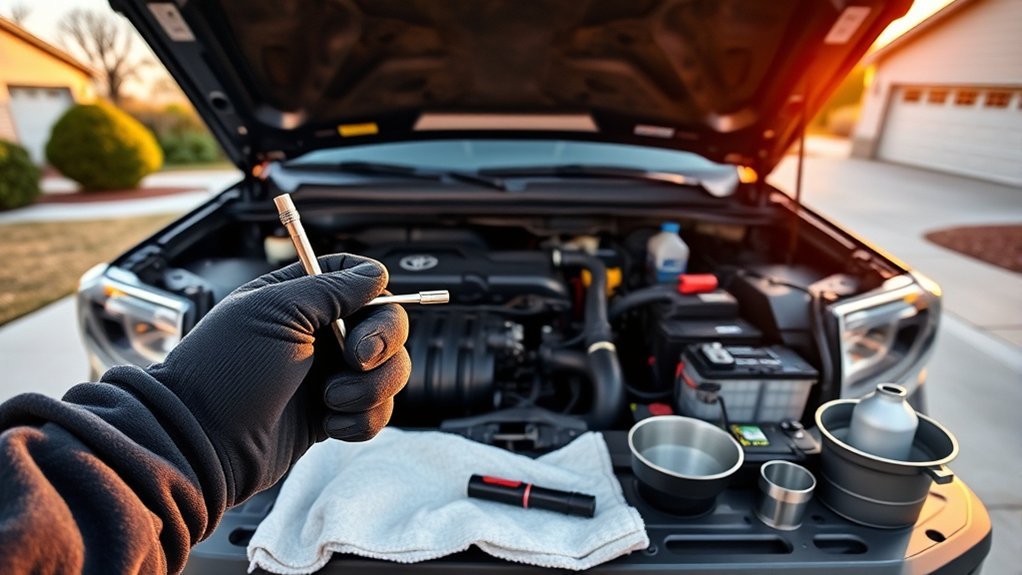
After you’ve verified service records and scanned for big-ticket issues, keep the Tundra running longer by doing a handful of routine, do-it-yourself checks that catch wear before it becomes failure. You’ll gain freedom from surprise breakdowns by performing targeted inspections with basic DIY Inspection Tools and a disciplined log.
Use these focused checks to facilitate Early Problem Detection and extend engine life:
- Check and change engine oil every 5,000–10,000 miles to prevent sludge and guarantee lubrication.
- Inspect air filter every 15,000–30,000 miles to preserve airflow and efficiency.
- Monitor coolant and transmission levels; plan transmission fluid change at 60,000–100,000 miles.
- Torque lug nuts with a torque wrench to avoid rotor warping and brake-related strains on the engine.
- Maintain a concise maintenance log to reveal patterns and trigger proactive repairs.
Do these steps methodically, document results, and you’ll reduce risk while reclaiming control over vehicle reliability.
Frequently Asked Questions
How Many Tundra Engines Need to Be Replaced?
Few Tundra engines need replacement; you’ll rarely face it if you follow engine longevity tips. You’ll address common issues like leaks, overheating, and missed oil changes methodically, preserving freedom from premature engine failure and costly swaps.
Conclusion
Keep a disciplined maintenance routine and your Tundra will reward you: properly serviced, Toyota engines often reach 300,000 miles or more—over 20% of Tundra owners report surpassing that mark. Prioritize oil changes, cooling, transmission care, and valve/spark plug service on schedule; prevent rust and monitor tires/brakes to cut drivetrain load. Inspect high‑milers before each trip, use simple DIY checks, and adopt smoother driving habits—these methodical steps deliver measurable longevity gains.