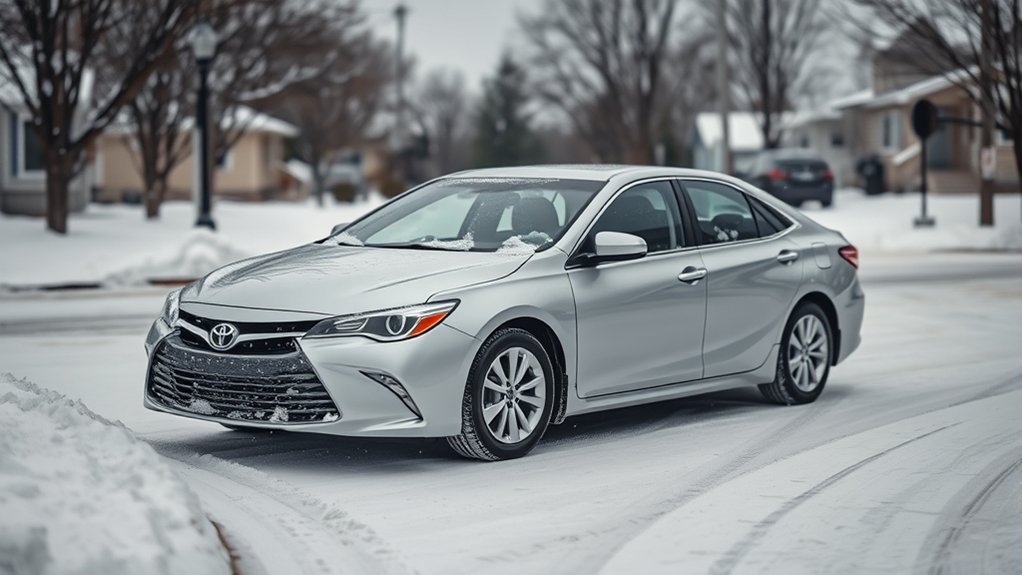
Use Snow Mode in your Camry when roads are packed with snow or consistently slick so throttle softens, shifts stay in higher gears, and wheel spin is reduced for steadier starts and gentler accelerations. Activate it before you encounter slippery sections and confirm the instrument-cluster indicator. Don’t rely on it for ice, deep snow, towing, or dry pavement—those conditions need different traction strategies. Keep sensors clear and monitor system warnings, and continue for detailed operation, limits, and safety advice.
Turn On Snow Mode (Toyota Camry): Quick Steps
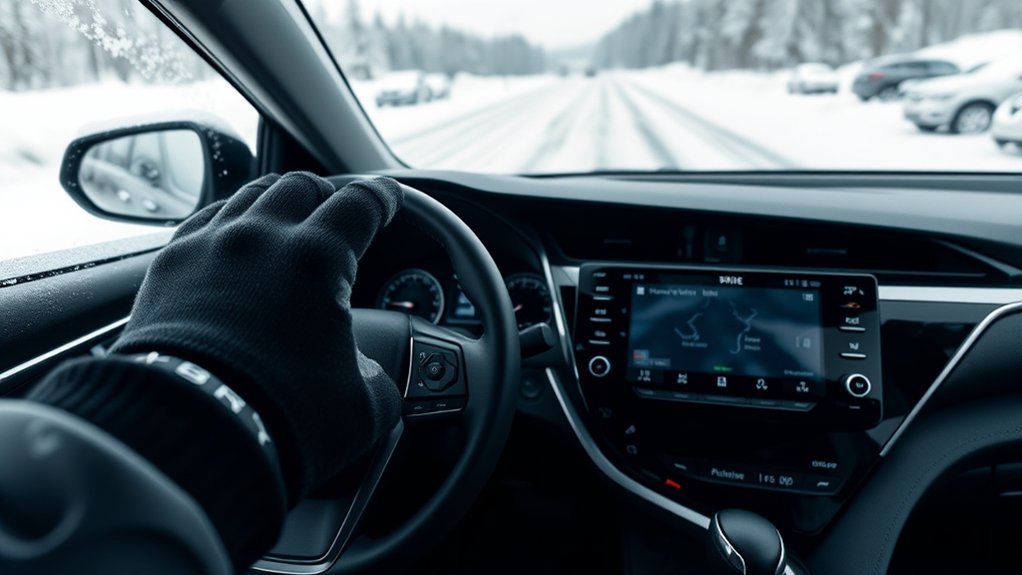
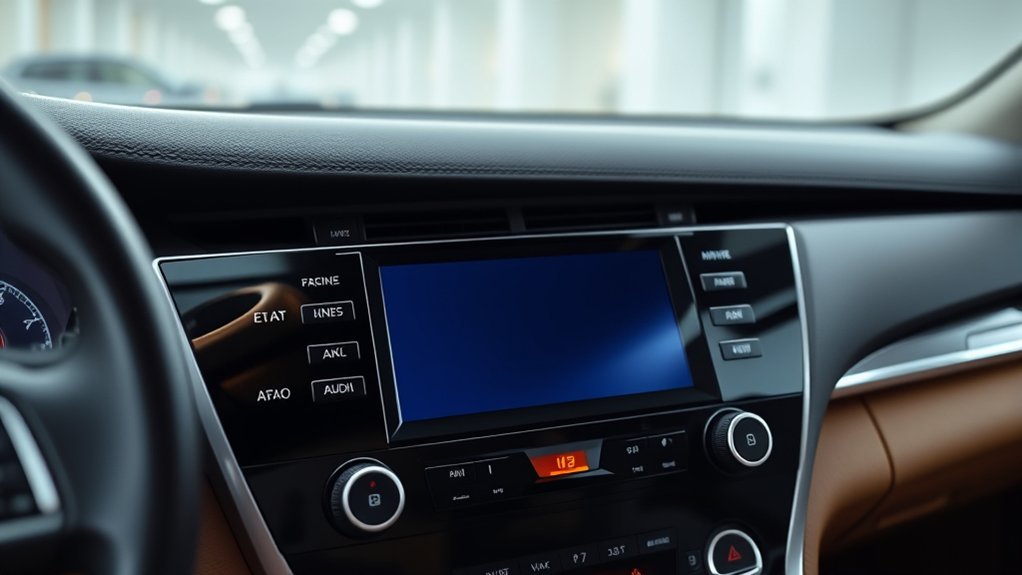
Start by locating the Snow Mode button—usually on the center console or near the gear shift—and press it before you encounter icy or snowy surfaces; the system will immediately alter throttle response and transmission behavior to improve traction, and an illuminated dashboard indicator confirms activation. You’ll feel and see the change: throttle becomes less aggressive, transmission upshifts earlier to reduce wheelspin, and stability feels firmer. That feedback lets you judge snow mode benefits in real time. Use this mode proactively rather than reactively; engaging it after losing traction limits its effectiveness. Combine the feature with disciplined inputs—smooth throttle, gentle steering—to exploit its control advantages. If you still detect slippage or conditions worsen, reduce speed and apply additional driving tips like increasing following distance and avoiding sudden maneuvers. You’re not ceding control by using Snow Mode—you’re choosing a calibrated, technical aid that expands your operational margin and supports safer, more liberated movement through winter roads.
Step-by-Step: Engage Snow Mode in Your Camry
1 clear action gets you into Snow Mode: locate the Snow button—usually near the gear lever or on the dash—and press it before you hit icy or snow-covered surfaces. Next, verify activation via the instrument cluster indicator; confirmation frees you to proceed with controlled momentum. Engage at any speed if conditions change, but the best practices call for switching on while stopped or cruising gently to avoid abrupt inputs.
Monitor wheel response and brake feel; Snow Mode dulls throttle sensitivity and alters transmission behavior to reduce wheel spin. If traction doesn’t improve, reduce speed and use progressive, light throttle—this is a core driving tip for liberated control. When roads clear, deactivate Snow Mode to restore normal responsiveness and fuel efficiency. Evaluate each use: apply Snow Mode selectively, not habitually. That disciplined approach keeps you safe, conserves fuel, and preserves the Camry’s handling integrity.
How Snow Mode Changes Throttle, Shifting, and Traction
When you engage Snow Mode, the throttle softens to smooth out acceleration and cut wheel spin on slippery surfaces. The transmission shifts earlier and more gently, holding higher gears to reduce torque and improve stability. These changes, combined with optimized traction control, measurably enhance grip and control in snow and ice.
Softer Throttle Response
Although it feels subtle, Snow Mode actively softens the Camry’s throttle mapping so you deliver power more gradually and cut wheel-spin risk on slick surfaces. You’ll notice reduced throttle sensitivity intended for winter driving, letting you exploit grip rather than overpower it. This is about liberation from anxiety: measured inputs produce predictable responses so you stay in control.
- Softer throttle reduces abrupt torque spikes that break traction.
- Smoother acceleration maintains lateral stability on packed snow.
- Optimized power delivery complements traction control to prevent slips.
- Consistent response lets you modulate speed without fighting the car.
Evaluate Snow Mode as a tactical setting: it sacrifices immediate responsiveness for controllable progress, empowering confident, safer movement in adverse conditions.
Earlier, Gentler Shifts
Because Snow Mode shifts earlier and softer, you’ll feel the transmission upshift at lower RPMs to keep torque delivery modest and controllable. You get gentler acceleration and smooth changes as the ECU retards throttle input and advances shift points, prioritizing stability over quick response. That reduces wheel slip during initial pull-away and highway merges in icy conditions. Traction control and shift mapping coordinate to moderate torque pulses, so you can liberate yourself from anxiety about sudden spinouts. Evaluate engagement: use Snow Mode when surfaces are slick or visibility limits speed; disengage on clear, dry roads to restore responsiveness. The system sacrifices acceleration for predictability, giving you measurable control gains when you need steady, confidence-inspiring traction management.
How Snow Mode (Camry) Interacts With Traction Control & Safety Systems
When you engage Snow Mode, the Camry retards throttle and adjusts shift logic while traction control stays active to further limit wheel slip, so you’ll notice smoother acceleration with fewer interventions. Check how the Pre‑Collision System and automatic emergency braking respond in low‑traction scenarios, since reduced wheel grip can alter stopping distances and sensor thresholds. Also be aware that parking sensors and assisted parking functions may be affected by snow buildup or altered vehicle responses, so don’t rely on them exclusively in winter conditions.
Snow Mode And Traction
If you engage Snow Mode, the Camry immediately softens throttle response and alters transmission shift logic so the traction control can more effectively prevent wheel spin on icy or snowy surfaces. You gain clear traction benefits: reduced engine torque at launch, firmer ABS modulation, and coordinated traction control intervention tailored to poor driving conditions. That coordination frees you to focus on deliberate inputs and escape rigid fear of skids.
- Softer throttle limits torque spikes that break traction during takeoff.
- Transmission starts in higher gear or delays downshifts to avoid wheelspin.
- Traction control applies selective braking and engine cuts sooner.
- ABS calibration gives more controlled stops on packed snow and ice.
Use Snow Mode as a liberating tool—paired with cautious speed and spacing.
Pre‑Collision System Behavior
Although Snow Mode primarily tunes throttle and traction control for slippery surfaces, it also coordinates with the Camry’s pre-collision system to preserve safe following distances and reduce false reactions under low-traction conditions. You’ll find Snow Mode increases traction-control sensitivity to limit wheel slip while the pre-collision logic adapts braking thresholds to avoid abrupt interventions that could induce a skid. That coordination reduces unnecessary pre collision warnings yet still prioritizes collision avoidance; you should keep traction control enabled to retain that balance. Be aware sensors can be obstructed by snow, so sensor maintenance is critical—blocked sensors may trigger warnings or reduce system effectiveness. In short, Snow Mode refines stability and safety systems so you stay free to move without sacrificing protective intervention.
Parking Sensor Interactions
One key interaction to understand is that Snow Mode adjusts traction control and throttle mapping to prioritize grip, while parking sensors can become compromised by snow and ice and produce false or persistent alerts. You’ll rely on traction control for winter driving stability, but sensor visibility may degrade and trigger warnings that don’t reflect true hazards. Evaluate and act decisively.
- Manually clear sensors of snow/ice to restore accurate readings.
- If alerts persist, temporarily disable parking sensors to avoid distraction.
- Keep Snow Mode engaged—traction control remains active for grip.
- Post-park, inspect sensor lenses and confirm system status before resuming travel.
You’re entitled to control: maintain safety systems for liberation from risk, while managing sensor clutter pragmatically.
When Not to Use Snow Mode: Special Cases and Warnings
When road surfaces are dry, icy, deep with snow, or when you’re towing a heavy load, don’t rely on Snow Mode—it’s optimized for light, low-traction conditions and can reduce traction, limit engine power, or compromise handling in these special cases. You need to evaluate snow mode limitations against actual conditions. In icy conditions, Snow Mode may not improve grip and can give a false sense of security.
| Condition | Recommendation |
|---|---|
| Dry pavement | Disable Snow Mode; it can cause unnecessary wear |
| Icy surfaces | Avoid Snow Mode; it may not provide sufficient grip |
| Deep snow/off-road | Don’t use; engine power and acceleration can be limited |
| Towing/heavy loads | Refrain; performance and control may be compromised |
You should adapt driving technique, tires, and speed rather than depend on a mode. Use Snow Mode only when traction loss is light and predictable. That keeps you free to choose safety over automation.
Camry Winter Prep: Clear Sensors, Manage Cruise-Control and Alerts
If sensors get covered by snow or ice, clear them before you drive so adaptive cruise, pre‑collision, and parking aids work as intended. You’ll reduce false warnings and restore system accuracy—basic sensor maintenance that preserves freedom of movement in winter driving. Evaluate systems quickly and act decisively.
- Inspect and remove snow/ice from front grille, bumper, and windshield areas where sensors and cameras sit.
- If adaptive cruise triggers warnings, switch to regular cruise control to avoid interrupted holds and nuisance alerts.
- Access the vehicle menu to temporarily disable the pre‑collision system if sensors remain compromised, limiting distracting alarms.
- Consider turning off parking sensor alerts via settings when salt and slush cause persistent beeps; keep traction control enabled for safety.
You’re balancing autonomy with responsibility: disable only what obstructs clarity, not what preserves safety. Maintain sensor maintenance routines, monitor warning messages, and prioritize traction control during winter driving to stay liberated and secure on the road.
Frequently Asked Questions
Can I Drive My Toyota Camry in the Snow?
Yes — you can drive your Camry in snow, but prioritize tire traction and winter readiness: equip winter tires, engage Snow Mode if available, clear sensors and windows, and trust traction control while adapting speed for safety and freedom.
Conclusion
You’ll want Snow Mode when roads are giving you a cautious handshake — light ice, packed snow, or slush where extra smoothness in throttle and gentler shifts reduce slip. It tempers throttle response, alters shift points, and leans on traction aids so your Camry behaves more politely. Don’t expect miracles on black ice or deep drifts; in those delicate situations, choose more conservative driving or alternative transport. Keep sensors clear and cruise off for best results.