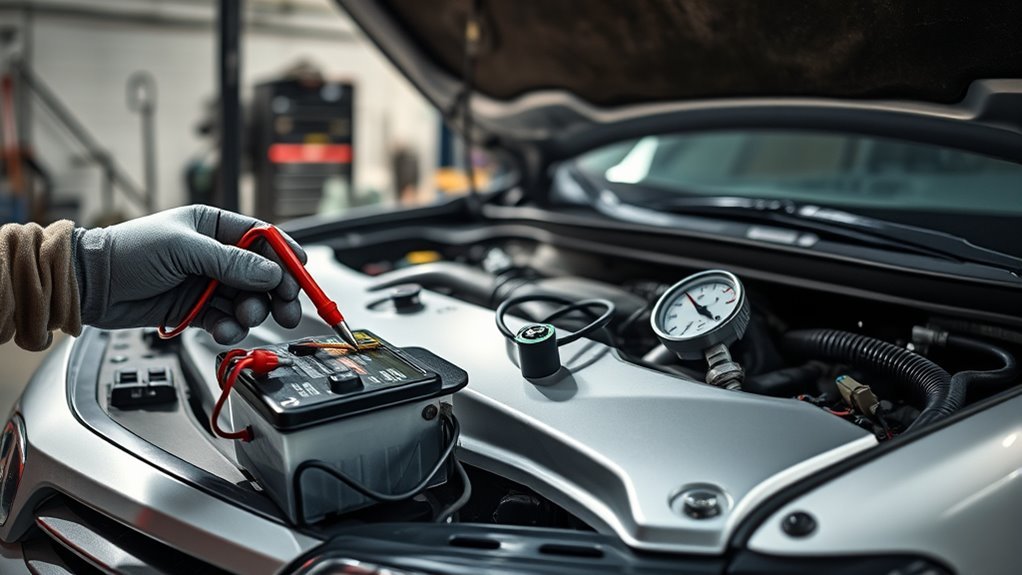
When a 2007 Toyota Camry cranks but won’t start, do not replace the fuel pump first. Prove the failure by checking the basics in order: battery cranking speed, security light behavior, stored trouble codes, fuel pressure, injector pulse, spark, and compression. Most no-start diagnoses go faster when each test has a clear pass or fail result.
Quick Answer
A 2007 Camry that cranks but won’t start usually needs a fuel, spark, injector pulse, compression, or cam/crank signal test. For the 2.4L 2AZ-FE, Toyota service information lists fuel pressure at 44.1–49.7 psi. A silent pump alone is not proof; verify pump command, power, ground, and pressure first.
Key Takeaways
- Do not rely only on a key-on fuel-pump hum; command the pump with a scan tool or test during cranking.
- For the 2AZ-FE four-cylinder, fuel pressure should be about 44.1–49.7 psi, not 30–40 psi.
- Check spark and injector pulse before condemning the pump.
- A 2007 Camry uses timing-chain/valve-timing systems, so “broken timing belt” is not the right default diagnosis.
- Relieve fuel pressure, disconnect the battery before fuel-system disassembly, and check for leaks after any repair.
At a Glance
| Time Required | 30–90 minutes for diagnosis; 2–4 hours for a fuel-pump module replacement if access is clean |
| Difficulty | Intermediate; fuel-system work requires care |
| Tools Needed | OBD-II scanner, fuel-pressure gauge with correct adapters, multimeter, spark tester, compression gauge, basic metric tools, safety glasses, gloves, shop rags |
| Cost | DIY diagnosis is low-cost if you own tools; pump parts and shop replacement costs vary widely by pump type, engine, region, and labor rate |
Warning: Gasoline is flammable and the fuel line can retain pressure after the engine stops. Work in a ventilated area, keep sparks and cigarettes away, wear eye protection, relieve fuel pressure before opening the system, and disconnect the negative battery cable before fuel-system disassembly.
Start With the Three Basics: Fuel, Spark, and Compression
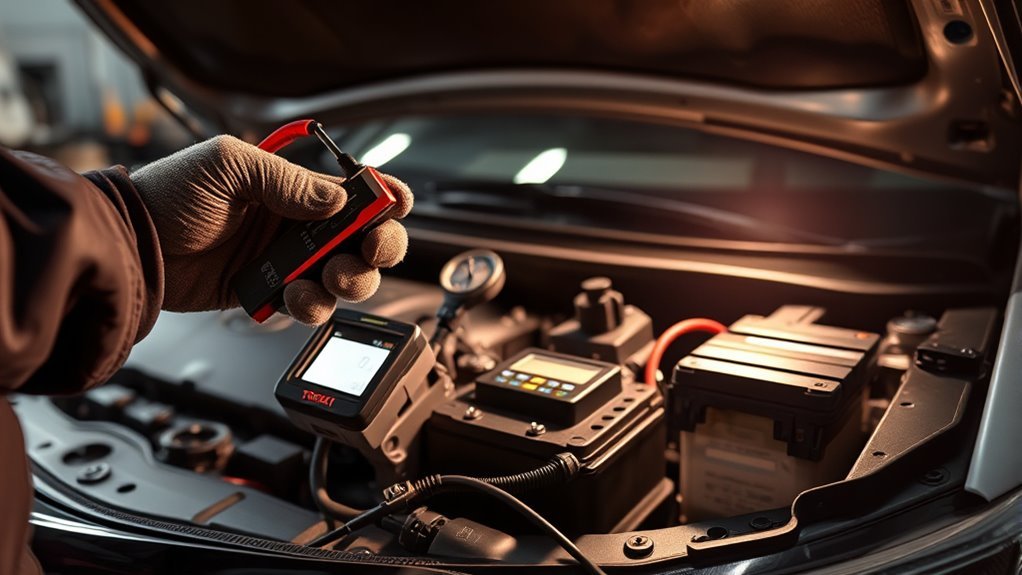
A gasoline engine needs the right fuel pressure, spark at the right time, injector pulse, and enough compression to run. The fastest path is not guessing which part failed. It is testing one system at a time and moving on only after the result is clear.
| System | Quick Test | What a Failed Test Suggests |
|---|---|---|
| Fuel | Fuel-pressure gauge and pump command test | Weak pump, no pump command, bad power/ground, restricted filter/strainer, pressure regulator issue |
| Spark | Inline spark tester while cranking | Ignition coil issue, CKP/CMP signal fault, wiring, ECM command issue |
| Injector pulse | Noid light, oscilloscope, or scan-tool data | No CKP/CMP signal, immobilizer issue, wiring, ECM driver issue |
| Compression | Compression gauge on each cylinder | Valve timing, worn engine, washed cylinders, head gasket, mechanical damage |
Before You Blame the Fuel Pump, Check These First
A weak battery can crank slowly enough to confuse diagnosis. Charge the battery or use a known-good battery if cranking sounds lazy. Then watch the security light. If the immobilizer light behaves abnormally or a replacement key is being used, the ECM may allow cranking but prevent starting.
Next, scan for diagnostic trouble codes before clearing anything. Codes such as P0335 or P0339 point toward the crankshaft position sensor circuit, while misfire codes, cam/crank correlation codes, or fuel-trim codes can change the test order. Toyota owner publications are available through Toyota Owners, and Toyota repair manuals and wiring diagrams are available through Toyota Technical Information System.
Note: The 2007 Camry may have a 2.4L 2AZ-FE, 3.5L 2GR-FE, or hybrid powertrain. The diagnostic flow is similar, but connector locations, safety steps, and exact specifications can differ. Hybrid high-voltage work should be left to trained technicians.
How to Confirm There Is No Fuel Delivery
Fuel delivery diagnosis has three parts: command, pressure, and electrical supply. A pump can be quiet because it is bad, but it can also be quiet because the ECM is not commanding it, the relay is not closing, a fuse is open, or the pump has a poor ground.
Do Not Rely on a Key-On Pump Hum Alone
Some vehicles briefly prime the pump when the key is turned on; others may not make an obvious sound unless the pump is commanded with a scan tool or the engine is cranking. For the 2AZ-FE procedure, Toyota service information describes using an active test to command the fuel pump and then checking for fuel flow sound and pressure. Use a compatible bidirectional scanner when available.
Check Fuel Pressure Correctly
Install a fuel-pressure gauge with the correct adapter and follow the service procedure for your engine. For the 2.4L 2AZ-FE, the service-manual fuel-pressure specification is 304–343 kPa, or 44.1–49.7 psi. After the engine stops, the same source lists residual pressure of 147 kPa, or 21 psi, or more after 5 minutes. Low pressure means you should check hoses, connections, the pump, filter/strainer, and pressure regulator before replacing parts.
Pro Tip: Record the pressure while the pump is commanded, while cranking, and after the key is off. A pump that reaches pressure but bleeds down quickly points to a different fault than a pump that never builds pressure.
Inspect the Fuel Relay, Fuses, Power, and Ground
The Camry fuel-pump circuit includes the fuel pump, EFI-related fuses, circuit-opening relay/integration relay control, ECM command, wiring, and ground. Check the correct fuse locations for your trim and engine before probing. A fuse that looks good can still test bad, so verify continuity and voltage with a meter.
| Test | Tool | Pass Result | Fail Result |
|---|---|---|---|
| Fuel pump command | Bidirectional scan tool | Pump runs and pressure rises | Check command path, relay, ECM inputs, wiring |
| Fuse voltage | Multimeter/test light | Voltage on both sides under load | Open fuse, power feed problem, poor contact |
| Pump connector power | Multimeter or loaded test light | Battery voltage during command/cranking | Relay, fuse, wiring, ECM command, or connector fault |
| Pump ground | Voltage-drop test | Low voltage drop under load | Corroded ground, damaged harness, loose terminal |
Check Injector Pulse
If fuel pressure is correct but the engine still will not start, check injector pulse. Use a noid light, lab scope, or scan-tool data. No injector pulse with no spark often points toward crankshaft/camshaft position input, immobilizer, ECM power/ground, or wiring rather than the pump itself.
Quick Spark and Compression Checks to Rule Out Ignition and Mechanical Problems
Use an inline spark tester instead of grounding a loose spark plug near the engine bay. A bright, consistent spark during cranking means the ignition system is at least producing output. No spark on all cylinders moves the diagnosis toward CKP/CMP inputs, ignition power supply, ECM command, wiring, or related fuses.
For compression, remove the ignition coils and spark plugs, disable fuel injection, open the throttle, and crank with a fully charged battery. For the 2AZ-FE, Toyota service information lists standard compression at 198 psi, minimum compression at 142 psi, and maximum cylinder-to-cylinder difference at 14 psi. If compression is low across all cylinders, suspect valve timing, a flooded/washed engine, or mechanical wear. If one or two cylinders are low, continue with leak-down testing.
Quick In-Car Fuel Pump Test: Relay, Fuse, and Listen

Start with the least invasive checks. Scan for codes, command the pump if your scan tool supports it, and listen near the rear seat area for fuel-flow sound. If the pump is commanded and there is no sound or pressure, test the pump connector for power and ground during the command. Battery voltage with a good ground but no pump operation strongly suggests a failed pump or pump module.
If there is no voltage at the pump connector, do not install a pump yet. Work upstream through the fuse, relay, ECM command, and harness. A pump cannot run without a clean power feed and ground, and a new pump will not fix an open circuit.
Inspect the In-Tank Pump Access and Wiring on a Camry
The 2007 Camry fuel pump is accessed from the rear-seat area through a rear floor service hole cover. That makes inspection easier than dropping the tank, but the work is still fuel-system work and must be handled carefully.
Access the Pump Connector Under the Rear Seat
Relieve fuel pressure, disconnect the negative battery cable, remove the rear seat cushion, and remove the rear floor service hole cover. Inspect the connector for corrosion, heat damage, spread terminals, loose pins, and damaged insulation. Do not probe terminals aggressively; spreading a terminal can create an intermittent no-start after reassembly.
Use Voltage-Drop Testing Instead of Guessing
A simple voltage reading can mislead you if the circuit is not loaded. Test power and ground with the pump commanded or while cranking. If the power feed is present but drops badly under load, suspect a high-resistance connector, fuse contact, relay contact, or harness problem. If the ground side shows excessive voltage drop, clean and repair the ground path before replacing the pump.
Warning: Do not jump battery power into an open fuel-tank area with fuel vapors present. If a pump must be bench-tested, do it only after safe removal and away from gasoline vapors, sparks, and open flame.
Test the Crankshaft Position Sensor and Scan Codes
A failed crankshaft position sensor signal can cause a crank/no-start with no spark, no injector pulse, or no reliable RPM signal on the scan tool. On the 2AZ-FE, Toyota service information lists P0335 for crankshaft position sensor “A” circuit and P0339 for intermittent crankshaft position sensor “A” circuit. Trouble areas include an open or short in the CKP circuit, the sensor, the sensor plate, or the ECM.
When a CKP code is present, inspect the wiring and connector before replacing the sensor. Look for oil contamination, rubbed-through insulation, loose pins, or previous repair damage. If you have a scan tool, watch engine RPM while cranking. If RPM stays at zero, the ECM may not be receiving a usable crank signal.
Replace the Camry Fuel Pump: OEM vs. Aftermarket Advice
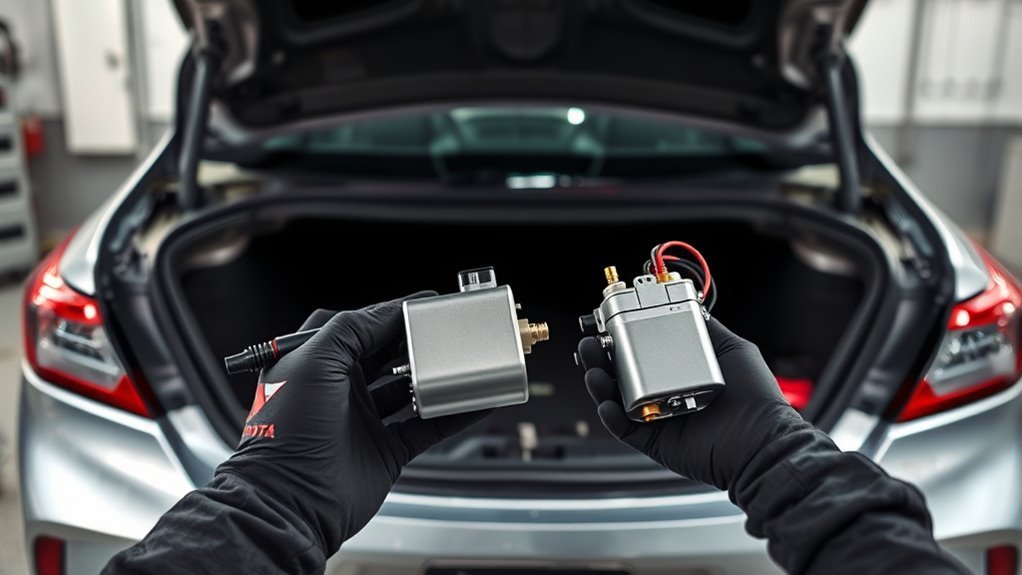
Replace the pump only after pressure, power, ground, and command tests support the diagnosis. An OEM or high-quality branded pump module usually gives the best fit and calibration. Cheap pump motors may cost less up front, but poor flow, noisy operation, or fitment problems can create repeat no-starts.
| Option | Best For | Risk |
|---|---|---|
| OEM fuel pump or full suction tube assembly | Best fit, reliability, and factory-style repair | Higher part cost |
| Reputable aftermarket module | Balanced cost and convenience | Quality varies by brand |
| Low-cost pump motor only | Budget repair when the module is otherwise good | More assembly work and higher comeback risk |
Safe Fuel Pump Replacement Overview
This is not a substitute for the factory service manual, but it shows the general order of work:
- Park outside or in a well-ventilated area, away from flame, sparks, heaters, and smoking materials.
- Scan and record codes before disconnecting the battery.
- Relieve fuel pressure according to the service procedure.
- Disconnect the negative battery cable.
- Remove the rear seat cushion and rear floor service hole cover.
- Disconnect the fuel pump connector and inspect the harness.
- Disconnect the fuel line only after pressure is relieved; cover the connection with a shop rag.
- Remove the pump retaining hardware or lock ring according to the service manual.
- Lift the pump module out carefully without bending the float arm.
- Replace the required gasket/O-ring and any non-reusable clips or clamps.
- Install the pump module, reconnect the line and connector, and reinstall the access cover with proper sealing.
- Reconnect the battery, command/prime the pump, and check carefully for leaks before starting.
- Start the engine, recheck for leaks, clear codes if appropriate, and road-test.
Cost, Time, and Tools for a Camry Fuel Pump Swap
Plan on 2–4 hours for a careful DIY fuel-pump module replacement if the rear-seat access cover and fuel-line fittings cooperate. Diagnosis may take less than an hour if the fault is obvious, or longer if the no-start is intermittent.
Time Estimate Breakdown
- Diagnosis: 30–90 minutes for scan, pressure, spark, injector pulse, and power/ground checks.
- Pressure relief and access: 20–45 minutes to prepare the work area, disconnect the battery, and expose the pump cover.
- Replacement: 1–2 hours to remove the module, transfer parts if required, replace seals, and reinstall.
- Final checks: 15–30 minutes to prime, inspect for leaks, clear codes, and test-start.
Required Tools List
You will usually need a metric socket set, screwdrivers, trim tools, pliers, a fuel-line disconnect tool if required, fuel-pressure gauge with correct adapters, multimeter, scan tool, shop rags, safety glasses, gloves, and a fire extinguisher rated for flammable liquids. A factory service manual or professional repair database is strongly recommended for connector views and torque specs.
Five Common Post-Replacement Mistakes and How to Avoid Them
After replacing the fuel pump, slow down and verify the repair. Many repeat no-starts happen because a seal, connector, line, or code was overlooked.
A new pump is not a finished repair until pressure is correct, the system holds residual pressure, no fuel leaks are present, and the engine starts repeatedly.
- Loose fuel line: Push the connector fully until it clicks, then gently pull back to confirm it is locked.
- Reused damaged seal: Replace the pump tank seal/O-ring if the service procedure calls for it.
- Poor electrical connection: Confirm the pump connector is fully seated and the terminals are not spread or corroded.
- No leak check: Command or prime the pump and inspect before reinstalling trim and seats.
- Codes ignored: Clear codes only after recording them, then recheck for returning CKP, fuel-trim, or misfire codes.
When to Stop and Call a Mechanic
Call a professional if you smell fuel you cannot locate, see fuel spray, have melted wiring, find no ECM pump command, have no spark and no injector pulse, or suspect a timing-chain/valve-timing problem. Hybrid Camry high-voltage diagnostics should be handled by trained technicians with the correct safety equipment.
Frequently Asked Questions
What could be the problem with a car that cranks but does not start?
A crank/no-start usually comes from missing fuel pressure, no spark, no injector pulse, low compression, a security/immobilizer issue, or a missing crankshaft/camshaft signal. Start with a scan, then test fuel pressure, spark, injector pulse, and compression.
What are the symptoms of a bad Toyota fuel pump?
Common symptoms include extended cranking, crank/no-start, stalling, hesitation under load, low fuel pressure, lean codes, or a pump that does not run when commanded. Confirm the diagnosis with pressure and electrical tests before replacing the pump.
Should I hear the fuel pump when I turn the key on?
Maybe, but a missing key-on hum is not enough to condemn the pump. Use a scan tool to command the pump when possible, or test pump voltage, ground, and fuel pressure during cranking.
What fuel pressure should a 2007 Camry have?
For the 2.4L 2AZ-FE, Toyota service information lists 304–343 kPa, or 44.1–49.7 psi. Because the 2007 Camry came with different powertrains, always confirm the exact specification for your engine.
Can a bad crankshaft position sensor cause a crank/no-start?
Yes. If the ECM does not receive a usable crankshaft position signal, it may not control spark or injector pulse correctly. Codes such as P0335 or P0339, no RPM reading while cranking, no spark, and no injector pulse all point toward CKP circuit testing.
Does a 2007 Camry have a timing belt?
The common 2007 Camry gasoline engines use timing-chain/valve-timing systems, so a generic “broken timing belt” diagnosis is not the right starting point. If compression is low or cam/crank correlation codes are present, inspect valve timing according to the service manual.
Conclusion
If your 2007 Camry cranks but will not start, test before replacing parts. Start with the battery, immobilizer light, and trouble codes. Then check fuel pressure, pump command, pump power and ground, injector pulse, spark, and compression. Replace the fuel pump only when the tests prove the pump or module has failed. After any fuel-system repair, prime the system, inspect for leaks, and confirm the engine starts repeatedly.
Sources
- Toyota Owners Manuals and Warranties — official owner manual access and Toyota publication reference.
- Toyota Technical Information System — official Toyota repair manual and wiring diagram access.
- Toyota Camry 2007–2009 Service Manual: 2AZ-FE Fuel — fuel-system precautions, pump access, fuel-pump active test, and 2AZ-FE fuel-pressure specification.
- Toyota Camry 2007–2009 Service Manual: 2AZ-FE Engine Mechanical — compression-test procedure and compression specifications.
- Toyota Camry 2007–2009 Service Manual: 2AZ-FE Engine Control System — CKP/CMP sensor locations, diagnostic code list, and P0335/P0339 trouble areas.
- Kelley Blue Book Fuel Pump Replacement Cost — repair-cost context and location-based estimate guidance.