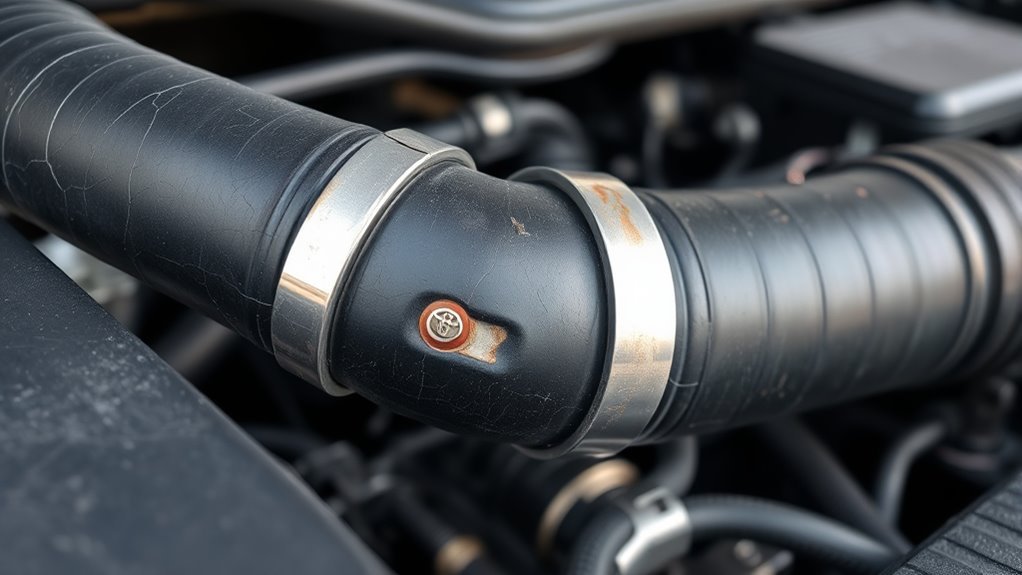
You’ll know a Camry radiator hose is aging when it looks brittle, shows surface cracks, or feels soft and spongy to the squeeze; bulges, swelling, or oil contamination signal internal breakdown, while crusty coolant deposits or persistent seepage at clamps mean looming leaks. Twist and bend gently to reveal hidden splits or crunching. Monitor unexplained coolant loss and temperature warnings, top off with the correct fluid, and replace at first signs—keep going to get practical inspection and replacement guidance.
Quick Answer: Is My Radiator Hose Bad?
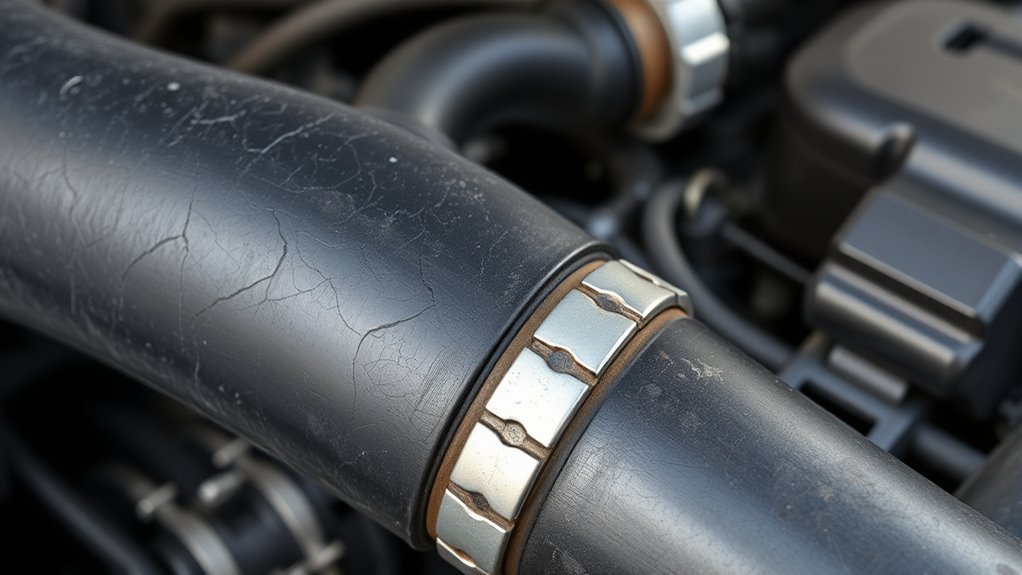
Wondering if your radiator hose is bad? You’ll assess it quickly: check for brittle appearance, visible cracks, bulges, leaking coolant, soft or spongy texture, and any swelling or deformation. You’ll feel the hose when the engine is cool—softness or sponginess means compromise; brittleness or surface cracks means imminent failure. Bulges and swelling often follow exposure to oil or incompatible coolant types, so verify you’ve used the correct coolant for your Camry during radiator maintenance. If you detect coolant around hose connections or along the hose length, plan immediate replacement; leaks escalate rapidly and risk overheating. Use inspection as a liberation tool: regular, decisive checks free you from roadside breakdowns. Replace hoses showing any of these defects rather than waiting for a catastrophic split. Keep records of coolant type and hose age to streamline future maintenance cycles and to guarantee the cooling system stays reliable and resistant to premature degradation.
Visible Signs of an Aging Radiator Hose (Toyota Camry)
After you’ve learned how to spot a bad radiator hose in general, focus on the visible signs specific to an aging Camry hose: look for surface cracks, hard or soft spots, and any bulges or swelling along the length. You’ll perform a crack inspection visually and by feeling the hose without probing systems. Surface cracks and splits indicate structural deterioration and demand immediate attention to prevent leaks. Note hose bulging or localized swelling—this often signals oil exposure or internal failure and requires replacement. Check around clamps and crimp areas for dried coolant or stains; leaks there are common with aged hoses. A spongy or overly hard texture shows rubber degradation and reduced pressure tolerance. Regular, disciplined visual checks free you from sudden failures and help you schedule replacements on your terms. Keep records of findings and act decisively when you see cracking, bulging, or leakage to protect the Camry’s cooling integrity.
How to Test a Camry Radiator Hose: Squeeze, Bend, Inspect
You’ll start by squeezing the hose firmly—if it feels soft or spongy instead of resilient, it’s deteriorating and likely to fail. Next, bend and twist the hose while watching for cracks, bulges, or crunching noises that indicate internal breakdown. Finish with a surface inspection and a gentle scratch test; any material coming off or visible irregularities means replace it immediately.
Squeeze For Firmness
Grab the upper and lower radiator hoses and squeeze them firmly—if the rubber feels soft, spongy, or gives way under moderate pressure, the hose has likely deteriorated and should be replaced. Use the squeeze test to assess hose integrity: press along the length, note any sections that compress differently. You’re checking for uniform firmness; variation indicates internal breakdown or delamination. Apply steady, controlled pressure so you can detect subtle changes without damaging the hose. If material flakes or the surface yields excessively, remove and replace the hose to restore system reliability. This hands-on check empowers you to prevent roadside failure, maintain coolant flow, and reclaim control over maintenance rather than waiting for a catastrophic leak. Keep records of findings and replacement dates.
Bend And Inspect
Bend and twist each radiator hose along its length while watching and feeling for issues—cracks, bulges, or areas that fold oddly all point to weakening or internal delamination. You’ll combine tactile and auditory checks to judge hose durability: squeeze to confirm firmness, then bend while listening for crunching that signals internal breakdown. Use focused inspection techniques—look for surface flaking when you scratch gently, and inspect clamp and crimp ends for leaks or distortion. Any soft, spongy feel, audible collapse, visible debris, or irregular folding means replace the hose. These practical steps free you from guesswork and keep cooling integrity in your control. Repeat inspections regularly to catch progressive deterioration before failure.
Hidden Signs: Coolant Loss, Crust, and Low-Temp Warnings
If you notice unexplained coolant drops or a sweet smell under your Camry, check the radiator hoses and connections for leaks immediately. Look for crusty white or green deposits around hose clamps and fittings—those indicate slow seepage that can worsen. Also watch for persistent low coolant readings or temperature warnings, which often point to restricted flow or hose failure.
Unexplained Coolant Drops
When your Camry’s coolant level keeps dropping with no visible leak, suspect aging radiator hoses: they often develop tiny fissures or loose clamps that leave crusty deposits at the hose-to-radiator and hose-to-engine joints and can let coolant escape intermittently. You’ll want to track coolant levels regularly; persistent drops point to hidden coolant leaks from hose deterioration that can culminate in overheating. Check for a sweet-smelling puddle under the car and monitor low-temperature warnings on the dash — both signal insufficient coolant circulation. Because deteriorating hoses can bleed fluid without obvious rupture, inspect clamps, feel for soft or spongy hose sections, and pressure-test the system when in doubt. Fixing a compromised hose restores control and prevents cascading damage.
Crust Around Connections
Although it can look harmless, crust around your Camry’s radiator hose connections usually signals a slow coolant leak that you shouldn’t ignore. You’ll see crust formation where hoses meet the radiator or engine; that white or rusty residue marks escaping coolant that’s evaporated and left deposits. Don’t wait for a temperature spike — low coolant levels can trigger low-temperature warnings and indicate the cooling system isn’t performing efficiently. Inspect hose connections regularly, feel for dampness, and probe clamps for looseness; early detection prevents overheating and engine damage. Remove crust buildup, tighten or replace faulty clamps, and swap aged hoses to restore sealing integrity. Acting decisively preserves cooling performance and extends the lifespan of your radiator hoses.
Why Camry Radiator Hoses Fail: Heat, Oil, Age, Clamps
Because your Camry’s cooling hoses sit in a hot, vibrating, and chemically active environment, they tend to fail for a few predictable reasons: heat-driven rubber breakdown undermines hose material durability, while oil contamination attacks elastomers, causing swelling and softening that reduce sealing effectiveness. You’ll see aging as surface cracks, hardening, or bulges that signal impending rupture. Vibration and engine movement initiate fatigue at bends and connection points, accelerating micro-cracks that grow under thermal cycling. Oil wicking from adjacent leaks or spills speeds chemical degradation, making hoses brittle and prone to splits. Clamps matter: loose, corroded, or improperly sized clamps prevent a secure seal and let coolant escape at joints, worsening overheating and promoting external contamination. Inspecting hose integrity and clamp condition reveals compromised zones before catastrophic failure. You want autonomy over maintenance—prioritize hose material durability and clamp torque checks so you can replace components on your schedule and avoid being stranded by predictable failures.
Immediate Steps and When to Call a Mechanic
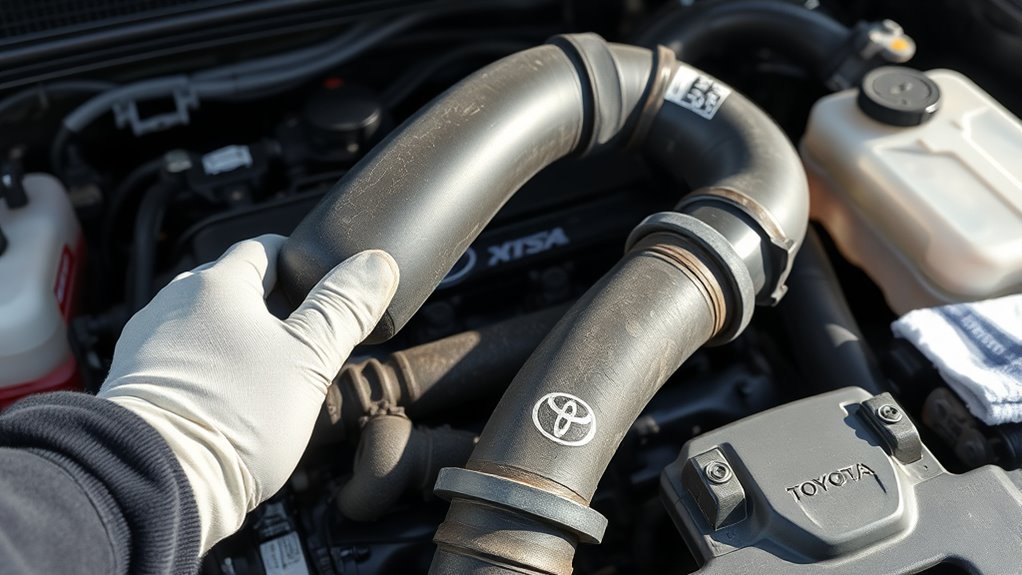
If you spot visible cracks, bulges, coolant residue, or smell that sweet antifreeze scent, stop driving and address the hose issue immediately to avoid overheating and engine damage. Park safely, let the engine cool, and visually verify the affected hose. Don’t touch hot components; once cool, feel the hose for soft or spongy spots that indicate internal breakdown. If you see coolant crust at clamps or joints, tighten nothing more than a visual check—loose clamps can cause leaks but overtightening may damage fittings.
For immediate action, top off coolant only if you have the correct type and a cool engine; otherwise wait for professional help. Prioritize hose replacement when cracks, swelling, or soft texture are present. Seek mechanic consultation if you detect persistent leaks, repeated temperature spikes, unclear leak sources, or if you’re uncomfortable performing a safe inspection. Getting expert diagnosis preserves freedom from roadside failure and protects your engine.
Replacement Options & Maintenance Tips for Longer Life
When you replace radiator hoses, choose high-quality, heat- and oil-resistant hoses and matching clamps to avoid premature failure and coolant loss. Opt for OEM-spec or proven aftermarket replacement materials like EPDM rubber or silicone for higher temperature tolerance and chemical resistance. Replace hoses every 4–5 years or immediately if you spot cracks, bulges, soft spots, or a spongy texture.
Establish a disciplined maintenance schedule: inspect hoses visually and by feel at every oil change, tighten or swap worn clamps, and perform coolant flushes per manufacturer intervals. Tight clamps should compress hose ends evenly; replace rusted or deformed clamps to prevent leaks. When changing hoses, drain coolant into a closed container, torque clamps to spec, and pressure-test the cooling system to confirm integrity.
You’re reclaiming control of vehicle reliability—use robust replacement materials, follow the maintenance schedule, and act on early signs to extend cooling-system life and avoid roadside failures.
Frequently Asked Questions
How Do I Know When to Replace My Radiator Hose?
Replace it when you spot cracks, bulges, sponginess, leaks, or crust at connections; squeeze hoses for softness or collapse and monitor coolant loss. Use radiator maintenance tips and hose inspection techniques to free yourself from breakdowns.
Conclusion
You’ve spotted cracks, bulges, or soft spots — and now you’re deciding whether to drive or act. Don’t wait for steam or a warning light; squeeze the hose, trace leaks, and watch coolant levels overnight. If anything feels spongy, oily, or crusted, replace it. Use OEM-style hoses, tighten clamps correctly, and schedule checks every oil change. Do the swap now, and you’ll avoid a roadside breakdown that’s coming closer than you think.