Your Toyota Camry uses a 12V auxiliary battery to power startup electronics, lights, locks, accessories, and control modules. Older gas Camrys use only this low-voltage battery, while Camry Hybrids also have a separate high-voltage traction battery for hybrid drive assist. Most Camry 12V batteries last about 3 to 5 years, but heat, short trips, vibration, corrosion, and parasitic drain can shorten that window.
Quick Answer
A Toyota Camry 12V battery usually lasts 3–5 years. Test it sooner if you notice slow cranking, dim lights, warning messages, corrosion, swelling, or repeated jump-starts. Camry Hybrids also have a high-voltage battery, but that is a separate system with separate warranty coverage and service procedures.
Key Takeaways
- Plan to test your Camry’s 12V battery annually, and more often after year three or before extreme heat/cold.
- A resting voltage around 12.6V or higher is usually strong; 12.4V needs charging and retesting, and below 12.0V is a serious warning sign.
- Do not choose a battery by price alone. Match the correct group size, terminal layout, hold-down, CCA rating, and chemistry for your exact year and trim.
- Toyota TrueStart 12V batteries have 24 months of free-exchange coverage and prorated coverage up to 84 months when warranty terms apply.
- Never service orange high-voltage hybrid cables or the hybrid traction battery yourself.
At a Glance
| Time Required | 5–10 minutes for a voltage check; 20–45 minutes for a simple 12V replacement |
| Difficulty | Beginner for testing; moderate for replacement if the battery is easy to access |
| Tools Needed | Digital multimeter, safety glasses, gloves, terminal brush, socket/wrench set, battery charger or load tester if needed |
| Cost | Often about $120–$300 for many aftermarket 12V batteries; premium AGM or dealer/OEM options may cost more |
Camry Battery Types: 12V vs. Hybrid Battery
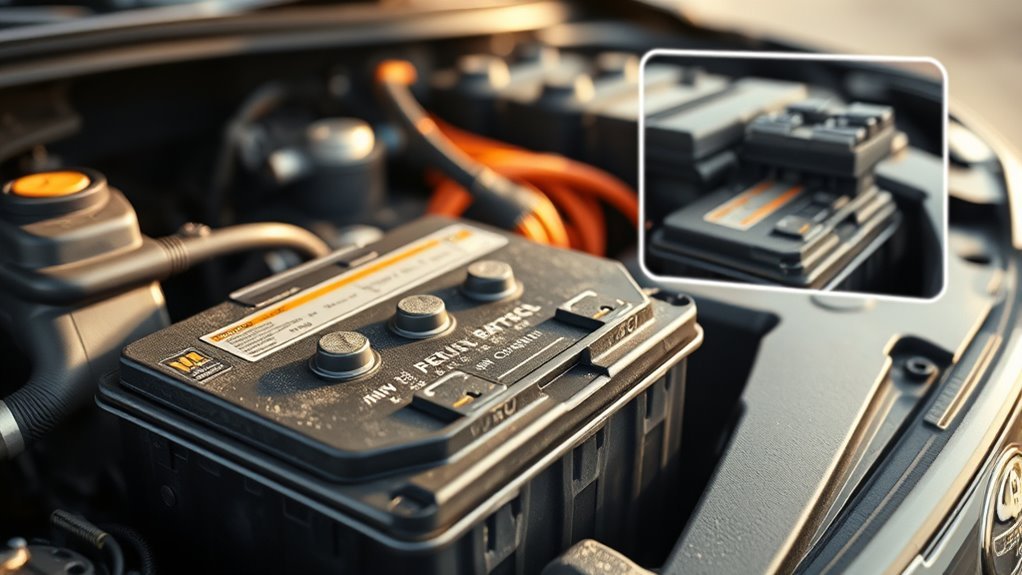
The first thing to know is that “Camry battery” can mean two different things:
| Battery | What it does | Owner service? |
|---|---|---|
| 12V auxiliary battery | Powers vehicle electronics, lights, locks, computers, and startup systems. On a gas Camry, it also supplies starting power for the engine starter. | Testing and terminal cleaning are reasonable DIY tasks. Replacement may be DIY if you use the correct battery and follow safety steps. |
| Hybrid high-voltage battery | Stores energy for the hybrid system and electric motor assist. It is separate from the 12V battery. | No. Diagnosis and service should be handled by Toyota-trained or hybrid-certified technicians. |
For many older gasoline Camrys, the main battery conversation is the 12V lead-acid battery under the hood. For Camry Hybrids, including the newer U.S. Camry lineup that became hybrid-only beginning with the redesigned 2025 model year, you still have a 12V battery, but you also have a high-voltage hybrid battery.
Note: The 12V battery and the hybrid traction battery are not interchangeable. A weak 12V battery can keep a Camry Hybrid from entering READY mode even when the high-voltage battery is healthy.
Toyota’s current hybrid battery warranty information says Toyota hybrid batteries are supported by a 10-year/150,000-mile limited warranty, whichever comes first. That warranty coverage is not a guarantee that every pack will fail at that mileage; it simply explains the coverage period. Real-world life depends on age, temperature, use, diagnostics, and vehicle history.
How Long Does a Camry 12V Battery Last?
A Camry’s 12V battery usually lasts about 3 to 5 years. In mild climates and with longer drives, it may reach the upper end of that range. In very hot climates, with repeated short trips, or with a vehicle that sits for weeks, the battery can weaken earlier.
After the third year, do not wait for a no-start. A quick voltage and load test can catch a weak Camry battery before it leaves you stranded.
Typical Lifespan Range
| Use pattern | Expected 12V battery life | What to do |
|---|---|---|
| Mild climate, regular longer drives | Often 4–5 years | Test annually and before long trips. |
| Hot climate or heavy accessory use | Often closer to 3 years | Test every 6 months after year three. |
| Frequent short trips or long storage | Can fail early | Use a smart maintainer if the car sits. |
Signs of Failure
Battery failure is not always sudden. Watch for these common warning signs:
- Slow cranking or delayed startup when you press the start button or turn the key.
- Dim or flickering headlights and cabin lights, especially at startup or idle.
- Battery, charging, check engine, or hybrid system warnings on the dashboard.
- Repeated jump-starts or a battery that will not hold a charge overnight.
- Corrosion, loose clamps, a swollen case, or a rotten-egg smell near the battery.
A swollen battery case, leaking fluid, or strong sulfur smell is not a “test it later” situation. Stop using the battery and have it replaced safely.
What Affects Camry Battery Life?
The biggest battery-life factors are time, heat, vibration, charge level, and driving pattern. Heat speeds internal battery wear. Cold reduces available power and makes the vehicle need more energy to start. Short trips prevent the charging system from restoring the battery fully. Dirty or loose terminals add resistance and can make a good battery act weak.
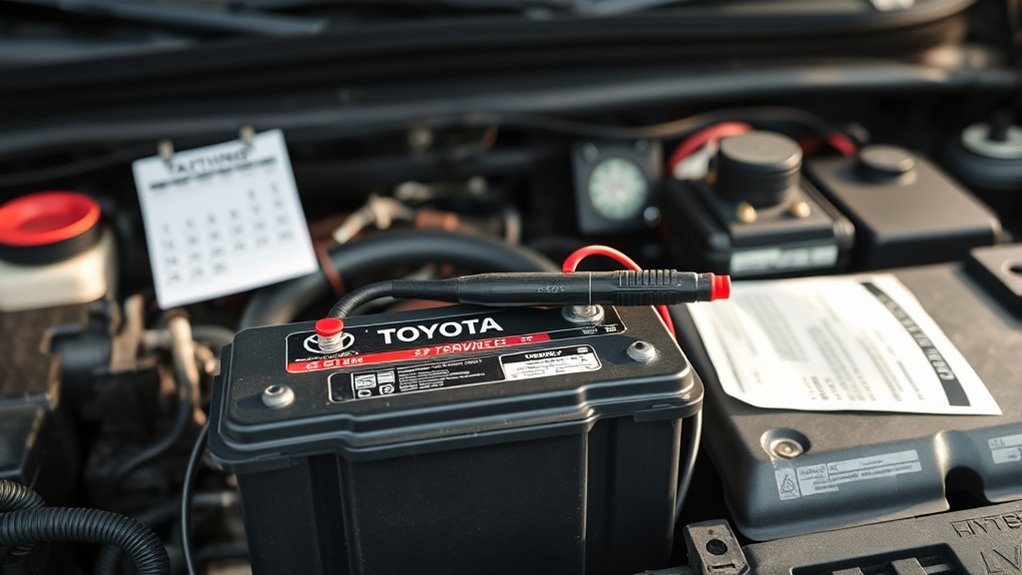
Pro Tip: Look for the date sticker or stamped date code on the battery. If it is more than three years old and you are seeing symptoms, test it before the next hot summer or cold snap.
Factors That Shorten Camry Battery Life
If you expose your Camry’s 12V battery to extreme heat or cold, run lots of short trips, leave the car parked for weeks, use accessories with the engine or READY mode off, or skip terminal maintenance, you can shorten battery life significantly.
Common causes include:
- Heat exposure: Under-hood temperatures can accelerate internal corrosion and fluid loss in lead-acid batteries.
- Cold starts: Cold weather lowers battery output at the same time the vehicle needs more starting power.
- Short-trip driving: A 5-minute errand may not replace the energy used during startup.
- Parasitic drain: A light, module, aftermarket alarm, dashcam, or accessory can drain the battery while parked.
- Loose or corroded terminals: Bad contact can reduce available power and confuse electronic systems.
- Vibration: A loose hold-down can damage internal plates over time.
To extend battery life, keep the battery secured, clean the terminals, avoid leaving accessories on when the vehicle is off, combine short errands when possible, and use a smart battery maintainer if the Camry sits for long periods.
Signs Your Camry’s 12V Battery Is Failing
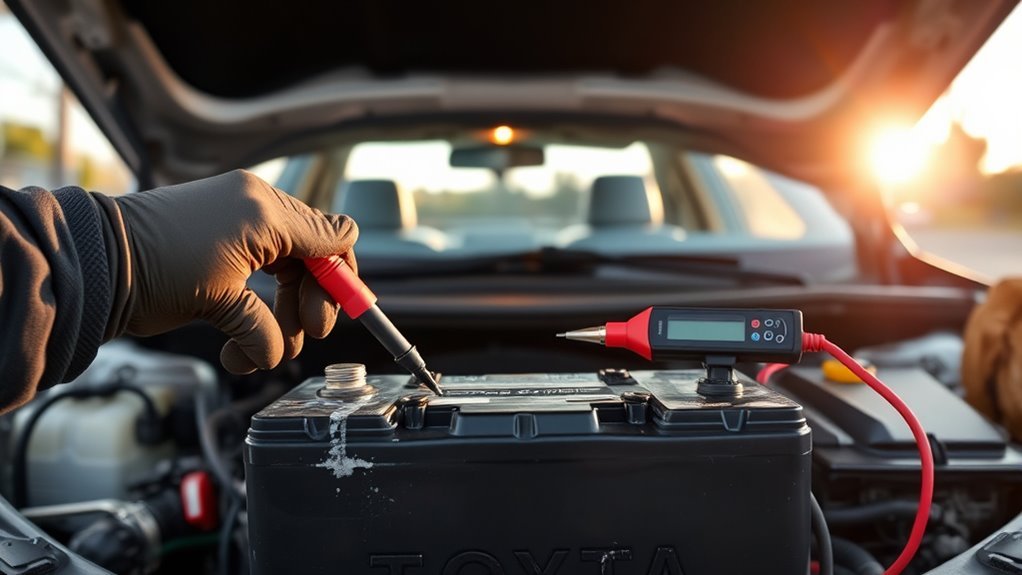
A weak 12V battery usually shows up first through electrical behavior. However, the battery is not the only possible cause. Starter problems, loose cables, alternator issues on gas models, DC-DC converter issues on hybrids, and parasitic drains can create similar symptoms. Testing helps separate a weak battery from a charging-system problem.
Slow Engine Crank
On a gasoline Camry, a weak 12V battery may make the engine crank slowly or hesitate before starting. On a Camry Hybrid, you may not hear a traditional starter crank, but a weak 12V battery can still cause no-start behavior, warning messages, or failure to enter READY mode.
Check the terminals first. If they are clean and tight, test resting voltage and then have the battery load-tested if symptoms continue.
Dimming Interior Lights
Dim cabin lights, weak headlights, or lights that fade when accessories are switched on can point to low battery capacity or poor cable contact. Dimming that happens only while driving may also involve the charging system, so do not replace the battery blindly without a basic test.
Dashboard Warning Indicators
Battery-related warnings, check engine messages, charging system alerts, or hybrid system warnings can appear when voltage is low. Modern Camrys rely on stable 12V power for many modules, so one weak battery can trigger several unrelated-looking alerts.
Replace or professionally test the battery immediately if warning lights come with slow startup, repeated jump-starts, corrosion, swelling, or a battery older than three years.
Test Your Camry’s 12V Battery at Home
Warning: Wear safety glasses and gloves when working near a lead-acid battery. Keep sparks, cigarettes, and open flames away. Do not test, charge, jump-start, or clean a frozen, leaking, swollen, or damaged battery. On Camry Hybrids, never touch orange high-voltage cables or the hybrid battery pack.
To test the 12V battery with a digital multimeter:
- Park safely, turn the vehicle off, and wait at least 10–20 minutes so surface charge can settle.
- Set the multimeter to DC volts.
- Touch the red probe to the positive battery terminal and the black probe to the negative terminal or approved ground point.
- Read the voltage and compare it with the table below.
- If the result is low, charge the battery fully and retest. If it drops again, the battery may be failing or the vehicle may have a drain.
| Resting voltage | What it usually means | Next step |
|---|---|---|
| 12.6V–12.8V | Strong state of charge | Test again seasonally or before long trips. |
| 12.4V–12.5V | Partially charged or beginning to weaken | Charge fully, retest, and consider a load test. |
| 12.2V–12.3V | Low charge | Charge and test for drain or battery age. |
| Below 12.0V | Deeply discharged or failing | Charge only if safe; replace if it fails a load test. |
A voltage check is useful, but it does not tell the whole story. A battery can show 12.6V at rest and still fail under load. If the Camry struggles to start, have the battery tested for cold cranking amps (CCA) and internal resistance.
Interpreting Battery Test Results and Next Steps
Most battery testers report voltage, CCA, state of charge, and sometimes state of health. Use those numbers to choose the next step:
- Voltage is low but the battery passes load testing: Recharge it and look for short-trip use, accessory drain, or a charging issue.
- CCA is far below the battery label rating: Replace the battery before hot or cold weather makes the problem worse.
- Voltage drops sharply during load testing: The battery is weak even if it looked okay at rest.
- Battery passes but symptoms continue: Inspect cables, grounds, starter, alternator on gas models, or the DC-DC charging system on hybrids.
- Battery is swollen, leaking, or smells like sulfur: Do not keep testing it at home. Replace it safely.
Note: If your Camry Hybrid has a weak 12V battery, the high-voltage battery may still be fine. Start diagnosis with the 12V battery before assuming the hybrid traction battery has failed.
Camry Battery Upgrade Options: Flooded, EFB, AGM, and High-CCA
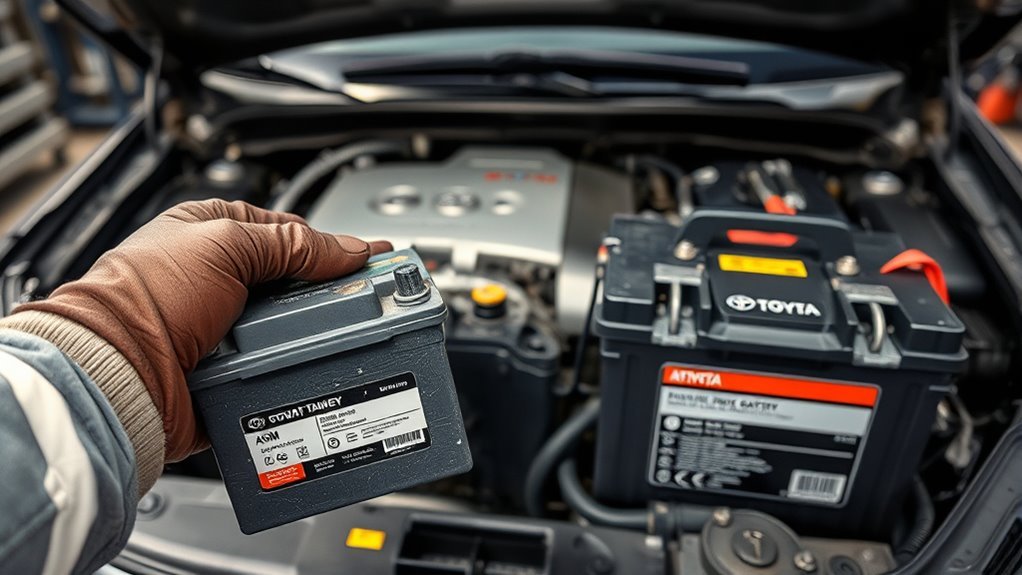
When choosing a replacement, match the battery to your exact Camry rather than guessing by size. The safest path is to confirm fitment by VIN, owner’s manual, or Toyota parts lookup.
| Battery type | Best for | Watch out for |
|---|---|---|
| Flooded lead-acid | Many older Camrys and budget replacements | Can be more sensitive to deep discharge and vibration. |
| EFB | Vehicles that need improved cycling over standard flooded batteries | Must match the vehicle’s charging system and fitment. |
| AGM | Higher accessory loads, vibration resistance, and some newer applications | Do not install AGM just because it is “better.” It must be compatible with your Camry’s charging strategy. |
| High-CCA battery | Cold climates and owners who want more cold-start margin | Meet or exceed OEM CCA, but do not sacrifice physical fit, terminal layout, or hold-down security. |
Battery Fitment Checklist
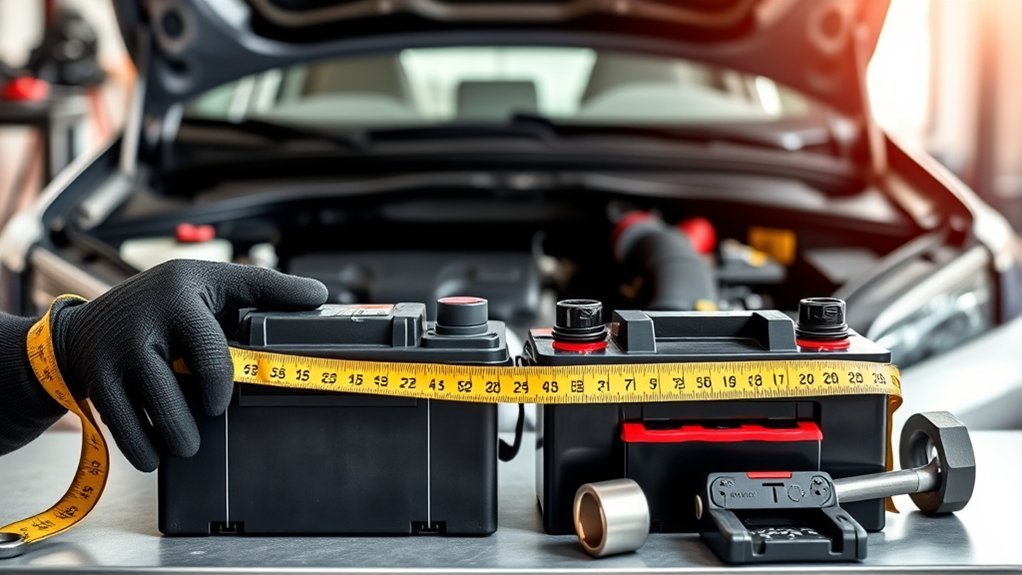
Before buying a Camry battery, confirm:
- BCI group size or Toyota part fitment for your year and trim.
- Terminal orientation so cables reach without stretching.
- Hold-down compatibility so the battery cannot move.
- CCA rating that meets or exceeds the original requirement.
- Reserve capacity appropriate for accessories and climate.
- Venting needs, especially if the battery is mounted outside the engine bay.
- Battery chemistry that matches the charging system.
Toyota’s official parts listings show Toyota TrueStart batteries with an 84-month limited warranty on applicable batteries, but actual fitment and dealer price vary. Use the owner’s manual and dealer parts lookup to confirm the correct battery before purchase.
Camry Battery Replacement Cost, Labor, and Warranty
For a normal Camry 12V battery replacement, expect the total cost to vary by year, battery type, brand, labor rate, and whether you buy from a dealer, parts store, or repair shop. As a practical planning range, many aftermarket Camry 12V batteries fall around $120–$300, while premium AGM batteries or dealer/OEM batteries can cost more. Installation may be free at some parts stores or may add shop labor at a dealer or repair facility.
Do not confuse the 12V battery with the hybrid high-voltage battery. A high-voltage hybrid battery is a different, much more expensive component and should be diagnosed by a hybrid-certified technician.
| Item | Typical guidance |
|---|---|
| Standard 12V battery | Often in the low hundreds, depending on group size, brand, and warranty. |
| AGM / premium 12V battery | Often higher than flooded batteries; buy only if compatible and needed. |
| Labor | May be free with purchase at some retailers, or billed by a shop/dealer if access, testing, registration, or diagnostics are required. |
| Toyota TrueStart warranty | Toyota states TrueStart batteries are free exchange for 24 months, then prorated up to 84 months when warranty terms apply. |
| Toyota hybrid battery warranty | Toyota hybrid batteries are listed with 10-year/150,000-mile limited warranty coverage, whichever comes first. |
Keep your receipt, installation paperwork, and battery test results. Warranty decisions often depend on the purchase date, battery type, proof of purchase, and whether the battery failed due to defect rather than misuse, deep discharge, incorrect installation, or vehicle electrical problems.
How to Replace a Camry 12V Battery Safely
If the battery is easy to access and you are comfortable with basic tools, replacing a Camry 12V battery can be a DIY job. Stop and use a shop if the battery is hard to access, damaged, leaking, swollen, or connected to unfamiliar wiring.
- Turn the vehicle off, remove the key fob from the cabin, and keep doors closed when possible.
- Put on safety glasses and gloves.
- Take a photo of the battery, clamp positions, and hold-down before removing anything.
- Disconnect the negative cable first, then the positive cable.
- Remove the hold-down and lift the battery straight up. Batteries are heavy, so use proper lifting form.
- Clean the tray and terminal clamps if needed.
- Install the correct replacement battery and secure the hold-down.
- Connect the positive cable first, then the negative cable.
- Start the vehicle or put a hybrid into READY mode and check for warning lights.
- Reset clock, window auto-up/down, radio presets, or other memory items if needed.
Warning: On a hybrid Camry, this section applies only to the 12V battery. Do not open or service the high-voltage battery case, orange cables, inverter, or hybrid system components.
When to Visit a Dealer or Certified Shop for Service
Visit a dealer or certified shop if your Camry has repeated no-starts, multiple warning lights, a battery that dies overnight, a battery that tests good but symptoms continue, or any hybrid-system warning. A professional can test the battery, inspect cable voltage drop, check charging output, scan diagnostic codes, and identify parasitic draw.
Use a dealer or hybrid-certified shop immediately if the concern involves the high-voltage battery, orange cables, inverter, DC-DC converter, or hybrid READY mode problems that do not resolve after the 12V battery tests good.
Bring the battery age, test results, and service history with you. That helps the technician separate a simple weak battery from a charging, cable, starter, module, or drain issue.
Frequently Asked Questions
How long does a Toyota Camry 12V battery last?
Most Toyota Camry 12V batteries last about 3 to 5 years. Hot climates, short trips, long parking periods, corrosion, vibration, and parasitic drain can shorten that range. Test the battery at least annually and every 6 months after year three if conditions are harsh.
What is the life expectancy of the battery in a Toyota Camry Hybrid?
A Camry Hybrid has a 12V battery and a separate high-voltage hybrid battery. The 12V battery usually lasts about 3 to 5 years. Toyota’s hybrid battery warranty is listed as 10 years or 150,000 miles, whichever comes first, but actual service life depends on age, use, heat, and vehicle condition.
How do I know if a 12V battery needs to be replaced?
Replace or professionally test the battery if you notice slow starting, dim lights, repeated jump-starts, battery or charging warnings, corrosion, swelling, leaking, or resting voltage that stays low after charging. A load test is more reliable than resting voltage alone.
How long is the Toyota 12V battery warranty?
Toyota states that TrueStart 12V batteries are covered by free exchange for 24 months from the purchase date, regardless of mileage, then prorated coverage up to 84 months when warranty terms apply. True-2 batteries have different terms, so check your receipt and dealer paperwork.
Can I replace a Camry 12V battery myself?
Yes, if the battery is easy to access, undamaged, and you are comfortable using basic tools. Disconnect negative first, then positive; install positive first, then negative. Use the correct battery size and wear eye and hand protection. Do not attempt high-voltage hybrid battery work yourself.
Is an AGM battery worth it for a Toyota Camry?
AGM can be worth it if your Camry’s charging system and fitment support it, especially for higher accessory loads or vibration resistance. However, AGM is not automatically the best choice for every Camry. Match the battery chemistry, size, terminal layout, and CCA rating to your exact model.
How much does a Toyota Camry battery replacement cost?
Many normal Camry 12V battery replacements fall in the low hundreds for the battery itself, with premium AGM or dealer/OEM options costing more. Labor may be free with purchase at some retailers or billed separately at a shop. A hybrid high-voltage battery is a separate and much more expensive repair.
Conclusion
Your Camry’s 12V battery is small compared with the engine or hybrid system, but it can stop the whole car when it gets weak. Treat 3 to 5 years as the normal planning window, test sooner in harsh climates, and act quickly if you see slow starts, dim lights, warning messages, corrosion, or swelling. For the best result, choose the correct battery by fitment and spec, keep the terminals clean, and leave high-voltage hybrid battery work to trained technicians.
Sources
- Toyota Owners Manuals and Warranties — current Camry warranty/manual reference and Toyota hybrid warranty details
- Toyota Electrified Vehicles Battery Warranty — Toyota hybrid battery warranty coverage
- Toyota TrueStart 24F EFB Battery — Toyota 12V battery warranty and fitment reference
- Toyota USA Newsroom: Next-Generation Camry — 2025 Camry hybrid-only model-year context
- AAA: How Long Do Car Batteries Last? — typical 3–5 year battery life and factors that affect battery aging
- OSHA Battery Charging and Changing — battery charging, ignition-source, and jump-start grounding safety guidance