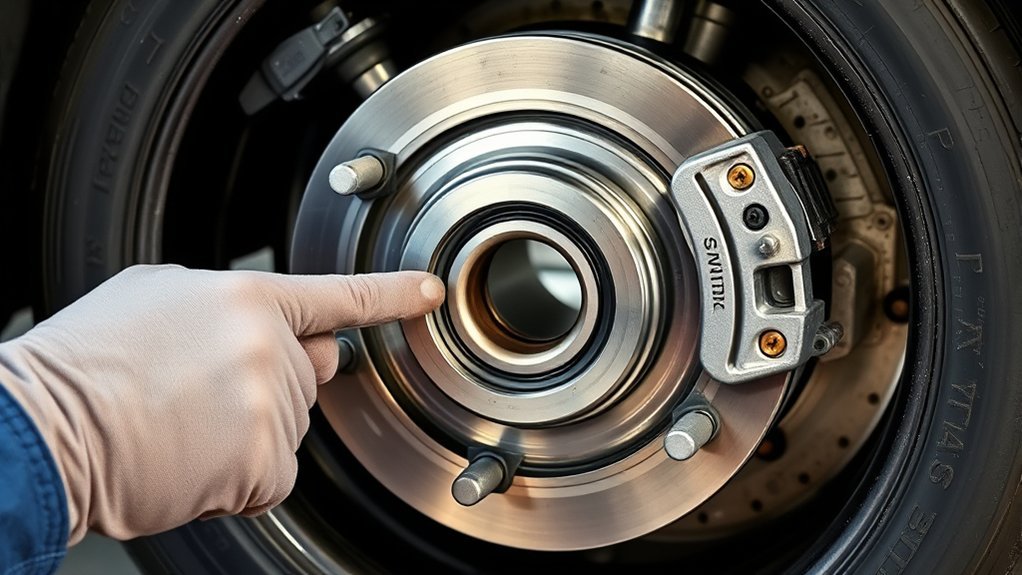
A Toyota Camry wheel bearing helps each wheel carry the vehicle’s weight and spin smoothly with very little friction. When a bearing wears out, the first clues are usually a humming, growling, grinding, vibration, uneven tire wear, or an ABS/traction-control warning. Catching those signs early matters because a badly worn bearing can damage the hub, tire, brake parts, or suspension.
Quick Answer
A Camry wheel bearing supports the wheel hub, reduces friction, and helps the wheel rotate straight and smoothly. A failing bearing often makes a speed-related hum or growl, may create steering vibration or wheel play, and can trigger ABS or traction-control warnings when the wheel-speed signal is affected.
Key Takeaways
- A Camry wheel bearing lets the hub rotate smoothly while carrying vertical, cornering, and braking loads.
- The most common warning sound is a humming, droning, growling, or grinding noise that changes with road speed.
- Most modern Camry bearings are sealed; they are usually replaced when worn rather than cleaned and re-greased.
- Do not rely on a jack alone for inspection. Use wheel chocks, level ground, and properly rated jack stands.
- Torque specs vary by model year and drivetrain, so final installation should follow Toyota service information for the exact vehicle.
At a Glance
| Quick Check Time | 10–20 minutes per wheel once the car is safely lifted |
| Difficulty | Beginner for listening checks; advanced for replacement |
| Tools Needed | Wheel chocks, floor jack, rated jack stands, gloves, flashlight, pry bar, torque wrench, and possibly an ABS-capable scan tool |
| Typical Repair Cost | Often about $312–$526 for a Camry wheel bearing replacement, before taxes, location differences, and related repairs |
Warning: Never crawl under a Camry that is supported only by a jack. Work on level ground, chock the opposite wheels, use jack stands rated for the vehicle, and secure the load before inspecting or shaking the wheel.
What a Wheel Bearing Does in a Toyota Camry
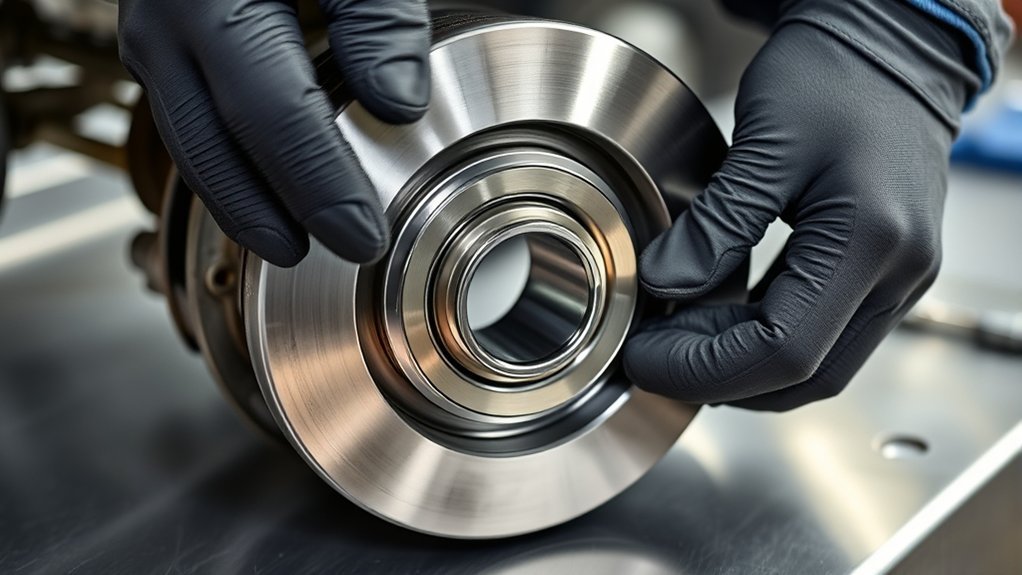
A wheel bearing is a precision part inside the wheel hub area. Its job is simple but demanding: it lets the wheel rotate smoothly while supporting the weight of the vehicle and the forces created by turning, braking, and road impacts.
Inside the bearing, hardened steel rolling elements move between machined races. Grease reduces friction, and seals help keep water, dust, road salt, and grit away from the bearing surfaces. When the bearing is healthy, the wheel spins quietly and stays centered on the hub.
When the seal fails, the bearing is overloaded, or the races become pitted, the wheel may no longer rotate smoothly. That is when you may hear humming, growling, squeaking, or grinding. You may also feel vibration, notice uneven tire wear, or see an ABS or traction-control warning if the wheel-speed signal is affected.
Most late-model Camry wheel bearings are sealed units. That means routine maintenance is mainly inspection, not lubrication. If a sealed bearing is worn, loose, noisy, or leaking, replacement is normally the correct repair.
Camry Wheel Bearing Design and Where It Sits
Every Camry wheel has a wheel bearing at the hub. The exact design depends on the model year, drivetrain, and axle position. Some applications use a bolt-on hub and bearing assembly. Others may use a pressed bearing that requires a press or special service tools.
Many modern hub assemblies also interact with the anti-lock brake system. For example, Toyota sells genuine front axle hub and bearing assemblies with an ABS sensor for applicable vehicles, combining the hub, bearing, and wheel-speed signal function in one matched unit. That is why a bearing or hub problem can sometimes appear with ABS or traction-control symptoms.
Note: Do not assume every Camry uses the same front or rear bearing design. Use the VIN, Toyota service information, or a trusted parts catalog to confirm the exact hub/bearing layout before ordering parts.
The bearing is mounted tightly in the hub or steering knuckle area. It must sit squarely and at the correct preload. Poor installation, damaged mating surfaces, incorrect torque, or a distorted seal can shorten the life of a new bearing.
Common Causes of Camry Wheel Bearing Failure
Camry wheel bearings can last a long time, but they are not immune to wear. The most common causes of early failure include:
- Impact damage: Potholes, curb strikes, and road debris can shock-load the bearing and damage the races, seals, or hub.
- Water and grit intrusion: A damaged seal can let moisture, salt, sand, and dirt reach the bearing surfaces.
- Incorrect installation: Pressing on the wrong race, forcing the hub, using an impact wrench where a torque wrench is required, or guessing torque can damage the bearing before the car is even driven.
- Overloading: Heavy cargo, repeated rough-road driving, or towing loads outside the vehicle’s limits can increase bearing stress.
- Wheel or suspension problems: Bent wheels, worn suspension parts, poor alignment, and uneven tire wear can add vibration and uneven loading.
- Age and mileage: Even a properly sealed bearing can eventually wear as grease breaks down and metal surfaces fatigue.
Preventive maintenance is mostly about catching symptoms early. Listen for new road-speed noises, inspect tires for uneven wear, keep suspension and alignment problems corrected, and avoid ignoring ABS or traction-control warnings.
9 Signs Your Camry Wheel Bearing Is Failing
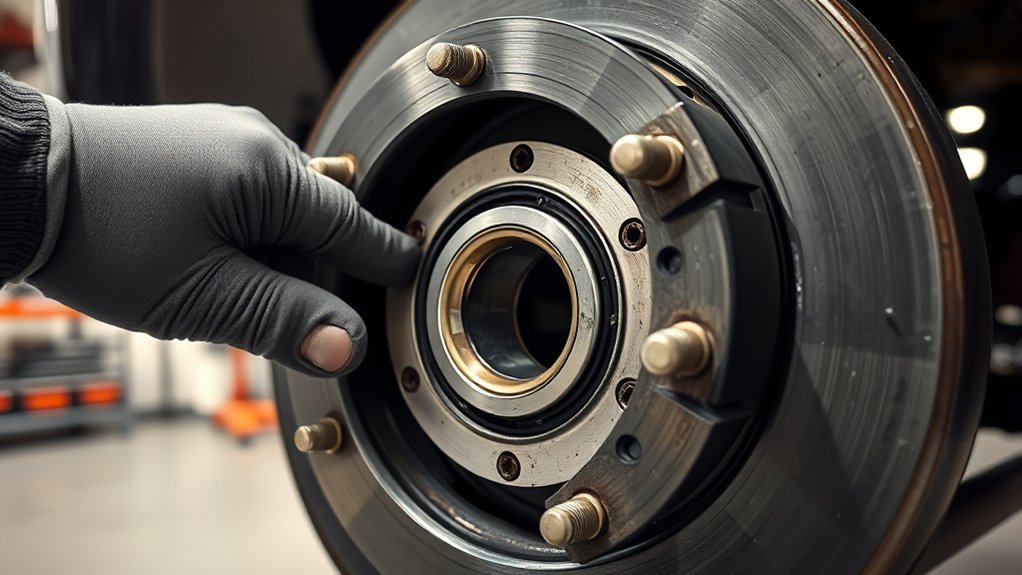
A bad bearing often starts quietly and gets worse with speed. Watch and listen for these symptoms:
- Humming or droning noise: The sound usually rises with vehicle speed.
- Growling or grinding: Rough metal-on-metal sound can mean the bearing is badly worn.
- Noise that changes while turning: The sound may get louder or quieter as vehicle weight shifts from side to side.
- Steering wheel vibration: A worn front bearing can transmit vibration into the steering wheel.
- Seat or floor vibration: Rear bearing noise may be felt more through the body than the steering wheel.
- Wheel play: A loose bearing may let the wheel rock when the car is safely lifted.
- Uneven tire wear: Excess movement at the hub can affect tire contact and wear patterns.
- Pulling or wandering: Severe looseness may make the car feel unstable.
- ABS or traction-control warning lights: If the sensor, encoder, tone ring, or wiring is affected, warning lights may appear.
Warning: Stop driving and arrange inspection if you hear harsh grinding, see smoke near a wheel, feel severe wobble, notice obvious wheel play, or the vehicle becomes hard to control.
Wheel Bearing Noise vs. Tire, Brake, and CV Axle Noise
Wheel bearing noise is easy to confuse with other problems. Use this table as a first-pass guide, not a final diagnosis.
| Symptom | More Likely Cause | What to Check |
|---|---|---|
| Hum or growl increases with speed | Wheel bearing or tire wear | Road test, tire tread pattern, lifted spin test |
| Noise changes when steering left or right | Wheel bearing load change | Compare left-turn and right-turn noise safely |
| Clicking while turning sharply | CV axle joint | Inspect CV boots and axle joints |
| Squeal only while braking | Brake pads, rotor, or hardware | Inspect pads, rotors, clips, and caliper movement |
| Noise changes on different pavement | Tire tread pattern or cupping | Inspect tire wear and rotate tires if appropriate |
| Vibration at one speed range | Wheel balance, bent wheel, tire issue, or bearing | Balance check, tire inspection, hub play check |
If the symptoms overlap, do not guess. A technician can isolate bearing noise with a road test, lift inspection, chassis ears, scan data, and wheel-end checks.
Step-by-Step Camry Wheel Bearing Inspection Quick Checks
These checks can help you decide whether the Camry needs a professional inspection. They do not replace Toyota service procedures, and they do not prove the bearing is safe for long-distance driving.
Safety Setup Before Inspection
- Park on a flat, solid surface.
- Set the parking brake.
- Chock the wheels that will stay on the ground.
- Loosen the lug nuts slightly before lifting if the wheel needs to come off.
- Lift at the correct Toyota jacking point.
- Lower the vehicle onto rated jack stands.
- Shake the vehicle lightly to confirm it is stable before touching the wheel.
Lift and Wiggle Test
With the wheel safely off the ground, grab the tire at the 12 and 6 o’clock positions. Rock it inward and outward. Then grab it at 3 and 9 o’clock and repeat the test.
A tiny amount of movement may come from normal suspension or steering play, but a clunk, visible hub movement, or clear looseness needs further diagnosis. If the steering tie rod, ball joint, or control arm also moves, the problem may not be the bearing alone.
Spin Wheel Listening
Spin the wheel by hand and listen near the hub. A smooth wheel should rotate without a rough growl or grinding sound. A bad bearing may feel gritty or may make a low rumble.
Compare both sides of the car. A noisy side-to-side difference is useful because one bearing may sound much rougher than the other.
Visual Seal Inspection
Look around the hub, backing plate, and axle area for grease leakage, rust trails, metal dust, damaged wiring, or a loose ABS sensor lead. A failed seal or damaged hub area can let contamination enter the bearing.
Pro Tip: Check the tire tread before blaming the bearing. Cupped or feathered tires can make a loud hum that sounds very similar to bearing noise.
Mechanic Diagnostic Tests and How to Read Results
A shop should confirm the fault before replacing parts. Good diagnosis prevents replacing a bearing when the real issue is a tire, brake, CV axle, or suspension part.
Road-Test Noise Check
A technician will usually listen at different speeds and under gentle left-right steering input. If the sound changes as vehicle weight shifts, the loaded or unloaded bearing may become easier to identify.
For example, a noise that gets louder during a gentle left curve may point to a right-side bearing because more weight is loaded on the right side. This rule is helpful, but not perfect, so it should be confirmed with lift checks.
Lift and Wheel Play
Once the car is safely lifted, the technician checks for wheel play and compares it with suspension movement. If the hub moves but the control arm, ball joint, and tie rod do not, the bearing or hub assembly becomes a stronger suspect.
Some failing bearings are noisy before they become loose. Others show play before they become loud. That is why a play test and noise test work best together.
Bearing Noise Tests
Shops may use a mechanic’s stethoscope, electronic chassis ears, or vibration tools to locate the noise. The goal is to identify which corner is creating the sound and to avoid confusing tire noise with hub noise.
A good result should name the suspect wheel, describe the sound, and explain whether the bearing has play, roughness, sensor faults, or related damage.
ABS Sensor Checks
If the ABS or traction-control light is on, the shop should scan for codes and compare wheel-speed data. A damaged sensor wire, loose connector, cracked tone ring, encoder problem, or excessive bearing play can all disturb the signal.
Do not replace a bearing only because an ABS light is on. The sensor circuit, connector, harness routing, and live wheel-speed data should be checked first.
Immediate Steps If You Suspect a Bad Camry Wheel Bearing
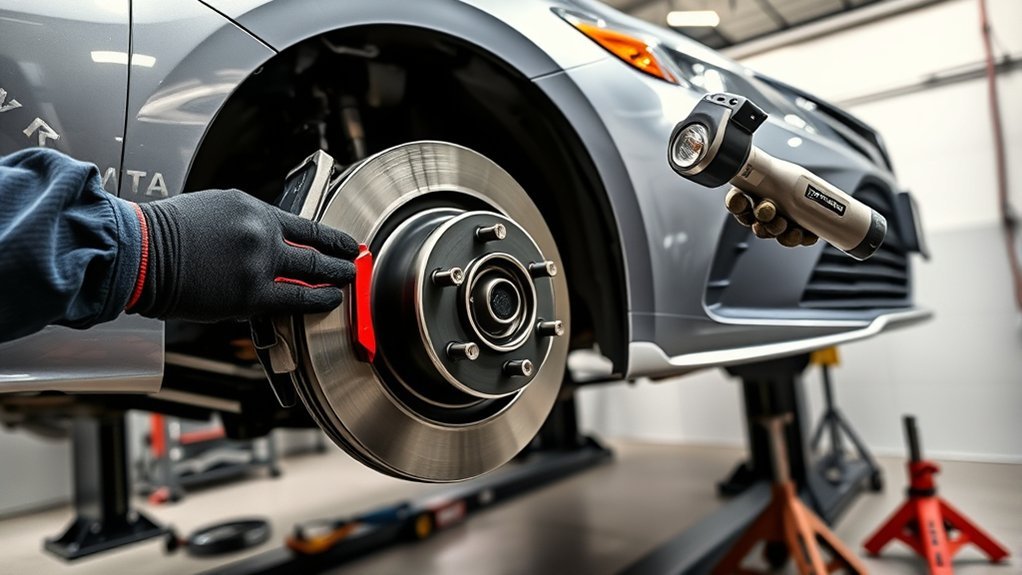
If you suspect a bad bearing, reduce speed and avoid long trips until the car is inspected. A mild hum may allow you to drive carefully to a nearby shop, but harsh grinding, wobble, smoke, or severe vibration means the vehicle should not be driven.
- Note the symptom: Write down the speed, road surface, and steering direction that makes the sound worse.
- Check tires first: Look for cupping, uneven wear, low pressure, or visible damage.
- Check warning lights: ABS or traction warnings can help guide diagnosis.
- Avoid heavy loads: Extra load adds stress to the wheel end.
- Schedule inspection quickly: Do not wait for a growl to become a grind.
If a shop confirms wheel play, roughness, or bearing noise, replacement is the correct fix. A bearing that has already become loose will not heal with driving.
Camry: OEM vs Aftermarket Bearings and Hub Options
Once the failed corner is identified, the next decision is what part to install. You may see genuine Toyota parts, premium aftermarket hub assemblies, budget aftermarket bearings, or full hub kits.
| Option | Best For | Watch Out For |
|---|---|---|
| Genuine Toyota hub/bearing | Best fit confidence and factory-style compatibility | Usually higher part price |
| Premium aftermarket | Good balance of cost and quality when using a reputable brand | Must match model year, trim, ABS setup, and drivetrain |
| Budget aftermarket | Low upfront cost | Higher risk of noise, fitment issues, or shorter service life |
| Complete hub assembly | Faster replacement when the design allows it | May cost more than a pressed bearing alone |
Choose based on how long you plan to keep the car, local labor rates, and the importance of avoiding repeat work. A cheap bearing can become expensive if it fails early and you have to pay labor twice.
Typical Camry Wheel Bearing Replacement Process and Parts
The replacement process depends on whether the Camry uses a bolt-on hub assembly or a pressed bearing for that axle. The steps below describe the typical workflow, but the exact procedure and torque values must come from Toyota service information for the specific vehicle.
Hub and Bearing Removal
A technician will usually raise and support the vehicle, remove the wheel, remove the brake caliper and rotor, secure the caliper so it does not hang by the brake hose, disconnect any necessary ABS wiring, and access the hub or bearing assembly.
For a bolt-on hub assembly, the old unit is unbolted from the steering knuckle or rear carrier. Rust can make removal difficult, so the mating surface may need careful cleaning.
For a pressed bearing, the knuckle may need to come off the vehicle. The old bearing is pressed out and the new bearing is pressed in with the correct adapters. Pressing on the wrong part of the bearing can damage it.
Reassembly and Torque Specifications
During reassembly, the bearing or hub must sit squarely. The ABS sensor or encoder must be aligned correctly if the assembly uses one. Mating surfaces should be clean and free of burrs, rust buildup, and debris.
Final tightening should be done with a calibrated torque wrench. Do not guess axle-nut, hub-bolt, caliper-bracket, or lug-nut torque. Do not use an impact wrench to set final bearing preload or axle-nut torque unless the service procedure specifically allows it.
Note: Brake bleeding is not part of a normal wheel bearing job unless a hydraulic brake line was opened. If the brake hose stayed connected and sealed, the system usually does not need bleeding.
After the repair, the shop should road-test the Camry, confirm that the noise is gone, check for warning lights, and verify that the wheel is secure. If suspension parts were removed, an alignment check may also be needed.
Cost Estimates, Service Choices, and When to Get a Second Opinion
A Toyota Camry wheel bearing replacement often falls around $312 to $526 before taxes, fees, location differences, and related repairs. The final quote can be higher if the vehicle needs a full hub assembly, has rusted hardware, uses a more expensive ABS-integrated assembly, or requires extra suspension work.
Costs vary because the repair may be quick on a bolt-on hub design but more labor-intensive on a pressed-bearing design. Dealer labor rates are also usually higher than independent shop rates.
Ask for an itemized estimate that separates:
- Part cost
- Labor hours
- Which wheel is being repaired
- Whether the part is genuine Toyota, premium aftermarket, or economy aftermarket
- Whether an alignment is included or recommended
- Whether ABS sensor work is included
Get a second opinion if the shop recommends replacing both bearings without showing evidence, quotes a full assembly when your model uses a serviceable bearing, cannot explain which wheel failed, or gives a much higher estimate than local averages.
How to Help Prevent Early Wheel Bearing Failure
You cannot make a wheel bearing last forever, but you can reduce avoidable stress.
- Avoid hard pothole hits: Slow down on damaged roads when safe.
- Fix tire and alignment problems: Cupped tires and worn suspension parts increase vibration.
- Use correct wheel torque: Over-tightened or unevenly tightened lug nuts can add stress to the wheel end.
- Do not overload the car: Stay within the Camry’s load limits.
- Repair splash shields and seals: Keeping water and grit away from the hub area helps the bearing last longer.
- Inspect after impacts: If you hit a curb or pothole hard, listen for new noise and check for wheel or tire damage.
A wheel bearing diagnosis should identify the noisy or loose corner before parts are replaced. Guessing by sound alone can waste money because tires, brakes, and CV axles can mimic bearing noise.
Frequently Asked Questions
What are the three main functions of a wheel bearing?
A wheel bearing supports the vehicle’s load at the wheel, reduces friction so the wheel can rotate smoothly, and keeps the hub centered so the tire, brake rotor, and wheel-speed sensor can work correctly.
Can I drive a Camry with a bad wheel bearing?
Only for a short, careful trip to a repair shop if the symptom is mild. Do not keep driving if the bearing is grinding, smoking, wobbling, showing obvious wheel play, or making the car hard to control.
Can a bad Camry wheel bearing turn on the ABS light?
Yes, it can. Some hub assemblies include or work closely with the wheel-speed sensor. Bearing play, damaged wiring, a sensor fault, or an encoder/tone-ring issue can disturb the ABS signal and trigger ABS or traction-control warnings.
Should I replace one wheel bearing or both sides?
Replace the failed bearing and inspect the opposite side. Replacing both can make sense if both are noisy, both have similar play, or the car has very high mileage, but it is not automatically required for every repair.
How long does a Toyota Camry wheel bearing last?
There is no fixed mileage. Many sealed bearings last well over 100,000 miles, but pothole impacts, water intrusion, overload, poor installation, tire vibration, and road salt can shorten their life.
Conclusion
A Toyota Camry wheel bearing is small compared with the engine or transmission, but it has a major effect on safety, steering feel, tire wear, braking, and road noise. The main signs of failure are speed-related humming, growling, grinding, vibration, wheel play, uneven tire wear, and sometimes ABS or traction-control warnings.
Start with safe basic checks: listen during a road test, inspect tires, check for play only after the car is properly supported, and compare both sides. If the symptoms point to a bearing, get a professional diagnosis before replacing parts. Use the correct part for the exact Camry, follow Toyota torque specifications, and choose quality parts to avoid repeat repairs.
Sources
- Toyota Genuine Front Axle Hub & Bearing Assembly with ABS Sensor — supports hub, bearing, and ABS wheel-speed signal explanation.
- RepairPal Toyota Camry Wheel Bearing Replacement Cost — supports current cost range, symptoms, sealed bearing note, and diagnosis overview.
- OSHA 1910.244: Jacks — supports jack rating, firm foundation, and securing the load after lifting.
- SKF Wheel End Bearing and Seal Installation Guide — supports clean-tool handling, seal care, and bearing installation precautions.
- Timken Bearings & Seals Installation Instructions — supports torque-wrench use, manufacturer torque specs, ABS sensor connection, and clean assembly practices.
- BCA Bearings Top Ten Wheel Bearing Torque Tips — supports checking service information because torque values vary by bearing and axle design.