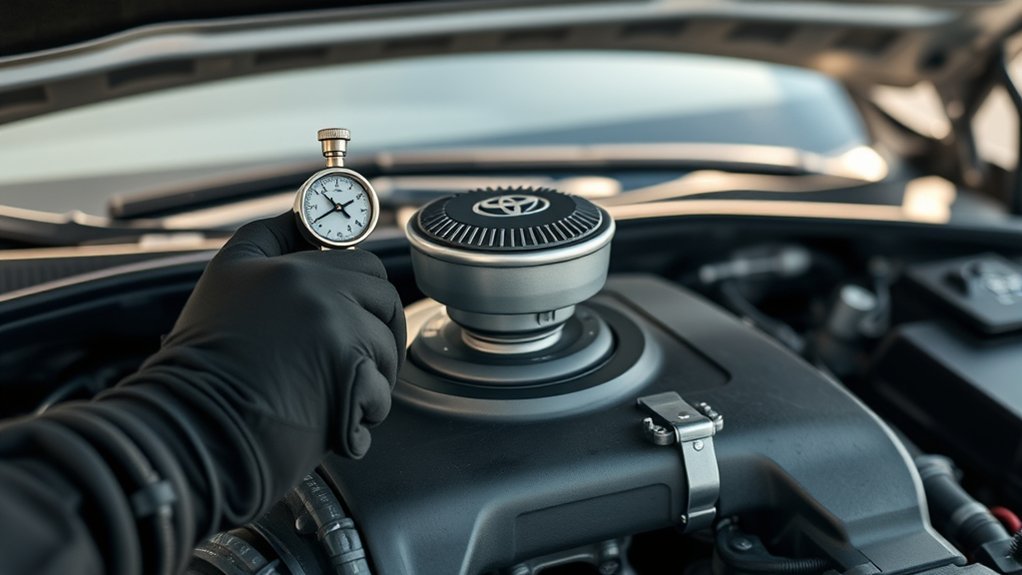
Checking the engine oil level on a Toyota Camry is a simple maintenance task, but it needs to be done carefully. The goal is to park on level ground, let the engine cool or sit long enough for oil to drain back into the pan, read the dipstick correctly, and add only the oil type recommended for your Camry’s engine.
Quick Answer
To check the oil level on a Toyota Camry, park on level ground, turn the engine off, wait a few minutes, pull the dipstick, wipe it clean, reinsert it fully, then pull it out again. The oil should be between the low and full marks. If it is low, add the correct oil slowly and recheck.
Key Takeaways
- Check the oil with the car parked on level ground and the engine off.
- Always wipe the dipstick first, reinsert it fully, then read it on the second pull.
- For many 2019 Camry models, the 2.5L four-cylinder uses SAE 0W-16, while the 3.5L V6 uses SAE 0W-20; confirm your engine and owner’s manual before adding oil.
- Add oil in small amounts, wait, and recheck so you do not overfill the engine.
- A red oil-pressure warning is not a routine oil-level reminder; stop safely and get help if it appears.
At a Glance
| Time Required | 5–10 minutes |
| Difficulty | Easy beginner DIY task |
| Tools Needed | Clean rag or paper towel, funnel, correct engine oil, gloves if desired |
| Cost | Usually $0 to check; cost only applies if oil is needed |
Why Checking Your Oil Level Matters

Engine oil lubricates moving parts, helps reduce friction, carries heat away from engine components, and helps keep internal parts clean. If the oil level is too low, the engine may not get enough lubrication. If it is too high, oil can foam or create pressure problems. Either condition can shorten engine life.
Toyota’s 2019 Camry quick reference guide identifies the engine oil level dipstick and oil filler cap in the engine compartment and notes that scheduled maintenance, including oil changes, helps maintain performance. You can also find official model-specific manuals through Toyota’s 2019 Camry manuals and warranties page.
Warning: Do not ignore a red oil-pressure warning light. That warning is usually about oil pressure, not just the dipstick level. Pull over safely, turn the engine off, and check the owner’s manual or contact a mechanic before driving further.
Before You Start: Safety and Setup
For the most reliable reading, park your Camry on a flat surface. Turn the engine off and give the oil time to settle back into the oil pan. If you have just driven, wait several minutes before checking. Avoid touching hot exhaust or engine parts.
- Use a clean rag or paper towel so dirt does not get into the dipstick tube.
- Keep a funnel nearby if you may need to add oil.
- Use only oil that matches your engine and owner’s manual.
- Never check oil with the vehicle parked on a steep driveway or curb.
Pro Tip: Check oil in the same parking spot each time if possible. A consistent surface makes it easier to notice real changes in the oil level over time.
Steps to Properly Check Your Oil Level
Follow these steps slowly. The second dipstick pull is the one you should trust.
- Park on level ground. Shift to Park, set the parking brake, and turn the engine off.
- Open the hood. Use the hood release inside the cabin, then secure the hood safely.
- Find the dipstick. Look for the engine oil level dipstick in the engine compartment. Its handle is often brightly colored, but the exact look can vary.
- Pull and wipe. Pull the dipstick out and wipe it clean with a lint-free rag or paper towel.
- Reinsert fully. Push the dipstick all the way back into the tube.
- Pull and read. Remove it again and check where the oil film lands between the low and full marks.
- Add oil only if needed. If the oil is below or near the low mark, add a small amount of the correct oil through the oil filler cap, wait a minute, and recheck.
- Secure everything. Reinstall the dipstick and oil filler cap fully before closing the hood.
How to Locate the Dipstick in Your Camry
On a Toyota Camry, the dipstick is in the engine compartment and is used only to measure engine oil level. The oil filler cap is separate; that is where oil is added. Toyota’s 2019 Camry quick reference guide shows the dipstick and filler cap for both the 2.5L four-cylinder engine and the 3.5L V6 engine.
Find the Dipstick Location
Open the hood and look near the top/front area of the engine bay for the oil dipstick handle. On many Camry models, the handle is yellow or orange, but do not rely on color alone. If you are unsure, use the diagram in your owner’s manual or quick reference guide before pulling anything.
Identify the Oil Filler Cap
The oil filler cap is usually marked with an oil-can symbol or oil viscosity information. Do not pour oil into the dipstick tube. Add oil only through the filler opening after removing the oil filler cap.
Access the Engine Compartment Safely
Make sure the engine is off, the hood is stable, and loose clothing or jewelry is away from moving or hot components. If the engine bay is too hot to work around comfortably, wait longer before checking.
Understanding Your Oil Level Indicators
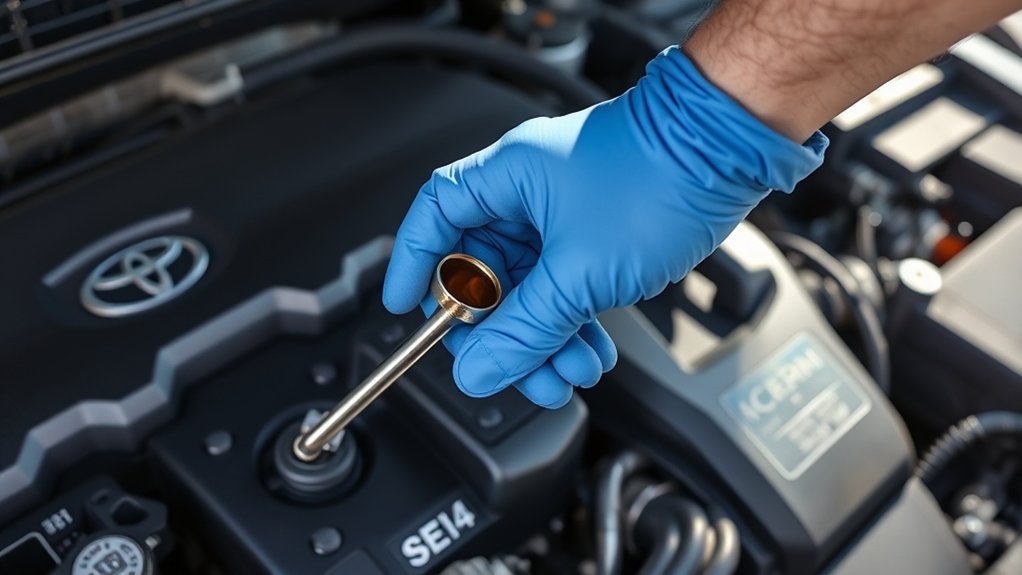
Most dipsticks show a safe range between a low mark and a full mark. Your goal is not to fill past the top mark. Your goal is to keep the oil within the safe range.
Low Level Indicator
If the oil film is at or below the low mark, the engine needs oil. Add a small amount, such as a quarter quart at a time, then wait and recheck. Adding too much at once can overfill the engine.
Full or High Level Indicator
If the oil is at the full mark, do not add more. If it is above the full mark, the engine may be overfilled. Overfilled oil can foam, leak, or affect engine operation. If you are unsure how much was added, have the level corrected before driving far.
Ideal Oil Range
The ideal reading is between the low and full marks, preferably near the upper part of the range without going over the full mark. A reading slightly below the full mark is normal and does not mean the engine must be topped off immediately.
How to Handle Low Oil Levels
If the dipstick shows low oil, do not panic, but do act carefully. Remove the oil filler cap, place a clean funnel in the opening, and add the correct oil slowly. Wait a minute after adding oil so it can drain down, then recheck the dipstick.
If the level is low again soon after topping off, look for signs of leaks under the car or oil residue around the engine. If there are no visible leaks but the level keeps dropping, the engine may be burning oil and should be inspected.
Note: Low oil level and low oil pressure are related but not identical. A dipstick checks the amount of oil in the engine. A dashboard oil-pressure warning means the engine may not be receiving safe oil pressure and needs immediate attention.
Choosing the Right Oil for Your Camry
The correct oil depends on the Camry year, market, and engine. For a 2019 Toyota Camry, published owner-manual data commonly lists the following gasoline-engine recommendations. Always confirm with your own owner’s manual, oil cap, or Toyota dealer before adding oil.
| Engine | Recommended Viscosity | What to Know |
|---|---|---|
| 2.5L 4-cylinder A25A-FKS | SAE 0W-16 | Use the manufacturer-recommended viscosity for normal service. If a temporary substitute is allowed, return to the recommended grade at the next oil change. |
| 3.5L V6 2GR-FKS | SAE 0W-20 | Use oil that meets the Toyota-specified performance standard shown in your owner’s manual. |
The American Petroleum Institute motor oil guide explains that viscosity describes an oil’s ability to flow at certain temperatures and that vehicle requirements vary, so you should follow the vehicle manufacturer’s SAE viscosity recommendation.
Recommended Oil Specifications
Look for the oil viscosity and performance standard listed in your owner’s manual. Modern oil bottles may show API and ILSAC markings. If the manual lists an older API or ILSAC standard, a newer licensed oil may be suitable when it is backward-compatible and has the correct viscosity, but the safest rule is still to follow Toyota’s recommendation for your exact engine.
Synthetic vs. Conventional Oil
Many modern low-viscosity oils, including 0W-16 and 0W-20, are commonly sold as synthetic or synthetic blend products. Synthetic oil generally handles temperature extremes and oxidation better than conventional oil, but the most important choice is not the marketing label. It is the correct viscosity and performance specification for your Camry.
How to Add Oil Safely and Cleanly
Adding oil is easy, but overfilling is a common mistake. Add slowly.
- Confirm the oil type for your engine.
- Remove the oil filler cap, not the dipstick.
- Insert a clean funnel.
- Add a small amount of oil.
- Wait about a minute.
- Recheck the dipstick.
- Repeat only until the oil is within the safe range.
- Reinstall the oil filler cap securely.
Warning: Do not drive with the oil filler cap loose or missing. Oil can splash out, create smoke or odor, and leave the engine low on oil.
Essential Tips for Regular Oil Level Monitoring

Check the oil level at least monthly, before long trips, and any time you notice oil spots, burning smells, unusual engine noise, or a dashboard warning. Keep a small record in your phone with the date, mileage, and oil level. This can help you spot unusual oil consumption early.
Also follow the maintenance schedule for oil and filter changes. Checking the dipstick does not replace oil changes. It only tells you whether the oil level is currently within range.
A good dipstick habit catches small oil-level problems before they become expensive engine problems.
Signs of Oil Issues to Watch For
Watch for these warning signs:
- Oil level keeps dropping: This may indicate a leak or oil consumption.
- Dark puddles under the car: These may be engine oil leaks.
- Burning oil smell: Oil may be leaking onto hot parts.
- Milky oil on the dipstick: This may indicate coolant contamination and should be inspected quickly.
- Gritty or sludgy oil: The oil may be overdue for service or the engine may need inspection.
- Ticking, knocking, or rattling: Stop checking casually and get professional help, especially if the oil is low or a warning light appears.
When to Consult a Mechanic About Oil Issues
Contact a mechanic or Toyota service center if the oil level repeatedly falls below the safe range, if you see leaks, if the oil looks milky, if the engine makes unusual noises, or if a red oil-pressure warning appears. Do not treat an oil-pressure warning as a simple top-off reminder. It can mean the engine is not being lubricated safely.
You should also get help if you accidentally overfill the engine and do not know how to remove the extra oil. Driving with too much oil can cause problems just as driving with too little oil can.
Frequently Asked Questions
How do you check the oil on a Toyota Camry?
Park on level ground, turn the engine off, wait a few minutes, pull the dipstick, wipe it clean, reinsert it fully, then pull it out again. The oil should be between the low and full marks.
How do I check the oil percentage on a Toyota Camry?
A dipstick does not show an oil percentage. It shows whether the oil level is low, full, or somewhere between those marks. If your dashboard has a maintenance reminder, that is separate from the dipstick reading.
What oil should I add to a 2019 Toyota Camry?
It depends on the engine. Many 2019 Camry 2.5L four-cylinder models call for SAE 0W-16, while the 3.5L V6 commonly calls for SAE 0W-20. Check your owner’s manual, oil cap, or Toyota dealer before adding oil.
Can I add oil when the engine is hot?
It is safer to let the engine cool enough to work around it without burns. A very hot engine bay can also make checking and adding oil messy or unsafe. Park on level ground, turn the engine off, and wait before checking.
Will my Toyota Camry tell me if the oil is low?
Do not rely only on the dashboard. Some warnings relate to oil pressure, which is more urgent than a routine low-level reading. The dipstick is still the correct way to check oil level manually.
What happens if I overfill the oil?
Too much oil can cause foaming, leaks, smoke, or engine performance problems. If the dipstick reads above the full mark and you recently added oil, have the excess oil removed before driving far.
Conclusion
Checking your Toyota Camry’s oil level is one of the easiest ways to protect the engine. Park level, let the oil settle, wipe and reinsert the dipstick, then read the level on the second pull. Keep the oil between the low and full marks, use the correct oil for your engine, and do not ignore leaks, unusual engine noises, or oil-pressure warnings.
Sources
- Toyota Owners — 2019 Camry Manuals and Warranties — official Toyota source for model-specific manuals.
- Toyota 2019 Camry Quick Reference Guide — shows hood release, engine oil dipstick, and oil filler cap locations.
- Toyota Owners — Warning Lights — explains warning-light colors and low engine oil pressure urgency.
- API Motor Oil Guide — explains SAE viscosity, API/ILSAC marks, and following manufacturer oil recommendations.