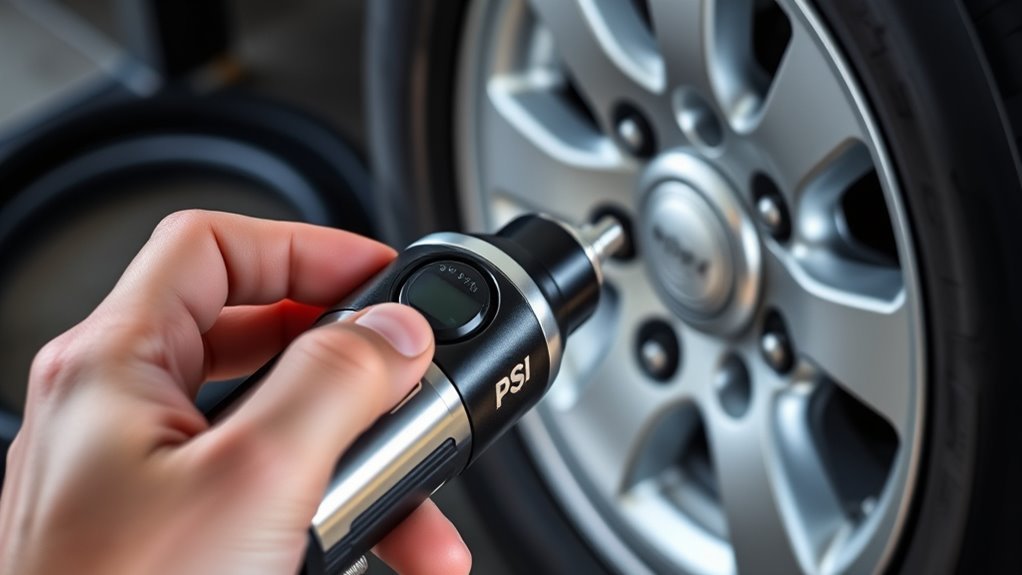
Tire pressure changes with temperature, dropping about 1 PSI for every 10°F decrease and increasing by 1 PSI for every 10°F rise. This means in cold weather, you might lose around 5 PSI from summer to winter. To adjust, check your tire pressure when cold, or after the car’s been parked for several hours. Make sure to reference the manufacturer’s recommended pressure for ideal performance. There’s more to learn about maintaining proper tire pressure year-round.
How Temperature Affects Tire Pressure Changes

As temperatures fluctuate, tire pressure changes considerably, impacting your vehicle’s performance and safety. You should know that tire pressure drops about 1 PSI for every 10°F decrease in temperature. In cold weather, this can lead to significant pressure loss, potentially around 5 PSI from summer to winter. Conversely, a 10°F increase can raise tire pressure by 1 PSI, risking overinflation if unchecked. To guarantee accurate readings, always check tire pressure when the tires are cold, as driving heats them and results in misleading higher readings. Understanding how temperature affects these psi changes is vital for maintaining ideal cold inflation. Regular monitoring empowers you to guarantee safer driving conditions, enhancing both performance and longevity of your tires.
Why Cold Tire Pressure Is Crucial for Safety
Maintaining proper cold tire pressure is crucial for ensuring your vehicle’s safety and performance. Cold tire pressure, defined as the recommended inflation level when tires are cool, directly impacts handling, traction, and braking. When temperatures drop, tire pressure shifts, causing a decrease of about 1 PSI for every 10°F drop. This can lead to underinflation, resulting in faster tire wear, reduced fuel efficiency, and increased risk of blowouts. Regular tire pressure checks are important, especially during seasonal changes, as tires naturally lose 1–2 PSI monthly. By keeping your tires properly inflated, you enhance road contact and overall vehicle stability, making every drive safer and more efficient. Prioritize cold tire pressure to safeguard your driving experience.
Accurately Checking Your Tire Pressure
To guarantee accurate tire pressure readings, check your tires when they’re cold, ideally after the vehicle has been parked for several hours. Always refer to the manufacturer’s recommended cold tire inflation pressure, typically located on the driver’s side door jamb. Regular monthly checks are essential, as tires can lose 1-2 PSI due to natural air seepage over time.
Recommended Pressure Guidelines
Checking your tire pressure accurately is crucial for guaranteeing safety and optimal vehicle performance. Always refer to your vehicle’s manufacturer’s recommended PSI, typically found on the driver’s side door jamb or in the owner’s manual. This guarantees you’re inflating your tires to the ideal level. Remember, tire pressure can fluctuate with temperature changes; for every 10°F shift, light-duty tires may adjust by about 1 PSI, while heavy-duty tires can change by 2 PSI. Since tires generally lose 1-2 PSI per month due to natural air permeation, regular monitoring is essential. When adjusting for temperature, if moving from a heated environment to a colder one, add approximately 1 PSI for every 10°F difference to maintain proper tire pressure.
Ideal Timing for Checks
After ensuring your tires are inflated to the recommended PSI, the timing of your pressure checks becomes important for accuracy. To get the most precise readings, check tire pressure when your tires are cold, ideally before driving. Driving generates heat, which can artificially inflate your readings. Aim to check your tire pressure at least once a month and before long trips. Be especially vigilant during cold weather, as a 10-degree Fahrenheit drop can cause about 1 PSI loss. Mornings are ideal for checks since temperatures are stable. Using a quality tire pressure gauge consistently will help maintain proper inflation, safeguarding against the issues that underinflation or overinflation can cause. Stay proactive for peak performance and safety on the road.
How Hot Weather Affects Tire Pressure?
In hot weather, you can expect your tire pressure to increase by about 1 psi for every 10°F rise in temperature. If you don’t monitor this change, you risk overinflation, which can lead to uneven wear and decreased traction. It’s crucial to regularly check and adjust your tire pressure to maintain peak performance and safety.
Pressure Increase Dynamics
As temperatures rise, you may notice a significant increase in tire pressure, which can be attributed to the laws of physics governing gas behavior. Here’s how hot weather affects your tires:
- For every 10°F increase in temperature, tire pressure can rise by approximately 2 PSI.
- When driving on hot pavement, internal air heats up, leading to pressure increases of 10-20 PSI above cold readings.
- Never adjust tire pressure based on hot readings; inflate to manufacturer specs plus an additional 10 PSI if needed.
- Properly inflated tires are essential to avoid uneven tread wear, reduced traction, and blowouts.
Understanding these pressure changes is important for maintaining vehicle performance, safety, and tire longevity. Regular monitoring guarantees your tires remain properly inflated.
Overinflation Risks Explained
While monitoring tire pressure is critical, the risks of overinflation, especially in hot weather, can’t be overlooked. High temperatures can cause tire pressure to increase by 1 PSI for every 10°F rise, leading to overinflated tires if you’re not vigilant. An overinflated tire wears unevenly, particularly in the center, compromising both safety and performance. Furthermore, operating your vehicle generates additional heat, further elevating pressure and potentially exceeding the maximum recommended limits. This excessive tire pressure heightens the risk of blowouts, especially in sweltering conditions. To guarantee safety, always check tire pressure when tires are cold, as driving can produce misleading readings that suggest overinflation. Stay proactive to keep your tires in prime condition.
Ensuring Tire Safety in Hot Weather
To guarantee tire safety in hot weather, it is crucial to monitor tire pressure regularly, especially since temperature fluctuations can greatly affect it. Here are four key steps to make certain your tires remain safe:
- Check tire pressure in the morning: This reflects cold tire conditions, avoiding misleading high pressure readings.
- Adjust for temperature changes: Remember, tire pressure can increase by 1-2 psi for every 10°F rise.
- Maintain manufacturer’s recommended pressure: Familiarize yourself with this to prevent overinflation.
- Watch for signs of wear: Overinflated tires can lead to uneven tread wear and blowouts.
How Seasonal Changes Affect Your Tire Pressure

Seasonal changes greatly impact your tire pressure, particularly as temperatures drop during winter months. For every 10°F decrease in temperature, your tire pressure can drop by approximately 1 PSI. This can lead to significant underinflation, especially during colder months when the average loss can reach about 5 PSI. It’s essential to check your tire pressure regularly during these seasonal shifts, as tires naturally lose about 1-2 PSI per month regardless of temperature. Cold weather causes tires to contract, which can decrease traction and handling, leading to increased tire wear. Monitoring and adjusting your tire pressure in response to these seasonal temperature fluctuations is vital for maintaining your vehicle’s safety and performance.
Adjusting Tire Pressure for Temperature Changes
As temperatures fluctuate, adjusting your tire pressure becomes essential for maintaining ideal performance and safety. To effectively manage tire pressure during temperature changes, follow these steps:
- Check PSI in the morning: Confirm accurate readings before driving, as heat from driving increases pressure.
- Add 1 PSI for every 10°F increase: When moving from cold to warm environments, compensate for the temperature difference.
- Monitor for drops: In colder conditions, expect a 1 PSI decrease for every 10°F drop, preventing underinflation.
- Adjust regularly: Seasonal changes require consistent monitoring to maintain peak tire pressure.
Understanding How Altitude Impacts Your Tire Pressure
Maintaining proper tire pressure is not just about temperature fluctuations; altitude plays a significant role as well. As you ascend, air density decreases, affecting tire inflation levels. For every 1,000 feet of elevation gained, tire pressure increases by approximately 0.48 PSI. Consequently, a tire at 100 PSI at sea level can show about 102 PSI at 5,000 feet.
| Altitude (Feet) | Tire Pressure (PSI) | Adjustment Needed |
|---|---|---|
| 0 | 100 | None |
| 1,000 | 100.48 | Increase |
| 3,000 | 101.44 | Increase |
| 5,000 | 102 | Increase |
| 10,000 | 104.8 | Increase |
Adjusting your tire pressure based on altitude guarantees ideal performance and safety.
Tips for Year-Round Tire Pressure Maintenance

To guarantee your tires perform at their best year-round, it is crucial to regularly monitor and adjust their pressure. Here are some tips for effective tire pressure maintenance:
- Check tire pressure at least once a month, as tires can lose 1–2 PSI due to natural air loss and temperature changes.
- Adjust tire inflation pressure by adding 1 PSI for every 10°F temperature difference from the recommended cold inflation.
- Measure tire pressure in the morning when tires are cold for the most accurate readings.
- Keep a quality tire pressure gauge handy, as relying solely on your vehicle’s TPMS might not give a complete picture.
Frequently Asked Questions
How to Adjust Tire Pressure for Temperature?
To adjust tire pressure for temperature effects, regularly check and increase pressure by 1 PSI for every 10°F rise, or decrease for drops. This guarantees peak performance during seasonal changes and enhances your vehicle’s safety.
What Is the 3% Tire Rule?
Imagine a balloon expanding in the sun. Similarly, the 3% tire rule states that for every 10°F change, tire pressure shifts by about 2%. Monitoring this helps guarantee safety and proper maintenance for your vehicle.
Should You Add Air to Your Tires When the Temperature Drops?
Yes, you should add air to your tires when the temperature drops. Cold weather causes air contraction, impacting tire performance and raising safety concerns. Maintaining proper pressure guarantees peak handling and fuel efficiency during winter conditions.
How Much Does Tire Pressure Fluctuate With Temperature?
Tire pressure fluctuates about 2% with every 10°F temperature change. You should regularly check with a pressure gauge, especially during seasonal changes, to maintain ideal tire performance and guarantee safety on the road.
Conclusion
In the dance between temperature and tire pressure, fluctuations can either enhance your vehicle’s performance or lead to dangerous outcomes. Maintaining proper tire pressure in both scorching heat and frigid cold is essential for safety and efficiency. By regularly checking and adjusting your tires, you not only guarantee peak handling but also prolong tire life. Embracing these practices year-round empowers you to navigate changing conditions with confidence, keeping both you and your vehicle secure on the road.