What’s in This Article
- Quick Answer: Does Toyota WS ATF Need Changing?
- What Toyota WS ATF Is and Why Fluid Spec Matters
- Spot Worn Toyota WS ATF: Color, Smell, and Performance Signs
- Toyota Camry WS Service Intervals: Normal and Severe Driving
- Performing a WS Fluid Change: Tools, Temperatures, Dealer vs DIY
- Common Risks When You Delay WS Fluid Changes
- Choosing the Right Replacement Fluid for Your Camry
- Who Makes WS ATF, What’s in It, and Why It Matters
- Frequently Asked Questions
Toyota WS automatic transmission fluid can look clean from the outside, but worn fluid can still affect shift quality. Your Camry depends on the right fluid level, friction control, and service method to protect the transmission. This guide explains when WS ATF needs attention, how to spot worn fluid, and what to check before a dealer or DIY service.
Quick Answer: Does Toyota WS ATF Need Changing?
Quick Answer
Toyota WS ATF can need changing, but the correct interval depends on your Camry model year, transmission, and driving conditions. Many Toyota maintenance schedules treat WS fluid as long-life under normal driving, while severe use may require inspection or replacement sooner. Use Toyota WS or a fluid that clearly states Toyota WS compatibility, and follow the exact temperature-based fill procedure.
Key Takeaways
- Check your owner’s manual or maintenance guide before choosing a WS ATF service interval.
- Fresh WS ATF usually has a red tint, while burnt smell or poor shifting calls for service.
- Use Toyota WS ATF or a clearly approved WS-compatible fluid to protect shift quality.
- Set the fluid level at the correct temperature because many Camry transmissions lack a dipstick.
- Keep service records, especially if your Camry sees heat, traffic, hills, towing, or heavy use.
Wondering if Toyota WS ATF needs changing? The safe answer is yes, but not every Camry follows the same mileage rule. Toyota WS fluid uses a specific friction formula for Toyota automatic transmissions, so you should not treat it like a generic automatic transmission fluid (ATF).
Some Camry maintenance schedules do not list routine ATF replacement under normal driving. Severe use can change the answer. Heat, stop-and-go traffic, long hills, and heavy loads can age fluid faster and make earlier service a smart choice.
Dark fluid, burnt smell, slipping shifts, delayed engagement, or rough gear changes mean you should inspect the transmission soon. Track mileage, keep service records, and use the correct WS specification. That gives your transmission the best chance of long, smooth service.
What Toyota WS ATF Is and Why Fluid Spec Matters
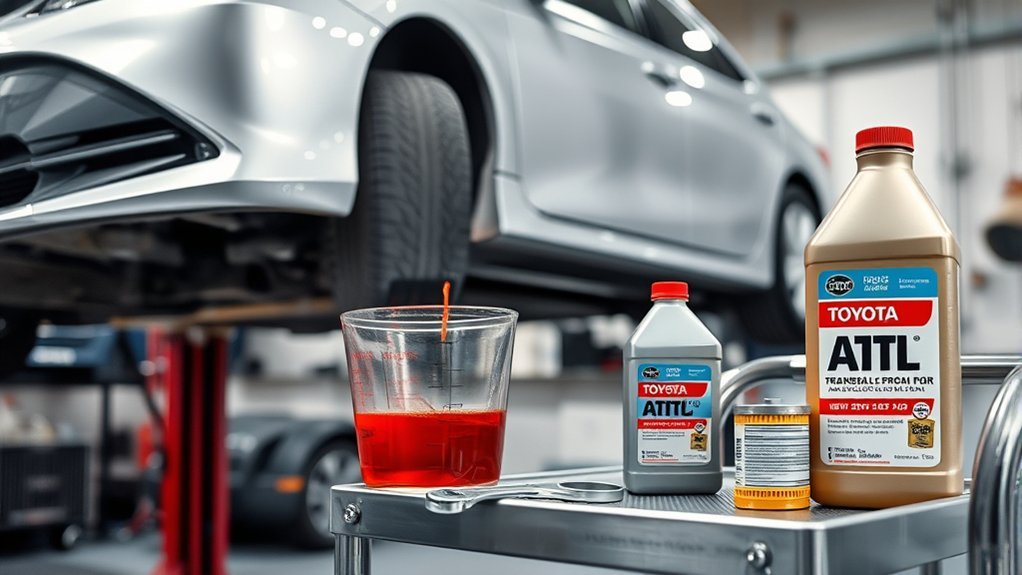
Toyota WS ATF stands for Toyota World Standard automatic transmission fluid. Toyota designed it as a low-viscosity fluid for many modern Toyota automatic transmissions. It supports hydraulic pressure, clutch friction, lubrication, cooling, and smooth shift timing.
You should treat WS as a fluid specification, not just a bottle label. The friction behavior matters because Toyota valve bodies and clutch packs depend on a narrow fluid range. A fluid that feels similar in your hand may not act the same inside the transmission.
Avoid broad claims that WS fluid lasts forever or must always be changed at one fixed mileage. Your correct interval depends on the maintenance guide for your exact model year. If you choose an aftermarket fluid, use only one that clearly states Toyota WS compatibility.
Note: Toyota WS is not interchangeable with older Toyota Type T-IV, Dexron, or Mercon fluids.
Spot Worn Toyota WS ATF: Color, Smell, and Performance Signs
Check the ATF color and smell when you can safely inspect the fluid. Fresh Toyota WS often has a red or reddish tint, but used fluid can turn darker with age and heat. Color alone does not prove the fluid has failed, but it can warn you to inspect further.
A burnt odor, slipping, delayed engagement, harsh shifts, or unusual noises deserve fast attention. These signs can come from old fluid, low fluid, overheating, internal wear, or an electronic control issue. Do not keep driving hard if the transmission starts slipping.
Color Changes Over Time
Fresh WS ATF usually looks red or reddish. Over time, heat and normal wear particles can darken the fluid. A brown or black color means you should inspect the fluid condition, level, and service history.
Use a clean sample if you compare old fluid with new fluid. Do not judge the whole transmission from one dark drop on a rag. Pair the color check with smell, shift behavior, mileage, and any diagnostic trouble codes.
Burnt or Chemical Odor
A burnt odor points to heat stress or fluid breakdown. You may notice the smell during a warm inspection or after hard driving. Burnt fluid can lose friction control and may speed up wear inside the transmission.
- Confirm the fluid color with a clean sample.
- Check for a burnt smell after the transmission reaches normal temperature.
- Inspect for leaks, overheating signs, and low fluid level.
- Schedule service if the fluid smells burnt or shift quality has changed.
Slipping and Shift Issues
Transmission performance often gives you the clearest warning. If your Camry hesitates, slips between gears, or engages late, the transmission needs inspection. Worn fluid can cause these symptoms, but low level or internal wear can also cause them.
Do not fix slipping by guessing at fluid alone. Scan for transmission codes, inspect for leaks, and confirm the fluid level with the correct procedure. A fast diagnosis can prevent a small service issue from becoming a major repair.
Toyota Camry WS Service Intervals: Normal and Severe Driving
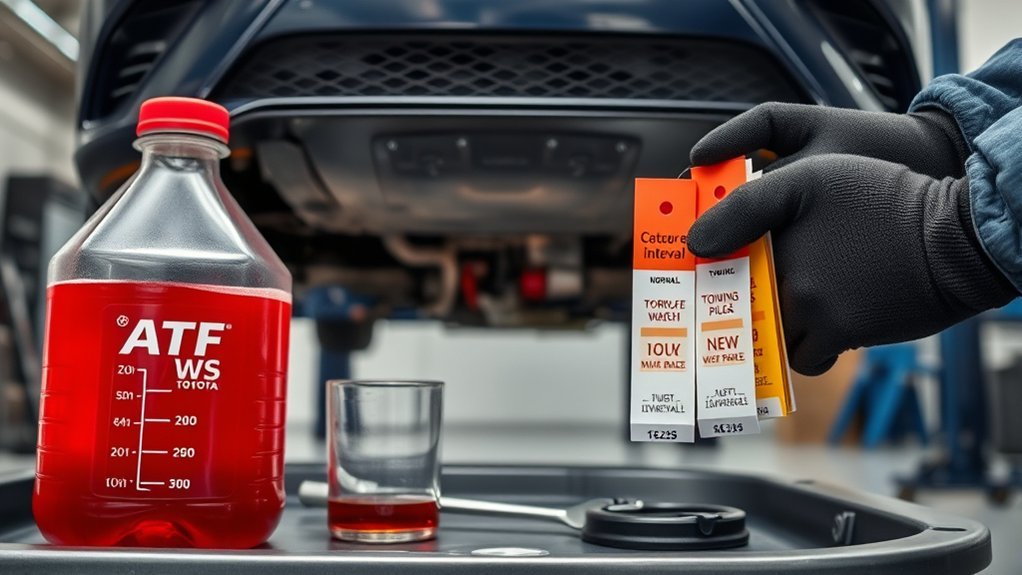
Your Camry’s WS ATF service interval depends on the maintenance schedule for your model year. Many Toyota schedules do not call for routine WS replacement under normal driving. Severe driving can justify earlier inspection or service.
Use your owner’s manual, maintenance guide, or Toyota service information as the final source. If your Camry has unknown service history, ask a qualified technician to inspect the fluid before choosing a drain-and-fill. Avoid aggressive flushing on a neglected transmission unless a professional recommends it.
Normal Driving Interval
Normal driving usually means light daily use, steady road speeds, and no heavy loads. Under these conditions, Toyota may not list a routine WS ATF replacement interval for some Camry models. That does not mean the fluid cannot age.
You can still inspect fluid condition during regular service. Ask the shop to check for leaks, transmission codes, and shift concerns. If you plan to keep the car for many years, a conservative drain-and-fill may help, but follow your model’s service data.
- Check the maintenance guide for your exact Camry year.
- Inspect fluid condition if shifts feel delayed, harsh, or inconsistent.
- Keep records for resale value and warranty questions.
- Use the correct WS fluid and fill procedure every time.
Severe Driving Conditions
Severe driving can age transmission fluid faster than easy highway use. Heat creates the biggest concern because it harms fluid additives and clutch friction control. Common severe conditions include traffic, hills, high heat, heavy loads, and repeated short trips.
Some Toyota schedules call for transmission fluid inspection or replacement under special operating conditions. Check your guide before using a fixed mileage rule. If you drive in harsh conditions, ask a Toyota-trained technician about a service interval that fits your use.
- Frequent stop-and-go driving in hot weather
- Long climbs, mountain roads, or heavy passenger loads
- Taxi, delivery, rideshare, or commercial use
- Known overheating, leaks, or rough shift symptoms
Performing a WS Fluid Change: Tools, Temperatures, Dealer vs DIY
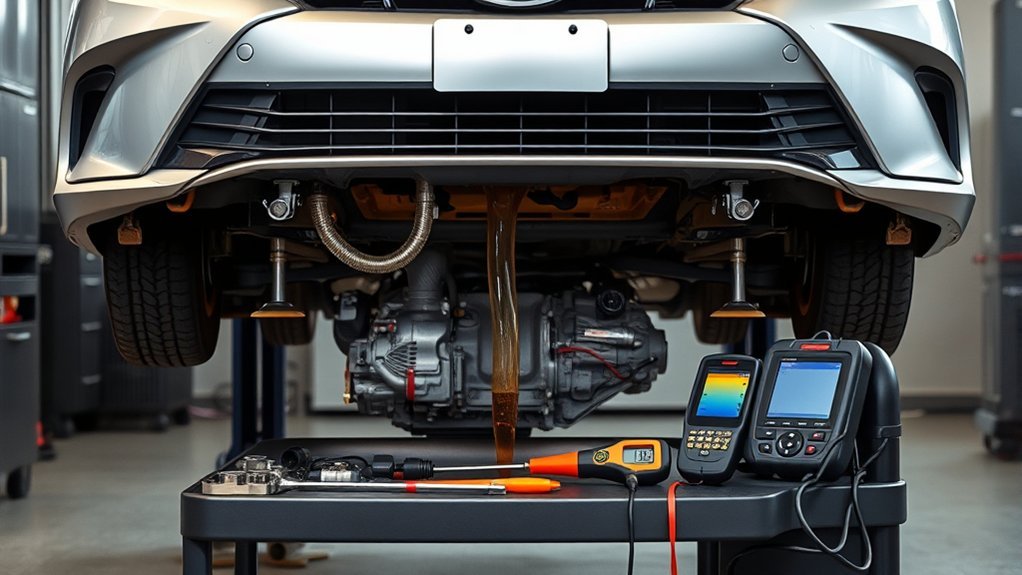
Many Camry transmissions use a temperature-based fluid level check. You must set the level when the fluid sits within the specified temperature range for that transmission. Guessing the level can cause overfill or underfill, and both can hurt shift quality.
Gather the right WS fluid, a fluid pump, new washers or gaskets, a drain pan, a torque wrench, and a scan tool that reads transmission fluid temperature. Some models need a specific overflow plug method. Check the service manual before you start.
- Confirm the correct WS fluid type and service capacity.
- Raise the vehicle level and secure it safely.
- Drain the old fluid and measure what came out.
- Refill with the correct amount of WS fluid.
- Warm the fluid to the specified temperature range.
- Set the final level through the overflow or check procedure.
- Road-test the car and inspect for leaks.
Warning: Never crawl under a vehicle supported only by a jack, and never open hot fluid points without protection.
A dealer or transmission shop can handle the job if you lack the tools. DIY can save money, but only if you follow the procedure with care. The wrong level can create more trouble than old fluid.
Common Risks When You Delay WS Fluid Changes
Delaying WS ATF service can reduce fluid performance when the fluid has already aged or overheated. Old fluid may lose friction control, cooling ability, and protection against wear. Contaminated fluid can also carry fine metal and clutch material through the system.
Still, a badly neglected transmission needs careful handling. A simple drain-and-fill may help if the unit still shifts well. A harsh flush can sometimes expose existing wear problems, so get professional advice if the fluid looks black or smells burnt.
| Symptom | Possible Meaning |
|---|---|
| Dark, dirty fluid | Heat stress or contamination |
| Burnt smell | Overheated or degraded fluid |
| Delayed engagement | Low pressure, low fluid, or wear |
| Rough shifts | Fluid, control, or internal issues |
Timely service helps preserve hydraulic function and clutch life. You control the risk by checking fluid condition, fixing leaks early, and using the correct procedure. Do not wait for slipping before you take action.
Choosing the Right Replacement Fluid for Your Camry
When you replace Camry transmission fluid, choose Toyota WS ATF or a fluid that clearly lists Toyota WS compatibility. The correct fluid helps preserve valve-body control, clutch friction, and smooth shifts. Avoid fluids that only claim broad or universal coverage without a clear WS statement.
- Check your owner’s manual for the exact fluid specification.
- Match the service capacity to the drain-and-fill method.
- Use new seals, washers, or gaskets where the service manual requires them.
- Document the fluid brand, mileage, date, and service method.
Do not mix WS with older Toyota fluid specs unless a manufacturer clearly approves it. Mixing fluid types can change friction behavior and shift feel. If a shop cannot confirm the fluid spec, choose another shop.
Who Makes WS ATF, What’s in It, and Why It Matters
Toyota sells genuine WS ATF through Toyota parts channels, but outside suppliers may produce fluids to meet Toyota’s requirements. You do not need to know the refinery name to service your Camry correctly. You do need the right specification, sealed fluid containers, and a reliable seller.
WS ATF contains base oil and additives that support lubrication, oxidation control, seal compatibility, and clutch friction. The exact formula belongs to the fluid maker and Toyota’s specification process. That means you should avoid guessing based on color, smell, or bottle shape.
Buy from a trusted source because counterfeit or wrong fluid can damage your transmission. Save receipts and photos of the fluid label. These records help if you later need warranty support, resale proof, or service history.
Frequently Asked Questions
Can I Mix WS ATF With Other Transmission Fluids Safely?
You should not mix WS ATF with other transmission fluids unless the fluid maker clearly states Toyota WS compatibility. Mixing the wrong fluid can change shift feel and friction control. Use one correct fluid type whenever possible.
Will WS ATF Void My Camry’s Transmission Warranty?
Using the correct Toyota WS fluid should not void your warranty by itself. Problems can arise if a shop uses the wrong fluid, wrong level, or wrong procedure. Keep receipts and service records for proof.
How Does WS ATF Affect Hybrid Camry Transmissions?
Hybrid Camry models can use different driveline designs than non-hybrid models, so you should check the exact fluid spec first. If your hybrid calls for WS ATF, the fluid supports lubrication and cooling inside the unit. Do not assume every Camry transmission uses the same service steps.
Can I Reuse Drained WS ATF After Filtering?
No, you should not reuse drained WS ATF after filtering. A filter may remove some particles, but it cannot restore worn additives or undo heat damage. Use fresh, correct fluid for service.
Are There Environmental Disposal Rules for Used WS ATF?
Yes, used transmission fluid needs proper disposal. Take it to an auto parts store, repair shop, recycling center, or local waste site that accepts used automotive fluids. Never pour it on the ground, into drains, or into household trash.
Conclusion
Toyota WS ATF can need service, but your Camry’s correct interval depends on model year, transmission type, and driving conditions. Check the maintenance guide, watch for dark fluid or burnt smell, and respond quickly to slipping or delayed shifts. Use genuine Toyota WS or a clearly compatible WS fluid, then follow the temperature-based fill procedure. A careful service plan helps your Camry shift smoothly and last longer.
References
- Toyota Owner Resources and Manuals — Toyota Motor North America
- Toyota Warranty and Maintenance Guides — Toyota Motor North America
- Managing, Reusing, and Recycling Used Oil — U.S. Environmental Protection Agency