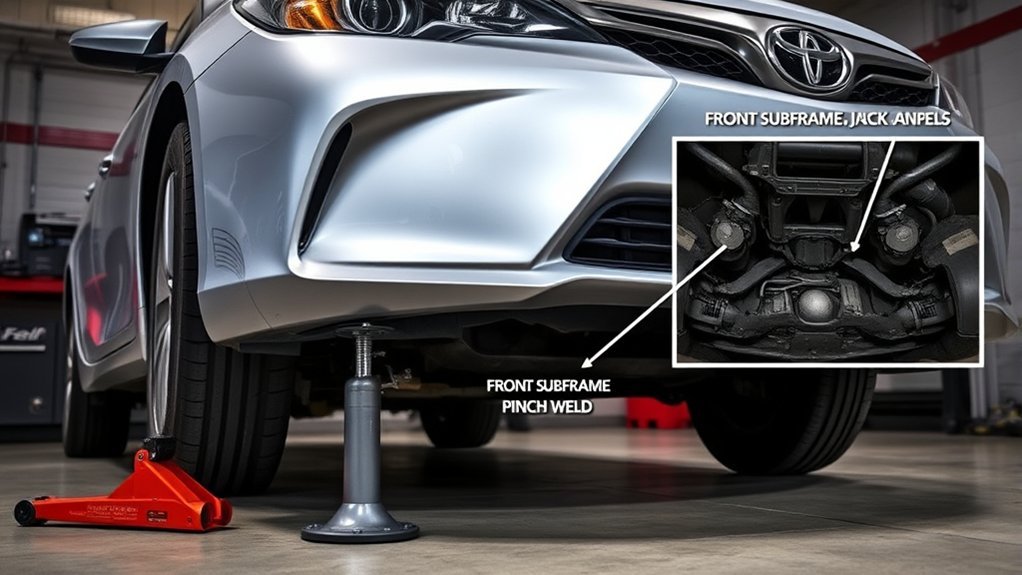
You should place the jack under the stamped center jack point near the exhaust heat shield or on the reinforced frame rails just behind the front wheels, using a rubber pad to protect the frame. After lifting incrementally, set two jack stands symmetrically on solid subframe or pinch‑weld spots, chock the rear wheels, and confirm level ground and stand locks. Never rely on the jack alone; follow three‑point support procedures and keep checking stability if you want more detailed steps.
Quick Answer: Safe Jack Points for a 2000‑Era Toyota Camry
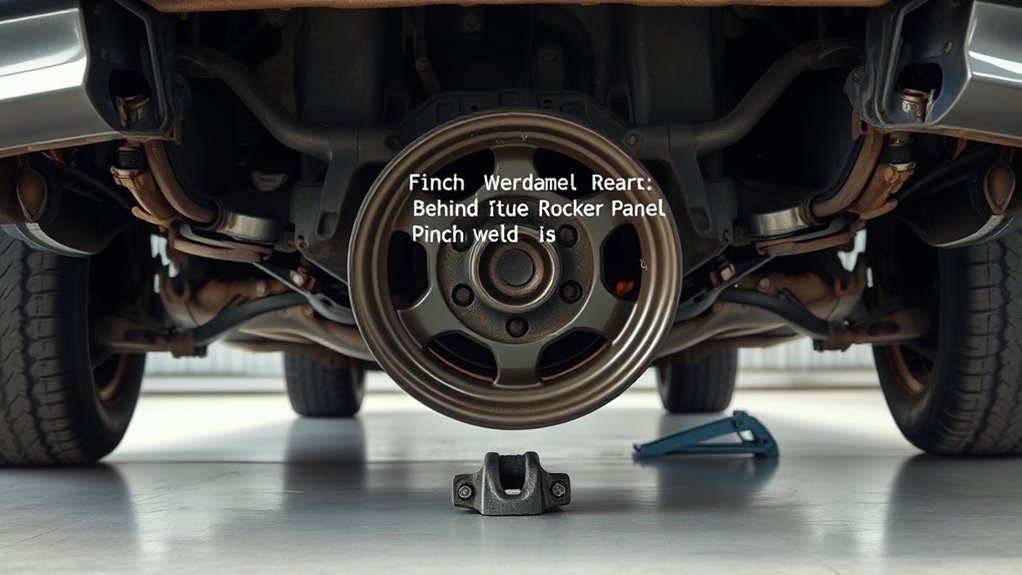
For a 2000‑era Toyota Camry, jack the car at the frame rail just behind the front wheels and support it on the subframe mounting points near the front suspension tie‑ins to guarantee stable, even weight distribution; always use jack stands on level, solid ground with rubber pads on the stands to protect the pinch welds and improve grip. You’ll position the jack at that frame rail for maximum stability, then lower the vehicle onto stands placed at the subframe mounting points. Confirm stands are spaced apart and sit flat; uneven placement risks collapse. This methodical approach gives you control and reduces dependence on roadside help, a practical step toward independence. For jack safety, inspect stands and pads for wear, chock rear wheels, and avoid soft surfaces. These maintenance tips keep you safe and effective: torque your tools, verify lift height before working underneath, and recheck stability after any repositioning. Follow this procedure to work confidently and securely.
Locate the Center Jack Point Near the Exhaust (What to Look For)
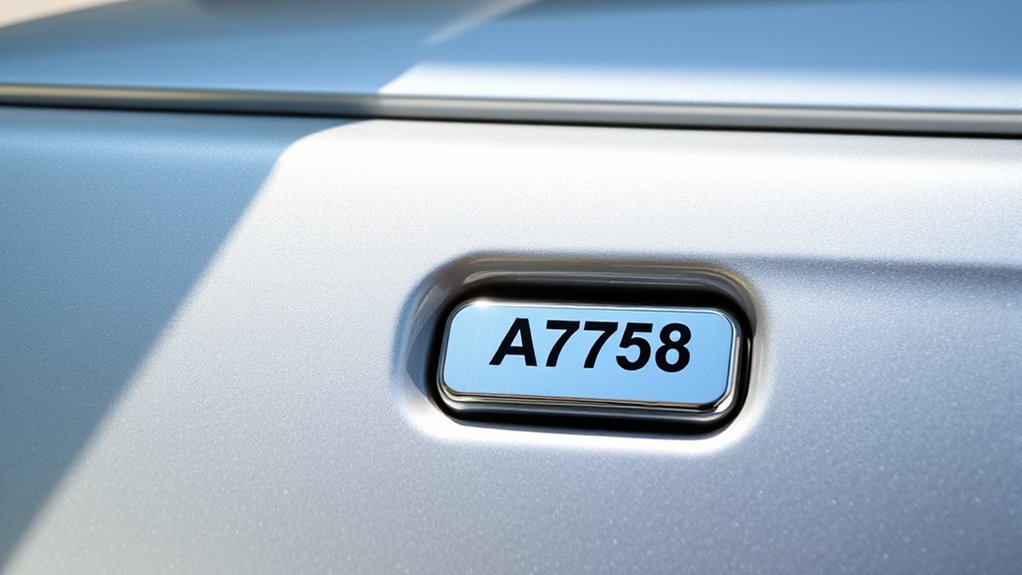
Look under the Camry near the exhaust heat shield and you’ll spot a stamped arrow or jack symbol marking the center jack point along the undercarriage; position your hydraulic jack there on a rubber pad to protect the frame, confirm the ground is level, and only lift when you’ve verified the vehicle’s weight will be supported evenly and jack stands are ready. You’ll perform jack point identification visually and tactilely: the symbol aligns with a reinforced section of the frame designed for centralized lifting. Check for corrosion or damage before committing. Confirm level ground and chock wheels to prevent movement. Use a rubber pad to prevent metal-on-metal deformation and to maintain lifting safety. When you raise the vehicle, raise incrementally and inspect that load transfers to the jack point cleanly; don’t rely on the jack alone. Set jack stands at equal heights and verify stability before entering under the car. These steps free you to work confidently and safely.
Locate the stamped jack symbol near the exhaust heat shield, use a rubber pad, chock wheels, lift incrementally, and secure with stands.
- Inspect symbol and frame
- Set jack with rubber pad
- Secure with stands and chocks
Front Frame‑Rail and Pinch‑Weld Jack‑Stand Spots (Camry)
When you’re lifting the Camry from the front, place the jack stands on the reinforced frame rail just behind the front wheels and on the pinch-weld spots indicated by the factory seams, using rubber pads to protect the metal and 2x4s inside the pinch welds to spread the load; make sure stands sit on level, solid ground, are spaced for even weight distribution, and contact strong, undamaged frame areas before lowering the car onto them. You’ll position stands symmetrically to maintain balance and avoid torque on the shell. Use rubber-topped stands to reduce metal deformation and set 2×4 blocks inside pinch welds to broaden contact—these jack stand tips increase stability. Perform safety checks: verify ground firmness, confirm stand height locks, and rock the vehicle lightly after lowering to guarantee secure seating. Keep wheels chocked and the parking brake engaged. Work methodically, deliberate in movement, and refuse complacency; freedom to repair your vehicle comes from disciplined, repeatable procedures that protect you and the car.
Subframe and Suspension Tie‑In Points for Jack Stands
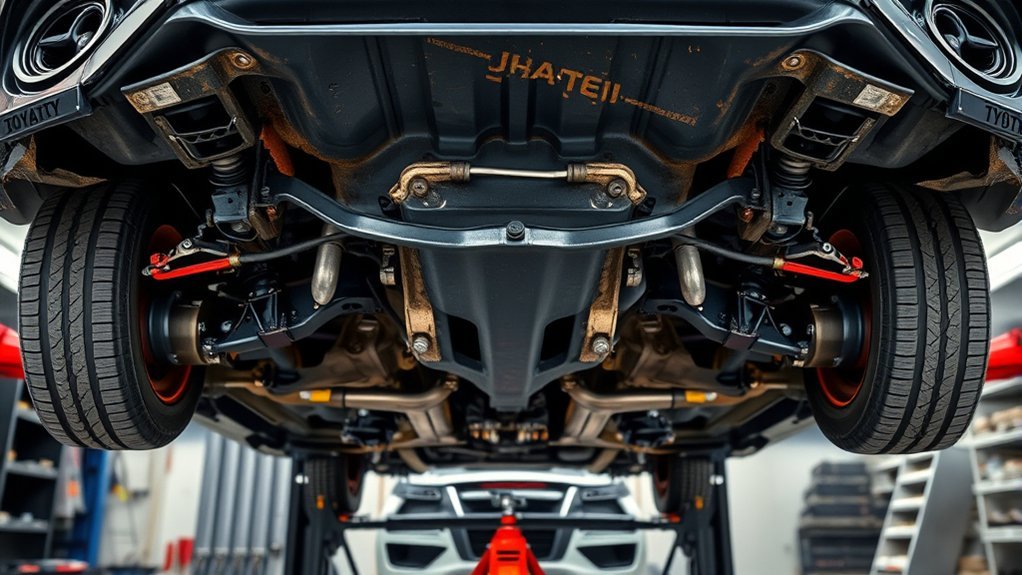
Moving rearward from the frame‑rail and pinch‑weld points, set your jack stands under the Camry’s reinforced subframe mounting points or at designated suspension tie‑in locations; these spots are engineered to carry concentrated loads and give far more rigidity than thin sheet‑metal areas. You’ll protect subframe integrity by using points designed for vertical suspension load transfer rather than improvised spots that can deform. Place stands symmetrically, check for tight contact, and confirm clearance for tools and movement.
Set jack stands on reinforced Camry subframe mounts or suspension tie‑ins — symmetric, tight contact for safe, rigid support.
- Use subframe mounting points near the rear of the engine cradle for primary support; they’re sized for concentrated suspension load and resist bending.
- Consider suspension tie‑in locations if the subframe points aren’t accessible; they’re engineered to carry load paths without compromising structure.
- Space stands to balance weight distribution, set heights for firm contact on level, solid ground, and recheck stability before working.
Operate methodically, prioritize subframe integrity, and liberate yourself from unsafe shortcuts.
Step‑by‑Step: Position Jack Stands Behind the Front Wheels
Position the jack stands on the frame rail just behind the front wheels for solid support. Use rubber pads on the stands, chock the rear wheels, and confirm the ground is level before lowering the car onto the stands. Verify stand height gives safe working clearance without over‑raising the suspension.
Frame Rail Placement
Start by placing the jack so the vehicle is raised evenly and the front wheels are clear enough to allow jack stands to sit on the frame rail just behind each wheel. You’ll set stands on solid, level ground and align them with specified frame rail locations for frame rail safety. Use rubber pads to protect pinch welds and confirm suspension is fully extended at the chosen height. Check spacing for even weight distribution; don’t pick weak spots.
- Inspect rail area, clean contact points, follow jack stand maintenance routines.
- Position stands symmetrically behind each front wheel, verify level and height clearance.
- Lower vehicle gently onto stands, verify no shift, test stability before entering work area.
Safety And Support
If you’re working underneath the front of the Camry, set the jack stands on the frame rail just behind each front wheel so the load sits on solid structure and the suspension is fully supported. Position stands symmetrically, spaced for even weight distribution, and avoid cantilevering. Use rubber pads on the stand cups to protect pinch welds and prevent body damage. Verify ground conditions: it must be level, firm, and free of debris. Raise the car to modest clearance—enough to work, not to impress—and lock the stands at matching heights. Perform routine safety inspections on stands and lifting points before entry. Treat your tools as liberation: quality support equipment and disciplined checks keep you in control and out from under risk.
Use Rubber Pads and 2x4s to Protect Pinch Welds and Spread Load
Protect the pinch welds by placing rubber pads on your jack stands and sliding 2x4s just inside the pinch rail to spread the vehicle’s load; this prevents concentrated stress on the welds and improves stability while the car is elevated. You’ll use pinch welds protection and load distribution techniques to preserve structure and maintain control while you work. Fit rubber pads to each stand, center them on the weld, and seat the 2x4s so they bear against the inner rail flange rather than a single lip.
Check 2×4 length and condition—no splits, rot, or severe wear—and verify the rubber pads show no cracks or compression memory. Always set stands on flat, solid ground and apply the load gradually, observing any shift. Regular inspections guarantee continued safety and liberation from unnecessary damage.
- Fit rubber pads to jack stands for weld protection.
- Slide full-length 2x4s inside pinch rail for even load distribution.
- Inspect materials and ground stability before committing to support.
How High to Lift a Camry for Brakes, Oil Changes, and Undercar Work
For brake jobs, oil changes, and undercar inspections, lift the Camry only as high as needed for safe access and stability: for brakes raise just enough to get the tire slightly off the ground so the suspension is fully extended, for oil changes and most undercar work aim for roughly 12–18 inches of clearance (a minimum of 12 inches working space), and always lower onto jack stands placed on the subframe or frame rails behind the front wheels before you go underneath. You’ll keep lifts minimal to preserve stability and freedom to work.
| Task | Recommended Lift |
|---|---|
| Brake maintenance | Tire slightly off ground; suspension fully extended |
| Oil change / oil filter | 12–18 inches; ≥12 inches minimum |
| General undercar work | ~12 inches; use jack stands on subframe/frame rails |
Work methodically: lift, seat stands on solid points, verify clearance, then proceed. Avoid excess height—liberation comes from confident, controlled procedures. Maintain clear access to the oil filter and drain plug, and perform tasks without compromising stability.
Verify Stability: Three‑Point Support, Wheel Chocks, and Level Ground
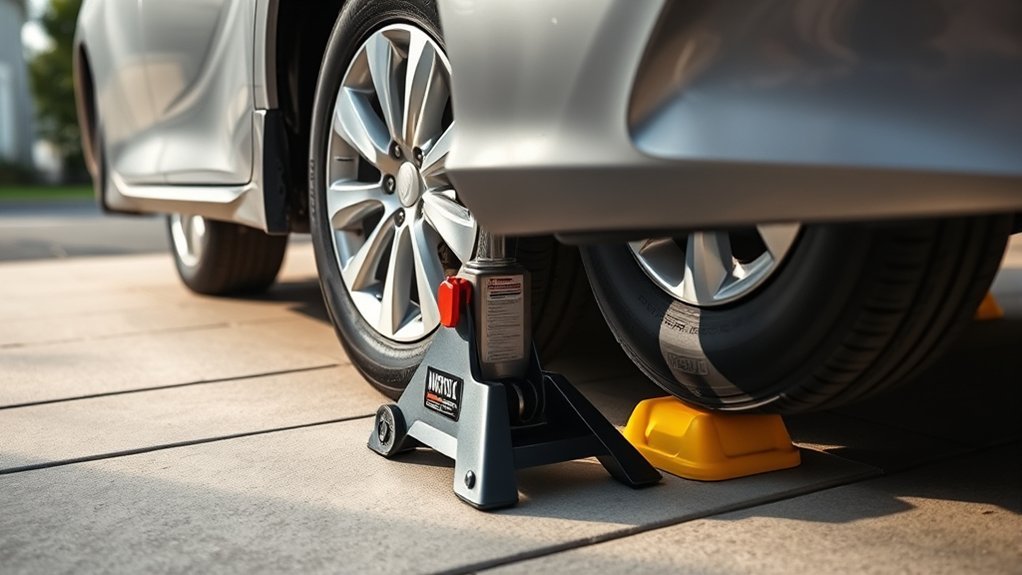
Before you raise the Camry, confirm the vehicle sits on level ground to minimize roll risk. Place wheel chocks behind the rear wheels and use one jack plus two jack stands to establish a three-point support system. Verify jack stands bear on solid, flat surfaces and recheck stability periodically while working underneath.
Three-Point Support Check
Although you’ll already have the floor jack at the designated jack point, confirm three-point support by setting two jack stands on the frame rails just behind the front wheels, chocking the rear wheels, and ensuring all supports sit on level, solid ground. Put on safety gear, review lifting techniques, and approach the lift deliberately. Position stands symmetrically, matching vehicle width, and lower the car until weight rests evenly on both stands plus the jack for redundancy. Inspect contact points, ground firmness, and stand engagement before sliding underneath. Monitor stability throughout work; any shift means lower the vehicle and reposition. Maintain control—this is about freedom to work safely and confidently.
- Symmetric stand placement and even load distribution
- Rear wheel chocks engaged and checked
- Continuous stability inspection and adjustment
Wheel Chock Placement
You’ve set up three-point support and confirmed stand placement; now focus on wheel chock placement to lock the car against unintended roll. Place chocks against the rear tires, one on each side, so the vehicle is restrained laterally and longitudinally. Choose wheel chock types rated for your Camry’s weight—heavy-duty polyurethane or rubber models with traction grooves work best. Position chocks snug to the tire tread, seating them on solid, level pavement to maximize bite. Test resistance by applying parking brake and gently rocking the vehicle; if movement occurs, re-seat or upgrade chocks. Implement routine chock maintenance: inspect for cracks, compressive deformation, and worn surfaces; clean contact faces and replace compromised units immediately. This disciplined approach preserves safety and your autonomy during service.
Confirm Level Ground
If the ground isn’t level and stable, the best jack and stands won’t keep your Camry secure, so always verify surface flatness and firmness before lifting. You’ll confirm level ground safety by choosing a paved, compacted area; avoid soft soil or slopes. Place wheel chocks on the rear wheels and inspect them for damage. Position the jack at the manufacturer’s jack point and set two jack stands under rated support points to create three-point support: one jack, two stands. Check the bases sit on solid ground; use plywood pads if needed. Regularly inspect jack and stands for wear. Follow these jack placement tips to maintain control and free yourself from unnecessary risk.
- Verify surface firmness and flatness.
- Apply wheel chocks and inspect equipment.
- Set jack and two stands for three-point support.
Common Mistakes to Avoid When Placing Jack Stands on a Camry
When you lift a Camry, position jack stands on the frame rail just behind the front wheels and never on weak points like pinch welds; doing otherwise risks collapse or body damage. You’ll avoid common mistakes by checking ground firmness and level, confirming jack stand placement on the solid frame rail, and never relying solely on the hydraulic jack. Don’t set stands on pinch welds, plastic panels, or suspension components — they’ll deform or fail. Use rubber pads to protect contact surfaces and reduce slip. Verify the height gives full suspension droop without over-extension; incorrect height alters load paths and destabilizes the car. Avoid uneven stand heights or mixed-capacity stands; match rated capacity and set them symmetrically. Don’t work under a car that rocks or sits on loose blocks. After placing stands, nudge the vehicle to confirm stability before entering. These methodical checks liberate you from risk and keep the Camry secure while you work.
When to Choose a Shop Lift or Safe Alternative Supports (Decision Guide)
Although a shop lift gives full, stable access for extensive or multi-task repairs, you should opt for jack stands or other rated supports for routine jobs like oil changes or brake service to save cost and space. You’ll choose based on scope, vehicle size, and stability needs. For larger Camrys or simultaneous tasks, accept shop lift benefits: superior access, enhanced stability, and reduced physical strain. For single-task maintenance, prioritize jack stand safety: use rated stands on solid, level ground, position at factory support points, chock the rear wheels, and lift only to the minimal height needed.
Choose a shop lift for big jobs; use rated jack stands on level ground and factory points for routine maintenance.
- Assess scope: pick a shop lift for large jobs or multiple repairs to gain full access and stability.
- Use jack stands for routine work; place stands at subframe mounting areas or just behind front wheels, keep tires barely off ground.
- Enforce safety protocol: level surface, wheel chocks, minimal height, and verified stand ratings before working under the vehicle.
Frequently Asked Questions
Can I Use the Spare Tire Jack Instead of a Floor Jack for Lifting?
You can, but you shouldn’t for full vehicle lifts; spare tire usage suits wheel changes at jack points only. Follow safety precautions: chock wheels, use recommended jacking points, work on level ground, and support with jack stands.
Are There Differences in Jack Points Between Camry Trim Levels?
Like map variations on a ship, yes — you’ll find jack point variations across trim level differences; you’ll inspect reinforced subframes, pinch welds and designated lift pads, follow specs, and you’ll liberate maintenance with precise, confident method.
How Often Should Jack Points Be Inspected for Corrosion or Damage?
Inspect jack points for corrosion or damage every 3–6 months and after harsh conditions; you’ll perform jack point maintenance, clean and treat surfaces, and use corrosion prevention methods so you stay empowered and self-reliant.
Can I Lift a Camry on an Incline With Additional Supports?
No — you shouldn’t lift a Camry on an incline even with supports; safety precautions demand level ground, wheel chocks, rated jack stands, and incline stability checks; otherwise you risk catastrophic slip, collapse, or loss of liberation.
Are Aftermarket Jacking Plates Safe to Use on Pinch Welds?
About 70% of failures stem from misuse, so no—you shouldn’t assume aftermarket jacking plates are safe on pinch welds. Inspect weld condition, use rated aftermarket jacks, follow torque specs, and combine with proper stands for liberation.
Conclusion
You’ve learned the exact spots to lift and support your Camry—visualize the jack snug under the center near the exhaust, stands planted at the frame rails or subframe like sturdy pillars, wheels chocked. Move methodically: lift, set, lower, test. When you feel solid, the car sits level and uncompromising beneath you, safe as a sealed vault. If anything feels off, stop and switch to a shop lift or proper supports—never gamble with safety.