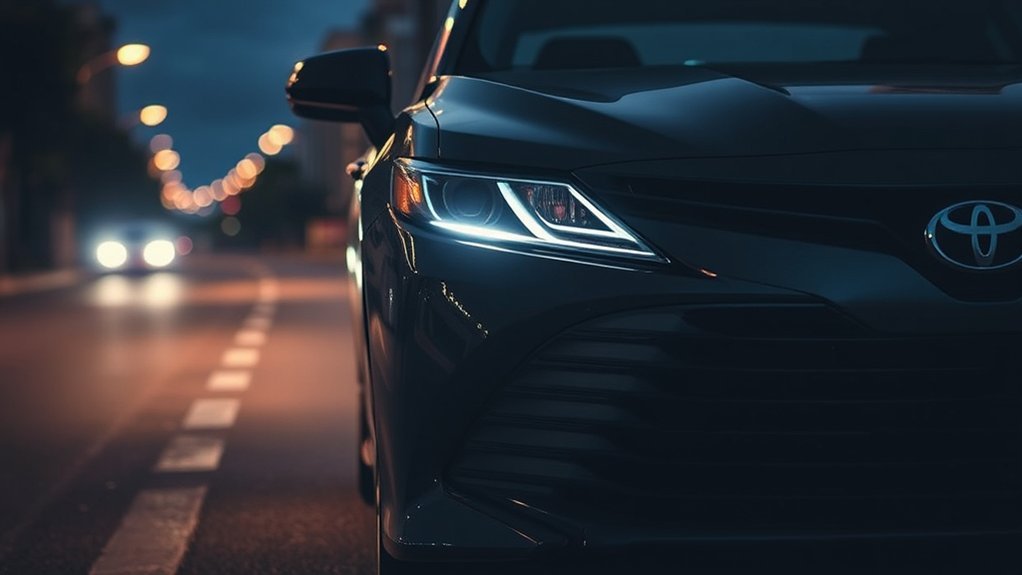
The Toyota Camry’s automatic high beam system enhances your nighttime driving experience by using a camera to sense surrounding light conditions. It automatically switches between high and low beams to improve visibility while minimizing glare for oncoming drivers. However, be mindful of factors that can affect performance, such as weather and road conditions. Always stay alert, as this technology isn’t foolproof. If you’re interested, there’s more to discover about maximizing this feature and its maintenance.
How Does the Toyota Camry’s Automatic High Beam Work?
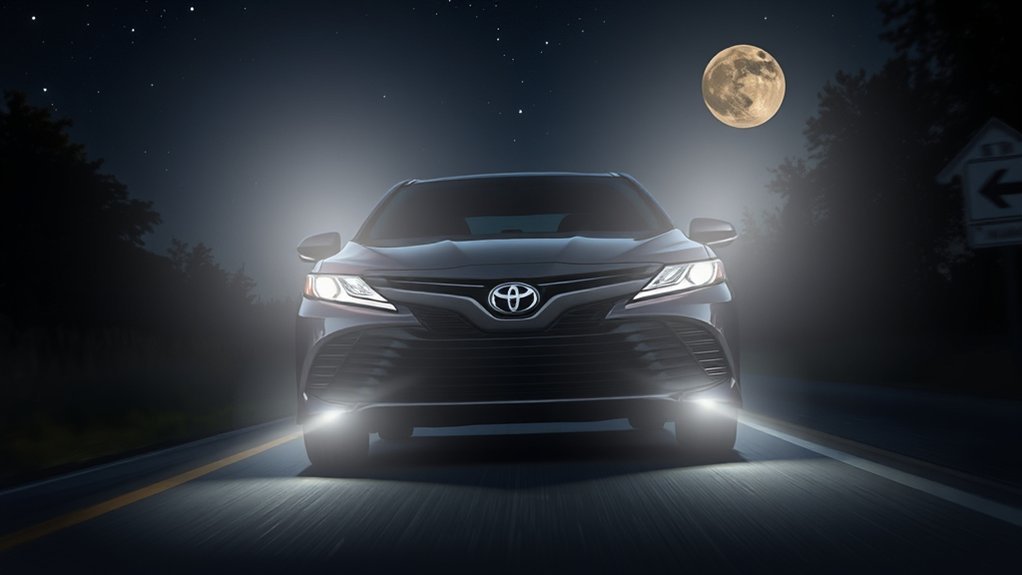
When you drive a Toyota Camry at night, its Automatic High Beam system enhances your visibility by using an in-vehicle camera to detect surrounding lights. This camera functionality automatically switches between high and low beams, ensuring ideal illumination for your journey. Operating effectively at speeds above 25 miles per hour, the system improves your ability to spot pedestrians and obstacles ahead.
However, clear visibility is essential for it to work properly. Obstructions like dirt, ice, or adverse weather can hinder the system’s performance. Additionally, it may struggle on uneven surfaces and may not detect vehicles without lights or with irregular lighting. While the system provides convenience, you should be prepared to make manual beam adjustments when needed, as it doesn’t guarantee high beam cycling in every scenario. Embrace the technology, but remain aware of its limitations for a safer nighttime driving experience.
What Conditions Affect High Beam Functionality?
Driving conditions play an essential role in the functionality of your Toyota Camry’s automatic high beam system. Visibility factors can greatly impact how well the system detects other vehicles and adjusts accordingly.
| Condition | Impact on High Beams |
|---|---|
| Poor Weather | Rain, fog, or snow can hinder detection. |
| Obstructions | Dirt or ice on the sensor blocks functionality. |
| Uneven Roads | Rough surfaces can reduce system effectiveness. |
In challenging weather, the in-vehicle camera struggles to identify headlights and taillights, limiting the automatic high beams’ operation. Additionally, vehicles with no lights or irregular lighting patterns may not be detected, further complicating the shift between high and low beams. Keeping your sensor clean and being mindful of road conditions can help guarantee peak performance, allowing you to drive confidently in various environments.
Why Driver Awareness Is Essential With Automatic High Beams
While automatic high beams enhance nighttime visibility, they’re not infallible, making driver awareness vital. You must stay vigilant and attentive, as the system may overlook vehicles without lights or those with irregular lighting. In poor weather, like rain or snow, dirt or ice can obstruct the sensor, necessitating manual intervention for peak safety. Additionally, the system struggles on uneven roads or sharp curves, further emphasizing the need for your proactive engagement.
Familiarizing yourself with your Owner’s Manual is important; it outlines the system’s limitations and promotes responsible use of automatic high beams. Over-relying on this technology can lead to dangerous situations, so be ready to manually switch beams when necessary. By remaining aware and prepared, you can guarantee a safer driving experience, maximizing the benefits of your Toyota Camry’s high beam system while minimizing risks. Your vigilance is key to steering through the night safely.
Safety Benefits of Automatic High Beams
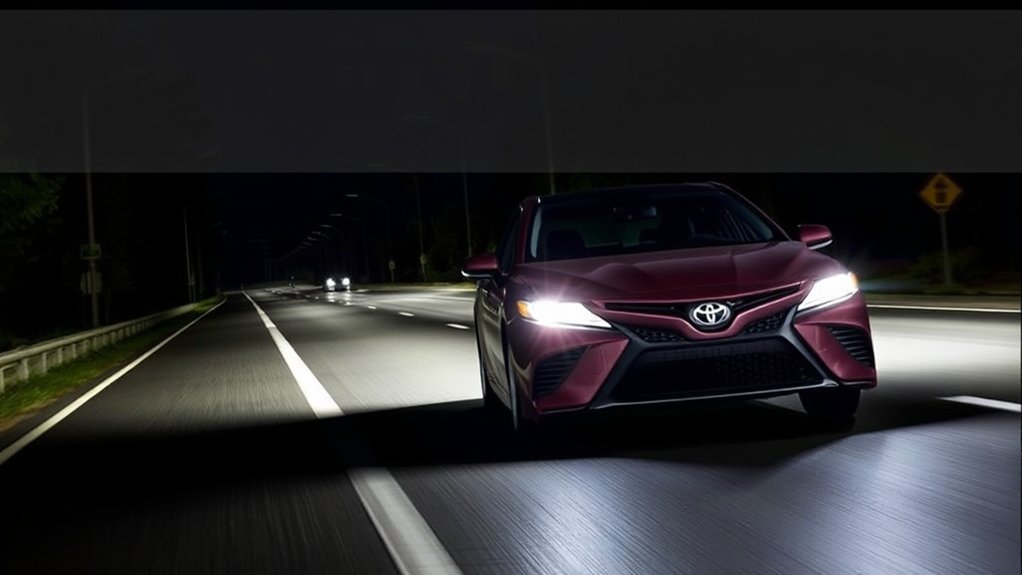
The automatic high beam system in your Toyota Camry greatly boosts nighttime visibility, helping you see better and reducing the chances of accidents. By automatically adjusting to minimize glare for oncoming drivers, it enhances safety for everyone on the road. Plus, improved detection of pedestrians and obstacles means you can react faster, making your nighttime drives much safer.
Enhanced Nighttime Visibility
Automatic High Beams greatly enhance nighttime visibility, ensuring you have ideal illumination for safer driving. This innovative system automatically switches between high and low beams based on detected headlights and tail lights, greatly improving your road illumination. Operating effectively at speeds above 25 miles per hour, it allows you to spot pedestrians and obstacles earlier, tackling common visibility challenges during night driving. With enhanced forward visibility, you can navigate potential hazards more effectively, reducing the risk of accidents. By supporting optimal visibility without compromising the safety of other drivers, Automatic High Beams encourage responsible nighttime driving practices. This technology not only benefits you but also creates a safer environment for everyone on the road.
Reduced Glare For Others
When driving at night, it’s crucial to guarantee not only your safety but also the comfort of other road users. The Toyota Camry’s Automatic High Beam system excels in glare reduction, ensuring that oncoming drivers aren’t dazzled by your headlights. By automatically toggling between high and low beams, it maintains ideal visibility for you while prioritizing considerate driving. This technology actively detects headlights and tail lights, contributing to a safer driving environment for everyone.
| Feature | Benefit |
|---|---|
| Automatic Beam Switching | Reduces glare for oncoming traffic |
| Enhanced Visibility | Improves your night driving safety |
| Safety for All Road Users | Minimizes temporary blindness risks |
With this system, you’re fostering a more cooperative atmosphere on the road.
Improved Obstacle Detection
Driving at night can be challenging, especially when it comes to spotting obstacles and pedestrians in low-light conditions. The Toyota Camry’s Automatic High Beam system greatly enhances your forward visibility, allowing you to detect nighttime hazards earlier, particularly at speeds above 25 miles per hour. By automatically switching between high and low beams, it guarantees you’re not blinded by glare while also improving your sightlines. This enhanced obstacle detection helps minimize accident risks, giving you a clearer view of your surroundings. However, the system’s effectiveness relies heavily on sensor reliability; regular maintenance is essential to maintain peak performance. With improved lighting, you can react more quickly to unexpected challenges, making your nighttime drives safer and more confident.
Key Limitations of the Automatic High Beam System?
While the Toyota Camry’s Automatic High Beam system offers enhanced visibility, it does come with notable limitations that can impact its effectiveness. For instance, poor weather conditions like rain or fog can obstruct the in-vehicle camera’s visibility, reducing the system’s ability to function effectively. Additionally, obstructions such as dirt, ice, or debris on the sensor can lead to unreliable operation, making regular sensor maintenance vital. The system also struggles on uneven or rough road surfaces, which can disrupt its detection of oncoming vehicles. It might not recognize vehicles without their lights on or those with irregular lighting, limiting its beam adjustments. Moreover, traversing roads with frequent curves or sharp turns may compromise the high beam functionality, as the system might not react quickly enough to changing conditions. Understanding these limitations can help you make more informed decisions while driving.
Manually Adjusting Your Headlights: A Safety Guide
Although the Toyota Camry’s Automatic High Beam system enhances nighttime visibility, there are times when manual adjustment of your headlights becomes vital for safety. Familiarize yourself with your vehicle’s headlight controls, enabling you to switch between high and low beams quickly, especially when facing oncoming traffic. In adverse weather or on uneven roads, your automatic system may falter, making manual adjustments necessary.
Regular headlight maintenance is essential; clean and unobstructed headlights guarantee optimum performance. Dirt or ice can severely limit visibility, so check your lights often. Understanding the limitations of the automatic system lets you stay alert and ready to take control when needed. Always refer to your Owner’s Manual for guidance on manual operation and to comply with local traffic regulations. By following these visibility tips, you help ensure a safer driving experience for yourself and others on the road.
Tips for Keeping Your High Beam System in Top Shape
To keep your Toyota Camry’s Automatic High Beam system functioning at its best, regular maintenance is key. Start with sensor cleaning; dirt or ice can obstruct the in-vehicle camera, impairing its performance. Make certain the camera has a clear line of sight—avoid placing stickers or accessories on the windshield that could block it.
Regularly check your vehicle’s lighting system to verify all lights are operational, as the automatic high beams depend on detecting other vehicles’ lights. Familiarize yourself with the system’s limitations found in your Owner’s Manual to prevent over-reliance on automatic adjustments.
Lastly, schedule routine maintenance for your vehicle. This proactive step guarantees that the high beam system operates effectively, allowing you to enjoy a safer and more liberating driving experience. By following these tips, you can keep your high beams in top shape and enhance your nighttime visibility.
What to Do If Your High Beam System Fails?
If your Toyota Camry’s automatic high beam system isn’t working, start by checking the system settings to verify everything’s configured correctly. Next, inspect the camera lens for dirt or obstructions that might be blocking its view. If problems persist, you might need to manually activate the high beams until you can get the system checked.
Check System Settings
Have you noticed your automatic high beam system not functioning as it should? First, check your vehicle settings to confirm the automatic high beam feature is activated in the car’s menu. A simple system reset might resolve minor glitches. Next, make sure the in-vehicle camera isn’t obstructed by dirt or ice, as this can severely impact performance. Look for any dashboard alerts that might indicate sensor malfunctions. For a detailed feature overview, refer to your Owner’s Manual for specific troubleshooting steps and maintenance tips related to your high beam system. If you’re still facing issues, it’s a good idea to consult a certified Toyota technician for a thorough diagnostic and any necessary repairs.
Inspect Camera Lens
Inspecting the camera lens is vital when your automatic high beam system malfunctions. Start by checking for dirt, ice, or obstructions that might block the lens, as anything in the way can hinder its performance. Confirm the camera has a clear line of sight, allowing it to detect headlights and tail lights effectively. Look for signs of damage or misalignment, which could prevent it from switching between high and low beams properly. Regular camera maintenance, including lens cleaning, is important—especially before driving in low-light conditions. Always refer to your Owner’s Manual for specific troubleshooting and maintenance instructions to keep your high beam system functioning smoothly. Taking these steps empowers you to maintain peak visibility on the road.
Manual Activation Required
When your automatic high beam system malfunctions, knowing how to manually activate your high beams becomes important for maintaining visibility in dark conditions. Start by familiarizing yourself with your vehicle’s owner’s manual; it’ll guide you on how to switch to manual control. Always verify the in-vehicle camera is clean and unobstructed, as dirt or ice can hinder functionality. In situations where the automatic system struggles—like uneven road surfaces—switching to high beams manually enhances your safety. Remember to regularly check the high beam system during maintenance to avoid relying on faulty automation. Taking these safety precautions not only improves your visibility but also empowers you to navigate confidently through the night.
What’s New in the Latest Toyota Camry High Beam Features?
With the latest advancements in the Toyota Camry’s automatic high beam system, you’re equipped for a safer nighttime driving experience. This innovative technology enhances visibility by adjusting between high and low beams based on oncoming traffic, ensuring you can see clearly without blinding others.
Here’s what’s new:
- Advanced In-Vehicle Camera: Operates effectively at speeds above 25 mph for quicker detection.
- Improved Recognition: Better at identifying headlights and tail lights, enhancing safety.
- Glare Minimization: Reduces glare for other drivers, promoting safer driving practices.
- Pedestrian Detection: More capable of spotting pedestrians and obstacles in low-light conditions.
- Regular Maintenance: Sensor maintenance is essential for peak performance, especially in varying weather.
Stay mindful of these features, as they’re designed to empower your nighttime journeys while keeping everyone safe on the road!
Frequently Asked Questions
What Is the Symbol for Automatic High Beam Toyota?
The symbol for automatic high beams in your Toyota resembles a headlight with rays and an “A.” Check dashboard indicators; if it’s illuminated or flashing, the system might have a malfunction or obstruction.
What Does Automatic High Beams Mean?
Automatic high beams use adaptive lighting technology to enhance your visibility at night. This driver safety feature automatically adjusts your headlights based on traffic, ensuring you see clearly while minimizing glare for oncoming vehicles.
Conclusion
In today’s fast-paced world, where even your smartphone can navigate in the dark, understanding your Toyota Camry’s automatic high beams is essential. These features enhance your night driving experience, but they’re not foolproof. Stay aware and know when to manually adjust your lights for maximum safety. With a little care and attention, you can keep your system in top shape and enjoy the benefits of advanced technology while hitting the road confidently.