For a U.S.-market 2026 Toyota Camry, the factory wheelbase is 111.2 inches, or about 2,824 mm. Wheelbase is the distance from the center of the front axle to the center of the rear axle, and it affects ride stability, cabin packaging, and chassis layout. If you are ordering a fuel-system part, though, do not use wheelbase alone. Use the VIN, model year, trim, drivetrain, and exact OEM part fitment to avoid buying the wrong fuel pump or tank-related component.
Quick Answer
The 2026 Toyota Camry wheelbase is 111.2 inches. Confirm the spec on Toyota’s official specifications page or by VIN with a Toyota parts department. You can also measure from front hub center to rear hub center on level ground, but use VIN-based fitment—not wheelbase alone—when ordering fuel pumps or tank parts.
Key Takeaways
- The U.S.-market 2026 Toyota Camry uses a 111.2-inch wheelbase across the lineup.
- Wheelbase means the straight-line distance between the centers of the front and rear axles.
- The driver-side door jamb usually helps you find the VIN and tire/loading label, but it is not the best place to rely on for wheelbase.
- For fuel pumps, fuel tanks, and related parts, match by VIN, trim, drivetrain, and Toyota part number.
- Manual measuring is useful for verification, accident checks, custom work, or older cars with uncertain records.
At a Glance
| Time Required | 5–10 minutes |
| Difficulty | Easy |
| Tools Needed | Tape measure, masking tape or chalk, flat surface, helper recommended |
| Cost | Free if you already have a tape measure |
Camry Wheelbase: The Bottom Line
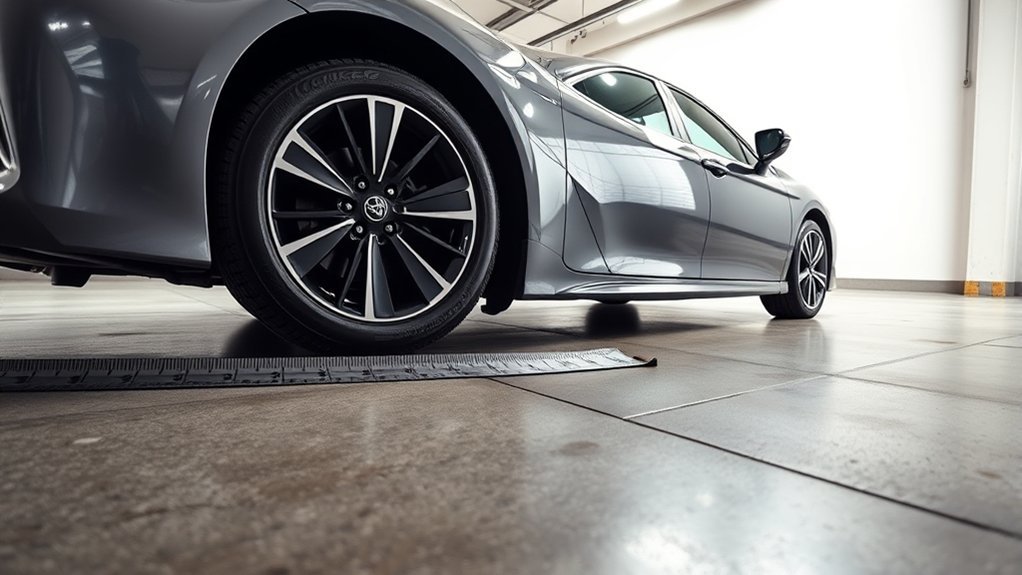
The 2026 Toyota Camry specifications from Toyota list the Camry’s wheelbase at 111.2 inches. That number helps describe the Camry’s chassis proportions and gives you a useful reference for checking ride geometry, accident damage, garage fit, transport setup, or custom fabrication.
Wheelbase is not, by itself, the correct way to choose a fuel pump. Modern Toyota fuel-system parts are matched by vehicle configuration and part number. For a 2026 Camry, use the VIN, trim, drivetrain, production details, and an official Toyota parts catalog or Toyota dealer to confirm fitment.
Warning: Do not buy a fuel pump, tank, sender, or fuel-line part based only on wheelbase. Two vehicles can share the same wheelbase and still use different fuel-system components.
What Wheelbase Means for the Toyota Camry
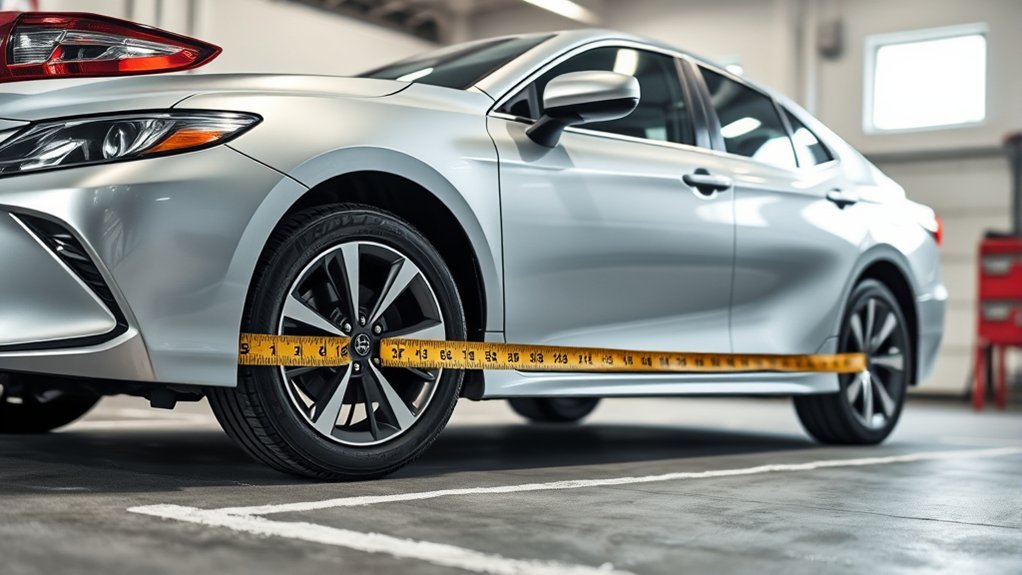
The wheelbase is the straight-line distance between the center of the front wheel hub and the center of the rear wheel hub on the same side of the vehicle. On the 2026 Toyota Camry, that distance is 111.2 inches.
Wheelbase matters because it helps shape how the car feels and how the body is packaged. A longer wheelbase usually supports a smoother ride and more cabin space, while a shorter wheelbase can help a car feel more compact and easy to rotate. The Camry’s 111.2-inch wheelbase is part of why it feels stable on the highway while still fitting normal parking spaces and garages.
Wheelbase Defined
Think of wheelbase as one of the Camry’s core chassis measurements. It is not the total length of the car. It is only the distance between the axle centerlines. The 2026 Camry’s total length is longer than its wheelbase because the body extends in front of the front axle and behind the rear axle.
You may need the wheelbase measurement when checking alignment damage, comparing trims, planning trailer transport tie-down spacing, reviewing body specifications, or confirming that a used car has not been misrepresented. For normal parts ordering, however, the VIN and OEM part catalog matter more than a tape-measured wheelbase.
Impact on Components
Wheelbase affects the overall chassis layout, but it does not automatically identify every part that fits the car. On a modern Camry, Toyota designs the fuel tank, hybrid components, exhaust routing, rear suspension, and underbody packaging as a complete system.
- Ride and stability: Wheelbase influences how planted the Camry feels at speed.
- Cabin packaging: Axle spacing helps determine passenger room and floor layout.
- Underbody layout: Wheelbase is one factor in where tanks, shields, brackets, and suspension points are packaged.
- Parts fitment: Final fit depends on VIN, trim, drivetrain, production details, and the exact Toyota part number.
Where to Find the Camry Wheelbase Spec
The easiest way to find the 2026 Camry wheelbase is to use Toyota’s official specifications page or a VIN-based Toyota parts lookup. The driver-side door jamb is still useful, but mainly because it helps you confirm the VIN and tire/loading information. It is not the most reliable place to look for wheelbase.
Note: Toyota’s support information says the VIN can be found on the certification label inside the driver-side door jamb. Use that VIN when asking a dealer or parts supplier to confirm fuel-system fitment.
Door Jamb Label Location
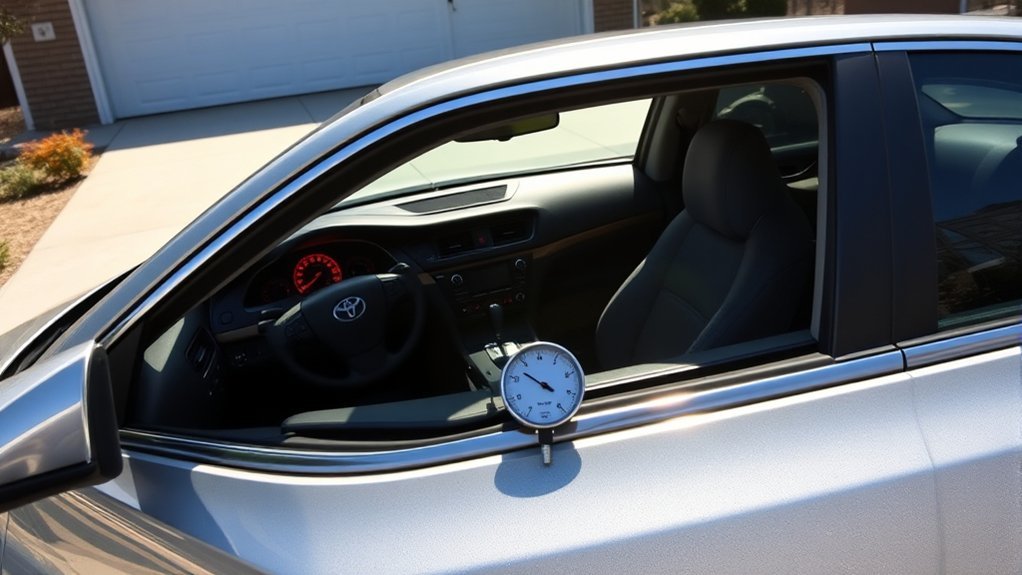
Open the driver door and look at the door jamb area. You should see labels that may include the certification label, VIN, tire pressure information, gross weight ratings, and tire/loading details. These labels are helpful for identifying the exact vehicle, but they should not be treated as your main source for wheelbase.
- Open the driver door fully.
- Locate the certification label and tire/loading information label.
- Confirm the VIN matches the VIN visible at the lower driver-side windshield area.
- Use that VIN with Toyota’s official parts catalog, a Toyota dealer, or a trusted OEM parts supplier.
Best Places to Confirm the Wheelbase Number
Use this order of reliability when confirming the Camry wheelbase:
| Source | Best Use | Reliability |
|---|---|---|
| Toyota official specs | Confirm factory wheelbase | Highest |
| VIN-based Toyota dealer lookup | Confirm vehicle and parts fitment | Highest |
| Owner resources/manuals | Confirm vehicle information and service references | High |
| Manual tape measurement | Verify physical axle spacing | Good if measured carefully |
| Generic parts listing | Initial research only | Varies |
Measure Camry Wheelbase With a Tape Measure Step by Step
Manual measurement is useful when you want to verify the physical car in front of you. It is especially helpful after collision repair, before custom fabrication, or when a used vehicle has uncertain history.
- Park on level ground. Choose a flat driveway, shop floor, or level parking area.
- Straighten the front wheels. Make sure the steering wheel is centered and the front wheels point straight ahead.
- Mark the front hub center. Use the center of the front wheel hub or center cap as your reference point.
- Mark the rear hub center. Use the rear wheel hub center on the same side of the car.
- Measure center to center. Run the tape from the front hub center to the rear hub center.
- Keep the tape straight and level. A sagging or angled tape can add error.
- Repeat on the other side. Both sides should be very close. A major difference can indicate measurement error or possible body/suspension damage.
- Compare with the factory spec. The 2026 Camry should be about 111.2 inches center to center.
Pro Tip: If the wheel center is hard to read, place a strip of masking tape on the ground beside each hub center, mark the centerline on the tape, then measure between the two ground marks.
Common Measurement Errors and How to Fix Them
An unexpected wheelbase reading usually comes from setup or technique. Before assuming the car is damaged, repeat the measurement carefully.
| Problem | Why It Changes the Reading | Fix |
|---|---|---|
| Car parked on a slope | The tape may not follow a true straight center-to-center line | Move to level ground |
| Front wheels turned | The hub center reference shifts slightly | Straighten the steering wheel |
| Tape held at an angle | Diagonal measuring adds length | Keep the tape parallel to the vehicle centerline |
| Measuring tire edges | Tire sidewalls are not axle centers | Measure hub center to hub center |
| Loose or sagging tape | Sag can add error | Keep the tape taut or use a helper |
For best results, measure both the driver and passenger sides, write down both numbers, and compare them. A small difference can be normal measurement error. A large difference should be checked by an alignment or collision-repair professional.
Why Wheelbase Matters for Your Camry’s Tank and Fuel Pump
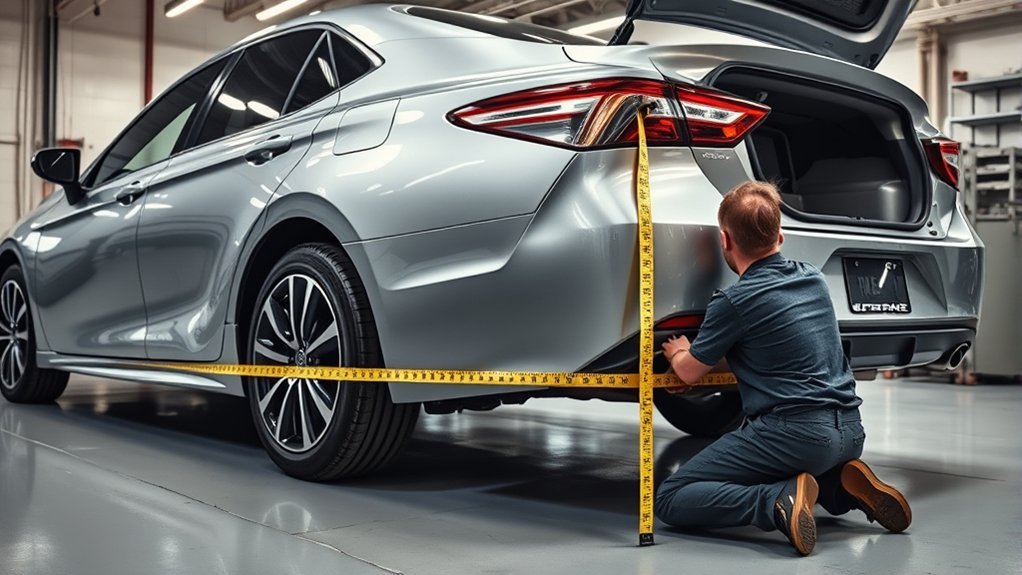
Wheelbase helps describe the Camry’s underbody layout, but it should not be treated as the deciding spec for fuel-pump fitment. Toyota fuel pumps, pump assemblies, senders, seals, tanks, valves, hoses, and related parts are built around specific vehicle configurations.
For the 2026 Camry, the more important fitment details are:
- VIN
- Model year
- Trim level
- FWD or electronic on-demand AWD
- Hybrid system configuration
- Emission-market requirements
- Exact Toyota part number
- Any previous tank, pump, or collision repair work
Wheelbase confirms the Camry’s chassis proportion; the VIN confirms the parts that fit it.
How Wheelbase Affects Tank Design and Pump Fit
During vehicle design, wheelbase is one of the dimensions engineers consider when packaging the fuel tank, rear suspension, exhaust routing, shields, hybrid components, and body structure. That does not mean an owner should shop for a replacement pump by wheelbase.
In real-world repair and parts ordering, a fuel pump must match the tank opening, electrical connector, pressure requirements, sender setup, seal design, and mounting depth. Those details are handled by the correct Toyota part number. A pump that looks similar can still be wrong if the connector, sender, or module depth differs.
If you are modifying the car for motorsport, custom fabrication, or a non-factory fuel cell, then wheelbase and underbody dimensions become more important. For normal replacement work, use OEM fitment data first.
What to Tell a Parts Supplier When Ordering a Camry Fuel Pump
When ordering a fuel pump or related fuel-system part for a 2026 Toyota Camry, give the supplier complete fitment information. This reduces returns and helps prevent unsafe repairs.
- VIN: This is the most important identifier. Toyota notes that the VIN can be found on the certification label inside the driver-side door jamb and on the lower driver-side windshield area.
- Year, make, and model: 2026 Toyota Camry.
- Trim: LE, SE, Nightshade, XLE, XSE, or the exact trim shown on your paperwork.
- Drivetrain: FWD or electronic on-demand AWD.
- Part needed: Fuel pump, fuel pump assembly, tank seal, sender, hose, valve, or another exact part.
- Current symptoms: No-start, weak fuel delivery, fuel gauge issue, leak, diagnostic trouble code, or collision damage.
- Modifications: Any non-factory tank, suspension, wiring, or fuel-system work.
- OEM preference: Ask for a Toyota Genuine part or a part that cross-references correctly to the OEM number.
Note: Toyota’s official parts site lets you add your vehicle or search by VIN to browse parts that fit. That is safer than matching by a single dimension such as wheelbase.
When You Should Measure Wheelbase Yourself
You usually do not need to measure the wheelbase before buying routine replacement parts. Still, a manual measurement can be useful in these situations:
- You are checking a used Camry after a collision history report.
- The car has had frame, subframe, or suspension repair.
- You are comparing both sides for possible alignment or body damage.
- You are planning custom fabrication or transport tie-down points.
- You want to verify that your physical measurement matches Toyota’s published 111.2-inch spec.
Camry Wheelbase vs. Length, Width, and Track
Wheelbase is only one exterior measurement. It is often confused with overall length, track width, or ground clearance. Here is the difference:
| Measurement | What It Means | Why It Matters |
|---|---|---|
| Wheelbase | Front axle center to rear axle center | Ride, stability, cabin layout, chassis reference |
| Overall length | Front bumper to rear bumper | Garage fit and parking space |
| Overall width | Side-to-side body width, usually excluding mirrors unless stated | Parking, lane feel, garage clearance |
| Track width | Left wheel center to right wheel center on the same axle | Handling feel and stance |
| Ground clearance | Lowest body/chassis clearance from the ground | Driveway, curb, and road clearance |
Frequently Asked Questions
Are all 2026 Toyota Camrys the same wheelbase?
For the U.S. market, Toyota lists the 2026 Camry wheelbase at 111.2 inches. Always check the official specifications for your market if the car was sold outside the United States.
Is wheelbase the same as overall length?
No. Wheelbase is the distance between the front and rear axle centers. Overall length is the full bumper-to-bumper length of the vehicle.
Can I find the Camry wheelbase on the door sticker?
The door jamb is useful for finding the VIN, certification label, and tire/loading label, but it is not the best source for wheelbase. Use Toyota’s official specs or a VIN-based Toyota dealer lookup for the most reliable information.
Do I need the wheelbase to order a Camry fuel pump?
Usually, no. You need the VIN, model year, trim, drivetrain, and correct part number. Wheelbase can help describe the vehicle, but it does not confirm fuel-pump compatibility by itself.
Why would my measured wheelbase be different from 111.2 inches?
Common causes include measuring from tire edges instead of hub centers, holding the tape at an angle, parking on a slope, or leaving the front wheels turned. If you measure carefully on both sides and still see a large difference, have the alignment and body structure inspected.
Conclusion
The 2026 Toyota Camry wheelbase is 111.2 inches, measured from the center of the front axle to the center of the rear axle. Use Toyota’s official specifications to confirm the factory number, and measure hub center to hub center only when you need to verify the physical car. For fuel pumps and tank-related parts, do not rely on wheelbase alone. Use the VIN, trim, drivetrain, and Toyota part number so the part fits correctly the first time.
Sources
- Toyota 2026 Camry Specifications — backs up the 111.2-inch factory wheelbase specification.
- Toyota 2026 Camry Overview — confirms current U.S.-market Camry lineup context and hybrid positioning.
- Toyota Owners Manuals and Warranties: 2026 Camry — official owner-resource page for vehicle documentation.
- Toyota Support: Where to Find the VIN — supports VIN locations, including the driver-side door jamb certification label.
- Toyota Genuine Parts Official Online Store — supports VIN/vehicle-based parts lookup and genuine Toyota parts fitment.