A P0300 on your Toyota RAV4 means random or multiple cylinder misfires, signaling faults in ignition, fuel delivery, or intake systems. Start by scanning for accompanying DTCs and freeze-frame data, inspect and swap spark plugs and coils, verify ignition timing, check fuel pressure and injectors, and probe for vacuum or intake leaks with smoke or starter fluid. Fixes range from plug/coil replacement to fuel-pump or gasket repair. Continue below to get step-by-step tests and cost guidance.
What P0300 Means for Your Toyota RAV4
When your Toyota RAV4 throws a P0300 code, it’s signaling random or multiple cylinder misfires that point to problems in the ignition, fuel delivery, or air intake systems. You’ll recognize misfire symptoms as rough idle, hesitation under load, and a sudden drop in engine performance; these signs mean combustion isn’t occurring consistently across cylinders. The P0300 flag doesn’t single out one cylinder, so you’ll treat it as a systemic fault pathway: inspect ignition components (spark plugs, coils), fuel delivery (injectors, pressure), and air pathways (vacuum leaks, intake integrity). You’ll also scan for related DTCs like P0301–P0304 to localize faults. Addressing root causes preserves combustion efficiency and prevents cascading damage to catalytic converters and pistons. Regular maintenance—scheduled plug changes and fuel-system cleaning—reduces recurrence. Approach diagnostics methodically, armed with data and decisive actions, so you can reclaim control of your vehicle’s performance and maintain the freedom to drive without compromise.
Immediate Checks: Read Codes, Inspect Air Filter, Safety Steps
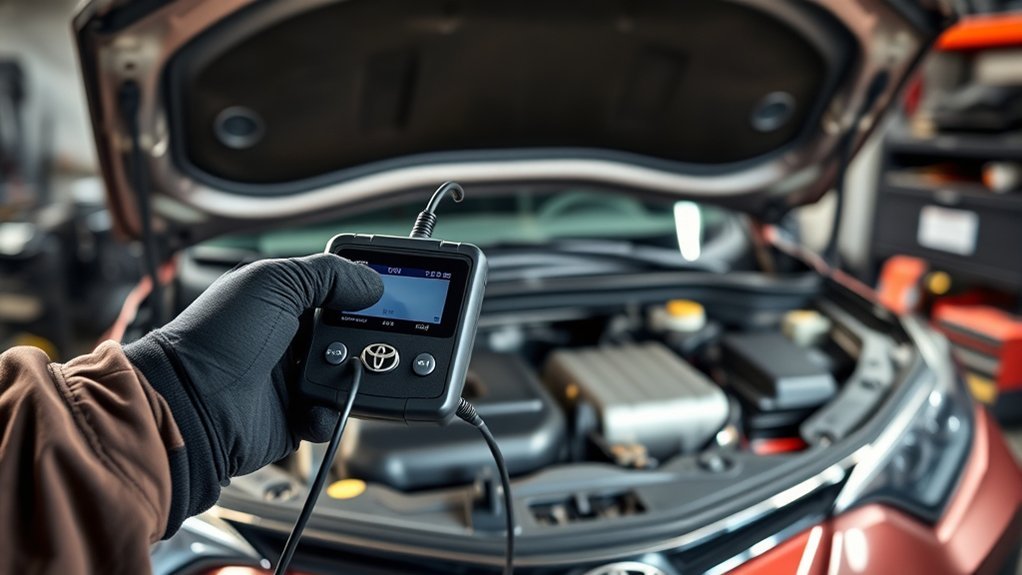
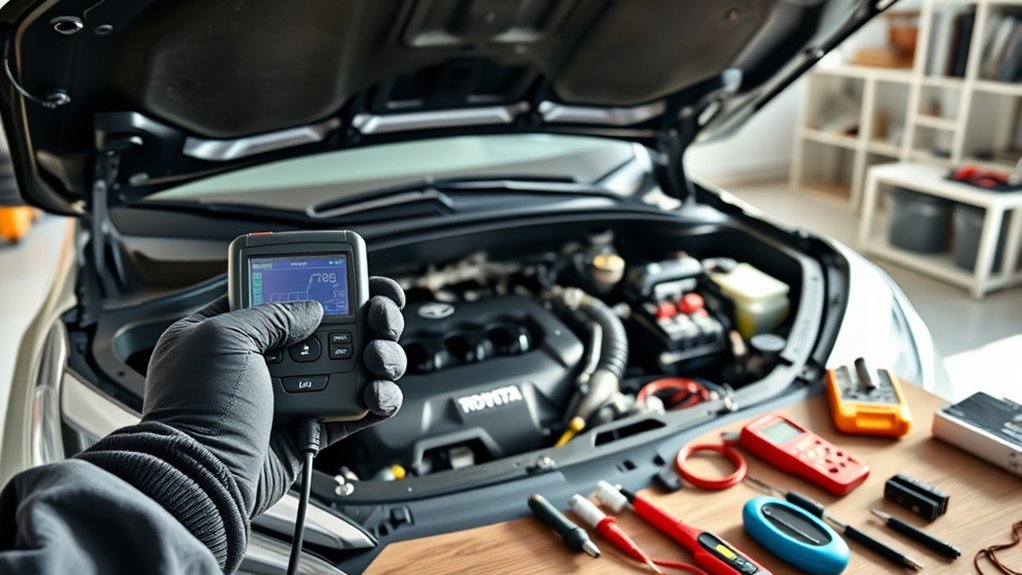
Because diagnosing a P0300 starts with data, begin by plugging in an OBD‑II scanner to read the code and any accompanying DTCs, then confirm freeze‑frame data and pending codes before touching components. You’ll use OBD II scanning to capture misfire patterns, RPM, load and temperature at fault occurrence; that data directs targeted checks and prevents wasted work.
- Use the OBD II scanning readout to note cylinder(s) affected, freeze‑frame conditions, and any related codes that indicate vacuum, fuel, or sensor issues.
- Inspect the air filter visually and by airflow test; replace if clogged or heavily soiled, since restricted intake alters air‑fuel ratio and can induce intermittent misfires.
- Execute safety steps: cool engine, disconnect battery, wear eye protection, and relieve fuel system pressure as required. Then perform a visual intake inspection for damaged hoses or loose clamps that would cause vacuum leaks.
Follow this sequence; it liberates you from guesswork and narrows causes efficiently.
Test Ignition: Plugs, Coils, and Spark Diagnostics for P0300
Although misfires can stem from fuel or intake problems, start by testing the ignition system — spark plugs, coils, and wiring — since faulty ignition components are a common and easily verifiable cause of a P0300. You’ll perform a spark plug inspection first: remove plugs, look for wear, carbon buildup, or electrode erosion, and replace per manufacturer intervals (30,000–100,000 miles). Use an inline spark tester to confirm consistent spark delivery; intermittent or absent spark isolates the ignition system.
Proceed to ignition coil testing with a multimeter. Measure primary/secondary resistance; coils typically read between 0.4 and 2.0 ohms on relevant windings—values outside spec indicate replacement. Inspect plug wires and boots for cracks, corrosion, or arcing marks that can disrupt flow. Finally, verify ignition timing with a timing light; incorrect timing can produce multiple-cylinder misfires. Methodically document findings, replace or repair failed components, and clear codes to confirm the P0300 no longer returns.
Check Fuel Delivery & Injectors; Find Intake and Vacuum Leaks
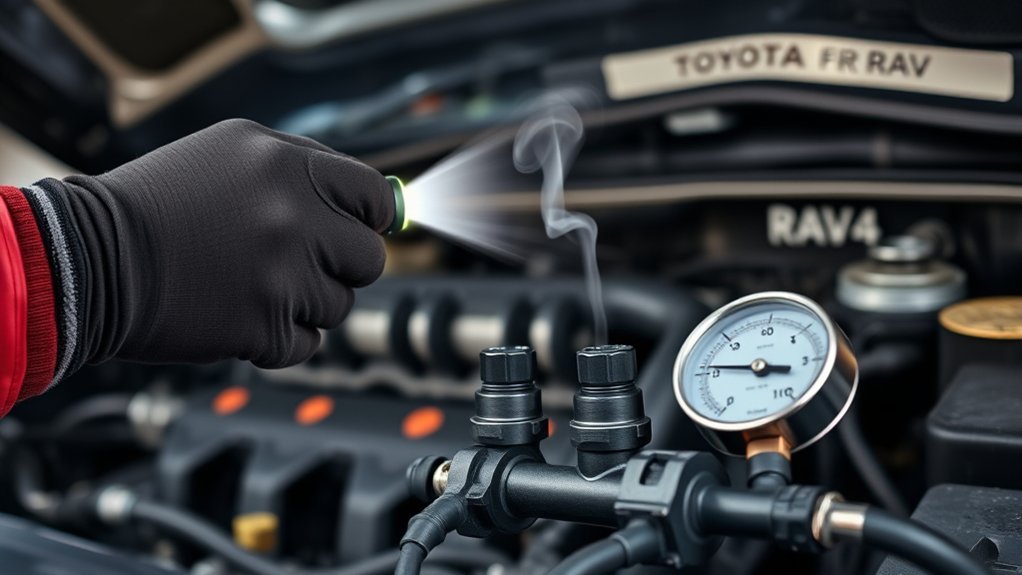
If ignition checks didn’t reveal the cause, move next to verifying fuel delivery and sealing of the intake tract, since inconsistent fuel pressure, clogged or failing injectors, or vacuum leaks commonly produce the random misfires flagged by P0300. You’ll take systematic steps to restore control over the engine’s air-fuel balance.
- Attach a fuel pressure gauge to the fuel rail and compare readings to Toyota specs; low or fluctuating fuel pressure points to pump, regulator, or filter faults that undermine combustion consistency.
- Perform injector testing with a multimeter to verify coil resistance, and swap suspected injectors with known-good cylinders to isolate failures; clogged or leaking injectors disrupt spray patterns and cause misfires.
- Inspect vacuum hoses and gaskets visually, use a smoke machine to reveal intake leaks, and confirm further with starter fluid around suspect joints—any change in idle confirms a leak that skews mixture and triggers P0300.
Act deliberately; these diagnostics free you from guesswork and guide precise repairs.
Fix Options, Cost, and When to Visit a Shop
Now that you’ve checked ignition, fuel delivery, and intake seals, you can match specific fixes to the confirmed faults and estimate costs so you can decide whether to repair at home or take the RAV4 to a shop. If diagnostics point to spark plugs or coils, expect repair estimates of $100–$500; you can replace plugs yourself to save labor. Fuel system faults (clogged filter or pump) run $150–$800; pump replacement typically requires shop tools. Vacuum or intake hose/gasket repairs are often DIY after inspection, though professional diagnostic fees of $100–$150 may apply if you need help locating leaks.
If multiple components are suspected, plan for an extensive scan (~$100) — many shops waive that fee when they perform repairs. Visit a shop if common symptoms persist after basic troubleshooting, or if misfires continue; continued driving risks broader engine damage and higher downstream costs. Make decisions that reclaim control over cost and reliability.
Frequently Asked Questions
What Is the Code P0300 on a Toyota rav4?
The P0300 code means your engine misfire is random or multiple; you’re seeing a diagnostic trouble signal. You’ll inspect ignition, fuel, and intake systems methodically, reclaiming control by fixing root causes and restoring reliable performance.
Conclusion
You’ve learned that P0300 means random misfires and that quick checks—reading codes, checking the air filter, and following safety steps—often reveal the culprit. Coincidentally, the same afternoon you spot a worn plug or a leaking vacuum line, the RAV4 that once hesitated now runs smoothly after a targeted repair. Stay methodical: test ignition, confirm fuel and injector function, seal intake leaks. If uncertainty remains, take it to a shop for precise diagnostics.