Toyota RAV4 ground clearance varies by generation and trim, so you’ll match ride height to intended use: early models sat around 7.3–7.5 in, mid‑gens dipped to ~6.3 in, and recent fifth‑gen/2025 trims range roughly 8.1–8.6 in. Clearance is measured from the lowest fixed point (exhaust hangers, skid plates) to ground and changes with tires, load, and suspension. Higher trims and TRD Off‑Road give more usable margin; keep going to see measurements, trade‑offs, and upgrade options.
RAV4 Ground‑Clearance: Quick Answer by Year and Trim

If you’re comparing RAV4 model years and trims for off‑road use, note that ground clearance varies considerably: you’ll use RAV4 history and clearance trends to prioritize trims that free you from terrain limits. First‑generation 1994 RAV4 offered 7.3 in (FWD) to 7.5 in (AWD), giving you modest capability and visibility. Second‑ and third‑generation models (2001, 2006) dropped to 6.3 in, constraining off‑road options; you’d avoid those if you want liberation from obstacles. The fourth‑generation (2013–2018) maintained a uniform 6.3 in across trims, simplifying comparisons but limiting capability. With the fifth‑generation (2019–present), clearance trends shift upward: 8.1–8.6 in depending on trim, and the 2025 RAV4 reaches up to 8.6 in on higher trims. You’ll thus select later fifth‑gen or 2025 higher trims when you need greater underbody margin, while earlier generations suit urban or light‑trail use.
RAV4 Ground‑Clearance: How It’s Measured and Why Specs Vary
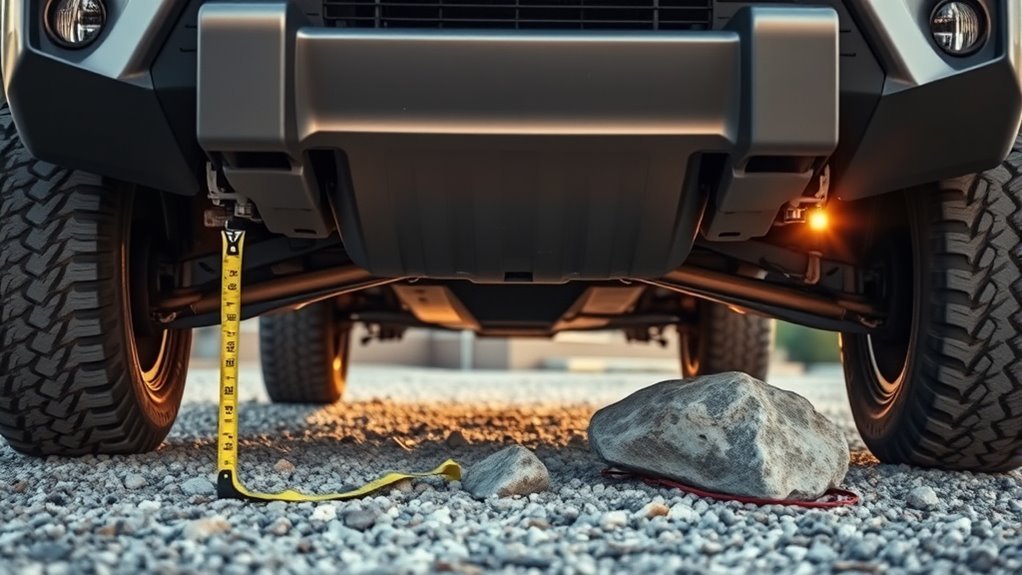
When you evaluate RAV4 ground clearance, start by noting the measurement reference point — manufacturers report height from the lowest fixed component to the ground, which can be exhaust hangers or skid plates. Design variations like exhaust placement, suspension tuning, and regional bumpers change the effective clearance and explain why Toyota lists 8.6 inches for the 2025 U.S. model while some markets show about 7.36 inches. Expect real‑world values to be lower (commonly 7–7.5 inches) once tires, load, and wear are factored in, which affects obstacle negotiation compared with rivals like the Crosstrek.
Measurement Reference Points
One clear way to understand RAV4 ground‑clearance numbers is to look at the measurement reference point: manufacturers usually report the distance from the ground to the lowest fixed component under the vehicle, but that lowest point can vary by design and trim. You should question measurement accuracy and account for ground effects like underbody panels or exhaust routing that shift the reported value from what you see off‑road. For liberation‑minded drivers, clarity lets you choose confidently.
- Specified 2025 RAV4: 6.3 inches from lowest point
- Exhaust placement can reduce effective clearance
- International variants sometimes measure 7–7.5 inches
- Trim and fixed components change the reference point
- Real‑world checks validate manufacturer claims
Use these reference rules to assert control over vehicle capability assessments.
Design Variations Impact
Because RAV4 ground‑clearance figures hinge on design decisions, you should read specs knowing they reflect the lowest fixed component rather than a uniform chassis baseline. You’ll see variations driven by specific design elements: exhaust routing, bumper profiles, and multi‑link rear suspension geometry that optimize handling but alter the lowest point. Trim levels shift clearance too—standard variants hover near 6.3 inches while higher 5th‑generation trims reach about 8.6 inches. International reporting and market differences further change published numbers, with some models listed above 7 inches. Interpret specs as conditional parameters, not absolutes. Use them to choose a configuration that frees your mobility needs, balancing on‑road dynamics and off‑road clearance within real design constraints.
Real‑World Versus Specs
If you compare published ground‑clearance figures to measurements taken by owners, you’ll quickly see why specs can be misleading: manufacturers report clearance from the vehicle’s lowest fixed point (often an exhaust hanger, skid plate edge, or bumper lip), while real‑world readings depend on tire pressure, load, suspension travel, and measurement method. You should treat the 2025 RAV4’s 6.3-inch spec as a baseline, not an absolute. User testimonials and real world experiences often show 7–7.5 inches under different conditions. Design choices, generation changes, and exhaust placement alter practical clearance and obstacle performance.
- Measure at multiple points: center, axle, and lowest hanger.
- Record tire pressure and load each time.
- Compare variants and model years.
- Consult user testimonials for patterns.
- Test actual obstacle negotiation before judgment.
What 6–9 Inches of Clearance Feels Like: City, Curbs, Snow, and Trails
With 6–9 inches of clearance you’ll find everyday city driving feels stable and predictable, with good sightlines and minimal scraping over standard curbs and speed bumps. In light snow or slushy conditions the RAV4’s height preserves traction and underbody safety, though deep ruts or heavy mud will reduce capability. On moderate dirt trails the upper end of that range handles small obstacles and rough surfaces confidently, but it isn’t optimized for demanding overlanding terrain.
City Driving Comfort
Anyone traversing city streets will notice how the RAV4’s up-to-8.6-inch ground clearance changes everyday drive dynamics: it clears common urban obstacles like curbs and speed bumps without frequent scraping, while its suspension maintains ride composure. You’ll value the RAV4’s urban maneuverability and comfort features when traffic, parking, and weather demand predictability. The elevation improves sightlines and lets you approach uneven surfaces with controlled confidence. Expect consistent contact patch management and reduced underbody impacts on maintained roads; don’t expect extreme off-road forgiveness.
- Confident lane changes in tight corridors
- Smooth negotiation of speed bumps and potholes
- Better visibility at intersections and crosswalks
- Reduced risk of snow-induced immobilization on cleared streets
- Suspension-tuned comfort for daily commutes
This balance supports mobility and autonomy in city life.
Curb And Obstacle Clearance
Six to nine inches of ground clearance—8.6 inches on the 2025 RAV4 at its peak—translates into predictable interactions with common urban and light off-road obstacles: you clear standard curbs, speed bumps, and packed snow without aggressive ramp angles, while moderate ruts and rocky tracks remain negotiable provided you manage approach and departure angles. You’ll appreciate curb navigation that lets you pull onto sidewalks or enter tight parking without scraping. Obstacle management becomes a procedural task: judge angles, reduce speed, and pick lines to keep suspension travel centered. Visibility gains free you to choose routes others avoid, but remember limited axle articulation and lower skid protection relative to higher-clearance SUVs. Use deliberate technique and you expand where you can go safely.
Snow, Mud, Trail Handling
Although you won’t conquer extreme terrain, the RAV4’s 6–9 inch clearance—peaking at 8.6 inches on the 2025 model—gives you practical capability in snow, mud, and maintained trails: it reduces underbody contact in moderate snowbanks, lowers the chance of mud packing around suspension components, and clears most trail obstacles that don’t require serious axle articulation. You’ll feel confident driving through winter streets and predictable backroads; the design balances protection and center-of-gravity control for traction and stability. Key operational takeaways:
- Snow performance: moves through moderate drifts without frequent high-centre risks.
- Mud traction: elevated clearance reduces underbody drag and clogging.
- Trail protection: shields critical components from rocks and ruts.
- Stability: preserves predictable handling on maintained trails.
- Limits: not intended for extreme articulation or deep-water fording.
RAV4 vs Crosstrek, Outback, and Jeep: Clearance Comparison
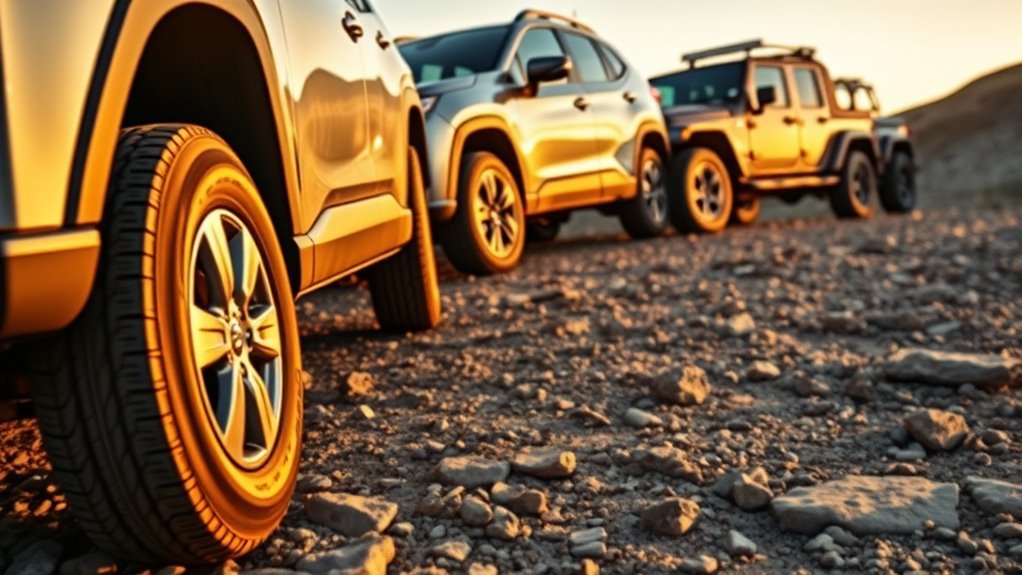
When evaluating off-road readiness, the 2025 Toyota RAV4’s up-to-8.6-inch ground clearance gives you a measurable advantage over the Subaru Crosstrek (6.3 in) and is effectively on par with vehicles like the Subaru Outback and typical Jeep Cherokee models (≈8.7 in), though exact numbers can vary by trim. You’ll find RAV4 advantages in visibility and undercarriage protection versus lower-clearance rivals; that boosts your off road performance in uneven terrain and light overlanding. It meets minimum overlanding thresholds but sits near the lower bound of the preferred 8–10 in range for demanding trails.
| Model | Ground Clearance |
|---|---|
| Toyota RAV4 (2025) | 8.6 in |
| Subaru Crosstrek | 6.3 in |
| Outback / Jeep Cherokee | ≈8.7 in |
Use this comparison to choose freedom—select the platform that aligns with your terrain goals and tolerance for modification if you need more clearance.
[Products Worth Considering]

Protect your Toyota RAV4 interior with this custom‑fit windshield sun shade that blocks 99% of harmful UV rays and reduces cabin heat. The mirror cut‑out ensures a seamless fit without gaps, while durable 240T polyester and bendable wire keep it sturdy through repeated use. Foldable and stored in a convenient pouch, it offers easy installation and removal for everyday comfort.

The Autovir windscreen shade offers full windshield coverage for Toyota RAV4 models from 2019 to 2026, blocking up to 99.95% of UV rays and reducing interior heat. Its multi‑layer reflective material provides SPF 100 and UPF 80+ protection while keeping the dashboard, seats, and steering wheel cooler. The foldable design installs quickly and stores conveniently in the glove box, and reinforced stitching ensures long‑lasting durability for daily use.
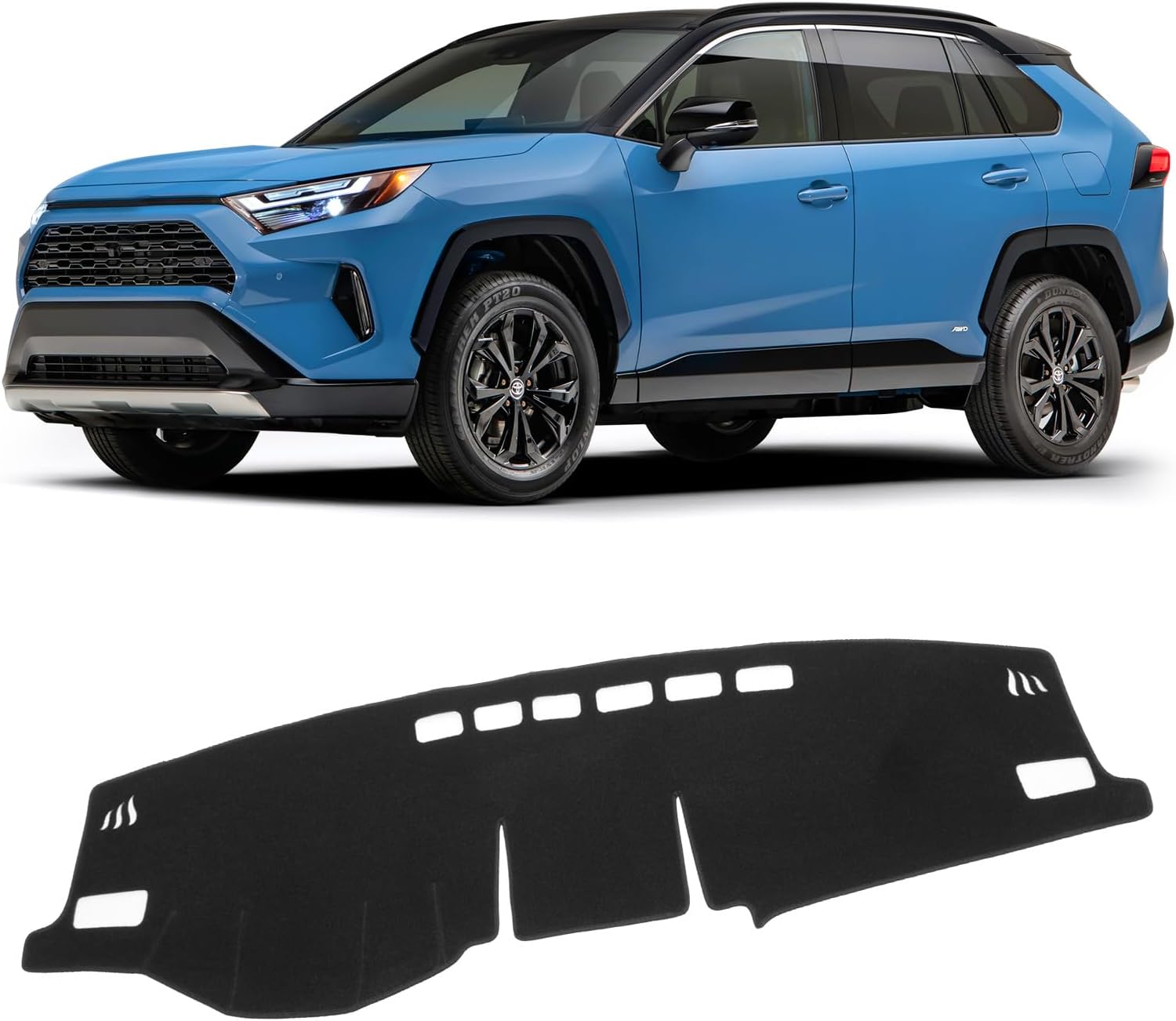
The KUST Black Dashboard Cover Mat offers a custom, eco‑friendly fit for Toyota RAV4 models from 2019 to 2025, protecting the dash from UV damage, scratches, and glare. Made from post‑consumer recycled polyester with a silicone anti‑slip underside, it stays soft, breathable, and odorless while securely adhering to the surface. Installation is quick and reversible, and the foldable design allows easy storage when not in use.
Which RAV4 Trim to Pick for Your Clearance Needs
Which RAV4 trim is right for your clearance needs depends on the terrain you expect to tackle and how much aftermarket modification you’ll accept. You’ll assess Trim Comparisons and Off Road Features analytically: XLE gives up to 8.6 inches—adequate for maintained off-road tracks and moderate trails—while TRD Off-Road Edition increases clearance and adds rugged hardware for tougher terrain. Choose by mission profile and freedom goals.
- XLE: up to 8.6″ clearance, efficient, good for moderate off-road use and urban liberation.
- TRD Off-Road Edition: higher clearance, reinforced components, best for aggressive trails.
- Lower trims: slightly less clearance; limit rough-trail capability without upgrades.
- Overlanding seekers: prefer trims closer to 8–10″ nominal range; evaluate payload and gear.
- Practical choice: match clearance to typical route, prioritize Off Road Features when you’ll stray from maintained tracks.
You’ll pick the trim that balances factory capability, intended routes, and your willingness to pursue aftermarket freedom.
[Products Worth Considering]

These silicone cup holder inserts provide a curved, anti‑shake design that securely grips water cups and bottles, preventing spills and rattling while driving. Made from high‑strength, waterproof silicone, they fit most vehicle cup holders and are easy to install with a self‑adhesive backing. The set includes six inserts, cleaning paper, and a manual for optimal placement and lasting stability.

These silicone cup holder inserts provide a precise fit for the 2026 Toyota RAV4, offering anti‑slip grip and noise reduction while protecting the interior from spills and scratches. Made from high‑quality silicone, they are durable, easy to clean, and install without tools, ensuring your drinks stay stable during every drive.
Clearance, Mods, and Towing: Limits and Upgrade Options
Because ground clearance directly affects obstacle negotiation and hitch geometry, you should weigh the RAV4’s stock 8.6 in. maximum, the TRD Off-Road’s improved suspension, and any planned lifts against payload and towing needs; assess trade-offs quantitatively. You’ll gain additional approach and departure margin with lift kits, but added height changes center of gravity, steering response, and brake leverage. Calculate payload reduction from heavier suspension components and extra gear, then compare to towing limits to keep tongue weight and gross combined weight within Toyota specs. For short overland stretches, 8–10 in. is the practical target; the RAV4’s stock value meets light off-road tasks, while reported 6–8 in. clearances require cautious routing. Prioritize suspension tuning that maintains factory load ratings or accept reduced towing capacity documented after modification. Choose upgrades that preserve braking performance, align tires with wheel wells, and don’t exceed posted towing limits if you want freedom to explore without compromising safety or legal compliance.
Protecting the Undercarriage: Practical Tips to Increase Usable Clearance

If you want to increase usable clearance without compromising safety, prioritize hard points and low-hanging components—install steel skid plates for the oil pan, transmission and fuel tank, consider a modest suspension lift or longer-travel springs only after calculating payload and tow impacts, and fit larger-diameter tires that clear wheel wells and gear while improving approach angles. You’ll protect essential hardware and gain functional clearance without speculative mods.
- Skid Plate Installation: fit steel plates anchored to factory mounts; protect oil pan, transmission, fuel tank.
- Suspension Upgrades: choose modest lifts or longer-travel springs after load and tow calculations to avoid driveline strain.
- Tire Selection: pick larger-diameter, high-sidewall tires that clear wells and improve traction and approach angle.
- Exhaust and Low Points: inspect routing; reroute or shield sections that create the lowest clearance.
- Driving Techniques: approach obstacles at an angle, control momentum, and scout lines to minimize undercarriage strikes.
Apply these measures methodically; they free you to explore while retaining safety margins and mechanical reliability.
Quick Buying Checklist: Pick the RAV4 Fit for Your Terrain
How much ground clearance do you really need for the routes you plan to drive? Start by matching measured and real-world numbers: the 2025 RAV4 lists 8.1–8.6 inches, users report 7–7.5 inches in practice, and the Crosstrek claims 8.7 inches. If your routes are well-maintained off-road tracks or light to moderate terrain, the stock RAV4 usually suffices.
Next, define your mission profile. If you want serious off-roading or overlanding, prioritize the TRD Off-Road Edition for its enhanced features and proven terrain suitability. Evaluate obstacle types — rocks, washouts, steep ruts — and compare ride height, suspension travel, and approach/departure angles.
Consider customization: targeted off road enhancements such as lift kits, skid plates, and all-terrain tires increase usable clearance and resilience. Finally, quantify trade-offs: higher clearance may alter center of gravity and fuel economy. Choose the RAV4 configuration and modifications that align with your freedom to roam, safety margins, and maintenance tolerance.
Frequently Asked Questions
Does RAV4 Ground Clearance Differ by Trim Level?
Yes — you’ll see trim comparison differences: lower trims sit around 8.4 inches, higher or TRD Off‑Road reach about 8.6. You’ll evaluate off road capability technically, choosing liberation through informed selection.
Is RAV4 Ground Clearance Enough for Trails?
Yes — and with limits: you’ll handle light trails, debris, curbs; you won’t dominate extreme routes. You’ll rely on off road capabilities, optimized suspension features, and trim choice; choose TRD Off‑Road for greater freedom.
Does a RAV4 Have Good Clearance?
Yes — you’ll find RAV4 specifications show up to 8.6 inches, offering competent off road performance for trails and visibility; it’s adequate for light overland use but may need mods for demanding, liberating adventures.
Conclusion
You’ll choose the RAV4 trim that fits your driving like a glove, balancing measured ground‑clearance specs with real‑world needs. Treat the published ride height as a baseline, not a guarantee: suspension travel, load, tires, and skid plates change usable clearance. If you need more clearance, opt for Adventure/TRD or fit modest lift and tougher tires, but respect suspension and towing limits. Plan maintenance and protection like armor, and drive accordingly.