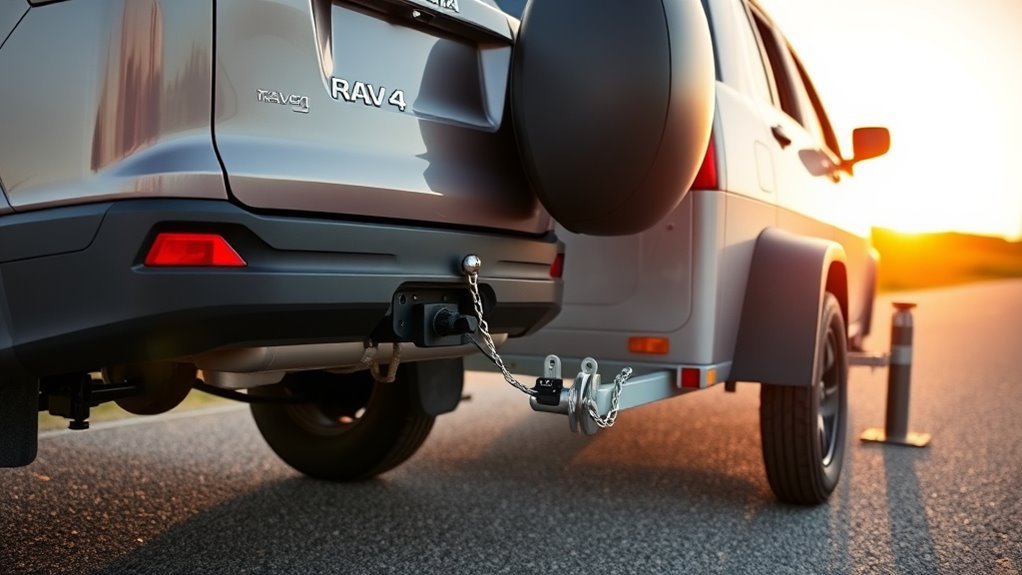
You can tow your Toyota RAV4 safely if you confirm the transmission and use the correct setup: manuals can be flat-towed with all wheels on the ground in neutral, while automatics need all wheels off the road or a hydraulic pump to protect the transmission. Disengage the steering lock, release the parking brake, fit the towing eye securely, and use proper straps and chocks. Drive slowly, brake early, and watch for leaks or odd noises — keep going for detailed steps and precautions.
Can You Tow a Toyota RAV4? Quick Guidance
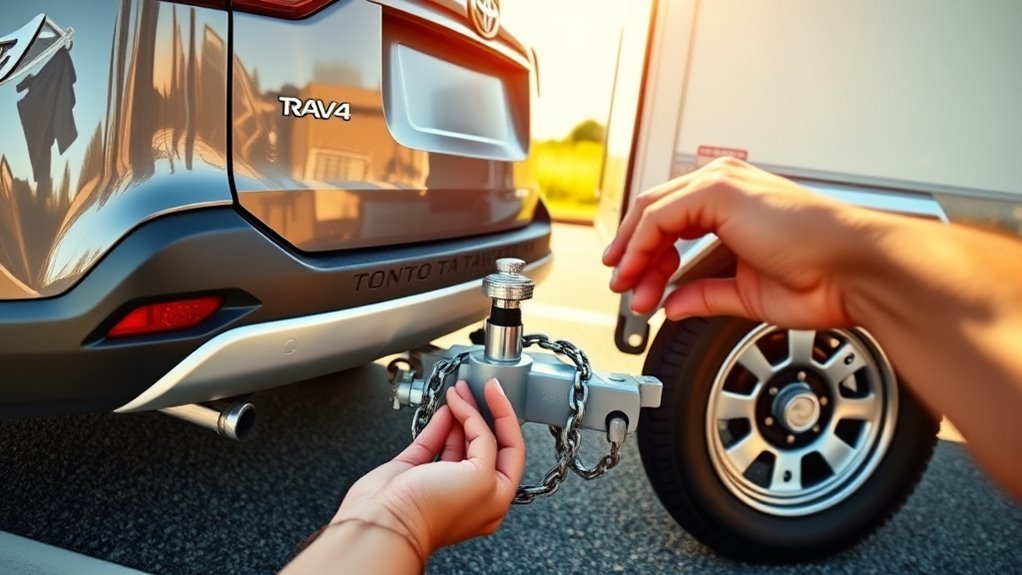
Wondering whether you can tow a Toyota RAV4? You can, but it depends on transmission and adherence to towing regulations and vehicle compatibility. If your RAV4 has a manual transmission, you can tow with all four wheels on the ground in neutral—only if the steering column won’t lock, the center differential lock is disengaged, and the parking brake is off when using a tow dolly. If your RAV4 is automatic, don’t tow with the drive wheels on the ground unless you lift all four wheels or install a hydraulic pump to protect the transmission; otherwise you risk serious damage. Always consult the owner’s manual and a trusted mechanic for your specific model year and configuration before you tow. You’re aiming for freedom on the road, so confirm compatibility, respect legal towing regulations, and take the precise precautions that preserve your vehicle and your independence.
Prep: Confirm Transmission, Keys, Brakes, and Tools
Before you hitch up, confirm whether your RAV4 is manual or automatic—this single detail dictates the safe towing method and what precautions you must take. Check the transmission type, then set the selector to neutral so wheels roll freely; manuals and automatics can demand different towing speeds and distances. Put the key in the accessory position to keep the steering disengaged and power accessible for lights and signals. Disengage the handbrake or parking brake completely to prevent dragging, heat, and brake system damage. Gather essential tools: towing eye, sturdy tow straps or bar, gloves, and wheel chocks for stabilization while you hook up. Confirm the towing eye fits the factory mount and is hand-tightened before final securing. Perform a quick walkaround verifying neutral, brakes off, key placement, and tools secured. These checks combine responsible vehicle maintenance with towing safety, empowering you to tow confidently and minimize risk to your RAV4 and others on the road.
Prepare the Towing Eye: Find, Fit, and Tighten
Locate the towing eye in the storage compartment beneath the boot carpet—fold the carpet twice to access it—then remove the plastic cover over the designated mounting point with a flat tool to expose where the eye screws in. You’ll take the towing eye from its storage slot and align its threads with the exposed socket; this is a simple, empowering installation technique that puts control back in your hands. Screw the eye in by hand until it seats fully, then use the tire iron provided in the toolkit to tighten it firmly. Confirm it’s secure by applying firm, steady force—there should be no play. Before you depart, verify the steering lock is disengaged and the vehicle is in neutral so the wheels will roll freely. These concise installation techniques guarantee the towing eye is fitted to handle the load and keeps you moving toward liberation with confidence and safety.
[Products Worth Considering]

These TPE door anti‑kick pads provide durable, water‑resistant protection for Toyota Tundra doors from 2022 to 2026. They fit precisely, are easy to install with double‑sided tape, and can be cleaned simply with water. The pads guard against scuffs and impacts while preserving the door's appearance and smooth operation.

The Pigenius windshield sunshade protects your Tundra's interior from heat and UV damage while keeping the cabin cool. Its accordion design folds easily for storage and quick setup, and the triple‑laminate construction provides durable, reflective protection. Ideal for long trips and daily commutes, it guards dashboards, seats, and steering wheels from sun‑related wear.

Protect your Toyota RAV4 interior with this custom‑fit windshield sun shade that blocks 99% of harmful UV rays and reduces cabin heat. The mirror cut‑out ensures a seamless fit without gaps, while durable 240T polyester and bendable wire keep it sturdy through repeated use. Foldable and stored in a convenient pouch, it offers easy installation and removal for everyday comfort.
Prepare a Manual RAV4 for Towing (Step-by-Step)
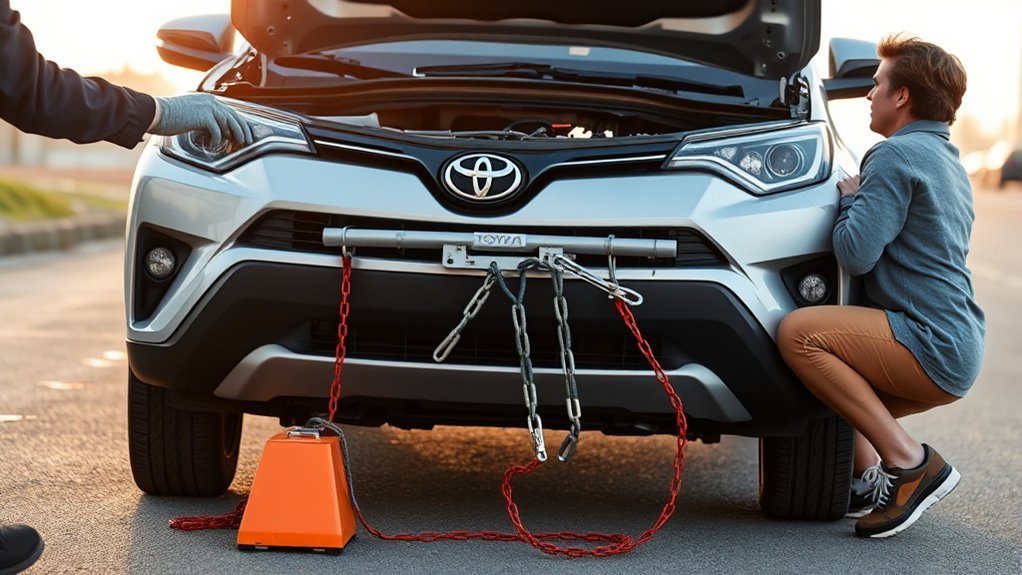
Start by positioning both vehicles on level ground, align them straight, and chock the towing vehicle’s wheels so nothing shifts while you set up; with the RAV4’s gear lever in neutral, parking brake off, and key turned to the accessory position to release the steering column, you’ll be able to roll the wheels freely. Confirm the center differential lock is disengaged and the steering column turns without resistance. Fold the boot carpet, remove the plastic cover with a flat tool, and screw in the towing eye securely. Gather towing accessories and safety gear before coupling.
- Verify alignment between vehicles and re-chock if needed to maintain freedom and control.
- Place the RAV4 in neutral, disengage parking brake, and keep key in accessory to prevent steering lock.
- Install the towing eye firmly; double-check threads and tightness.
- Ascertain center differential lock is off, inspect hitch and safety gear, and communicate signals with the driver.
Move with intention and confidence; you’re freeing your path while protecting both vehicles and everyone on the road.
[Products Worth Considering]

The Autovir windscreen shade offers full windshield coverage for Toyota RAV4 models from 2019 to 2026, blocking up to 99.95% of UV rays and reducing interior heat. Its multi‑layer reflective material provides SPF 100 and UPF 80+ protection while keeping the dashboard, seats, and steering wheel cooler. The foldable design installs quickly and stores conveniently in the glove box, and reinforced stitching ensures long‑lasting durability for daily use.
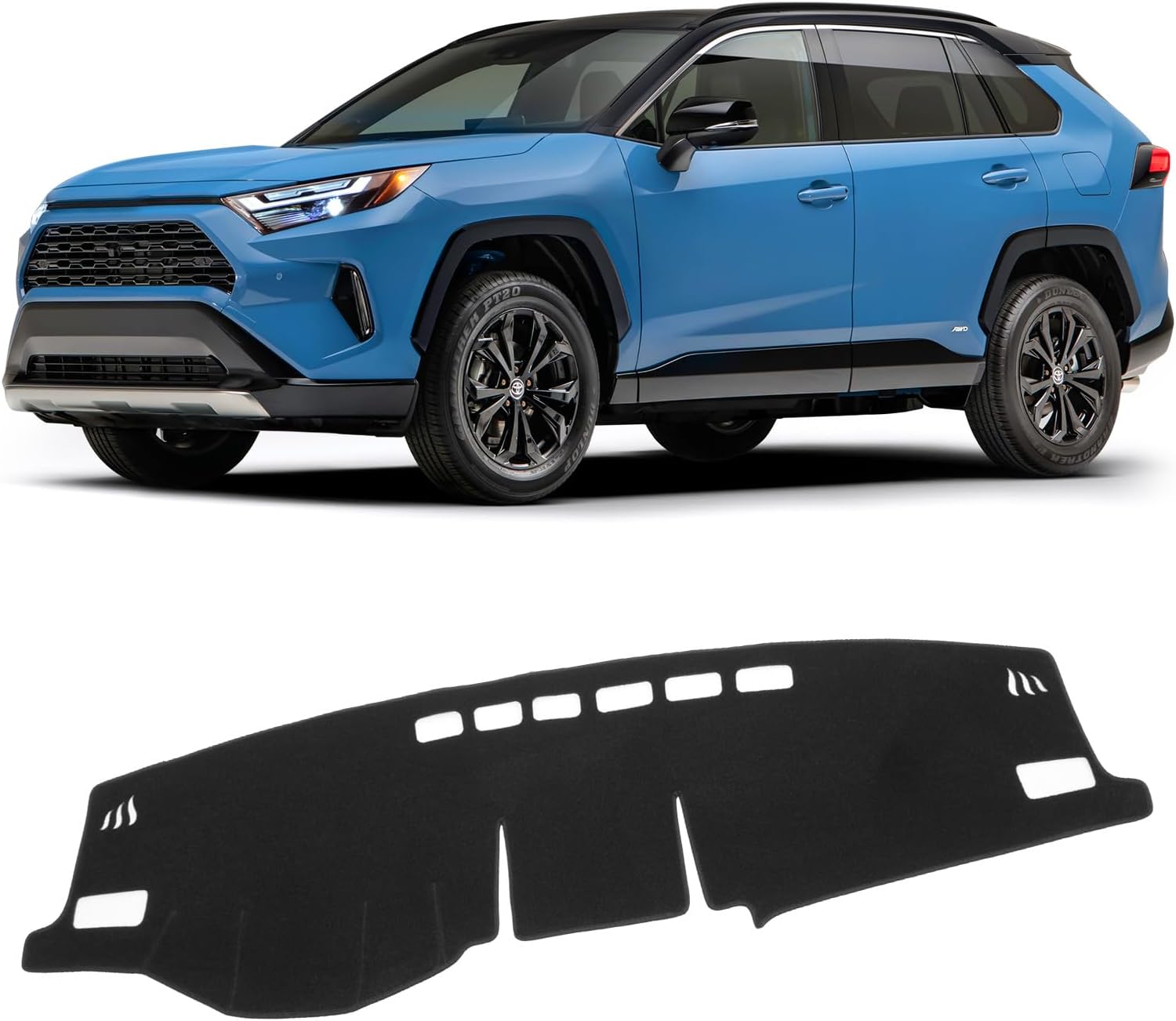
The KUST Black Dashboard Cover Mat offers a custom, eco‑friendly fit for Toyota RAV4 models from 2019 to 2025, protecting the dash from UV damage, scratches, and glare. Made from post‑consumer recycled polyester with a silicone anti‑slip underside, it stays soft, breathable, and odorless while securely adhering to the surface. Installation is quick and reversible, and the foldable design allows easy storage when not in use.
Prepare an Automatic RAV4 and When to Use a Transmission Pump
Towing an automatic RAV4 requires a hydraulic transmission pump to keep fluid circulating and prevent catastrophic internal damage, so don’t assume you can tow with the wheels on the ground unless that pump is installed and confirmed working. You’ll need the pump to force transmission fluid through the torque converter and gearsets while the engine’s off or the drivetrain’s disengaged; without it, internal wear and failure can occur even after a short tow.
Expect to invest $1,200–$1,500 for proper pump installation—an essential cost to protect your vehicle and preserve your freedom to move it when needed. Before you tow, verify pump operation with a trusted mechanic and follow strict towing precautions: confirm fittings, check fluid levels, and get documented proof the pump functions under load. Don’t improvise; treating this as optional risks severe, costly transmission damage and undermines your autonomy to tow safely.
Hook Up Safely: Alignment, Attach, and Unlock Steering
Before you hook up, make sure the RAV4 and tow vehicle are perfectly aligned so the car will track straight; this reduces sway and makes steering control predictable once you begin moving. You’ll release the steering by placing the key in the accessory position so the lock disengages, and you’ll set the transmission to neutral (use the shift-lock release if the battery’s dead). Tighten the towing eye securely with a tire iron and confirm the parking brake is fully released.
- Check steering alignment: park straight, center wheels, then secure the tow vehicle in place to preserve alignment.
- Free steering: insert key to accessory so wheels can turn freely for towing stability.
- Attach towing eye: screw it into the designated mount and tighten firmly; test for play.
- Verify drivetrain readiness: shift to neutral, confirm handbrake off, and know the shift-lock release procedure.
These steps give you control and liberation on the road while preserving towing stability.
Towing on the Road: Safe Speeds, Braking, and What to Watch

While you’re on the road, keep speeds under 55 mph and stay deliberate with braking—your stopping distance will be considerably longer with the extra weight. You’ll practice towing techniques that prioritize vehicle stability: allow greater following gaps, brake earlier and progressively, monitor temperature gauges, and recheck alignment at stops to prevent sway. Know your RAV4’s transmission limits—if it’s automatic, make sure all wheels are off the ground or use a pump to avoid damage. Watch for rising engine or transmission temps on long climbs or hot days; pull over if readings climb.
| Checkpoint | Action | Frequency |
|---|---|---|
| Speed | ≤55 mph | Continuous |
| Braking | Progressive, early | Every stop |
| Alignment | Visual, tow connection | Every 30 min |
| Temp gauge | Monitor, cool down | Continuous |
| Sway | Slow, stop, realign | As needed |
Stay deliberate and free—control the drive, protect your rig, and preserve your freedom to move.
Check for Towing Damage: Warning Signs, Who to Call, and Insurance
After towing, inspect for transmission leaks (fluid pooling under the car) and listen for unusual noises or rough shifting, which are common early indicators of transmission trouble. If you suspect damage, call the towing company to confirm how the RAV4 was towed and contact a qualified mechanic for a prompt assessment. Also discuss liability with the friend who borrowed the vehicle and notify your insurer if repairs or claims may be needed.
Transmission Leak Indicators
Noticing a drip under your RAV4 or hearing unusual whining after a tow? Check transmission symptoms quickly — leaks, whining, slipping gears — since damage from improper towing often shows over time. Do a fluid inspection: look for red or brown fluid, smell burnt odor, and note low levels.
- Document visible leaks and capture photos for proof.
- Note when symptoms began and any towing method used.
- Take the vehicle to a mechanic for a professional diagnosis and pressure-test if needed.
- Discuss responsibility with whoever borrowed or towed the car and the towing company for accountability.
Act decisively to protect your freedom from avoidable costs; timely inspection preserves options and prevents escalating internal damage.
Who To Contact
Who should you call first when towing-related damage is possible? Call the towing company immediately to confirm the method used and whether they followed towing regulations for your RAV4, especially if it has an automatic transmission. Document leaks, unusual transmission noises, and other symptoms with photos and notes. Contact the friend who borrowed the vehicle to get their account of events and any paperwork. Then contact your vehicle insurance agent to report the incident and learn coverage options; provide your documentation. Finally, consult a qualified mechanic specializing in transmissions for an inspection and written estimate. These steps preserve your rights, support claims, and push back against negligence—ensuring you’re empowered, not sidelined, in resolving towing-related damage.
Frequently Asked Questions
What Should I Know Before Towing With a RAV4?
Check your RAV4’s towing capacity, hitch requirements, and transmission type; confirm manual’s neutral or automatic’s wheels-off or pump provision, secure towing points and eye, release parking brake, follow manufacturer rules, and obey local regulations.
Can You Tow With a Toyota RAV4?
Yes — you can tow with a Toyota RAV4, but you’ll check towing capacity, use proper safety features, and follow transmission-specific methods so you’re free from costly damage and confident in secure, responsible towing.
Conclusion
Towing your RAV4 doesn’t have to be a headache if you follow the checklist: confirm transmission type, secure keys and brakes, fit the towing eye, and hook up with care. If your automatic needs a pump, don’t guess—get the right gear. Drive gently, watch brakes and steering, and inspect for subtle damage afterward. If anything feels off, call a pro and your insurer—better to address a whisper now than a shout later.