

When your RAV4 shows “Hybrid System Malfunction,” stop in a safe place, shift to Park, set the parking brake, and turn off nonessential accessories. Check the 12V battery voltage, inspect safe, accessible fuses and connectors, and try a jump-start only if the 12V battery seems weak. Don’t touch orange high-voltage cables or hybrid battery parts. If the warning stays on, or the car won’t enter Ready mode, tow it to a Toyota dealer or qualified hybrid technician for diagnostic trouble code (DTC) scanning and hybrid-system inspection.
Quick Answer
A “Hybrid System Malfunction” warning means your RAV4 detected a fault in the hybrid control system. A weak 12V battery can trigger this warning, but the problem can also involve fuses, sensors, relays, wiring, the inverter, or the high-voltage battery. You can check basic low-voltage items yourself, but you should leave high-voltage diagnosis to a trained hybrid technician.
Key Takeaways
- Stop safely and reduce electrical load when the warning appears.
- Test the 12V battery first because low voltage can confuse hybrid control modules.
- Inspect only safe, accessible fuses and connectors, and avoid orange high-voltage parts.
- Tow the vehicle if it won’t start, won’t enter Ready mode, or keeps showing the warning.
- Ask the dealer to scan Toyota-specific DTCs before replacing major hybrid parts.
What “Hybrid System Malfunction” Means for Your RAV4

When your RAV4 displays “Hybrid System Malfunction,” the vehicle has detected an electrical fault in the hybrid control system. The fault can involve the hybrid control computer, inverter, hybrid battery pack, sensors, relays, wiring, or the low-voltage 12V system.
Your RAV4 Hybrid uses the gas engine, electric motor, inverter, and battery together. Electronic controls manage power flow between these parts. The 12V battery also matters because it powers control modules and helps relays wake the vehicle up.
Toyota tells owners to have the vehicle inspected when a warning message says a dealer visit is needed. Treat this warning as a serious diagnostic alert, not a small dashboard notice. Driving normally with an active hybrid warning can lead to reduced power, limp mode, no-start issues, or more expensive repairs.
Safety Steps to Take Immediately When the Warning Appears
After you see a “Hybrid System Malfunction” warning, act calmly and protect yourself first. Pull over when safe, shift to Park, and set the parking brake. Turn off the air conditioning, heated seats, infotainment, and other nonessential accessories to reduce 12V battery drain.
If you see a Hybrid System Malfunction warning, stop safely, secure the vehicle, and avoid touching high-voltage parts.
- Confirm the shift lever sits in Park and the display shows Park.
- Turn off nonessential electrical accessories to limit battery drain.
- Check whether the vehicle can enter Ready mode without unusual sounds, smoke, heat, or warning buzzers.
- Power the vehicle off and wait a few minutes before trying one normal restart.
- Call roadside assistance or a qualified hybrid technician if the warning remains, the car won’t start, or the vehicle feels unsafe.
Warning: Never touch orange high-voltage cables, the inverter cover, or hybrid battery parts during roadside checks.
These steps help you avoid panic and reduce the chance of extra damage. They also help the technician understand what happened before the warning stayed on.
Check the 12V Battery, Fuses, and Connectors Yourself
Start with low-voltage checks because they are safer and easier than hybrid battery diagnosis. A healthy, fully charged 12V lead-acid battery often reads about 12.6 volts at rest after the vehicle has sat for several hours. A reading below about 12.4 volts can point to a weak or partly discharged battery.
Then inspect accessible fuses and visible low-voltage connectors for looseness, corrosion, or damage. Don’t open sealed hybrid components or disconnect high-voltage cables. If the warning remains after these checks, you need scan data from Toyota-compatible diagnostic equipment.
Test 12V Battery
If your RAV4 shows hybrid warnings, check the 12V battery before you assume the traction battery has failed. Use a multimeter at the battery terminals with the vehicle off. Record the voltage so you can share it with the technician later.
- Measure resting voltage after the vehicle has sat for several hours.
- Look for corrosion, loose clamps, cracked terminals, or swelling.
- Clean light terminal corrosion with proper battery-cleaning methods and eye protection.
- Retest voltage after cleaning and tightening the terminals.
- Replace or load-test the battery if voltage stays low or the battery fails under load.
Many 12V batteries weaken after several years, especially in heat, cold, or short-trip use. Age alone doesn’t prove failure, so use voltage and load-test results before replacing parts.
Inspect Fuses And Connectors
Inspect safe, accessible fuses and connectors before you move to deeper diagnostics. Check the owner’s manual or fuse-box cover for fuse locations and labels. Use a fuse tester or multimeter to confirm continuity rather than relying only on appearance.
For connector checks, look for corrosion, bent pins, loose terminals, damaged insulation, or moisture. Reseat only connectors you can access safely without disturbing high-voltage parts. Clean low-voltage contacts with proper electrical cleaner and let them dry before reconnecting.
Note: A blown fuse usually points to an underlying fault, so don’t keep replacing the same fuse without diagnosis.
If the battery reads low, a fuse has blown, or a connector looks damaged, fix that issue first. If warnings persist, stop guessing and schedule professional electrical troubleshooting.
Jump-Start, Reset, or Tow: How to Decide
Your next step depends on how the vehicle behaves. Choose the least risky option first, and stop if the warning points to a deeper hybrid-system fault.
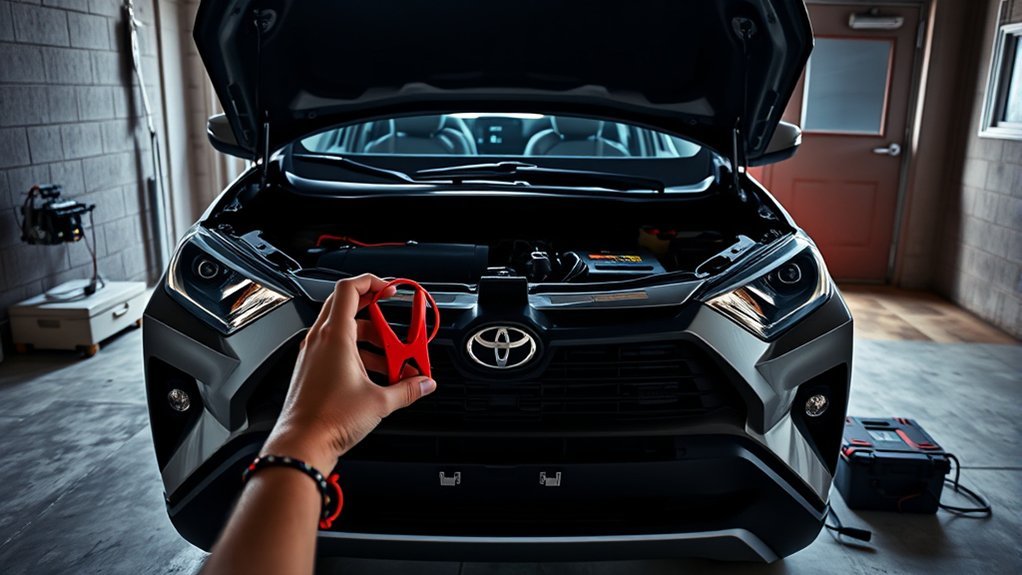
- Try a jump-start only if the 12V battery seems weak and you can follow the owner’s manual safely.
- Let the vehicle enter Ready mode after a successful jump, then watch for returning warnings.
- Try one normal power cycle if the vehicle starts but the warning remains.
- Avoid repeated disconnect resets because they can erase useful diagnostic clues.
- Tow the vehicle if it won’t enter Ready mode, loses power, smells hot, shows multiple warnings, or keeps the hybrid warning active.
A jump-start can help when the 12V battery causes the no-start condition. It won’t repair a failed inverter, damaged wiring, isolation fault, or high-voltage battery issue. When the warning stays on, a scan tool gives you a safer answer than repeated roadside resets.
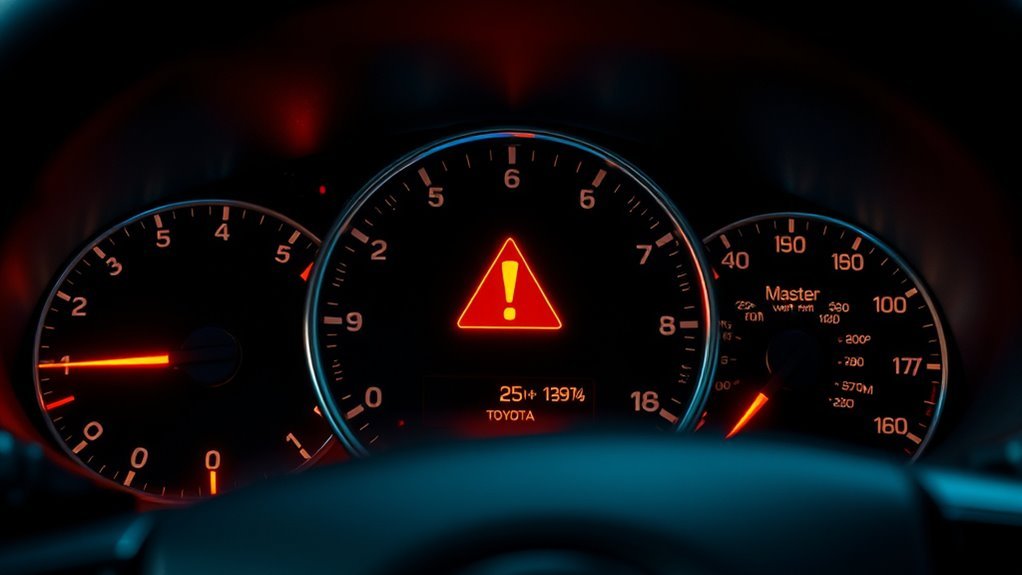
Pro tip: Take a photo of the dashboard warning before you power the vehicle off.
What Your Dealer Will Diagnose and Likely Repair

When you bring your RAV4 Hybrid to a dealer, the technician should start with a Toyota-compatible diagnostic scan. The scan reads hybrid-specific DTCs, freeze-frame data, battery data, voltage readings, and communication faults. This step matters because the same dashboard message can come from several different systems.
The technician will usually test the 12V battery, charging output, fuses, grounds, and low-voltage wiring first. Then they may inspect the inverter, hybrid control module, battery cooling system, relays, and high-voltage components. They can also check battery module balance and insulation data when scan results point in that direction.
Simple repairs can include a 12V battery, terminal, fuse, connector, ground, or software-related service. Larger repairs can involve an inverter, wiring harness, battery cooling part, or battery-pack service. Toyota states that hybrid battery warranty coverage can reach 10 years or 150,000 miles, whichever comes first, so ask the dealer to check your exact warranty before you approve major repairs.
Costs vary by model year, mileage, location, warranty status, and the part that failed. Ask for the DTC list and the test results before you approve a large repair. A clear diagnosis protects you from replacing parts that did not cause the warning.
Preventive Checks to Reduce Future Hybrid Failures
Good maintenance can reduce the chance of repeat hybrid warnings. Check the 12V battery regularly, keep terminals clean, and protect electrical connectors from moisture. Follow Toyota’s maintenance schedule and ask for hybrid-system checks when warning lights, no-start problems, or unusual charging behavior appear.
Toyota’s maintenance guide notes that scheduled service usually follows mileage or time, whichever comes first. The guide also lists hybrid battery cooling intake filter checks and cleaning at set intervals. A blocked cooling intake can raise battery temperature and hurt performance.
Regular 12V Battery Checks
Start by checking the 12V battery’s resting voltage. A fully charged reading often sits around 12.6 volts. Lower readings don’t always prove failure, but they tell you to charge, load-test, or replace the battery if it can’t hold voltage.
- Test resting voltage every month if you make many short trips.
- Request an annual battery load test during service.
- Use a smart maintainer during long storage periods.
- Keep terminals clean, tight, and dry.
- Replace a weak battery before it strands you.
Cold weather, heat, age, and long parking periods can stress the 12V battery. A small voltage problem can create large warning messages in a modern hybrid.
Protect Electrical Connectors
After battery checks, inspect the hybrid’s safe, visible electrical connectors. Look for corrosion, loose pins, frayed wires, damaged clips, or moisture near connector seals. Clean only low-voltage contacts you can access safely.
Use non-abrasive electrical cleaner and let contacts dry before reconnection. Apply dielectric grease only where appropriate, and avoid packing it into terminals in a way that blocks contact. Replace damaged connectors with original equipment manufacturer (OEM) quality parts when possible.
Keep splash shields, battery-area trim, and connector seals in good condition. These small parts help keep water and dirt away from electrical systems.
Keep the HV Battery Cooling Intake Clean
Your RAV4 Hybrid uses a cooling intake to help manage high-voltage battery temperature. Dirt, dust, pet hair, and cargo can restrict airflow. Check the intake area during routine cleaning and keep bags or floor items from blocking it.
Follow the cleaning interval in your Toyota maintenance guide for your model year. If you drive in dusty areas or carry pets often, ask your dealer whether you should inspect it more often. A clean intake helps the battery stay within a safer operating range.
Frequently Asked Questions
What Does Hybrid System Malfunction Mean on a Toyota RAV4?
It means your RAV4 detected a fault in the hybrid control system. The cause may involve a weak 12V battery, sensor fault, relay issue, inverter problem, wiring problem, or high-voltage battery fault. You need diagnostic testing if the warning does not clear after safe basic checks.
Can a Dead Battery Cause a Check Hybrid System Error?
Yes, a weak or dead 12V battery can trigger hybrid-system warnings because control modules need stable low-voltage power. Test the battery voltage and request a load test if the reading looks low. Replace the battery only after you confirm it can’t hold charge.
Is it safe to drive with a Hybrid System Malfunction warning?
Don’t continue normal driving with this warning active. Pull over safely, check for obvious danger, and decide whether the vehicle can move only a short distance to a safe place. Tow it if the warning stays on, power feels reduced, or the car won’t enter Ready mode.
Will disconnecting the 12V battery fix the warning?
Disconnecting the 12V battery may clear a temporary warning, but it does not repair the cause. It can also erase data that helps a technician diagnose the fault. Use a reset only with care, and don’t repeat it to hide a warning.
Does the warning mean the hybrid battery has failed?
No, the warning does not prove the hybrid battery has failed. A scan tool must identify the fault area before you replace expensive parts. Start with the 12V battery and DTC scan before assuming high-voltage battery failure.
Safety Disclaimer: This article is for informational purposes only and does not replace professional automotive diagnosis or repair. Hybrid vehicles contain high-voltage parts that can cause serious injury. Always consult a qualified hybrid technician before working near high-voltage components.
Conclusion
A RAV4 “Hybrid System Malfunction” warning deserves quick, careful action. Start with safe roadside steps, then check the 12V battery, accessible fuses, and low-voltage connectors. Don’t touch high-voltage parts or keep driving if the warning stays active.
Your best next step is simple: document the warning, avoid risky resets, and get a Toyota-specific diagnostic scan. A methodical approach can protect the hybrid system, reduce repair guesswork, and help you get back on the road with confidence.
References
- All-Electric and Hybrid Battery Warranty — Toyota, 2026
- Toyota RAV4 Hybrid Manuals and Warranties — Toyota Owners, 2026
- If a Warning Message Is Displayed — Toyota Owners, 2023
- 2024 RAV4 Hybrid Warranty & Maintenance Guide — Toyota, 2024
- Maximising Battery Life — Century Batteries

[…] your RAV4 Hybrid’s battery cooling system requires routine checks to avoid long-term wear. Follow these key […]