Quick Answer: You’ll typically find your Toyota Land Cruiser VIN on the driver’s door jamb tag or door pillar; older models show it stamped on the dash near the windshield or on a passenger-side firewall ID tag, and very early 1958–1967 frames use a full frame number stamped into the chassis. Clean the tag gently, document every character, and photograph it for records. Continue for model-year specifics, decoding tips, and verification steps.
Quick Answer: Find Your Land Cruiser VIN Now
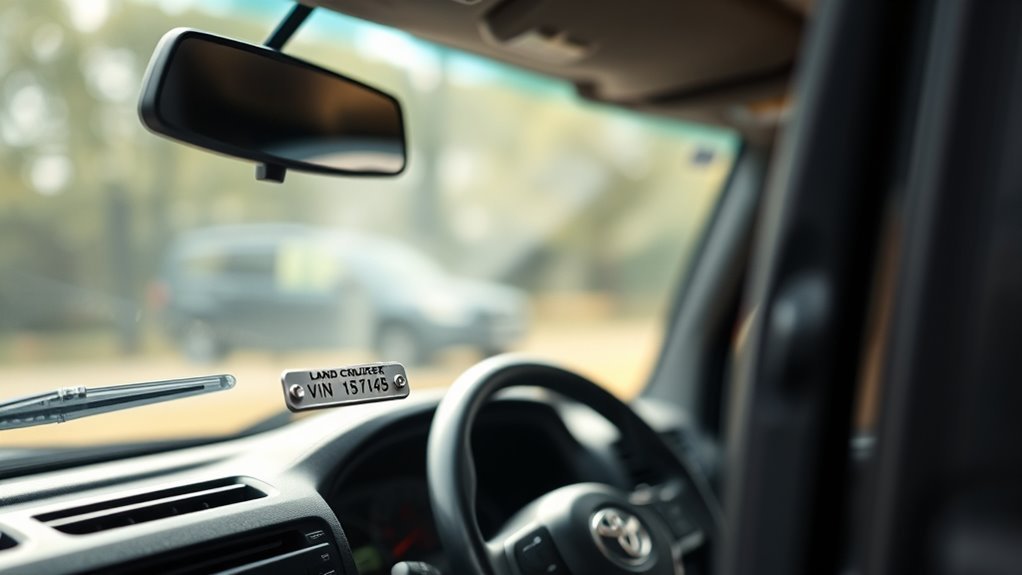
Looking for your Land Cruiser’s VIN? You’ll start by scanning common locations: newer models (1988+) have the VIN on the driver’s door or door pillar; earlier cars may show it stamped on the dash near the windshield. Note VIN Importance: the 17-character code verifies specs and guarantees you order correct parts. For 1967–1983 models, check the passenger-side firewall ID tag—its placement reflects Historical Changes in Toyota’s labeling practices. If the ID plate lacks a production date on early examples, record the full frame number for accurate ID. Procedure: approach the vehicle, open the driver’s door, inspect the door pillar area and dash base; for vintage models, move to the passenger firewall and look for the tag. Document every character precisely; copy directly rather than transcribing from memory. You’re reclaiming control of maintenance and parts sourcing—accurate VIN capture liberates you from guesswork and incorrect components.
Check the Driver’s Door Jamb and Vehicle Identification Tag
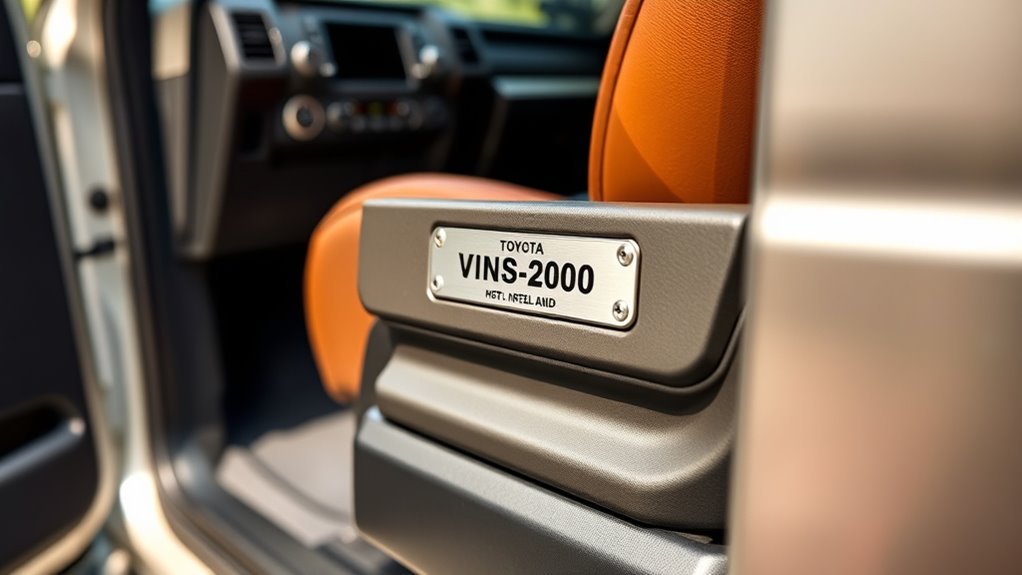
Start at the driver’s door jamb and inspect the metal ID tag on the door pillar, where Toyota has placed the VIN and other vehicle data on models from 1968 onward. You’ll read a stamped VIN that’s essential for parts, registration, and verification — VIN Importance is primary. Verify legibility and cross-check characters against documents.
| Item | Action |
|---|---|
| Locate | Open driver door; view pillar tag |
| Read | Note full VIN; photograph for records |
| Check | Confirm tag isn’t loose or altered |
Procedure: clean the tag gently to reveal stamped characters; avoid abrasives that erase metal. Record VIN immediately and store digitally. Tag Maintenance: secure fasteners, inspect for corrosion, and treat surface to prevent degradation. If tag is missing or unreadable, escalate to professional inspection and supporting documentation retrieval. This method keeps you sovereign over your vehicle identity, minimizes fraud risk, and guarantees correct part sourcing throughout the Land Cruiser’s lifecycle.
VIN Locations by Land Cruiser Model and Year (Dashboard, Firewall, Frame, Trunk)
Because VIN placement changed over the decades, you should check specific locations by model year to locate the correct tag quickly. Consult VIN history and model differences as you proceed. For Land Cruisers manufactured in 1967 or earlier, inspect the passenger-side firewall; the stamped plate or tag sits low and requires a flashlight. From 1968 onward, the 40 and 55 Series moved the VIN to the driver’s door pillar—open the door and view the pillar edge. The 60 Series and early 62 Series retain the door-pillar location; later 62 Series, plus 80 and 100 Series, may have the VIN on the driver’s door or the door pillar—verify both. Always cross-check the tag against your title and registration paperwork before ordering parts. Methodically document the VIN location, photograph the plate, and note corrosion or damage that could obscure characters. Follow this procedure to reduce errors and reclaim control over maintenance and parts sourcing.
Decode and Use Your Land Cruiser VIN (Full Frame vs. Partial VIN)
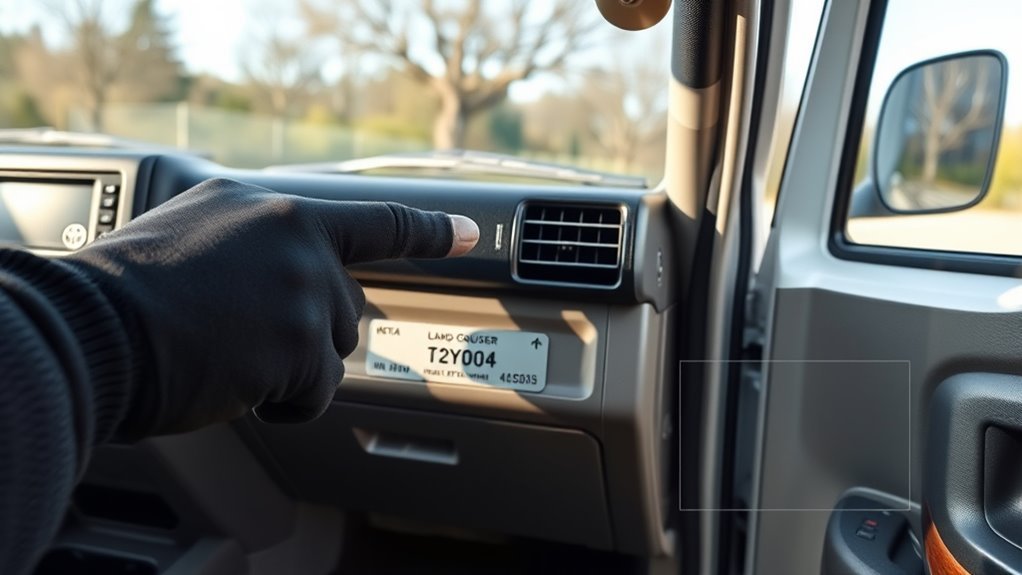
Now that you’ve found and documented the VIN plate, decode and use the full frame number to order parts and verify specifications—partial VINs or truncated tags can produce mismatched components. You’ll rely on the VIN importance for exact compatibility: a full frame identification gives model year, engine, drivetrain and trim. Don’t guess from a partial tag.
Use this procedural approach:
- Locate the full VIN on the door, firewall, or inner fender and transcribe every character.
- Run the full frame number through an online decoder or parts database to extract drivetrain, AWD options, and factory codes.
- Match the decoded specs to part numbers, cross-references, and service manuals before ordering.
For early models (1958–1967) without plate dates, the frame identification is the authoritative source. This keeps you independent and precise: you control parts accuracy, avoid returns, and free your project from dependency on assumptions or incomplete VINs.
Get Help Verifying Your Land Cruiser VIN (Toyota of Orlando & Parts Suppliers)
If you’re unsure about a VIN entry or need confirmation of factory options, contact Toyota of Orlando or a reputable parts supplier and have the full frame number ready so they can verify specifications and recommend correct parts. You’ll get precise VIN verification and guidance on parts compatibility. Provide the VIN from the driver’s door pillar, under the hood, or inner passenger fender; for early models (1958–1967) the full frame number is critical because the production date may be missing.
| Task | Action |
|---|---|
| Locate VIN | Check door pillar, under hood, inner fender |
| Early models | Use full frame number for orders |
| VIN decoding | Use online decoder or dealer tools |
| Dealer help | Toyota of Orlando available daily until 10 PM |
Follow this procedure: record the VIN, run a decoder for AWD and factory options, then call Toyota of Orlando sales or a parts supplier. They’ll cross-check vehicle history, confirm factory specs, and certify parts compatibility so you can act with autonomy.
Frequently Asked Questions
How Many VIN Locations Are on a Car Toyota?
You typically find three VIN locations on a Toyota: driver’s door pillar, dashboard near the windshield, and engine firewall. You’ll value VIN Importance and Vehicle Identification for parts, registration, verification, and asserting your ownership freedom.
Conclusion
You’ve now got clear steps to locate and decode your Land Cruiser VIN—start at the driver’s door jamb, then check the dash, firewall, frame, or trunk depending on model year. Use the full VIN for registrations and partial VINs for parts lookups. If unsure, contact a Toyota dealer or reputable parts supplier. Fun fact: over 80% of vehicle title errors trace back to VIN transcription mistakes, so double-check every character to avoid costly hassles.