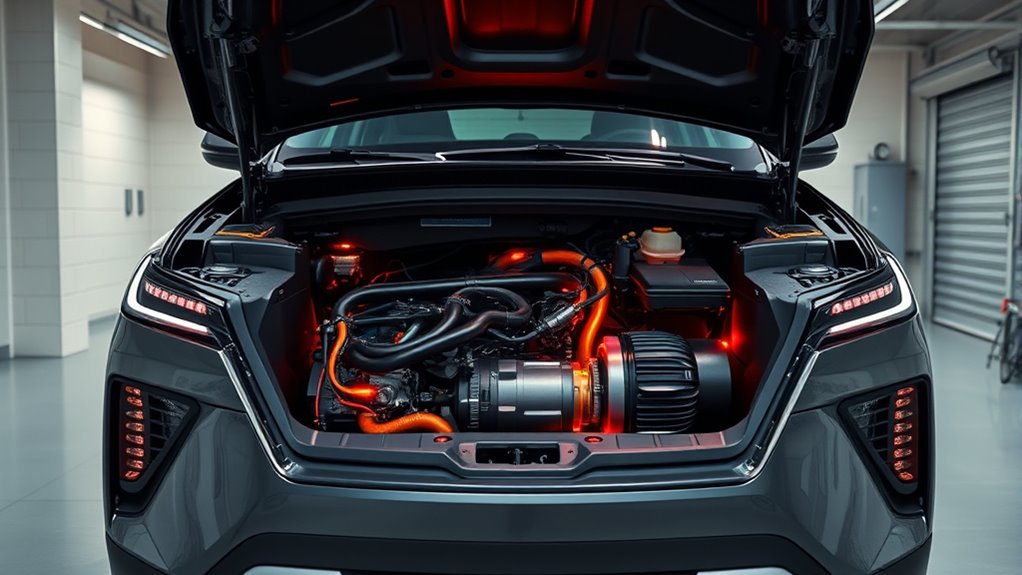
An SUV hybrid pairs a gasoline engine with one or more electric motors, a battery pack, and regenerative braking to optimize torque, fuel use, and emissions. You’ll get blended power via parallel, series, or power‑split architectures that balance motor and engine output for smooth acceleration and improved low‑end torque. Plug‑in variants add larger batteries for short electric range. Expect better MPG, modest towing, and specific battery warranties; keep going to see maintenance, architecture tradeoffs, and ownership math.
What Is an SUV Hybrid?
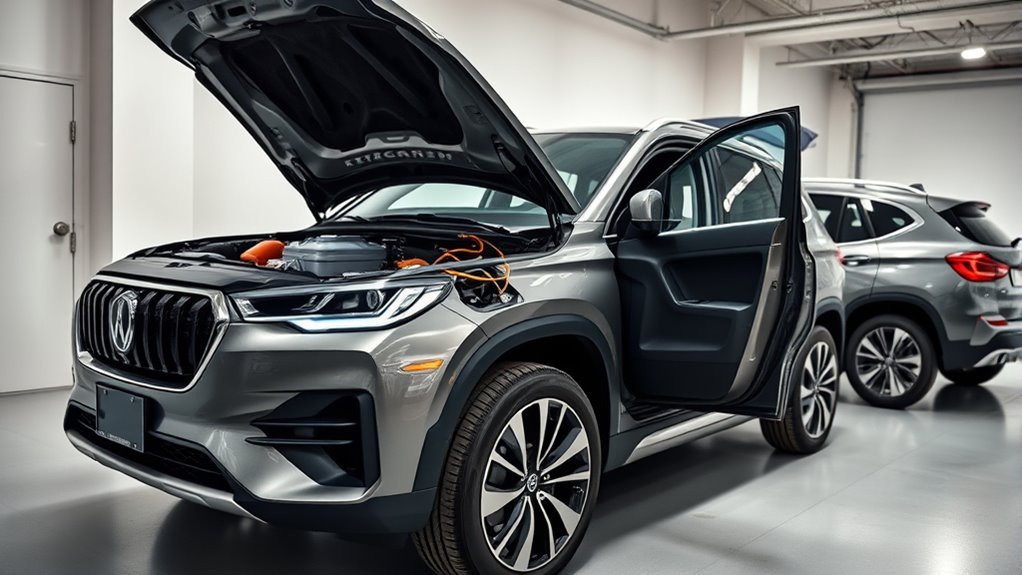
An SUV hybrid combines a conventional internal combustion engine with one or more electric motors and a battery pack to deliver improved fuel economy and lower emissions compared with a non-hybrid SUV. You’ll recognize it by dual power sources that manage propulsion to maximize fuel efficiency and enable measurable emission reduction. Systems coordinate engine and motor torque, switching seamlessly to optimize load, throttle response, and fuel use across speed bands. Regenerative braking recovers kinetic energy during deceleration, returning charge to the battery and improving net efficiency. Models such as the RAV4 Hybrid and Explorer Hybrid demonstrate that SUV utility — cargo space, towing capacity, and mixed-terrain capability — can coexist with EPA-estimated ~40 MPG combined performance. Market growth over 30% reflects consumer demand for vehicles that reduce operational costs and environmental impact. You’ll find hybrid control strategies produce predictable efficiency gains without sacrificing versatility, giving you technical empowerment to choose transport that aligns with personal and planetary liberation goals.
Hybrid Architectures for SUVs (Parallel, Series, Plug‑In)
While SUV hybrids share the goal of improving efficiency and lowering emissions, they use distinct architectures—parallel, series, and plug-in—that change how power flows between engine, motor, and battery and consequently how you’ll experience performance, fuel use, and charging behavior. In a parallel architecture you get parallel advantages: both engine and motor can drive the wheels together or independently, so you’ll see optimized fuel use across speeds and stronger acceleration when demanded. In a series layout the engine acts only as a generator, delivering series efficiency by letting the electric motor handle propulsion—ideal for stop‑and‑go urban driving where you’ll benefit from simpler mechanical paths and lower losses. Plug‑in designs add larger batteries and external charging, offering plug in convenience and electric ranges typically 20–50 miles so you can commute gasoline‑free. All configurations use regenerative braking to harvest deceleration energy. The hybrid versatility across these architectures lets you choose control over emissions, range, and fuel usage to match your liberated mobility priorities.
Power‑Split Drivetrains Explained
Because power-split drivetrains blend engine and motor outputs through a planetary gearset, you get seamless shifts between electric-only, engine-only, or combined propulsion that optimize efficiency across driving conditions. You’ll control a system that algebraically balances torque sources: the gasoline engine, an electric motor, and the gearset distribute power without discrete clutch engagements. At low speeds the electric motor can drive wheels directly; the engine can act as a generator to recharge the traction battery when load or state-of-charge demands it. Regenerative braking captures kinetic energy back into the battery, closing the energy loop and reducing net consumption. The planetary architecture simplifies mode changes and permits continuous variation of engine speed independent of wheel speed, so you can exploit more efficient engine operating points. For someone seeking liberation from fuel dependency, this configuration extends electric operation in urban cycles and tight traffic, while preserving combustion range for longer trips. The result: a compact, mechanically elegant hybrid that prioritizes compactness and measurable gains in fuel economy.
Real‑World Impacts: MPG, Performance, and Towing Capacity
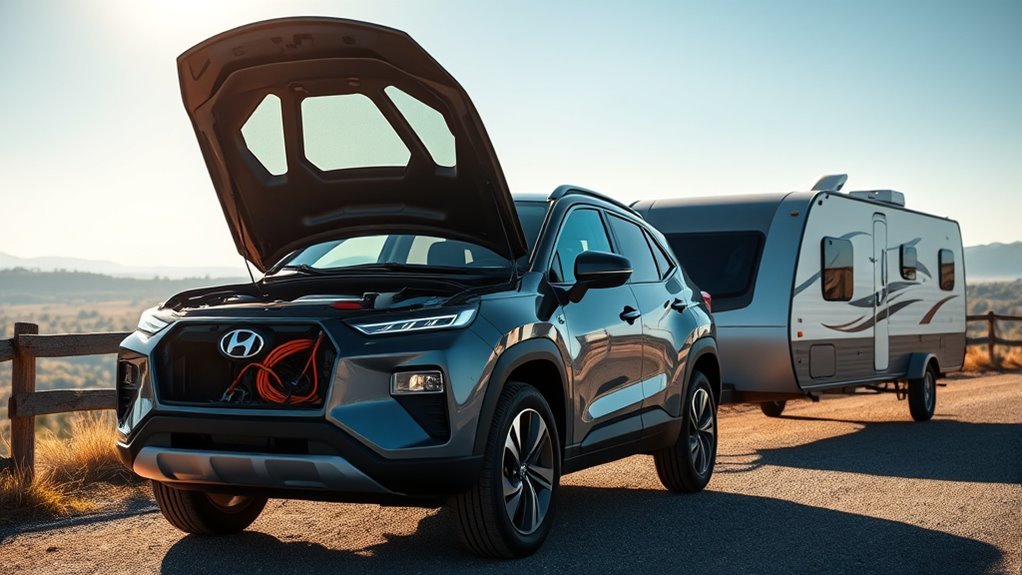
Fuel economy, acceleration, and towing capacity are the practical metrics that determine whether a hybrid SUV meets your real-world needs, and hybrids tend to outperform their gas-only counterparts on efficiency while matching or improving performance. You’ll see fuel efficiency gains—models like the RAV4 Hybrid approach 40 MPG city—because the gas engine and electric motor share load and recover energy via regenerative braking. That reduces emissions and lowers operating cost while freeing you from constant refueling.
| Metric | Typical Outcome |
|---|---|
| MPG (city) | ~40 MPG in efficient models |
| Acceleration | Improved low-end torque from motors |
Towing capacity is modest but usable: many hybrids (e.g., Ford Escape Hybrid) tow ~1,500 lb, so you can haul small trailers without sacrificing the liberated driving experience. Overall, hybrids optimize energy flow for efficiency and instant torque for responsive driving experience, delivering a balanced, practical package for liberated mobility without compromising everyday utility.
Maintenance, Warranty, and Battery Longevity for Hybrid SUVs
You’ll review battery warranty coverage first, noting typical terms like 5 years/60,000 miles and available extended plans that specifically cover hybrid modules. Then you’ll examine routine hybrid maintenance—annual 10,000-mile service intervals, complimentary hybrid health checks, and how regenerative braking lowers wear on pads and rotors. Finally, you’ll assess long-term battery health driven by management systems that optimize charge cycles and manufacturers’ recycling commitments.
Battery Warranty Coverage
Battery warranties give you measurable protection against premature degradation and major failures: most hybrid SUVs ship with coverage commonly set at 8 years or 100,000 miles, while some manufacturers (notably Toyota and Honda) extend that to 10 years or 150,000 miles, reflecting tested confidence in cell longevity. You’ll rely on warranty benefits to quantify expected battery performance and allocate risk; extended terms indicate manufacturer data showing cells retain usable capacity beyond typical service horizons. Warranties often include periodic diagnostic checks that document state-of-health, enabling claim validation and preserving resale value. You should verify transferability, exclusions, and required maintenance to avoid denial. Recycling and end-of-life programs further reduce lifecycle cost and environmental burden, reinforcing systemic durability and your autonomy from premature replacement.
Routine Hybrid Maintenance
Although hybrid SUVs blend electric and combustion systems, routine maintenance keeps both powertrains reliable and maximizes battery lifespan. You should schedule annual servicing roughly every 10,000 miles; technicians perform a complimentary hybrid health check that verifies electric motor, ICE, and control systems. Follow manufacturer warranty windows—commonly 3 years/60,000 miles plus a 7-year service-activated hybrid component warranty—and note battery warranties often span 5 years/60,000 miles. For liberation-minded drivers, proactive oversight preserves autonomy: monitor regenerative braking for wear and energy capture efficiency, inspect cooling systems, and maintain correct tire pressures to sustain hybrid efficiency. Maintenance tips: document service records, prompt repairs, and prefer certified hybrid technicians. Manufacturers’ recycling practices further reduce environmental cost when replacement becomes necessary.
Long-Term Battery Health
Start by treating long-term battery health as a managed system: manufacturers back hybrid packs with multi-year, high-mileage warranties (commonly 8 years/100,000 miles), and modern vehicles use battery management systems that actively balance cells, control charge/discharge rates, and monitor temperature to prevent degradation. You’ll maintain longevity by following scheduled inspections, fluid replacements, and software updates that preserve state-of-charge windows and thermal stability. Regenerative braking improves energy efficiency and reduces mechanical wear, reinforcing system resilience. When packs approach end-of-life, manufacturers and third parties emphasize battery recycling to reclaim materials and lower lifecycle cost. Read warranty terms, track maintenance, and use diagnostics to detect drift early. That disciplined approach gives you operational control, reduces replacement risk, and aligns vehicle use with long-term sustainability goals.
How to Choose the Right Hybrid SUV
How do you pick a hybrid SUV that matches your needs and budget? Start by quantifying fuel economy and electric range against your typical commute. Compare MPG ratings for combined and city driving; aim for models exceeding 40 MPG if urban efficiency matters. For plug-in hybrids, prioritize electric-only range of 20–50 miles to cover daily trips without gasoline.
Next, inspect cargo implications: analyze battery placement drawings or measurements to confirm trunk and load-floor usability. During test drives, evaluate acceleration, handling, and the smoothness of shifts between electric and gasoline power—measurements and repeatable impressions reveal system calibration quality. Finally, calculate total ownership cost: include incentives, rebates, and projected fuel savings over ownership horizon. Use a simple payback model to determine whether upfront premium aligns with liberated mobility goals. Choose the configuration that maximizes operational autonomy, minimizes dependency on fossil fuel, and fits your spatial and fiscal constraints.
Frequently Asked Questions
What Is the Main Disadvantage of a Hybrid Vehicle?
The main disadvantage is higher initial purchase cost: you’ll gain fuel efficiency but face elevated maintenance costs, potential battery replacement expenses, reduced cargo space, and variable highway savings, so weigh long-term economics before committing.
Conclusion
You’ve seen how SUV hybrids quietly bridge combustion and electric worlds, offering kinder fuel use, measured performance, and less frequent maintenance surprises. When you weigh architectures, towing needs, and warranty terms, you’ll find trade-offs that are easier to live with than you feared. Pick a plug‑in if short electric trips matter; choose a power‑split or parallel setup for consistent efficiency and towing. In practice, hybrids soften ownership costs while keeping capability intact.