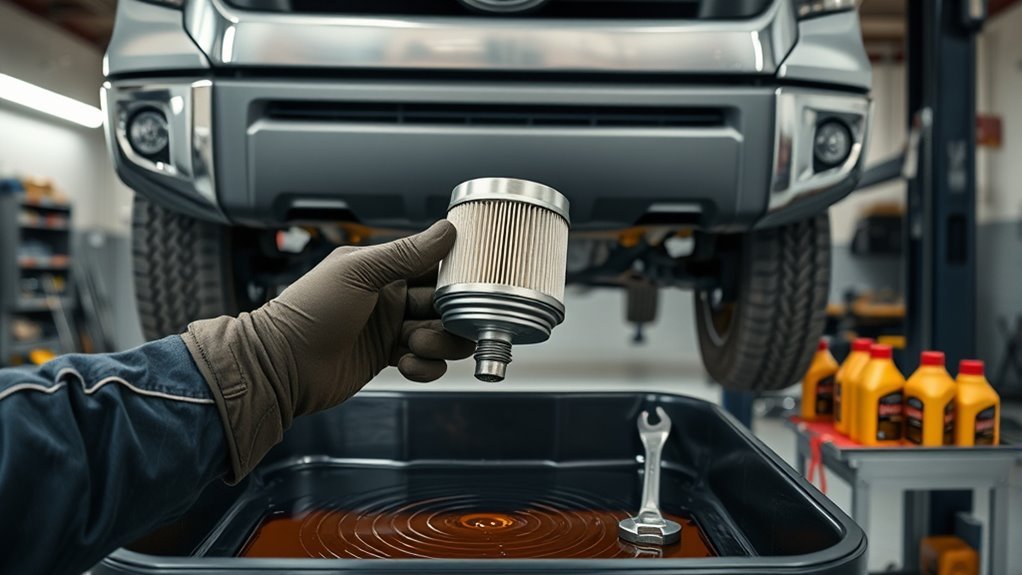
You should follow a 10,000‑mile oil change for most Tundras using 0W‑20 full synthetic, but switch to 5,000 miles for flex‑fuel 3UR‑FBE engines, heavy towing, frequent short trips, off‑road use, or when running E85. Inspect oil monthly, log fuel type and loads, and send annual samples for analysis; consider a 7,500‑mile compromise or a six‑month interval if usage varies. Continue for specifics on ethanol effects, monitoring, and scheduling.
Quick Answer: Tundra Oil Interval – 10,000 Miles for Most, 5,000 When Needed
Most Tundra owners can follow Toyota’s 10,000-mile oil change interval under normal driving conditions, but you should drop it to about 5,000 miles for flex-fuel models or when driving conditions are severe. You’ll base your schedule on oil quality, driving patterns, and mission-critical needs. Start by auditing duty cycle: frequent towing, off-roading, or many short trips accelerate contamination and thermal stress; treat these as severe and move to 5,000-mile changes. If you run a flex-fuel Tundra, the ethanol blend increases chemical breakdown, so shorten intervals immediately. For mixed use, consider a compromise of 7,500 miles guided by periodic oil analysis; test for viscosity, oxidation, and contaminants to protect engine longevity. Implement a maintenance log, record fuel type and loads, and adjust intervals when analysis shows degradation. This procedural approach frees you from arbitrary schedules and keeps the engine within designed wear limits while maximizing reliability and control.
Which Tundra Engines Require 5,000‑Mile Oil Changes (Including 3UR‑FBE / FFV)
Identify Tundra models with Flex‑Fuel (FFV) powertrains and apply the 5,000‑mile schedule unless conditions allow otherwise. For 3UR‑FBE engines you’ll follow a strict 5,000‑mile or 6‑month change, and you must cut that to 2,500 miles when running E85. Choose 5K intervals for any FFV or engines exposed to severe duty, high ethanol blends, or heavy towing to protect longevity and performance.
Flex‑Fuel (FFV) Engines
Because flex‑fuel Tundra engines use different combustion chemistry, you’ll follow a stricter oil‑change regimen: treat flex fuel benefits as conditional on disciplined maintenance and oil quality monitoring. You’ll schedule oil changes every 5,000 miles or six months; that interval preserves seals, additives, and tolerances altered by ethanol blends. If you run E85, shorten the interval to 2,500 miles because ethanol accelerates contamination and dilution, degrading lubricity and corrosion protection. Don’t apply the non‑FFV 10,000‑mile interval to these engines. Implement procedural checks at each service: verify fluid levels, inspect oil color and odor, sample for contamination if needed, and document mileage. Consistent adherence to the 5,000‑mile guideline maintains durability, efficiency, and your freedom to drive without unexpected failures.
3UR‑FBE Specifics
When you own or service a Tundra equipped with the 3UR‑FBE flex‑fuel V8, follow a strict 5,000‑mile (or six‑month) oil‑change interval regardless of oil brand or viscosity; if the vehicle runs E85, shorten that service interval to 2,500 miles to prevent accelerated contamination and lubricant dilution. You’ll treat the 3UR‑FBE as a high‑monitor engine: document mileage, oil type, and fuel used at each service to uphold oil change frequency and protect engine performance. Don’t apply extended 10,000‑mile schedules used on non‑FFV Tundras—the 3UR‑FBE disqualifies for extended intervals. Adhere to regular drain and fill, filter replacement, and inspection steps. Neglect compromises seals, deposits, and power output; disciplined maintenance frees you from premature degradation and preserves vehicle capability.
When To Choose 5K
Having covered the 3UR‑FBE specifics, you should now apply a 5,000‑mile (or six‑month) oil‑change cadence to any Tundra with a flex‑fuel or similarly restricted engine; those powerplants aren’t approved for the extended 10,000‑mile schedules used on non‑FFV models. Choose 5K for all FFVs because ethanol can dilute oil and degrade protection; if you run E85, shorten to 2,500 miles. Treat off‑roading, towing, or severe driving as conditions that force 5K service regardless of fuel type. Inspect oil level and quality at every fill‑up and perform routine maintenance checks to support engine longevity. Establish disciplined maintenance habits: schedule changes, document service, and act on abnormal oil appearance or consumption to protect performance and preserve your autonomy on the road.
How Towing, Short Trips, and Off‑Road Driving Shorten Oil Life
Although you can follow the factory 10,000-mile interval under ideal conditions, towing, frequent short trips, and off‑road use all accelerate oil degradation and demand tighter service intervals. When you tow heavy loads the towing impact increases engine strain, raising oil temperature and breaking down additives faster; plan changes every 5,000–7,000 miles. Short trips prevent full warm‑up, trapping moisture and combustion byproducts so oil contaminants build rapidly; with frequent cold runs change at about 5,000 miles. Off road effects—dust, mud, and particulates—enter the crankcase more easily, increasing abrasive wear and contaminant load; shorten intervals accordingly. Assess driving conditions regularly using oil inspections and onboard monitors; don’t rely solely on mileage. Establish a maintenance frequency based on observed oil color, smell, and lab or sensor feedback. Follow a procedural schedule: inspect oil monthly, log severe‑use miles, adjust interval to 5K–7K as needed, and prioritize engine longevity over theoretical maximum intervals.
How Ethanol/FFV Fuel Affects Oil Dilution and Monitoring
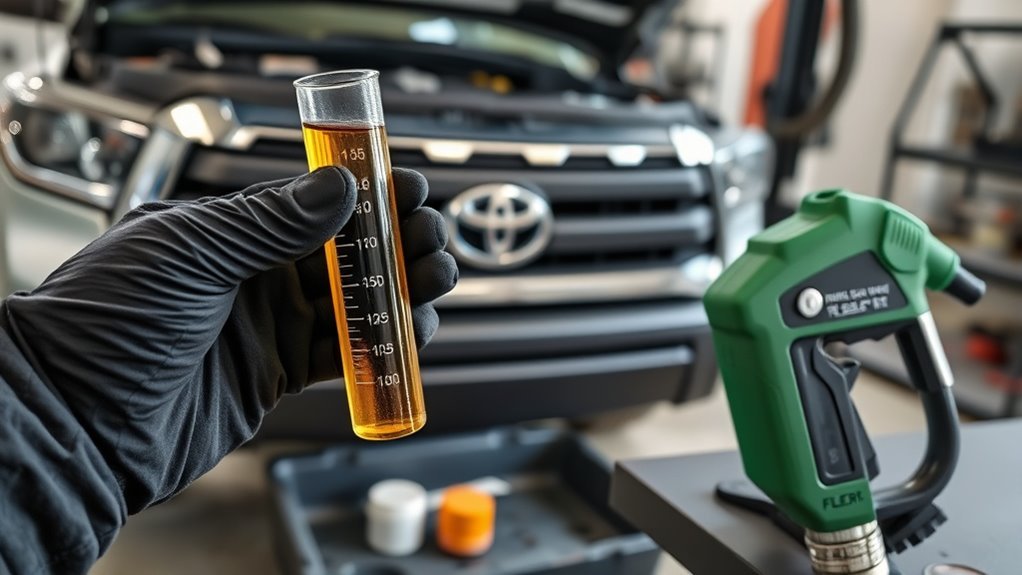
Because E85 and other high‑ethanol blends are more volatile and water‑attracting than straight gasoline, flex‑fuel Tundra owners need to monitor oil more frequently for dilution and contamination. You should treat Ethanol impact as an operational variable: expect faster dilution, darker oil early, and more frequent level checks. Set a 5,000‑mile baseline for oil changes and shorten intervals under heavy use.
| Parameter | Observation | Action |
|---|---|---|
| Dilution rate | Increased with E85 | Check every 1,000–2,000 miles |
| Oil color | Darkens by 8k–9k mi | Run oil analysis |
| Evaporation | Higher volatility | Monitor level weekly |
Follow a procedural routine: inspect dipstick, note odor/consistency, send samples for analysis when blending fuels. Use measured intervals, log results, and adapt service frequency. You’ll free yourself from surprise failures by making proactive Oil monitoring standard operating procedure under ethanol use.
Why Use 0W‑20 Full Synthetic and Which Oil Specs to Choose
When you choose 0W‑20 full synthetic for your Tundra, you get a blend optimized for low‑temperature flow, high thermal stability, and sustained film strength under load. 0W‑20 supports the engine’s fuel‑economy calibration and lets you safely extend drain intervals up to the manufacturer’s normal‑use recommendation (commonly 10,000 miles) provided you follow monitoring and service protocols.
Select oil by spec, not marketing. Confirm Toyota‑approved 0W‑20 that meets the owner’s manual viscosity and API/ILSAC specifications. Prioritize oils with demonstrated oil performance: oxidation resistance, shear stability, and additive retention. The synthetic benefits you rely on include consistent viscosity across temperature ranges, superior thermal breakdown resistance, and extended protective film life under load. Maintain liberation through disciplined checks: monitor level and top off as needed, follow scheduled inspections, and document service intervals. Using the correct spec preserves engine performance and efficiency while reducing maintenance frequency and cost. Choosing the right 0W‑20 full synthetic is a procedural decision that protects your Tundra and extends your freedom on the road.
When to Shorten Intervals: Signs, Oil Analysis, and Real‑World Darkening
If you routinely tow, go off‑road, or operate the Tundra in extreme heat or cold, shorten oil change intervals and watch oil condition closely—many owners find 5,000 miles safer under heavy use. You should inspect oil color and viscosity at every service; oil darkening by 8,000–9,000 miles under stress often signals contaminant buildup and reduced lubricity. Use oil analysis (Blackstone or similar) to quantify wear metals, soot, and TBN loss; that data lets you assert control over interval decisions rather than accept factory maxima.
Follow a procedural checklist to act decisively:
- Check oil color and dipstick feel monthly; record mileage and load (towing impacts noted).
- Send samples for lab analysis annually or after heavy-duty cycles.
- Shorten interval immediately if analysis shows elevated wear or if oil darkening and thickness increase.
You’ll liberate engine longevity by responding to measured condition changes, not calendar myths.
Middle‑Ground Plans: 7,500 Miles, 6 Months, or Condition‑Based Schedules

You can adopt a 7,500‑mile compromise to balance manufacturer guidance with practical engine wear data. Alternatively, schedule oil changes every 6 months regardless of miles to control time‑based degradation. Or use a condition‑based plan—monitor driving patterns and oil analysis and adjust intervals accordingly.
7,500 Mile Compromise
Although Toyota rates many Tundra engines for up to 10,000 miles between oil changes, a middle‑ground plan—changing at 7,500 miles, every 6 months, or based on operating conditions—gives you a practical balance of protection and convenience. You’ll preserve oil longevity and sustain engine performance by choosing a repeatable, documented interval that reflects your use. Inspect oil condition, load history, and ambient stressors; if you tow, off‑road, or run many short trips, shorten intervals toward 5,000 miles. Use oil analysis where available to validate extending intervals.
- Set a clear schedule: mileage, months, or condition triggers.
- Log service and operating conditions for trend analysis.
- Default to conservative changes when in doubt or under heavy duty.
This plan frees you to control risk without overconstraining maintenance.
Time‑Based Maintenance Option
Having settled on a practical 7,500‑mile compromise, adopt a time‑based maintenance option that sets clear triggers: 7,500 miles, every 6 months, or condition‑based checks informed by oil analysis and operating history. You’ll schedule oil services to balance oil change benefits with maintenance convenience while following Toyota guidance. Inspect usage patterns: towing, short trips, and harsh climates demand stricter adherence; reduce risk by meeting the 7,500/6‑month window. For lower‑mileage drivers, use oil analysis to move to condition‑based intervals, cutting unnecessary service without sacrificing protection. Record operating history and test results to justify extended intervals. Implement a reminder system tied to miles and calendar dates. This procedural approach frees you from uncertainty while preserving engine longevity and warranty alignment.
DIY vs Dealer: Filters, Oil Quality, and Warranty Implications
When you handle your own Tundra oil change, choose OEM or equivalent filters and high-quality synthetic oil to preserve engine wear rates and extend service intervals; dealers will usually follow factory specs automatically, which can simplify warranty documentation and reduce risk of disputes. You’ll apply oil change essentials and strict filter selection criteria: torque drain plug, replace seal, and use correct filter gasket orientation. Preserve records: date, mileage, product specs, and filter part numbers.
You’re empowered to control oil quality and interval testing through oil analysis; that data guides safe extension to about 10,000 miles with premium synthetics. Dealers reduce administrative friction for warranty claims because they log service in dealer systems and use factory procedures.
- Use OEM or clearly equivalent filters and list part numbers in records.
- Choose API/ILSAC-rated synthetic oil and note brand/viscosity.
- Perform oil analysis periodically and retain lab reports for warranty support.
Cost Tradeoffs: Long Intervals vs Frequent Changes Over Ownership
You’ll weigh long-term cost savings against the added security of more frequent oil changes. Calculate projected maintenance expense over your expected ownership (e.g., $2,400 savings at 10,000‑mile intervals over 300,000 miles vs increased repair risk with 5,000‑mile intervals). Then adjust interval choice for driving severity, oil type (full synthetic), and whether you perform DIY to optimize cost and peace of mind.
Long-Term Cost Savings
Although longer oil-change intervals cut the number of services you’ll pay for, they require disciplined monitoring and high-quality synthetic oil to realize real savings over ownership, especially across 300,000 miles. Do a strict cost analysis: compare total service counts, parts, and labor for 5,000- versus 10,000-mile schedules. Factor DIY versus shop rates and expected oil longevity from lab data. Track driving conditions; adjust interval if severe.
- Prioritize oil-condition checks and periodic lab sampling to validate oil longevity.
- Use manufacturer-grade synthetic oil and documented procedures to avoid premature wear.
- Recalculate cumulative costs annually to confirm projected ~$2,400 savings over 300,000 miles with 10,000-mile intervals.
Maintenance Peace Of Mind
If you prefer fewer visits to the shop, a 10,000-mile synthetic interval will lower service counts and can cut roughly $2,400 in maintenance costs over 300,000 miles, but it demands disciplined oil-condition monitoring and using manufacturer-grade oil to guarantee protection; conversely, sticking to 5,000–7,500-mile changes, especially for flex-fuel or heavy-duty use, increases service frequency and cost but reduces risk of oil degradation and engine wear. You’ll choose a maintenance strategy that aligns owner preferences and driving habits: long intervals free you from frequent upkeep; shorter intervals buy assurance via regular oil analysis. Prioritize oil quality to protect engine performance and performance longevity. Use cost analysis to balance liberty from shop visits against preventative maintenance.
| Choice | Feeling | Result |
|---|---|---|
| 10k | Relief | Savings |
| 7.5k | Control | Balance |
| 5k | Security | Protection |
| Analysis | Clarity | Confidence |
Set Your Personalized Tundra Oil Schedule and Tracking Tools
Set a clear oil-change interval for your Tundra based on how you drive: use 10,000 miles for typical highway and daily driving, drop to about 5,000 miles when you tow heavily, haul payloads, or go off-road, and consult your owner’s manual to confirm model-specific guidance. You’ll create a personalized scheduling plan that matches duty cycle and preserves engine life. Record baseline mileage, choose intervals, and log each service. Use oil analysis when conditions are severe to refine timing.
Use digital tracking tools to automate reminders, store service records, and timestamp oil analyses. Sync reminders with your calendar and vehicle telemetry if available. Engage forums for peer-tested schedules but verify against your manual and oil reports.
- Pick a fixed interval and commit to it.
- Use an app or spreadsheet to log oil changes and samples.
- Reassess intervals after towing seasons or off-road trips.
This procedural approach frees you from guesswork and keeps maintenance transparent and controlled.
Frequently Asked Questions
How Often Do Toyota Tundras Need Oil Changes?
You should change Tundra oil every 10,000 miles normally, 5,000 miles for flex-fuel or severe use; many choose 7,500 miles. Use full synthetic oil types, follow maintenance tips: monitor conditions, filter, and Fluid checks.
Can You Go 10,000 Miles With Synthetic Oil on a Toyota?
Yes—you can. Picture a smooth, amber river; use synthetic advantages and follow prescribed specs. You’ll get oil longevity up to 10,000 miles if you monitor condition, avoid severe duty, and perform scheduled analyses and inspections.
Is Oil Life 50% Ok?
Yes — 50% oil life can be OK if you monitor oil quality and driving conditions. Review maintenance tips: check oil color/consistency, adjust intervals for towing/harsh use, and perform periodic analysis to safeguard engine freedom.
What Is Toyotas Recommended Oil Change Interval?
You should follow Toyota’s recommendation: 10,000 miles for non-flex fuel engines and 5,000 miles for flex fuel. Start by checking oil types, then apply maintenance tips and honest driving checks to preserve freedom.
Conclusion
Use 0W‑20 full synthetic, follow 10,000‑mile intervals for most Tundras but drop to 5,000 miles for engines like the 3UR‑FBE/FFV or when you tow, do short trips, or go off road. Treat ethanol/FFV dilution seriously and monitor oil condition. Balance cost vs protection with 7,500‑mile or condition‑based plans. Change filters each service, track intervals, and document everything—like a checklist guiding routine maintenance so your Tundra runs reliably.