If your Tundra is knocking, act fast: listen for pitch changes under load versus at idle, try higher‑octane fuel, and check oil level and condition. Focus on a faulty knock sensor, detonation from low‑octane or lean mixtures, worn timing chain or lifters, and rod bearings or accessory pulleys. Record the noise and pull codes; avoid heavy load if knock is deep or RPM‑linked. Continue for targeted diagnostics, likely causes, and repair cost ranges.
Quick Triage: Is This Tundra Engine Knock Dangerous?
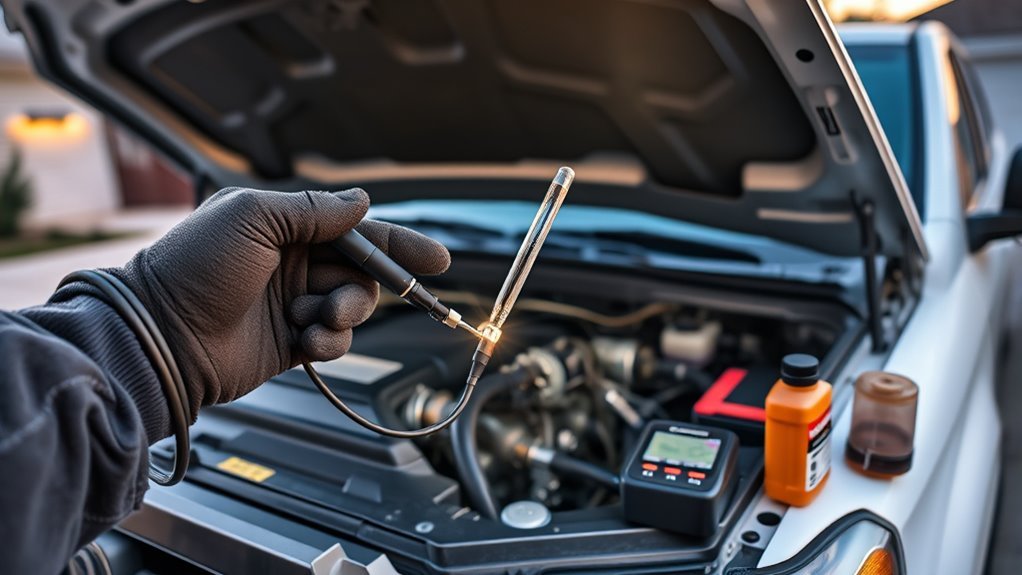
Wondering if that knock is urgent? You’ll run a quick triage: listen for when and how it occurs, then correlate symptoms with engine diagnostics. If the knock appears under load or during acceleration and vanishes with higher-octane fuel, suspect detonation tied to low octane or a lean air/fuel mix. If the noise persists at idle or under specific conditions, prioritize timing chain wear, lifters, or other mechanical faults. A faulty knock sensor stops the ECU from correcting detonation, so you won’t get automated protection — treat sensor faults as immediate priorities. Rod knock, from worn bearings, sounds deeper and signals impending catastrophic failure; don’t delay. After recent repairs, continuous knocking demands a professional inspection and focused diagnostics to avoid escalation. You’ll act decisively: check fuel quality, scan fault codes, test the knock sensor, and schedule mechanical inspection if the sound suggests internal wear. Liberation here means removing doubt with facts and prompt action.
Detonation vs. Mechanical Knock: How to Tell the Difference
Listen for timing clues in the knock: detonation pings under load or acceleration, while mechanical knock is often steadier at idle or low RPM. Watch how the engine responds to throttle — detonation changes with load and fuel/octane, mechanical knock usually persists regardless of throttle input. Finally, note tone and location: detonation is a higher‑pitched pinging from combustion, mechanical knock is deeper and more localized to bearings or rods.
Sound Timing Clues
When you hear a knock from your Tundra, timing the sound against engine load and RPM gives the quickest clue: detonation typically shows up under load or during acceleration and sounds like rapid metallic pinging from multiple combustion points, while mechanical knock (rod knock) presents as a deeper rattle or clunk that rises with RPM and persists regardless of throttle. Listen for changes in sound frequency and knock resonance as you vary conditions. If the noise intensifies only under load or with poor fuel/octane, suspect detonation—check timing, fuel quality, and the knock sensor. If the noise is constant, grows with RPM, and has a low, rhythmic thump, assume internal wear like rod bearings and act fast to prevent catastrophic failure.
Response To Throttle
If the knock changes with throttle input, you can usually separate detonation from mechanical knock by how the noise reacts as you load the engine. You’ll monitor throttle response and acceleration behavior to tell which fault is driving the sound. Detonation usually appears under load or during accel, can lessen when you open throttle further if timing or octane issues resolve, and may be masked by a bad knock sensor. Mechanical knock (rod knock, bearing wear) often persists at idle and amplifies under load, independent of fuel quality.
- Check noise during steady cruise versus heavy acceleration.
- Note if knock drops when you advance or retard throttle.
- Test with higher-octane fuel briefly.
- Scan for knock-sensor faults.
- Compare idle versus loaded behavior.
Location And Tone
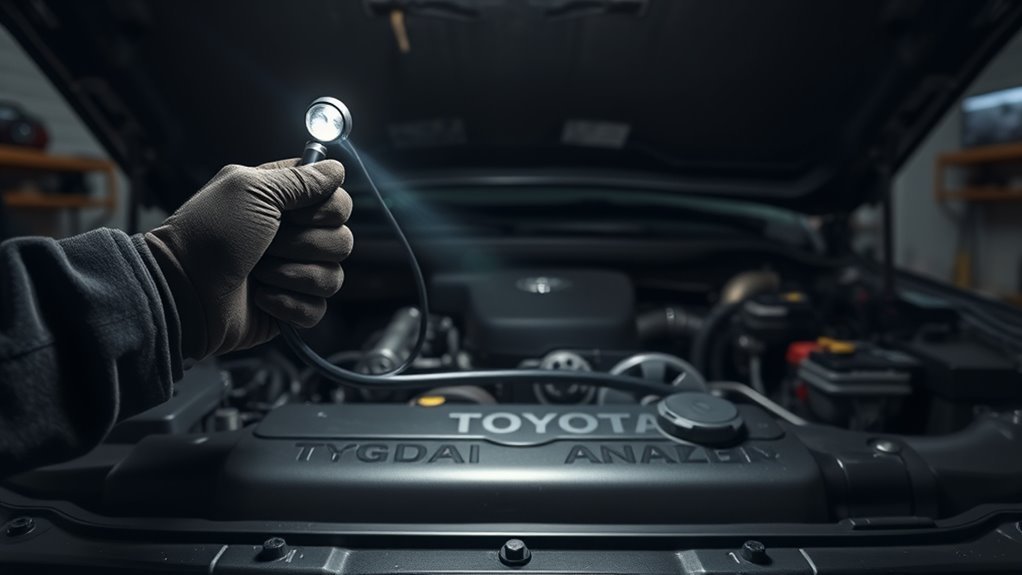
1 clear way to separate detonation from mechanical knock is to focus on where the sound seems to come from and the pitch it makes: detonation is a sharp, metallic ping or rattling you’ll hear toward the top of the engine and under acceleration, while mechanical knock is a deeper, rhythmic thump coming from the engine’s bottom end (near the crank) that often persists at idle and low RPMs. You should map knocking frequency and listen for changes with throttle: detonation pings at higher frequency and often fades or changes under load; mechanical knock stays low-frequency, consistent, and tied to engine vibrations regardless of throttle. Use a stethoscope or chassis ground to localize. If it’s bottom-end and persistent, prioritize teardown—don’t delay liberation.
Six Common Causes of Tundra Engine Knocking (What Each Sounds Like)
Because engine knock can signal anything from minor tune-up needs to catastrophic failure, you should be able to distinguish the common causes by sound and symptom. Listen first: engine noise patterns tell you where to focus and which diagnostic tools to use. You’ll want to isolate combustion sounds from accessory or mechanical rattles.
- Detonation knock: sharp, metallic ping under load — often from low-octane fuel causing multiple ignition points.
- Bad timing: irregular, popping knocks or misfire-like bangs caused by incorrect spark timing or failing plugs.
- Lean air/fuel mixture: hard, sporadic knock during acceleration from incomplete combustion due to sensors or injectors.
- Worn bearings (rod knock): deep, rhythmic rattling that changes with RPM, signaling bearing failure needing rebuild.
- Belt tensioners/pulleys: high-frequency rattle or chirp at idle and revs, mimicking knock but originating from accessories.
Use focused listening, rpm variation, and basic diagnostics to free yourself from uncertainty and act decisively.
What You Can Check Now: Oil, Battery, Plugs, Fuel, and Recordings
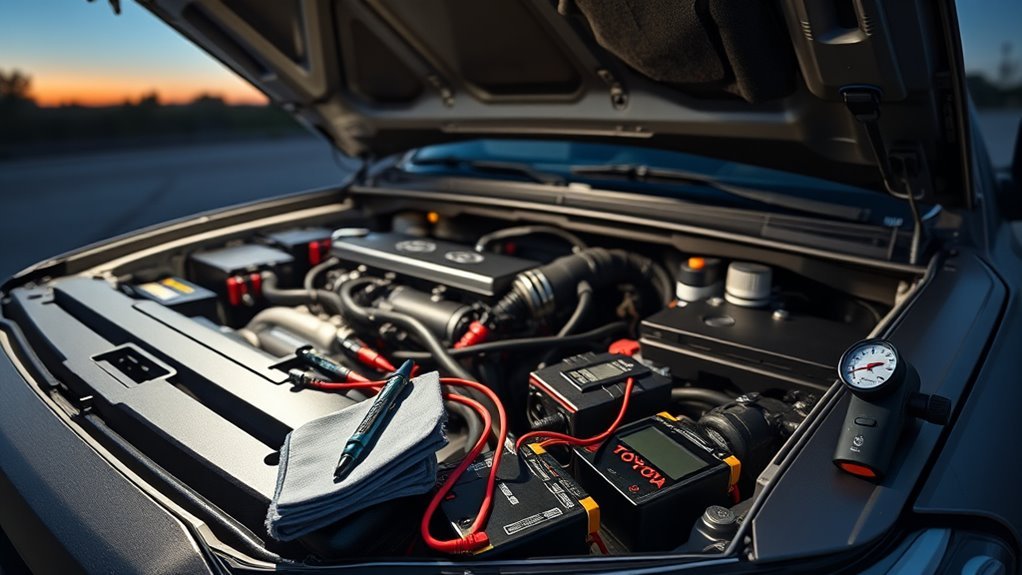
Start by checking the engine oil level and condition—low or contaminated oil accelerates bearing wear and can produce knocking. Next, test the battery voltage and inspect spark plugs for fouling or incorrect gaps, since weak ignition or a weak battery can worsen noise during start and run. If knocking persists, record the sound from multiple angles and note operating conditions to give technicians precise diagnostic data.
Check Engine Oil
Before digging deeper, check the engine oil level and condition—low or contaminated oil worsens knocking and can turn a fixable noise into catastrophic damage. You should confirm oil level on the dipstick, note color and smell, and look for metal particles. Use the correct engine oil types specified in the manual; wrong viscosity or synthetic vs. conventional mismatches can alter lubrication under load. Track oil change frequency and never exceed recommended intervals—old oil loses film strength and fails to protect bearings and lifters, increasing knock risk. If oil looks dark, gritty, or smells burnt, change it and re-evaluate noise.
- Check dipstick level and scent immediately
- Inspect for metallic debris
- Match viscosity and oil spec
- Follow oil change frequency strictly
- Record condition and changes before mechanic visits
Inspect Battery & Plugs
Having checked oil, next inspect the battery and spark plugs since electrical and ignition faults often mimic or worsen engine knock. You’ll verify battery maintenance by testing state of charge and load capacity; a weak battery can cause misfires and odd noises. Clean and tighten terminals, check for corrosion, and replace any battery older than recommended. Perform spark plug inspection: remove plugs, look for fouling, carbon buildup, or oil deposits, and confirm correct gap and heat range. Fouled or improperly gapped plugs cause pre-ignition, timing irregularities, and knocking. If plugs look degraded or gaps are off, replace them with OEM-spec parts. Combine these checks with fuel quality verification and an audio recording of the knock to empower accurate diagnosis.
When to Stop Driving and Have the Tundra Towed
Wondering when to stop driving your Tundra? You should act fast if knocking persists or worsens — your freedom depends on engine safety more than a stubborn trip. Persistent knocks, noises at idle or after warm-up, or intensifying vibration under load are clear towing signs. If you lose power or see the check engine light, don’t push it; have the truck towed.
- Knocking that continues while driving: stop immediately and call for a tow.
- Noises at idle or post-warm-up: avoid further driving to prevent bearing damage.
- Knock increases under acceleration: risk of timing or sensor failure—tow it.
- Loss of power with knock or CEL: tow for professional diagnosis.
- Unsure but worried: err on caution and arrange towing for engine safety.
You’re choosing liberty by preventing catastrophic failure. Towing now preserves options, avoids costly replacements, and keeps you in control.
What Dealers and Mechanics Should Inspect and Ask For
What should your dealer or mechanic inspect first when your Tundra shows knocking? Start with targeted engine diagnostics to capture fault codes and live data. Verify the knock sensor and its wiring; a failed sensor or loose connector can let damaging knock persist unnoticed. Next, evaluate the timing chain for wear, tensioner operation, and alignment—timing issues often mimic other knocks.
Confirm the air fuel mixture by checking oxygen sensors, fuel injectors, and fuel pressure; a lean mix produces incomplete combustion and knock. Perform a compression/leakdown test and listen for characteristic rod bearings noise—worn or misaligned rod bearings point to internal damage that needs prompt attention. Ask specifically for the vehicle’s maintenance history: recent oil changes, oil type, and spark plug/service records directly affect knock risk. Request that the shop documents findings and recommended next steps so you can decide confidently and retain control over repairs.
Repair Options and Typical Costs by Cause
Now that you know what a shop should inspect, you’ll want clear repair options and cost expectations for each likely cause of knock. You’ll get prudent repair techniques and a concise cost breakdown so you can choose the path that frees you from uncertainty.
- Detonation (low octane or timing): retune or replace spark components; cost breakdown $200–$500 for adjustments or parts.
- Lean mixture (faulty sensors): sensor replacement and fuel-system cleaning; repair techniques include O2/MAP/MASS replacement and injector service; cost breakdown $300–$1,200.
- Rod bearings (rod knock): engine disassembly, bearing replacement, possible machining; repair techniques are invasive; cost breakdown $2,000–$3,500.
- Belt tensioners/pulleys: replace tensioner or pulley, realign belts; repair techniques are straightforward; cost breakdown $150–$400.
- Knock sensor failure: diagnose and replace sensor, verify calibration; repair techniques are basic electrical service; cost breakdown $150–$300.
Use this to demand transparent estimates, pick durable parts, and refuse open-ended bills.
Frequently Asked Questions
Why Is My Toyota Engine Knocking?
Your engine’s knocking likely stems from common problems: low-octane fuel, incorrect timing, lean mixture, worn rod bearings, or sensor/fuel issues. You’ll diagnose engine noise quickly by checking fuel, timing, sensors, oil, and knock sensor.
How Do I Get My Engine to Stop Knocking?
Think of quieting your engine as reclaiming freedom: check correct octane, adjust timing, fix lean mixtures, replace faulty knock sensor, and maintain oil—these engine maintenance tips are essential knocking prevention methods to stop damage and restore control.
Conclusion
You’ve now got a roadmap to hunt down that Tundra knock; treat it like a smoke alarm, not background noise. Don’t shrug off metallic clatter — it’s the engine’s warning horn. Check oil, plugs, battery and fuel, capture recordings, then decide: drive cautiously or tow. Provide the shop with notes and sounds. Fixes range from cheap tune-ups to costly engine work, so act fast to prevent a small tap turning into a catastrophic bang.