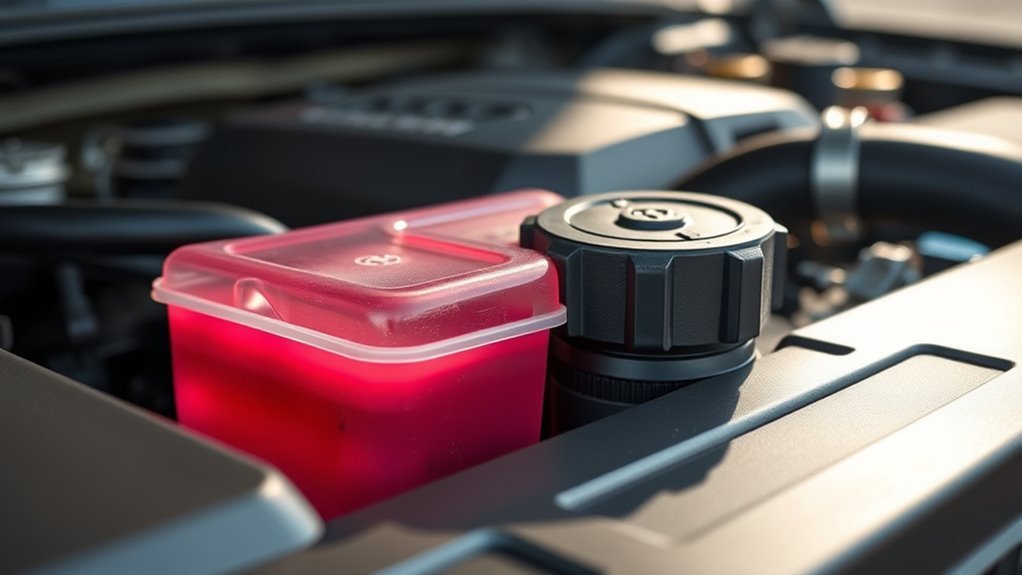
You should use a 50/50 mix of ethylene glycol and Toyota Long Life Coolant (SLLC) matched to your Tundra’s model year and engine; color isn’t a reliable guide and mixing unknown formulas can strip corrosion inhibitors and damage seals. SLLC (pink) lasts far longer than older red HOAT formulas, which need frequent changes. Top off only with compatible Toyota‑specified coolant or a tested Asian‑vehicle aftermarket equivalent. Continue below for specifics on identification, capacity, flushing, and disposal.
Quick Answer: Which Coolant Does the Toyota Tundra Need?
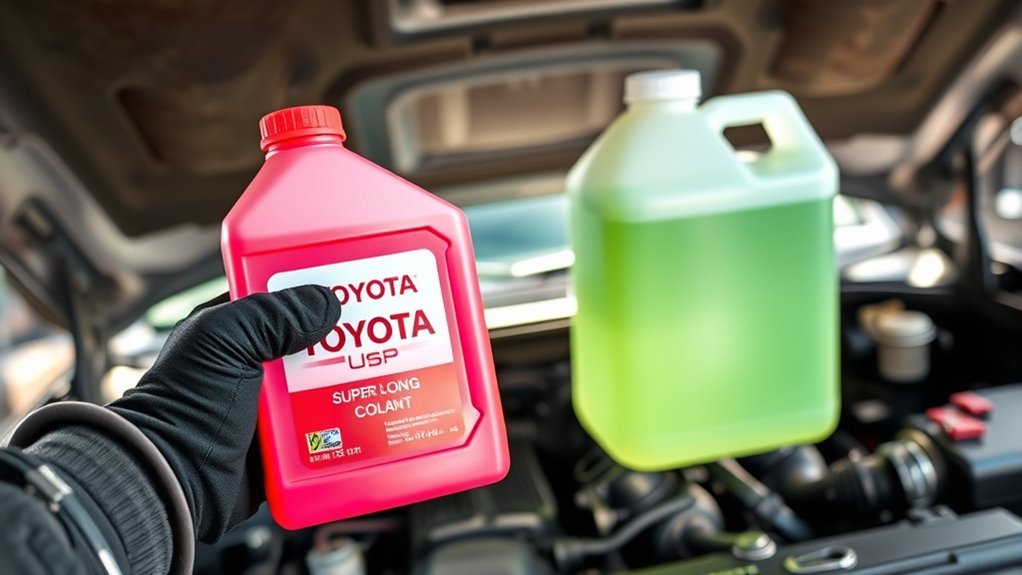
Which coolant should you use? You’ll use a 50/50 mix of water and ethylene glycol-based Toyota Long Life Coolant. That’s the technical baseline for most Tundra engines; color (pink, red, blue) isn’t a reliable indicator of coolant compatibility. You’ll check your owner’s manual for the precise spec tied to your model year and engine to protect warranty and avoid chemical mismatch that can cause corrosion or seal failure.
For practical maintenance tips, change the mix every 30,000 miles or every two years, and plan a full flush between 100,000 and 150,000 miles. When topping off, match the specified coolant chemistry rather than hue, and avoid blending unknown formulas. You’re liberating yourself from roadside breakdowns by following these steps: use the recommended Toyota Long Life formula, maintain the 50/50 ratio, adhere to service intervals, and consult documentation for any model-specific exceptions.
Coolant Chemistry for Tundra: SLLC (Pink) vs. Red HOAT
While both pink Super Long Life Coolant (SLLC) and Toyota’s red HOAT are designed to protect the Tundra with hybrid organic acid technology, they differ in service life and mixing compatibility—SLLC is formulated for up to 10 years/150,000 miles, whereas the red formula requires changes roughly every 2 years/24–30k miles; you should never mix them because blending will reduce corrosion inhibitors and can compromise seals and cooling performance. You’ll find both deliver HOAT-based corrosion protection and thermal stability, but the inhibitor packages and reserve capacities differ, so coolant performance varies over time. For liberation from unnecessary breakdowns, stick to the specified type and intervals for your model year. Practical maintenance tips include using factory-fill SLLC where specified, noting replacement intervals, and avoiding top-offs with unknown red coolant. If contamination occurs, plan a full system flush and refill with the correct formula to restore inhibitor balance and protect head gaskets, aluminum parts, and hoses.
How to Tell Which Coolant Is Currently in Your Tundra
Start by checking the coolant reservoir with the engine cool and the vehicle on level ground to avoid misleading readings. Inspect the fluid color: pink means Super Long Life Coolant (SLLC) while red indicates Toyota Red Long Life HOAT; note any darkening or discoloration. If you see sediment, rust, or unexpected color, consult the owner’s manual or have a professional test a sample for confirmation.
Check Coolant Reservoir
Open the hood and inspect the coolant reservoir to quickly identify what’s currently in your Tundra: pink fluid usually means Toyota Super Long Life Coolant, red indicates Long Life Coolant, clear and bright is fresh, and cloudy, dark, rusty, or sediment-filled fluid signals contamination or deterioration that may require a flush. Use basic reservoir inspection techniques: view levels against MIN/MAX markings, note color through the plastic, and check clarity by tilting the bottle. Follow coolant maintenance tips: record observations, compare to the owner’s manual, and confirm recommended type before topping up. If you see rust, particulates, or oil film, plan a flush and system service. Regular, disciplined checks free you from unexpected failures and keep the cooling system reliable.
Inspect Coolant Color
After you’ve checked the reservoir level and clarity, inspect the coolant color to identify what’s in your Tundra: pink indicates Toyota Super Long Life Coolant (SLLC) and red denotes the older Long Life Coolant. You’ll use color to decide maintenance urgency and avoid mixing incompatible types. Fresh pink lasts up to 10 years; red usually needs replacement every 2 years or 24,000–30,000 miles. Dark or reddish-brown fluid signals coolant contamination signs or age—treat it as a drain-and-flush candidate.
- Verify color against a clean white rag or clear container.
- Note service intervals and record date/mileage for coolant maintenance tips.
- If color is off, test for rust or oil cross-contamination.
- Consult your owner’s manual before swapping coolant types.
Can I Top Off With Aftermarket or a Different Coolant?
Can you top off your Tundra with an aftermarket or different coolant? You can, but do it deliberately. Use a coolant that meets Toyota specifications to protect performance and warranty. Aftermarket coolant options exist—some owners use Peak Global Lifetime or Zerex Asian Vehicle Coolant successfully—but compatibility matters.
Avoid mixing coolants casually. Mixing coolants with different chemistries can trigger chemical reactions that degrade corrosion inhibitors and lower boiling/freezing protection. Color isn’t a reliable guide; don’t assume pink equals compatibility. Check your owner’s manual for the specified formula and match inhibitor type and concentration.
If you must top off between services, choose a compatible aftermarket coolant labeled for Toyota or similar Asian vehicles, and top minimally to avoid diluting the system. Inspect levels and coolant condition regularly. For long-term health and freedom from preventable failures, plan a proper drain-and-fill with the correct coolant rather than repeated mismatched topping.
How Much Coolant Your Tundra Holds and Where to Add It
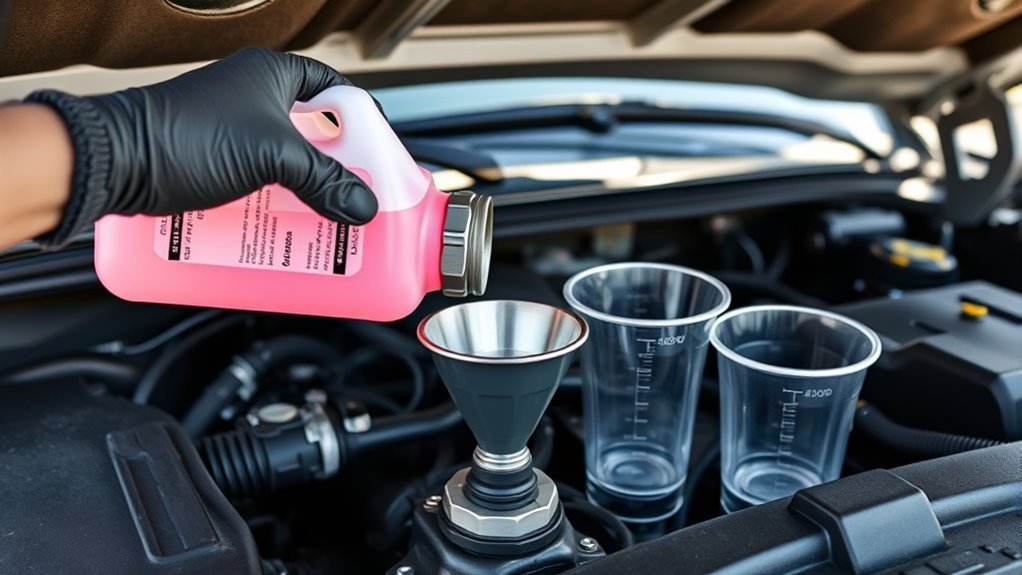
Your Tundra’s cooling system typically holds about 13–16 quarts of coolant depending on year and engine, so you’ll want to verify the exact capacity in your owner’s manual. Always add coolant at the radiator only when the engine is cold, and use the marked reservoir to top up between the FULL and LOW indicators without opening the pressurized system. Use the recommended 50/50 water/ethylene glycol mix to refill and recheck levels after a short run to guarantee proper circulation.
Tundra Coolant Capacity
Most Tundras hold about 12–15 quarts of coolant depending on year and engine. You’ll plan service knowing capacity varies by model; check your owner’s manual for the exact number. Use the recommended Toyota mix (50/50 ethylene glycol and water) to protect the engine and cooling passages.
- Check the overflow reservoir regularly; keep level between “low” and “full.”
- Always confirm engine is cool before opening the radiator or reservoir caps.
- Follow coolant maintenance tips: pressure-test the system and replace coolant per schedule.
- Consider coolant system upgrades like a higher-capacity radiator or upgraded hoses for heavy-duty use.
These steps give you control over cooling performance and freedom from preventable failures.
Where To Add Coolant
Knowing the Tundra’s coolant capacity (about 12.7 quarts for many models) helps you plan refill volume, but when adding fluid you’ll work at two locations: the radiator fill neck and the translucent overflow reservoir marked with MIN and MAX lines. You’ll open the radiator cap only when the engine is cool to avoid burns, and you’ll top the reservoir to between MIN and MAX. Use Toyota SLLC (pink) unless your manual specifies otherwise. Watch for leaks and overheating while you add fluid; this is practical coolant maintenance tips to protect the powertrain and preserve engine cooling efficiency.
| Location | Purpose |
|---|---|
| Radiator fill neck | Direct fill when needed |
| Overflow reservoir | Daily level check |
| Cap caution | Only when cool |
| Coolant type | Use SLLC as specified |
Checking Coolant Levels
Check the coolant level with the engine cold by locating the translucent overflow reservoir under the hood and confirming the fluid sits between the MIN and MAX marks. You’ll consult the owner’s manual for exact capacity—models vary—so you know how much to add if low. Inspect for coolant leaks around hoses, the radiator, and the reservoir. Monitor the temperature gauge; a rising needle indicates urgency.
- Use a 50/50 mix of water and ethylene glycol (Toyota coolant) when topping off.
- If level is below MIN, add slowly to the reservoir, not the radiator cap, while cold.
- Check levels every 15,000 miles and after any repairs.
- Address persistent drops or temp gauge excursions immediately to avoid engine damage.
Recommended Coolant Change Intervals for the Tundra
1 key interval to remember for your Toyota Tundra is a coolant change every 30,000 miles or every two years to keep the cooling system performing at its best. You’ll want to follow coolant maintenance tips in the owner’s manual and do inspections every 15,000 miles. That routine delivers clear engine performance benefits: reduced overheating risk and longer component life. A full flush is different and scheduled less often—typically 100,000–150,000 miles—to remove sludge and contaminants.
| Interval | Action | Purpose |
|---|---|---|
| 15,000 mi | Inspect level/condition | Early issue detection |
| 30,000 mi / 2 yr | Replace coolant | Maintain corrosion protection |
| 100–150k mi | Flush system | Remove sludge/contaminants |
| Owner’s manual | Model-specific | Follow exact guidance |
| Ongoing | Monitor | Preserve engine longevity |
Stick to the schedule, use correct fluid, and reclaim control over reliable, liberated vehicle ownership.
How to Flush and Refill a Tundra Coolant System
Start by draining the old coolant from the radiator petcock and flushing the system with a cleaning solution, running the engine briefly to circulate it before draining again. Rinse thoroughly with clean water until runoff is clear, then refill with a 50/50 Toyota-approved ethylene glycol/water mix. Run the engine with the heater on, check for leaks, and bleed the system and top off the level as needed to eliminate air pockets.
Drain And Flush System
When you flush and refill a Tundra’s cooling system, begin by draining the old coolant completely through the radiator pet-cock valve and treating the system with a cooling-system cleaner to remove debris and corrosion. You’ll act like a technician and a liberator: remove the drain plug, catch waste, and run cleaner through the block and radiator to dissolve scale. Follow coolant maintenance tips and flushing frequency guidelines — annual service is recommended. After flushing, rinse until clear, then dispose of old fluid responsibly.
- Locate radiator pet-cock, open and drain fully.
- Add cooling-system cleaner, run per product instructions.
- Rinse system until expelled fluid is clear.
- Verify seals, caps, and reservoir integrity before refilling.
Refill And Bleed
Refill the cooled system with a 50/50 mix of Toyota-approved coolant and distilled water, then run the engine with the heater on to expel air and circulate the new fluid. With the engine cool, remove the radiator cap, open the pet-cock, and drain into a safe container. Use a cleaner if corrosion’s present, then refill the radiator and reservoir to spec. Start the engine, bring it to operating temperature, and run at 2000 RPM briefly to dislodge trapped pockets. Monitor reservoir level and top off as needed. Apply precise bleeding techniques to free air; repeat warm-idle cycles until levels stabilize. These coolant maintenance tips give you control—liberate your vehicle from neglect and maintain system integrity.
| Step | Action |
|---|---|
| 1 | Remove cap |
| 2 | Drain old |
| 3 | Clean system |
| 4 | Refill 50/50 |
| 5 | Bleed/monitor |
Common Coolant Problems and Warning Signs in Tundras
Because coolant issues can escalate quickly, you should watch for clear warning signs—engine overheating, persistent low reservoir levels, visible steam under the hood, and discolored or rusty fluid—that indicate leaks, head gasket failure, or system corrosion. You’ll act faster when you recognize coolant leaks and overheating signs early: a rising temp gauge, steam, or grinding noises point to urgent inspection. Low reservoir readings usually mean a leak or evaporation; don’t ignore them.
- Rapid temperature rise on the gauge
- Steam or bubbling from radiator/under hood
- Rusty or sediment-filled coolant in the reservoir
- Persistent low coolant level despite refills
Addressing these signs protects the engine and preserves your autonomy over vehicle maintenance. Inspect hoses, clamps, and the radiator for wet spots or stains. If sediment or rust appears, flush and test the system to prevent corrosion. For grinding noises or sustained high temps, stop driving and diagnose immediately to avoid major engine failure.
Safe Disposal and Handling of Used Coolant
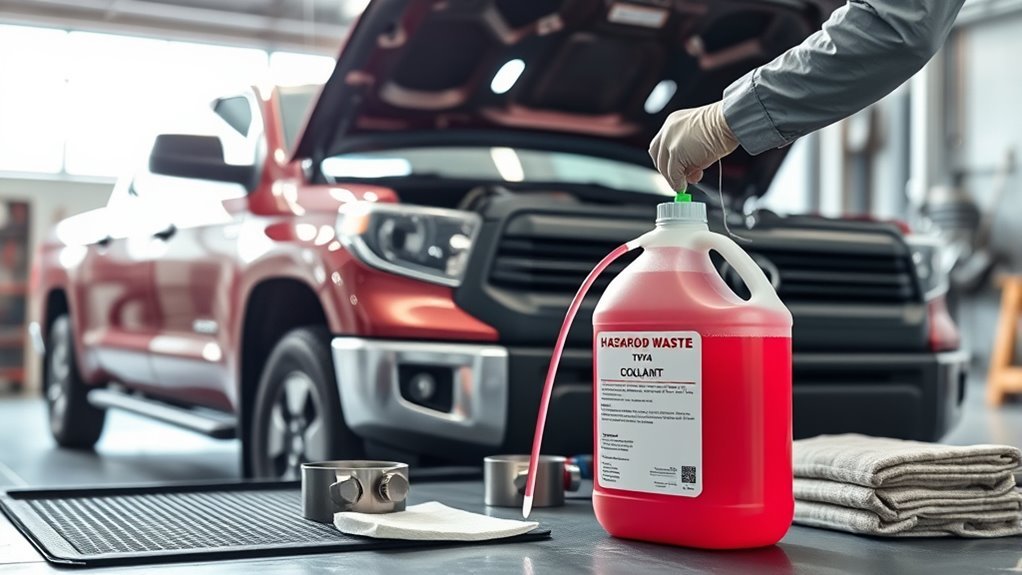
One clear rule: treat used coolant as hazardous waste and never pour it down drains, onto soil, or into storm sewers. You’ll follow environmental regulations and protect communities by handling spent coolant deliberately. Store used coolant in a sealed, labeled container to prevent leaks and keep kids or pets safe. If a spill happens, dilute with water and contain runoff immediately, then collect for proper disposal.
Locate authorized coolant recycling or disposal points—many garages and recycling centers accept used coolant and document transfer to comply with local rules. Check with waste management authorities for specific pickup, drop-off, or transport requirements so you don’t inadvertently violate law. When you relinquish coolant, get a receipt or manifest for records; that proves compliance and supports broader reclamation efforts. You’re reclaiming control: safe handling plus coolant recycling reduces contamination, conserves resources, and enforces the standards that protect people and land.
OEM vs. Aftermarket Coolant: Warranty, Brands, and Service Tips
After you’ve handled and disposed of used coolant responsibly, you’ll next decide whether to stick with Toyota’s Super Long Life Coolant or pick an aftermarket product. You’ll weigh OEM Benefits like guaranteed Compatibility Concerns and clear Warranty Implications against Aftermarket Risks and Cost Considerations. Toyota preserves warranty coverage when you follow specs; aftermarket options must meet your owner’s manual to avoid voiding claims.
- Performance Comparison: OEM vs recommended aftermarket formulas.
- Brand Recommendations: Peak Global Lifetime, Zerex Asian Vehicle Coolant.
- Maintenance Tips: check intervals, don’t mix unless specified.
- Warranty Implications: record service, keep receipts.
Be pragmatic: choose substitutes that match Toyota specifications to maintain corrosion protection and system chemistry. Avoid mixing types to prevent accelerated wear. Use brand choices that offer lab data aligning with Toyota’s specs. Keep service records and consult the manual at each interval so you stay independent, informed, and protected without surrendering performance.
Frequently Asked Questions
What Kind of Coolant Does a Toyota Tundra Take?
Your Tundra takes a 50/50 ethylene glycol/water mix, typically Toyota pink or red long-life coolant; you’ll guarantee coolant compatibility and follow coolant maintenance to protect the engine, preserve warranty, and free yourself from breakdowns.
Do Toyotas Require Special Coolant?
Yes—you should use Toyota-approved fluids; they’re formulated for compatibility and warranty. For coolant maintenance tips, compare specs in a Toyota coolant comparison, follow manual intervals, avoid mixing types, and drain/flush per recommended procedures.
Why Do Toyotas Need Pink Coolant?
Because it matches engine materials, pink coolant gives corrosion protection and sludge prevention—like a shield—so you’ll get coolant benefits and reliable temperature regulation, prolonging components’ life and freeing you from frequent repairs and worry.
Is G13 Coolant Pink or Purple?
G13 can be pink or purple, depending on formulation and manufacturer. You’ll recognize coolant colors differing across coolant types; you’ll choose the environmentally minded G13 for extended life, corrosion protection, and compatibility when you demand reliable, liberated performance.
Conclusion
Keep your Tundra’s cooling system matched to its original spec—use Toyota SLLC (pink) for newer models or the red HOAT where specified—and don’t mix chemistries. Check the reservoir label or test a sample to identify current coolant, top off with the same type, and flush/replace at recommended intervals. Watch for leaks, overheating, or sludge. Handle and dispose of used coolant safely. Treat coolant care like a pulse check: it keeps your engine alive and predictable.