
Why Your Tundra Battery Keeps Dying and How to Fix It
What’s in This Article
- Quick Fixes to Stop Your Tundra Battery Dying
- Before You Start: Tools and Safety
- Test Tundra Battery Health and State-of-Charge in 5 Minutes
- Check Alternator: Overvoltage and Intermittent Charging Faults
- Diagnose Parasitic Drain With Fuse-Pull Isolation Step by Step
- Test Aftermarket Items: Alarms, Dash Cams, Backup Cams, Trailer Wiring
- Inspect Grounds and Hidden Wiring That Cause Phantom Drains
- Short-Term Tools: Smart Chargers, Disconnect Switches, Tenders
- When to Replace the Battery and When to Get Pro Diagnostics
- Frequently Asked Questions
- Conclusion
A Tundra battery that keeps dying usually points to one of four problems: a weak battery, a charging fault, parasitic draw, or poor wiring. Start with battery state of health (SOH), state of charge (SOC), resting voltage, and a cold cranking amps (CCA) or load test. If the battery passes, check alternator output, isolate parasitic drains, inspect grounds, and test aftermarket alarms, dash cams, backup cameras, and trailer wiring.
Quick Answer
Your Tundra battery keeps dying because something either drains power while the truck sits or fails to recharge the battery while you drive. Test the battery first, then check alternator voltage, parasitic draw, aftermarket accessories, grounds, and hidden wiring. A normal sleep-mode draw should usually stay under about 50 milliamps, while more than 100 milliamps deserves closer testing.
Key Takeaways
- Test the battery before you replace parts, because low charge and low health can look the same.
- Check charging voltage with the engine running to catch alternator or voltage regulator faults.
- Measure parasitic draw only after the truck enters sleep mode, or your reading may mislead you.
- Disconnect aftermarket gear one item at a time, because alarms, cameras, and trailer wiring often cause hidden drains.
- Clean and tighten grounds before you chase complex electrical faults.
Quick Fixes to Stop Your Tundra Battery Dying
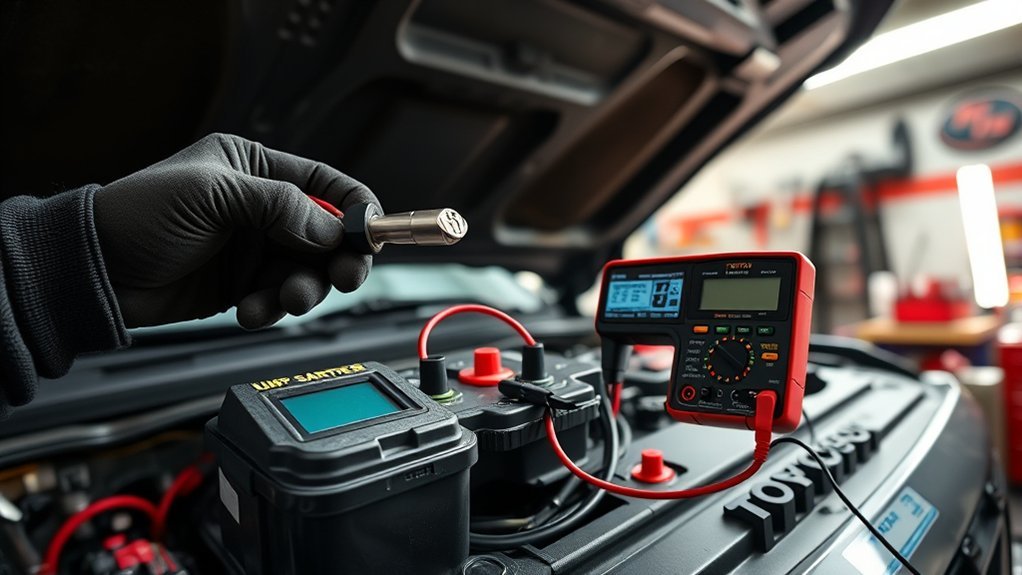
If your Tundra battery keeps dying, start by testing its state of health (SOH) and state of charge (SOC). A healthy 12-volt battery often reads about 12.6 volts or higher at rest, while 12.4 volts shows a partial charge and about 12.2 volts means the battery needs charging and further testing.
Next, isolate parasitic draw. Let the truck enter sleep mode, then measure amp draw with a digital multimeter. Fluke’s parasitic drain guide lists less than 50 milliamps as typical after sleep mode and more than 100 milliamps as suspect.
Unplug aftermarket accessories such as alarms, dash cams, parking-mode camera kits, backup cameras, and trailer wiring taps. Clean and tighten battery terminals, chassis grounds, and engine grounds. Use a smart charger or battery tender when the truck sits for long periods, but treat that as a short-term tool while you find the real cause.
Before You Start: Tools and Safety
You can handle the first checks with a digital multimeter, a battery tester, basic hand tools, safety glasses, and gloves. Use a smart charger or battery maintainer only if it matches your battery type and rating.
Work in a well-ventilated area, keep sparks away from the battery, and remove jewelry before you touch terminals. If you feel unsure about testing current in series, ask a technician to run the parasitic draw test.
Warning: A wrong multimeter setup can blow a meter fuse or damage electronics, so start on the high-amp setting and follow the meter manual.
Test Tundra Battery Health and State-of-Charge in 5 Minutes
Grab a multimeter and do a quick voltage check. About 12.6 volts at rest often means a charged battery, while about 12.4 volts shows a partial charge. If voltage stays low after charging, run a CCA or load test to confirm the battery’s ability to crank the engine.
Record each reading with the date, outside temperature, and whether the truck sat overnight. A simple log helps you spot a weak battery before it leaves you stuck.
[Products Worth Considering]

This fully automatic battery charger and maintainer delivers a full charge and then switches to float mode to help keep batteries at the proper storage voltage without overcharging. It supports 6V and 12V batteries, including lead-acid, AGM, gel, and lithium, making it a versatile option for cars, SUVs, trucks, motorcycles, and marine applications. Built with spark-proof operation, reverse polarity protection, and easy-to-read charging status indicators, it is designed for safe, reliable, connect-and-forget use.

This automotive test light combines a bright LED voltage display with quick polarity indication for fast, accurate circuit checks in a wide range of vehicle systems. It helps diagnose battery, charging, lighting, and fuse issues with a sharp stainless probe, long spring wire, and easy-to-use alligator clip for efficient troubleshooting.

This smart automatic battery charger and maintainer helps keep automotive batteries charged and ready by delivering a full charge before switching to float mode for long-term maintenance. It supports 6V and 12V batteries with broad compatibility for lead-acid, AGM, gel, and lithium types, while built-in safety features like reverse polarity detection and spark-proof connection help ensure reliable use. Compact construction, included connection cables, and indicator lights make it a convenient choice for cars, SUVs, trucks, and storage maintenance.
Quick Voltage Check
Set the multimeter to direct current (DC) volts. Touch the red lead to the positive terminal and the black lead to the negative terminal while the truck sits off with accessories off.
A resting reading around 12.6 volts or higher points to a charged battery. Charge and retest the battery if it reads under about 12.4 volts. If it drops again after sitting, continue with parasitic draw and charging-system checks.
Start the engine and check voltage at the battery. AAA’s alternator guidance lists about 13 to 14.5 volts as a normal charging range. A reading near battery voltage, above 15 volts, or one that jumps around can point to alternator, regulator, wiring, or ground trouble.
CCA and Load Test
Voltage gives you a fast snapshot, but CCA and load testing show whether the battery can handle starter demand. Use a quality battery tester or ask a parts store or repair shop to test rated cold cranking amps.
For a load test, Discover Battery recommends applying a load for 15 seconds and watching whether voltage stays above 9.6 volts under load. If the battery drops below that point after a full charge, plan for replacement.
Test the battery every six months if your Tundra sits often, runs many short trips, or has a history of slow cranking. You can catch decline early and avoid replacing good alternators or accessories.
Check Alternator: Overvoltage and Intermittent Charging Faults
Check alternator output after the battery passes testing. With the engine running, voltage that stays far below normal can leave the battery undercharged. Voltage above 15 volts can overcharge the battery and strain electronics.
Watch voltage while you turn on headlights, the heater fan, and rear defroster. A small change can look normal, but sharp spikes, dropouts, or flickering lights deserve a charging-system test.
Alternator Voltage Spikes
If your Tundra shows charging spikes near 15 to 18 volts while driving, stop guessing and test the charging system. Overvoltage can shorten battery life and damage sensitive modules.
Monitor alternator output with a multimeter or scan tool that can log voltage during a road test. Check battery terminals, alternator wiring, and engine grounds before you replace the alternator.
A faulty voltage regulator, poor ground, loose belt, weak battery, or bad alternator diode can cause unstable charging. Fix the root cause, then retest battery voltage after the truck sits overnight.
Intermittent Charging Failures
Intermittent charging faults can feel random because the battery may test fine one day and die the next. Track voltage at idle, during a short drive, and after shutdown.
Test alternator diodes and output if voltage wanders, headlights flicker, or the battery loses charge after normal driving. Universal Technical Institute notes that a bad alternator diode can contribute to parasitic drain and charging trouble.
Clean and tighten ground and alternator connections before you replace expensive parts. Poor current flow can mimic a weak alternator and hide the real fault.
Diagnose Parasitic Drain With Fuse-Pull Isolation Step by Step
Before you start, close all doors, turn off accessories, remove the key, and let the truck enter sleep mode. Fluke recommends waiting 10 to 45 minutes because modules can stay awake after shutdown.
Connect the multimeter in series with the negative battery cable and start on the high-amp setting. Once the current drops into a safe lower range, switch to a lower milliamp setting if your meter manual allows it.
- Measure the sleep-mode draw and write down the number.
- Pull one fuse at a time while you watch the meter.
- Reinstall the fuse if the reading does not change.
- Mark the fuse if the draw drops sharply.
- Inspect the parts on that circuit, including relays, modules, lights, and accessories.
- Keep a log with fuse ID, amp reading, time, and action.
- Retest a suspect circuit after the truck sleeps again.
- Use a wiring diagram when one fuse controls several parts.
Pro tip: If pulling fuses keeps waking modules, test voltage drop across fuses instead of removing each fuse.
Stay methodical and avoid rushing the test. One careful draw test can save you from buying a battery, alternator, or module you don’t need.
Test Aftermarket Items: Alarms, Dash Cams, Backup Cams, Trailer Wiring
Aftermarket gear often creates battery drain because installers may tap constant-power circuits. Start with alarm troubleshooting. Disconnect the alarm module or its fuse overnight, then check whether battery voltage holds.
Next, unplug the dash cam and any parking-mode hardwire kit. Measure parasitic draw with and without the camera connected. If draw drops after you unplug it, use an ignition-switched power source or a low-voltage cutoff kit.
For backup cameras, disconnect the camera fuse or the wiring tied into the trailer harness. Then inspect trailer connectors for corrosion, shorts, water, or incorrect taps. Log voltage and milliamps after each change so you can tie the drain to one part.
Inspect Grounds and Hidden Wiring That Cause Phantom Drains
If your Tundra keeps losing charge after battery and accessory checks, inspect every ground and hidden splice. Loose, corroded, or amateur wiring can create voltage drop and intermittent drain.
Focus on ground integrity and a clean wiring path. Clean and tighten battery terminals, battery ground, engine block ground, firewall ground, cabin grounds near the kick panels, and trailer-harness grounds.
- Inspect battery, engine block, and firewall grounds for looseness or corrosion.
- Check cabin grounds and kick-panel wiring for hidden taps or poor repairs.
- Inspect trailer wiring for corrosion, rubbed insulation, and constant-power taps.
- Measure draw again after cleaning grounds to confirm the change.
Fix questionable splices and remove unused wiring. Then repeat the parasitic draw test so you can confirm the truck holds charge.
Short-Term Tools: Smart Chargers, Disconnect Switches, Tenders
Smart chargers, battery disconnect switches, and trickle tenders can stop repeat dead starts while you diagnose the real fault. These tools work best when your Tundra sits for long stretches, runs short trips, or stays parked in cold weather.
A smart charger can maintain charge and shift to float mode when the battery reaches the right level. Toyota’s battery maintenance guidance for stored vehicles also stresses turning off accessories and maintaining the 12-volt battery during long storage.
Use a battery disconnect switch for longer storage only when you understand the tradeoff. It can cut parasitic draw, but it may reset clocks, learned settings, and some accessory memory.
Note: A charger can hide a drain problem, so still test the battery, alternator, and sleep-mode draw.
[Products Worth Considering]

The ANCEL BA101 helps diagnose 12V batteries quickly with clear readings for battery health, charge level, voltage, CCA, cranking, and charging system performance. Designed for a wide range of vehicles and battery types, it offers easy-to-read results, reliable clamp connections, and built-in protection to make testing safer and more convenient.
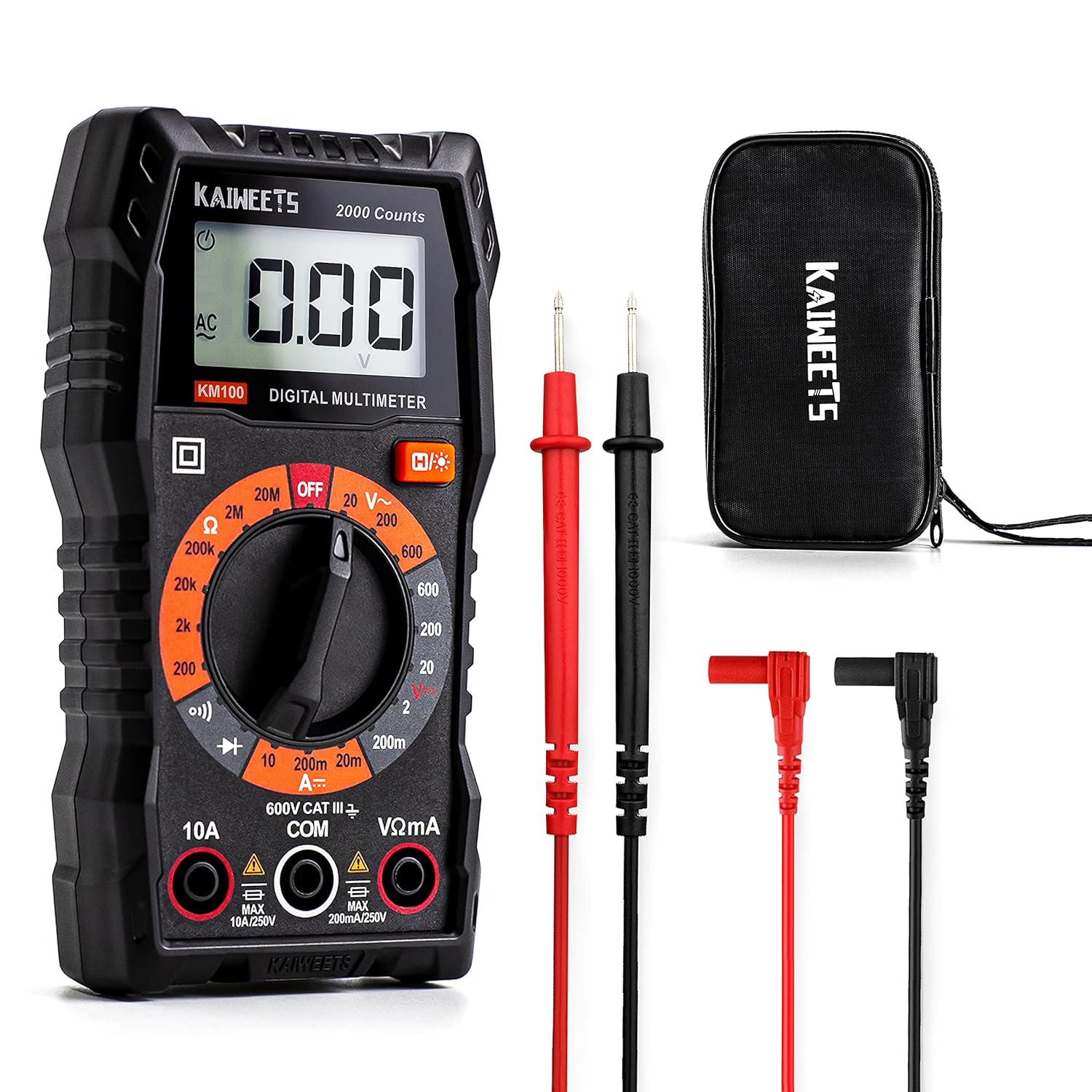
This KAIWEETS digital multimeter is a versatile tool for measuring AC/DC voltage, DC current, resistance, continuity, and diodes in home, automotive, and electrical applications. It includes pre-installed batteries, a carrying case, test leads, data hold, backlight, and overload protection for easier and safer everyday testing. Built with double fuses and rated for broad household and light professional use, it helps users diagnose electrical issues with confidence.

The NOCO GENIUS5 is an all-in-one battery charging and maintenance solution for 6V and 12V lead-acid and lithium batteries. It features temperature compensation, dead-battery recovery, desulfation, and safe long-term maintenance to help extend battery life and performance. Compact and versatile, it works with a wide range of vehicles and comes with mounting accessories and a warranty.
When to Replace the Battery and When to Get Pro Diagnostics
Replace the battery when it fails a proper load test, shows low CCA after a full charge, or drops voltage again soon after charging. Don’t replace it only because it reads low once. Charge it, test it, and confirm the result.
Many car batteries last about three to five years, but heat, cold, short trips, deep discharge, and parasitic drain can shorten that life. If your battery has reached that age range and tests weak, replacement makes sense.
- Replace the battery if it fails CCA or load testing after a full charge.
- Get pro diagnostics if the battery dies again after replacement.
- Ask for charging-system checks if voltage spikes above 15 volts or drops near resting voltage while running.
- Ask for parasitic-draw testing if the truck drains while parked.
Get a technician involved if the draw points to a body control module, alarm integration, trailer harness, or hidden wiring repair. These faults can take time, wiring diagrams, and the right test tools.
[Products Worth Considering]

The TOPDON BT100 helps you quickly check the health and charge status of 12V lead-acid batteries with clear analytical results, including state of health, state of charge, voltage, and cranking performance. It supports a wide range of battery types and vehicles, making it a practical tool for diagnosing starting and charging issues at home or in the shop. Compact and easy to use, it provides fast, reliable testing without needing to charge the device first.

The AstroAI M4K0R Digital Multimeter delivers accurate TRMS measurements for AC/DC voltage, current, resistance, continuity, diode testing, and battery checks, making it a versatile tool for home and automotive troubleshooting. Its non-contact voltage detection, backlit LCD, flashlight, data hold, and auto-ranging design help simplify everyday electrical diagnostics while supporting safer use with audible and visual alarms. Built with double ceramic fuses and a protective silicone cover, it is designed for reliable performance and added protection during demanding tasks.

The Fluke 15B+ Digital Multimeter is a rugged, easy-to-use tool designed for accurate electrical troubleshooting in residential, commercial, automotive, and equipment applications. It measures AC/DC voltage and current, resistance, continuity, diode, and capacitance, helping you diagnose problems quickly and confidently. With a safety-focused design and one-handed operation, it is built for dependable everyday use.
Frequently Asked Questions
Why does my Toyota Tundra battery keep dying overnight?
Your Tundra battery may die overnight because a circuit keeps pulling power after the truck shuts off. Common causes include aftermarket alarms, dash cams, interior lights, trailer wiring, stuck relays, faulty modules, or a bad alternator diode.
How do you fix a Tundra battery that keeps dying?
Start by charging and testing the battery, then check charging voltage with the engine running. If both pass, run a parasitic draw test, pull fuses to isolate the circuit, and inspect aftermarket wiring and grounds.
What parasitic draw is normal on a Tundra?
A good target after sleep mode is usually under about 50 milliamps. Readings above 100 milliamps deserve testing because a module, light, accessory, or wiring fault may still draw power.
Can a bad alternator drain a Tundra battery while parked?
Yes, a bad alternator diode can let current leak when the truck sits. Test alternator output while running and include diode testing if the battery passes but still drains.
Should you use a battery tender on a parked Tundra?
A battery tender can help when your Tundra sits for weeks, especially in cold weather or with low driving time. Use it as maintenance, not as a substitute for fixing parasitic draw or charging faults.
Safety Disclaimer: This article gives general information only and does not replace professional automotive diagnosis. Consult a qualified technician before you perform electrical testing you don’t fully understand.
Conclusion
A Tundra battery that keeps dying needs a test sequence, not guesswork. Start with battery voltage, SOH, SOC, CCA, and load testing. Then check alternator output, parasitic draw, aftermarket gear, grounds, and hidden wiring.
Your next step is simple: test the battery first, then move through one circuit at a time. A calm, logged process helps you stop repeat dead starts and get your Tundra back to reliable use.
References
- Toyota Manuals and Warranties — Toyota Owners, 2026
- Battery Maintenance for Hybrid and Auxiliary Batteries — Toyota Parts and Service, 2018
- How to Find Parasitic Battery Drain with a Multimeter — Fluke, 2026
- How Parasitic Battery Drain Happens and What to Do About It — Universal Technical Institute, 2021
- Load Testing Your Battery — Discover Battery
- Bad Alternator vs. Bad Battery: A Quick Guide — AAA




[…] your model, grab the right update, and install it either OTA (2022+) or via USB (2018–2021). Keep battery and Wi‑Fi stable, follow file/format requirements, and let dealer handle critical ECU or firmware […]