Heel-toe downshifting in your Toyota Supra is essential for maximizing performance and maintaining stability during high-speed driving. By synchronizing engine RPM with wheel speed, you prevent torque shifts that can destabilize your vehicle. Use the ball of your right foot on the brake while your heel blips the throttle. This technique can enhance your lap times and improve overall driving precision. Mastering these methods will refine your skills, leading to a smoother, more controlled driving experience.
Why Heel-Toe Downshifting Matters for Performance

When you’re pushing your Toyota Supra to its limits, heel-toe downshifting becomes essential for maximum performance. This technique maintains engine RPM during gear changes, preventing drastic torque shifts that could destabilize your car, especially in corners. By reducing stress on transmission components, you guarantee smoother gear engagement, enhancing the lifespan of your clutch and gearbox. Properly executed heel-toe downshifting allows seamless shifts between braking and acceleration, boosting vehicle balance and control during high-speed maneuvers. Rev matching minimizes the risk of losing traction, helping you maintain grip and stability as you enter turns. Ultimately, mastering heel-toe downshifting not only enhances your driving precision but also greatly improves lap times, elevating your overall experience in a performance-oriented vehicle like the Supra.
Step-by-Step Guide to Mastering Heel-Toe Downshifting
To master heel-toe downshifting, you need to focus on essential foot positioning techniques that set the foundation for smooth changes. Timing and coordination play vital roles in ensuring your shifts are seamless and effective. By practicing specific drills, you’ll develop the muscle memory necessary to execute this skill confidently on the road.
Essential Foot Positioning Techniques
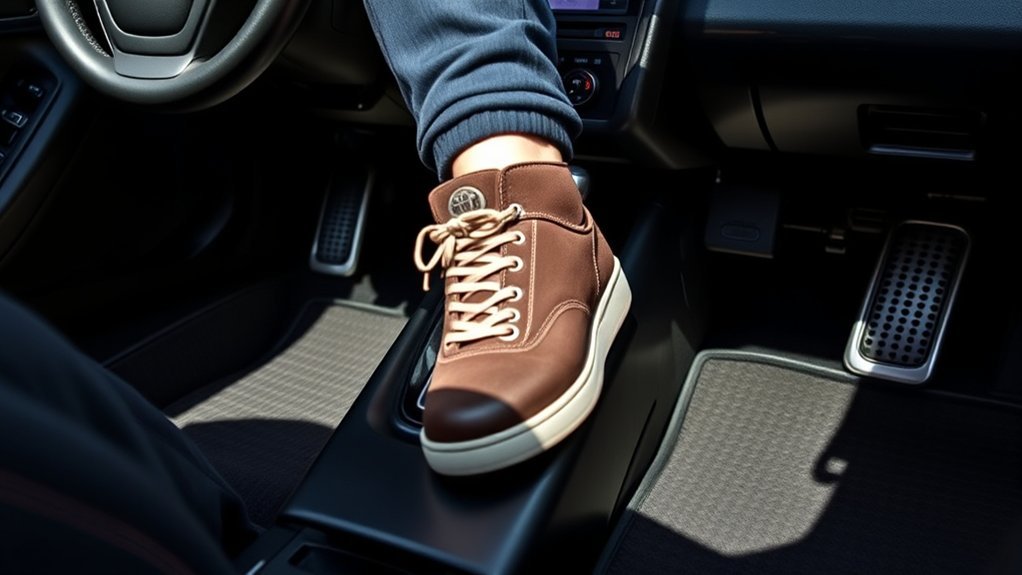
Mastering heel-toe downshifting hinges on precise foot positioning, which is essential for maintaining control and performance. Start by placing the ball of your right foot on the brake pedal, keeping your heel elevated and ready to blip the throttle for effective brake control. As you decelerate, smoothly press the clutch with your left foot just before the braking ends, enabling a seamless gear change. Shift into a lower gear while maintaining pressure on the brake and clutch, preparing to match engine RPMs with wheel speed. Use the outer edge of your right foot to blip the throttle, aiming for a 1000 RPM increase. Finally, release the clutch smoothly while easing off the brake to shift into acceleration without unsettling the vehicle.
Timing and Coordination Tips
While effective timing and coordination are essential for mastering heel-toe downshifting, understanding the sequence of each action is equally important. Here are some key timing challenges and coordination strategies to help you refine your technique:
- Start braking with the ball of your foot while lifting your heel to blip the throttle.
- Depress the clutch just before the brake engagement ends for a smooth gear change.
- Shift into the lower gear while aligning your throttle blip for ideal rev matching.
Practice this entire sequence in under half a second, focusing on minimizing jerking motions. By honing your timing and coordination, you’ll create a seamless shift to acceleration, enhancing your driving experience and liberating your connection with the road.
Practice Drills for Mastery
Refining your heel-toe downshifting skills requires practical drills that enhance both your technique and confidence. Start in a safe environment, focusing on hard braking with the ball of your right foot, while keeping your heel ready for gas blips. Next, practice throttle blips in neutral to develop muscle memory for that essential 1000 RPM increase. Incorporate practice scenarios that involve downshifting while braking, gradually introducing complexity like tight corners. Experiment with your pedal setup to find the ideal spacing for effective execution. Record your sessions for feedback, analyzing smoothness and timing to pinpoint areas for improvement. By consistently engaging in these drills and feedback sessions, you’ll elevate your heel-toe downshifting mastery.
Typical Obstacles in Mastering Heel-Toe Downshifting
Heel-toe downshifting can be an intimidating skill to master, particularly when you encounter common obstacles that challenge your technique. Understanding these hurdles is vital for your progress.
- Foot size challenges: Larger feet may struggle with limited footwell space, complicating brake and throttle operations.
- Footwear choices: Bulky shoes restrict necessary foot movements, hindering accurate pedal operation.
- Rev matching: Precise timing and coordination are essential, especially in tight corners, to maintain vehicle stability.
Practicing hard braking builds the muscle memory needed for smooth changes. Adjustments to pedal height and spacing can greatly enhance your comfort and effectiveness, allowing you to overcome these obstacles and embrace the liberating experience of heel-toe downshifting.
Why Rev Matching Makes Downshifting Smoother

Rev matching during downshifting isn’t just about technique; it’s essential for enhanced gear engagement. By blipping the throttle to sync engine RPM with wheel speed, you minimize abrupt torque changes, keeping your vehicle stable and balanced. This smooth shift not only reduces stress on your transmission but also boosts your overall driving performance.
Enhanced Gear Engagement
When you downshift in a manual transmission car, mastering the art of rev matching greatly enhances gear engagement. By raising engine RPM about 1000 RPM, you achieve ideal gear synchronization, allowing for smoother shifts. This skill is essential for any enthusiast aiming for liberation in driving.
- It minimizes torque spikes, enhancing stability during cornering.
- Proper throttle control reduces wear on transmission components, prolonging lifespan.
- A seamless rev match prevents jolts, maintaining vehicle balance.
With practice, you’ll find that rev matching not only boosts your comfort but also elevates your performance. Embracing this technique transforms your driving experience, ensuring every shift feels effortless and controlled.
Reduced Vehicle Stress
Mastering the technique of rev matching not only enhances your driving experience but also greatly reduces vehicle stress. By aligning engine RPM with wheel speed during downshifts, you minimize abrupt torque changes that can strain the drivetrain components of your Toyota Supra. This stress reduction translates into less wear and tear on your transmission, ensuring smoother gear engagement without those harsh jerks that disrupt your flow. Additionally, a well-executed rev match helps maintain stability during cornering, preventing traction loss. Keeping engine RPMs consistent with vehicle speed prolongs clutch and transmission lifespan, contributing to drivetrain longevity. Ultimately, effective rev matching delivers a smoother ride, enhancing passenger comfort and liberating you from the discomfort of engine braking sensations.
Ideal Foot Positioning for Effective Heel-Toe Execution
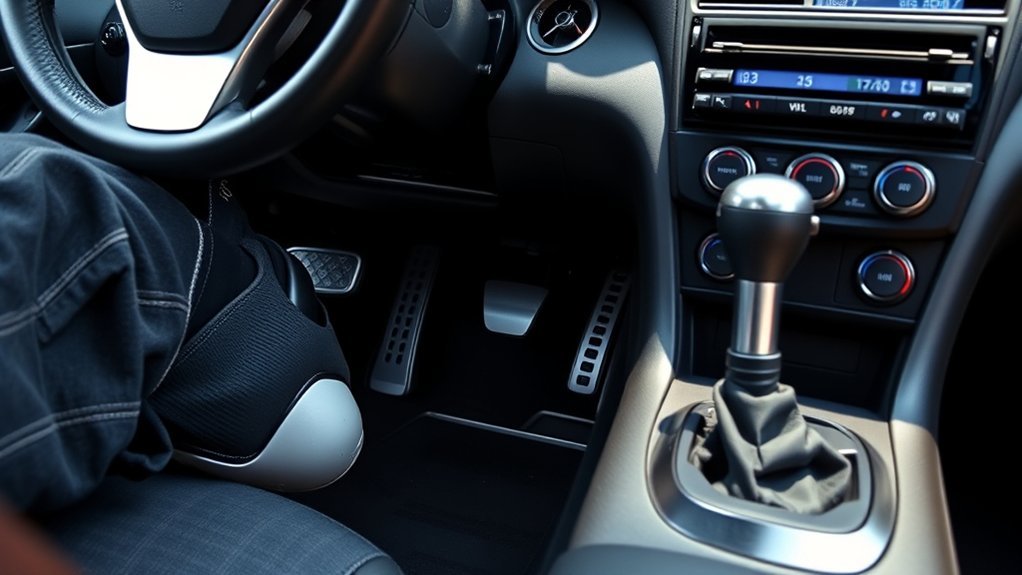
To effectively execute heel-toe downshifting, your foot positioning plays an essential role in achieving seamless gear changes. Start by placing the ball of your right foot on the brake pedal, allowing your heel to pivot toward the gas pedal for efficient throttle blipping. Meanwhile, guarantee your left foot fully engages the clutch pedal. To enhance foot comfort and responsiveness, keep a slight bend in your right foot and adjust the pedals to fit your foot size.
- Position the brake pedal for easy heel access.
- Maintain flexibility for quick throttle blips.
- Practice in neutral to develop timing.
With these adjustments, you’ll find the technique becomes more natural, revealing the full potential of your driving experience.
Practicing Heel-Toe Downshifting: Tips for Safety
When you start practicing heel-toe downshifting, your safety should be the top priority. Choose a controlled environment, like an empty parking lot, to focus on mastering the technique without the stress of traffic. Pay attention to how your vehicle responds, ensuring engine RPMs align with wheel speed for a smooth and stable shift.
Safety Practices First
Practicing heel-toe downshifting requires a mindful approach to safety, especially as you navigate the learning curve. Start in a controlled environment to build confidence without traffic distractions. Here are key safety practices to keep in mind:
- Always wear appropriate safety gear to protect yourself.
- Master emergency stops to guarantee you can react swiftly when needed.
- Maintain traffic awareness to avoid potential mishaps while practicing.
Focus on your foot positioning and timing to enhance vehicle control. As you feel more comfortable, gradually incorporate throttle blipping. Remember, the goal is to execute smooth changes without sudden jerks. By prioritizing safety, you empower yourself to master heel-toe downshifting confidently and effectively.
Control Your Environment
Creating a controlled environment for heel-toe downshifting is essential for honing your skills effectively and safely. Start in an empty parking lot or closed course, where traffic and obstacles won’t distract you. Maintain environmental awareness by ensuring no vehicles or pedestrians are nearby, as this will prevent loss of control during simultaneous braking and accelerating. Begin at lower speeds to master the technique without the pressure of high-speed cornering. Use reference points on the road for consistent braking and downshifting, which enhances muscle memory. Focus on smooth shifts between braking and acceleration to avoid abrupt movements that could unsettle your vehicle. This approach not only boosts safety but also empowers you to embrace the art of downshifting.
Focus on Vehicle Dynamics
Understanding vehicle dynamics is essential for mastering heel-toe downshifting effectively. By honing your skills, you can guarantee vehicle stability and optimize tire performance. Here are some tips to practice safely:
- Practice in Controlled Environments: Start in empty parking lots to minimize risks while you learn.
- Sensitivity to Tire Grip: Pay attention to your car’s response during braking and acceleration to maintain control.
- Smooth Shift Timing: Complete your downshift before the end of braking and shift to acceleration just before turn-in.
Improper execution can destabilize your vehicle, especially in tight corners. Regularly seek feedback from your car’s behavior to refine your technique, ensuring that your throttle blip and clutch release are perfectly timed for a seamless driving experience.
Enhancing Foot Positioning and Technique
To master heel-toe downshifting, you need to focus on foot positioning and technique. Start by ensuring your foot alignment is precise: keep the ball of your right foot on the brake while using your heel to blip the throttle. Make necessary pedal adjustments to achieve ideal control, allowing your foot to pivot comfortably between the brake and gas pedals without losing balance. If you have larger feet, consider modifying the pedal spacing for easier access. Practicing blipping the throttle in neutral helps you feel the required 1000 RPM increase during downshifts. Consistency in pedal spacing is essential, so think about using bolt-on pedal sets to enhance comfort and support, empowering your heel-toe execution.
The Impact of Heel-Toe on Vehicle Dynamics
While many drivers underestimate the significance of heel-toe downshifting, mastering this technique profoundly impacts vehicle dynamics. By synchronizing engine RPM with wheel speed, you can maintain vehicle balance and enhance stability during aggressive cornering.
- Smoother shifts between braking and acceleration reduce traction loss.
- Proper technique minimizes stress on clutch and transmission components.
- Quicker corner exits improve overall lap times.
Ultimately, heel-toe downshifting empowers you to prevent abrupt torque changes, allowing for more controlled and confident driving. As you refine this skill, you’ll notice enhanced performance and a deeper connection with your Toyota Supra, transforming your driving experience into an exhilarating journey of liberation and precision.
Comparing Heel-Toe With Other Downshifting Techniques
When comparing heel-toe downshifting with other techniques, it’s clear that heel-toe offers distinct advantages, particularly in high-performance driving scenarios. This method guarantees smoother shifts by allowing simultaneous braking and throttle blipping, which is vital in performance vehicles. In contrast, simpler techniques like clutchless shifting can lead to increased transmission wear due to improper RPM matching.
| Technique | Benefits |
|---|---|
| Heel-Toe | Maintains engine speed, enhances control |
| Standard Downshift | Can destabilize during cornering |
| Clutchless Shifting | Risk of increased transmission wear |
| Double Clutching | Requires more skill, less efficient |
| Rev Matching | Good for stability, less control |
Ultimately, heel-toe downshifting leads to improved driver confidence and responsiveness, elevating your driving experience.
Tips for Maintaining Clutch and Transmission Longevity
Mastering heel-toe downshifting not only enhances your driving experience but also plays a significant role in maintaining your vehicle’s clutch and transmission longevity. To guarantee ideal clutch maintenance and transmission care, consider these tips:
- Practice rev-matching: This reduces stress on transmission components, extending their lifespan.
- Maintain awareness of RPM: Keeping engine speed in sync with wheel speed avoids harsh clutch engagements that can wear components prematurely.
- Inspect regularly: Check and adjust clutch pedal height and throttle linkage to improve heel-toe effectiveness.
Frequently Asked Questions
How Fast Can You Downshift Using a Heel-Toe?
You can downshift using heel-toe techniques in under half a second. By mastering rev matching, you’ll achieve smooth shifts, enhancing cornering performance and maintaining vehicle stability for a liberating driving experience.
Why Is Heel-Toe Clutching Better?
Heel-toe clutching enhances braking efficiency and protects your engine by ensuring smooth shifts during downshifts. This technique reduces wear on components, allowing you to maintain control and maximize performance in any driving scenario.
Conclusion
Mastering heel-toe downshifting not only enhances your driving skills but also transforms your connection with the Toyota Supra. By practicing the right techniques and foot positioning, you’ll notice smoother gear shifts and improved vehicle dynamics. Think of it as finding the perfect beat in a classic rock song; once you get in sync, the experience becomes exhilarating. Keep at it, and you’ll not only prolong your clutch and transmission life but also elevate your driving game to legendary status.