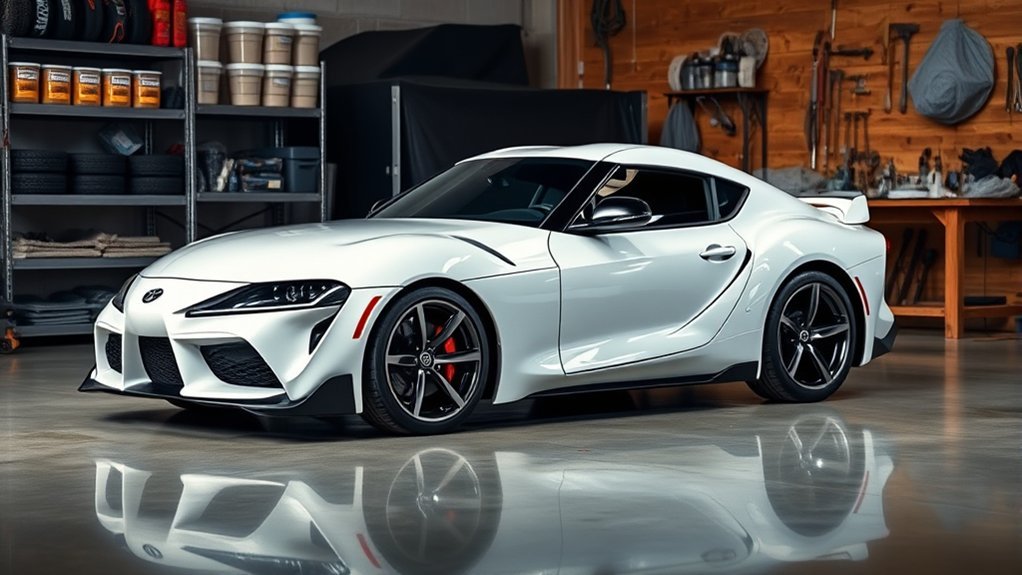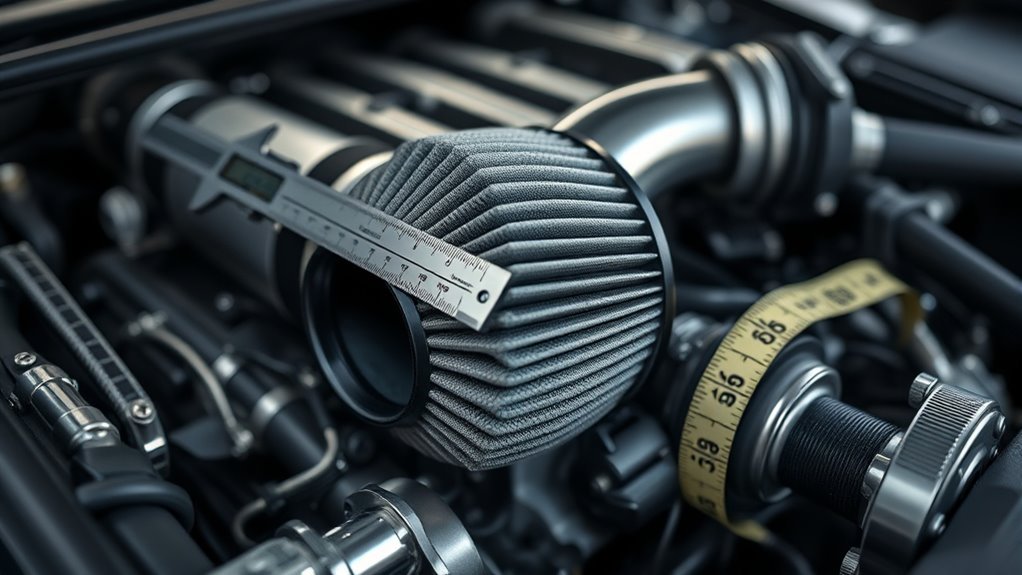
The 2025 Toyota GR Supra 3.0 uses a factory-style panel engine air filter, not a cone filter, so “size” mainly means the filter’s outside length, outside width, height/thickness, and sealing-gasket profile. The factory Toyota reference is 17801-WAA01. For a published dimensional reference, K&N’s verified 33-3136 cross-reference measures 10.688 in x 9.156 in x 1.625 in (271 mm x 233 mm x 41 mm). Those measurements are K&N’s published dimensions for its replacement filter, not a Toyota-published dimensional specification.
Last updated: September 16, 2026. Fitment, dimensions, warranty guidance, and the 2025 Toyota maintenance schedule were rechecked against current Toyota and manufacturer sources.
Quick Answer
For the 2025 GR Supra 3.0, use Toyota Genuine engine air filter 17801-WAA01 or a verified cross-reference that matches the factory panel-filter footprint and seal. K&N 33-3136 cross-references the Toyota part and is listed at 10.688 in x 9.156 in x 1.625 in (271 mm x 233 mm x 41 mm). Toyota’s 2025 maintenance chart marks the engine air filter for replacement at the 40,000-mile service point. Confirm fitment by VIN before buying.
How this guide was prepared: Fitment, dimensions, vehicle specifications, warranty language, and maintenance information were checked against Toyota’s 2025 GR Supra documentation, Toyota’s parts catalog, and manufacturer fitment data. This guide does not claim hands-on flow-bench testing or measured horsepower gains from the filters discussed.
Key Takeaways
- The safest replacement choice is a VIN-confirmed OEM Toyota filter or a drop-in filter that specifically cross-references 17801-WAA01.
- K&N 33-3136 provides a verified dimensional reference of 271 x 233 x 41 mm (10.688 x 9.156 x 1.625 in).
- Toyota’s 2025 maintenance chart marks engine-air-filter replacement at 40,000-mile intervals.
- For a stock or lightly modified Supra, the factory airbox size is usually the right size; bigger is not automatically better.
- Neck diameter matters when you switch to an open cone or custom intake; for the stock airbox, seal shape and panel dimensions matter more.
- If the filter shows damage, excessive wear, oiliness, deformation, or a poor seal, replace it rather than waiting for the next scheduled interval.
At a Glance
| Toyota OEM Reference | 17801-WAA01 |
| Verified Drop-In Cross-Reference | K&N 33-3136 |
| K&N Published Dimensions | 10.688 x 9.156 x 1.625 in / 271 x 233 x 41 mm |
| Toyota 2025 Replacement Point | 40,000-mile service point, repeating at subsequent 40,000-mile intervals |
2025 GR Supra 3.0 OEM Air Filter Size and Fitment
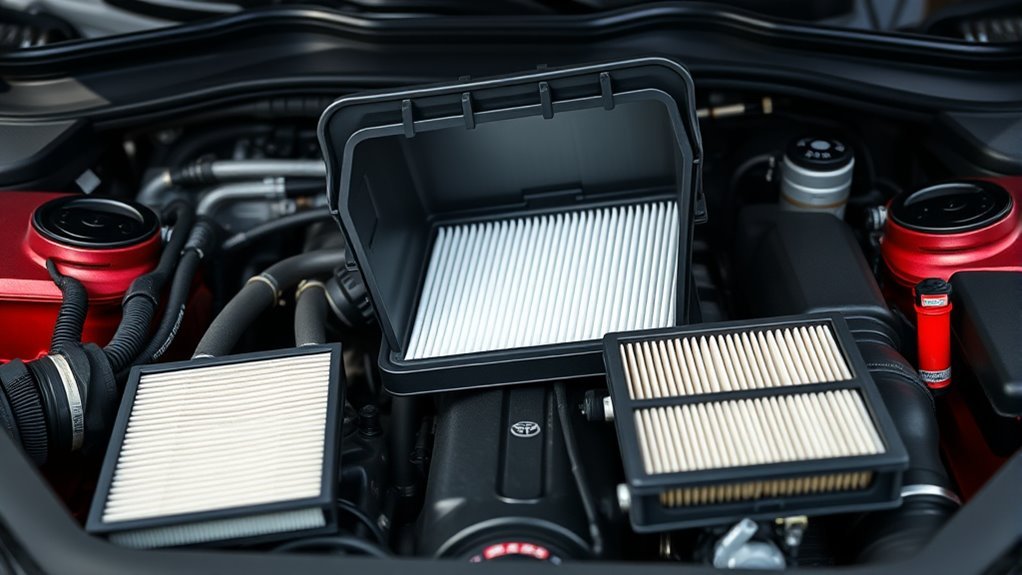
The correct OEM engine air filter reference for the 2025 Toyota GR Supra 3.0 is Toyota Genuine part 17801-WAA01. Toyota identifies it as a Genuine Toyota engine air filter and recommends checking vehicle fitment before purchase. For the U.S.-market 2025 GR Supra, Toyota lists a turbocharged 3.0-liter inline-six producing 382 horsepower and 368 lb-ft of torque.
Toyota’s public parts page identifies the OEM part number but does not publish a simple outside length x width x height specification for the element. For a dimensional reference, K&N’s 33-3136 drop-in panel filter cross-references Toyota 17801WAA01 and publishes these outside dimensions:
| Reference | Listed Size | Why It Matters |
|---|---|---|
| Outside length | 10.688 in / 271 mm | Must fit the airbox tray without bowing or leaving a gap. |
| Outside width | 9.156 in / 233 mm | Controls side-to-side seating and gasket compression. |
| Height / thickness | 1.625 in / 41 mm | Affects lid closure, seal pressure, and airflow path. |
| Seal profile | Must match the airbox flange | Prevents dusty air from bypassing the media. |
Note: Treat the dimensions above as the published measurements of K&N’s verified cross-reference, not as a Toyota dimensional specification. Exact gasket shape, corner profile, frame stiffness, and vehicle application still matter, so confirm the replacement by VIN or manufacturer fitment catalog.
Where Is the 2025 GR Supra Engine Air Filter Located?
The engine air filter sits inside the sealed air-cleaner housing under the hood, upstream of the turbocharger’s intake path. Open the airbox only with the engine off, keep loose dirt away from the clean side of the intake, and compare the old and new filters before closing the housing. The replacement element should sit flat in the tray with its sealing edge evenly captured by the airbox lid.
When Should the 2025 GR Supra Engine Air Filter Be Replaced?
Toyota’s 2025 GR Supra Warranty & Maintenance Guide marks the engine air filter for replacement at the 40,000-mile service point and again at subsequent 40,000-mile points. Toyota also says scheduled maintenance is due every 10,000 miles, twelve months, or when the maintenance reminder light appears, whichever comes first. In its maintenance-item explanation, Toyota says to inspect the engine air filter for damage, excessive wear, and oiliness and replace it if necessary.
How Filter Size, Surface Area, and Inlet Diameter Affect Power and Boost
For the stock GR Supra airbox, filter surface area and the quality of the seal are more important than “neck diameter,” because the factory element is a flat panel filter. A larger media area can reduce how much airflow each section of media must handle, but extra area is useful only when the filter still fits and seals correctly.
Neck diameter becomes relevant when you replace the factory airbox with a cone filter or custom intake. In that case, the filter inlet has to match the intake tube and the rest of the intake assembly without creating a loose joint, abrupt mismatch, or leak.
Panel Filter Fitment Matters More Than Neck Diameter
On the OEM-style setup, avoid filters that are too thin, too flexible, or poorly molded. A panel filter that does not compress evenly can leave a bypass path around the media. A filter that is too thick can prevent the lid from closing correctly or place unnecessary stress on the airbox fasteners.
Filter Surface Area
Surface area affects how much filter media is available to pass air and hold contamination. More area can be useful, but not if a filter fits poorly or sacrifices filtration and sealing. For a daily-driven 2025 GR Supra 3.0, prioritize an exact-fit OEM-size element over a universal filter that requires trimming or improvised mounting.
A clean, correctly sealed filter is usually more useful than a larger filter that does not match the airbox or intake path.
Boost Control Effects
A dirty or restrictive filter increases pressure loss on the intake side before the turbocharger. On a modified car, the useful question is whether that restriction is measurable under repeatable conditions. A filter swap by itself should not be treated as a guaranteed horsepower upgrade; compare a clean-filter baseline with the same logging method before deciding the filter is a bottleneck.
2025 GR Supra 3.0 Aftermarket Filter Options
Aftermarket filter choice depends on how the car is used. A stock daily driver mainly needs dependable filtration and exact sealing. A modified or track-driven car may place more emphasis on reusable media, intake-system airflow, heat management, and inspection between events. Vehicle-specific fitment matters more than a generic “high-flow” label.
| Filter Type | Best For | Watch For |
|---|---|---|
| Toyota Genuine or exact-fit paper equivalent | Stock daily driving and straightforward scheduled replacement | Confirm the exact application and replace if damaged, excessively worn, oily, or poorly sealed. |
| K&N 33-3136 oiled cotton drop-in | Drivers who specifically want a washable, reusable drop-in element | Follow K&N’s care instructions. Its current product specification lists a 2.68 oz / 79 ml filter re-oiling amount. |
| Vehicle-specific dry synthetic filter | Drivers who prefer washable media without filter oil | Verify an exact 2025 GR Supra 3.0 application in the filter maker’s current fitment catalog before buying. |
| Cone filter or complete intake kit | Modified intake systems where the factory airbox has been replaced | Confirm flange diameter, clamp engagement, clearance, heat shielding, sensor compatibility, and emissions legality. |
K&N lists 33-3136 for the 2025 Toyota GR Supra 3.0L. Its 33-3136 product specifications identify a washable cotton-gauze panel filter, list the 271 x 233 x 41 mm dimensions, and cross-reference Toyota 17801WAA01. For any other reusable or dry-media option, verify the exact 2025 GR Supra 3.0 application rather than assuming that a similar-looking filter will seal correctly.
Warning: Do not run the engine for normal use with the air filter removed, and do not install a filter that leaves a visible gap around the airbox seal. Unfiltered debris can enter the intake and expose the turbocharger and engine to contamination.
[Products Worth Considering]

This ultra-compact portable air compressor delivers fast, convenient inflation for car tires, bikes, motorcycles, scooters, sports balls, and more. With preset modes, multiple pressure units, auto-stop protection, and a clear LED display, it makes everyday tire maintenance simple and safer. The cordless rechargeable design and built-in emergency light add versatility for home, travel, and roadside use.

This ECOGARD engine air filter is designed to help keep dust, dirt, pollen, and road debris out of your engine intake system while supporting smooth airflow and efficient performance. It fits a wide range of Toyota, Lexus, Mazda, and Subaru applications, making it a practical replacement choice for maintaining engine health between service intervals. Recommended replacement at regular mileage intervals helps support consistent response and long-term reliability.

This A-Premium engine air filter is designed to help deliver cleaner airflow to compatible Toyota, Lexus, Scion, and Pontiac vehicles. It supports a wide range of fitments across select Camry, RAV4, Avalon, Matrix, Venza, ES350, tC, xB, and Vibe models, making it a convenient replacement choice. Built for straightforward maintenance, it is intended for regular service intervals to help keep engine intake performance on track.
When to Upgrade to a Larger or Custom Filter
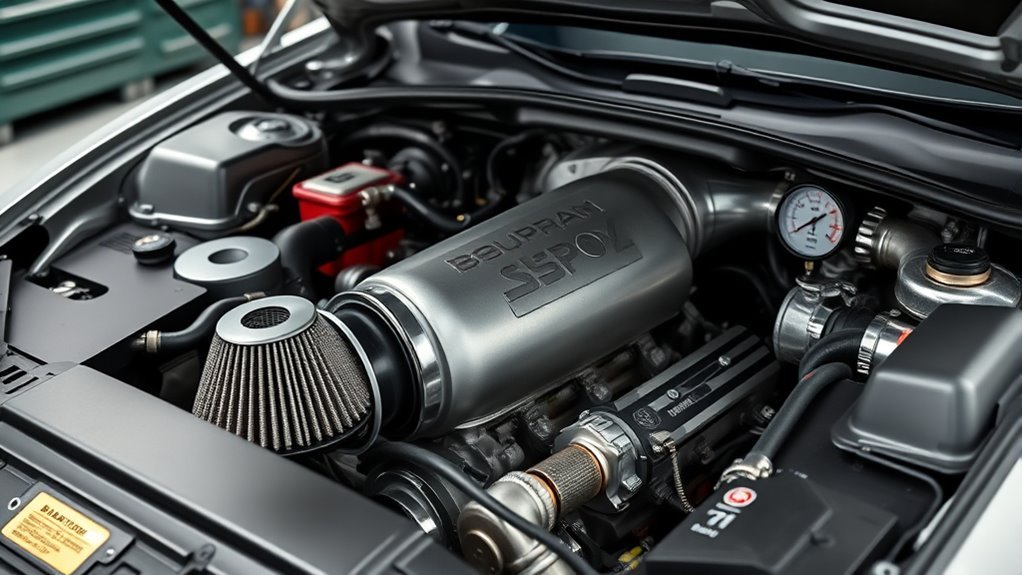
Most stock and lightly modified 2025 GR Supra 3.0 owners should stay with an OEM-size panel filter. Consider a larger or custom filter only when the rest of the intake system has changed enough to require one, such as a complete aftermarket intake, different turbo inlet, upgraded turbocharger, or a setup where repeatable data shows meaningful intake-side restriction.
A larger filter can help only when filter restriction is actually limiting the system. The filter, tube diameter, sensor arrangement, heat shielding, and compressor inlet have to work together. Moving to an exposed filter that draws hotter engine-bay air can also trade one problem for another during repeated high-load driving.
Signs the Stock-Size Filter May Be Holding You Back
- Repeatable pressure-drop testing shows significant restriction across the filter under load.
- Restriction rises noticeably as the element loads with contamination.
- Your tuner identifies the filter or airbox as an intake-side restriction after other components have been checked.
- Your current intake kit requires a cone or custom element with a specific flange diameter.
- The installed filter deforms or fails to remain fully seated under the intake system’s operating conditions.
Pro Tip: Before buying a larger filter, install a fresh, correctly fitted OEM-size element and repeat the same diagnostic checks. If the result does not change, the restriction or performance issue may be elsewhere in the intake, charge-air system, exhaust, calibration, or engine.
Measure Intake Restriction: Pressure-Drop Test for Your GR Supra 3.0
A pressure-drop test can show whether the filter is creating measurable intake restriction. The basic approach is to establish a clean-filter baseline and then compare pressure behavior under the same operating conditions as the filter ages or the intake system changes.
- Start with a clean baseline. Install a known-good filter and inspect the airbox seal.
- Measure consistently. Use instrumentation suitable for low intake-pressure differences and place the measurement point consistently.
- Record repeatable conditions. Compare data only under similar engine speed, load, temperature, and test conditions.
- Trend the readings. Increasing restriction over time can point to filter loading, debris, or another intake-side restriction.
- Confirm before changing parts. If restriction remains low with a properly fitted filter, a larger element is unlikely to solve an unrelated power problem.
There is no single pressure-drop number in Toyota’s 2025 owner documentation that defines when a larger filter is required. For a modified car, use the same clean-filter baseline and measurement method so the comparison reflects your own intake system rather than an unrelated universal threshold.
Installation, Maintenance, and Sensor/Boost Troubleshooting by Filter Type
Correct installation is just as important as filter brand. A premium element installed crooked can seal worse than a basic exact-fit filter installed correctly.
Basic Installation Checklist
- Let the engine cool and keep loose debris away from the open airbox.
- Remove the old filter carefully so dirt does not fall into the clean side of the intake.
- Wipe the airbox sealing surface with a clean, dry cloth.
- Set the new filter into the tray without forcing the corners.
- Check that the gasket sits flat all the way around.
- Close the lid evenly and confirm every clip or fastener is fully seated.
- Start the engine and listen for a new hiss or whistle that could indicate a lid, clamp, or sealing problem.
Maintenance by Filter Type
- OEM paper filter: Toyota’s 2025 chart marks replacement at 40,000-mile intervals. Replace sooner if inspection finds damage, excessive wear, oiliness, deformation, or another condition that prevents proper filtration or sealing.
- K&N 33-3136 oiled cotton filter: use the manufacturer’s specified cleaning and re-oiling procedure. K&N currently lists a 2.68 oz / 79 ml re-oiling amount for this part.
- Dry synthetic filter: follow the specific filter maker’s cleaning instructions and do not add oil unless that manufacturer explicitly requires it.
- Track or unusually dusty use: visually inspect the element and airbox after exposure to heavy debris rather than assuming the scheduled mileage alone describes its condition.
Toyota’s 2025 Toyota Supra maintenance schedule is built around 10,000-mile or 12-month service points. The factory chart marks the engine air filter for replacement at 40,000 miles and subsequent 40,000-mile intervals, while Toyota’s maintenance-item explanation says to inspect for damage, excessive wear, and oiliness and replace the filter when necessary.
Troubleshooting After a Filter Change
| Symptom | Possible Cause | What to Check |
|---|---|---|
| New whistling or hissing | Airbox lid, filter edge, or intake connection not fully seated | Filter perimeter, lid fasteners, intake connections, and any disturbed clamps |
| Rough idle after service | An intake connection or electrical connector was disturbed during service | Recent work, filter seating, intake boots, clamps, and connectors |
| Lower high-load consistency | Restriction, intake temperature, or another intake/boost-system issue | Filter condition, repeatable pressure-drop data, intake temperature, and diagnostic logs |
| Check-engine light after service | A connection, sensor circuit, or intake seal may have been disturbed | Scan the stored diagnostic code first, then inspect the areas touched during the filter change |
Choosing the Right Filter: Daily Driver, Track, or High-Boost Builds
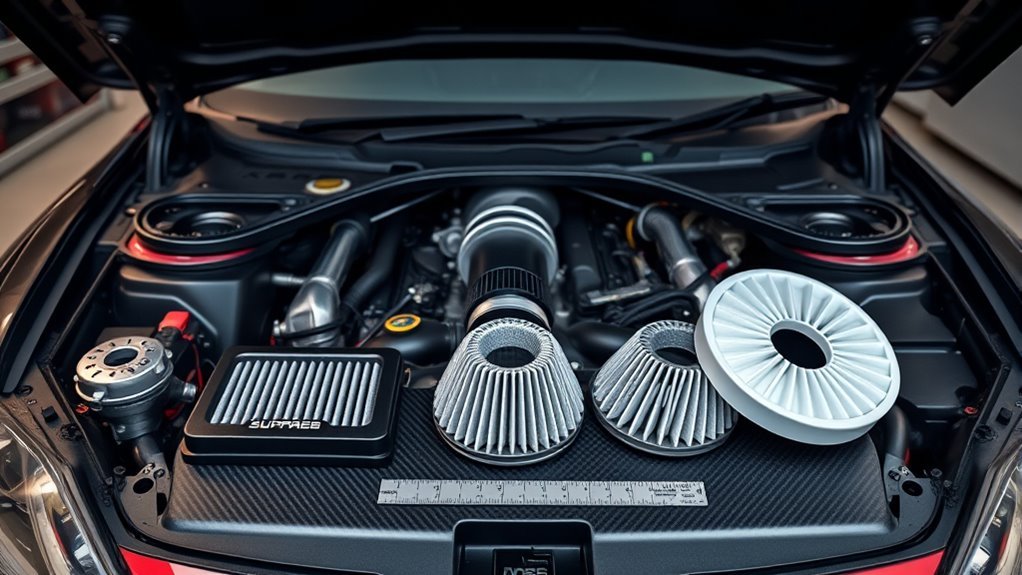
[Products Worth Considering]
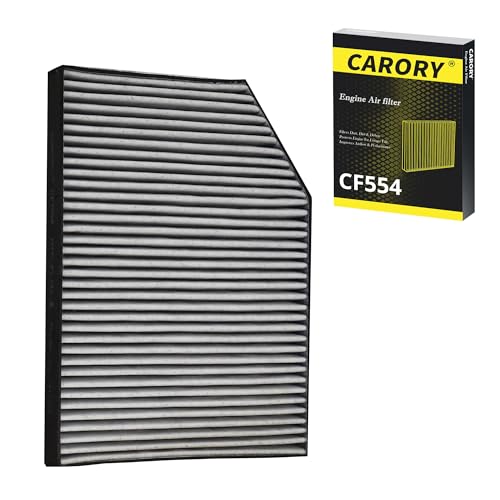
[Vehicle Fitment] Replacement for BMW: 230i (2022-2024), 230i xDrive (2024), 330e (2021-2024), 330e xDrive (2021-2024), 330i (2019-2024), 330i xDrive (2019-2024), 430i (2021-2024), 430i Gran Coupe (2022-2024), 430i xDrive (2021-2024), 430i xDrive Gran Coupe (2024), i4 (2022-2025), M2 (2023-2024), M240i (2023-2024), M240i xDrive (2022-2024), M3 (2021-2024), M340i (2020-2024), M340i xDrive (2020-2024), M4 (2021-2024), M440i (2021-2024), M440i Gran Coupe (2022-2024), M440i xDrive (2021-2024), M440i xDrive Gran Coupe (2022-2024), X3 (2018-2024), X4 (2019-2025), Z4 (2019-2025).

Direct fit for the 2020+ Toyota GR Supra 3.0T
Daily Driving Filtration Needs
For a stock daily driver, choose Toyota 17801-WAA01 or a high-quality exact-fit equivalent confirmed for the 2025 GR Supra 3.0. This keeps the decision simple: correct fit, predictable sealing, and a maintenance schedule that is easy to follow.
Track and High-Boost Considerations
For track days and high-boost builds, filter selection should be part of the complete intake plan. The element should be properly supported, protected from excessive heat, sized for the intake design, and easy to inspect between sessions. If you use a cone filter, confirm its flange diameter, clamp engagement, element length, and surrounding clearance so it cannot rub or pull loose.
Warranty and Emissions Notes
Toyota’s 2025 Warranty & Maintenance Guide states that warranty coverage is not dependent on using a particular brand of replacement part and that owners may choose non-Toyota parts for maintenance and repairs. Toyota also notes that replacement parts that are not equivalent in quality may impair emissions-system effectiveness and that failures caused by improper maintenance or repairs are not covered. The Federal Trade Commission likewise prohibits many warranty terms that condition coverage on use of a specified branded part unless the required part is provided free or another legal exception applies.
Note: A drop-in replacement element is different from a modified intake system. In California, aftermarket parts that modify an emissions-controlled vehicle may require a CARB Executive Order covering the specific part and application. Verify a complete intake kit’s emissions approval before installation.
Quick Decision Checklist: Pick the Best Air Filter for Your GR Supra 3.0
- Confirm the part number. Start with Toyota 17801-WAA01 or a verified cross-reference for the 2025 GR Supra 3.0.
- Use dimensions correctly. K&N 33-3136 publishes 271 x 233 x 41 mm, but treat those as dimensions for that verified cross-reference rather than a Toyota OEM dimensional specification.
- Match the seal. Do not trim, force, or improvise a panel filter that does not sit flat in the airbox.
- Choose the media for your use. An exact-fit paper element keeps maintenance simple; a verified reusable element can work when serviced according to its manufacturer’s instructions.
- Follow the factory schedule. Toyota marks engine-air-filter replacement at the 40,000-mile service point and repeating 40,000-mile intervals.
- Inspect condition. Damage, excessive wear, oiliness, deformation, or a poor seal justify replacement even if the next scheduled mileage has not arrived.
- Use data for major upgrades. Move to a larger or custom filter only when the intake design requires it or repeatable testing identifies meaningful restriction.
Frequently Asked Questions
What size engine air filter does the 2025 Toyota GR Supra 3.0 use?
The Toyota OEM reference is 17801-WAA01. K&N 33-3136 is a verified cross-reference and lists outside dimensions of 10.688 in x 9.156 in x 1.625 in (271 mm x 233 mm x 41 mm). Those measurements are K&N’s published dimensions; Toyota’s public parts page does not publish a comparable three-dimensional specification for 17801-WAA01. Confirm fitment by VIN before buying.
Where is the engine air filter located on a 2025 GR Supra?
The engine air filter is inside the sealed air-cleaner housing under the hood, upstream of the turbocharger intake path. When replacing it, keep loose debris out of the clean side of the airbox and make sure the new panel element sits flat with its sealing edge fully captured by the housing.
How do I know the size of my engine air filter?
Start with the vehicle-specific part number or VIN-based fitment rather than measurements alone. If you are comparing panel filters, check outside length, outside width, thickness, gasket shape, corner profile, and frame design. Two filters can have similar basic measurements but still seal differently.
What does air filter size actually mean?
For a panel filter, size means the element’s physical footprint, thickness, and sealing profile. For a cone or universal intake filter, size can also include flange or neck diameter, base diameter, overall length, and available media area.
Is a 1-inch or 2-inch air filter better?
Neither is automatically better. A thicker element can provide different media capacity, but only if the airbox is designed for that thickness. In the GR Supra’s factory airbox, use an exact-fit element so the lid closes correctly and the perimeter seal compresses as intended.
Will a K&N or other aftermarket filter void my Supra warranty?
Using a third-party replacement filter does not automatically cancel U.S. warranty coverage. Toyota’s 2025 guide states that warranty coverage is not dependent on using a particular brand of replacement part. However, failures caused by improper maintenance, incorrect installation, or unsuitable parts can fall outside warranty coverage, so use verified fitment and keep service records.
How often should I replace the 2025 GR Supra engine air filter?
Toyota’s 2025 GR Supra maintenance chart marks the engine air filter for replacement at the 40,000-mile service point and again at subsequent 40,000-mile intervals. Toyota also says scheduled maintenance is due every 10,000 miles, twelve months, or when the maintenance reminder appears, whichever comes first. Replace the filter sooner if inspection finds damage, excessive wear, oiliness, deformation, or a sealing problem.
Conclusion
The correct engine air filter for a stock 2025 GR Supra 3.0 is an exact-fit panel element matching Toyota reference 17801-WAA01. If you need a published dimensional reference, K&N 33-3136 cross-references that Toyota number and measures 271 x 233 x 41 mm (10.688 x 9.156 x 1.625 in). Toyota’s 2025 maintenance chart schedules engine-air-filter replacement at 40,000-mile intervals.
For most owners, exact fit and sealing matter more than choosing the largest or most aggressively marketed filter. Confirm fitment, keep the airbox clean, inspect the perimeter seal after installation, and reserve larger custom filters for intake systems that actually require them.
Sources
- Toyota 2025 GR Supra eBrochure — verifies the U.S.-market 2025 3.0-liter turbo inline-six, horsepower, torque, and vehicle configuration.
- Toyota Genuine Engine Air Filter 17801-WAA01 — verifies the Toyota Genuine engine-air-filter part number and Toyota’s filter guidance.
- K&N 33-3136 Replacement Air Filter — verifies panel-filter dimensions, media type, re-oiling amount, and cross-reference to Toyota 17801WAA01.
- Toyota 2025 GR Supra Warranty & Maintenance Guide — verifies the 2025 maintenance schedule, engine-air-filter inspection guidance, replacement-parts language, and warranty context.
- Federal Trade Commission: Right-to-Repair Warranty Enforcement — supports the U.S. warranty discussion concerning third-party parts and branded-part requirements.
- California Air Resources Board: Aftermarket Parts & Executive Orders — supports the California emissions-compliance note for modified aftermarket parts.