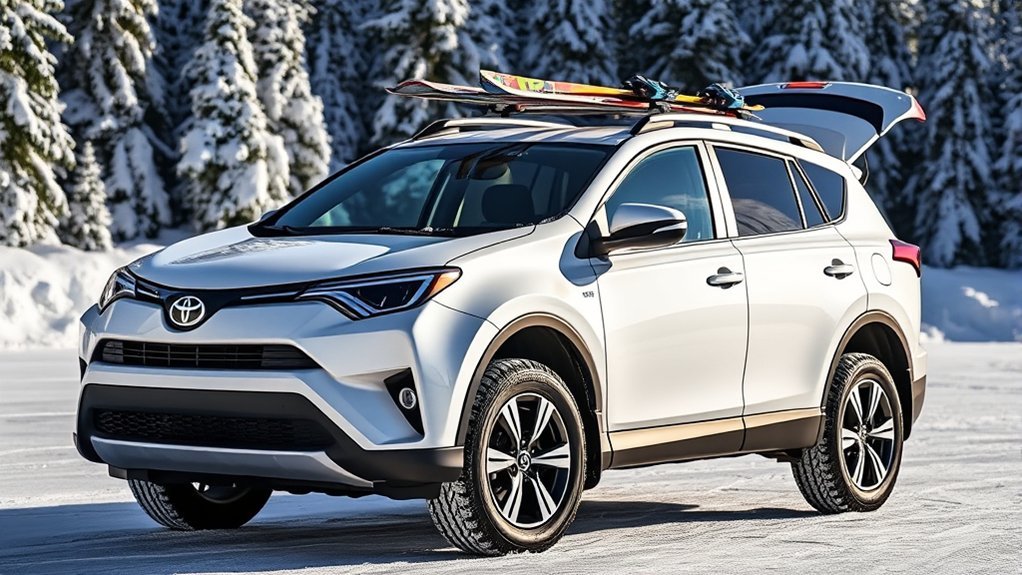
Preparing your Toyota RAV4 for winter driving is essential for safety. Start by installing winter tires for better traction on icy roads. Check your fluid levels, especially antifreeze and windshield washer fluid, to prevent freezing. Don’t forget to inspect your battery, brakes, and lights to guarantee everything’s functioning well. Pack a winter survival kit with essentials like food, warm clothing, and emergency tools. Want to know more about maximizing your RAV4’s winter performance? There’s plenty more to explore!
Why Winter Preparation Is Essential for Your RAV4
When winter rolls in, preparing your Toyota RAV4 isn’t just a good idea—it’s essential for your safety on icy roads. Proper winter preparation can greatly enhance winter safety and vehicle performance, reducing your risk of accidents in challenging conditions. Start by installing winter tires; they provide the traction needed to navigate slick surfaces and help prevent skidding.
Next, regularly check your fluid levels, including antifreeze and windshield washer fluid. This guarantees ideal operation and visibility, important in cold weather. Don’t forget to inspect your battery—cold temperatures can sap its power by up to 50%, leading to unexpected breakdowns.
Finally, verify all your lights are functional. Good visibility is crucial for you and others during those shorter daylight hours. By taking these steps, you’re not just preparing your RAV4; you’re embracing the freedom to drive safely and confidently this winter.
How to Perform Key Maintenance Checks for Cold Weather
Preparing your RAV4 for winter involves more than just tire changes and fluid checks; it’s about making certain every component is ready to handle the cold. Start with battery testing; extreme temperatures can sap your battery’s strength. A quick volt test can reveal if it’s up for the challenge. Next, check your fluids. Make sure your oil, coolant, and windshield washer fluid are winter-ready to prevent freezing and maintain performance.
Don’t forget about tire rotation and inspection. Cold weather can lower tire pressure by 1 PSI for every 10-degree drop, so keep an eye on that. Also, inspect tread depth to confirm adequate traction. Finally, check your brakes and lights. Properly functioning brakes are vital for safety, and good visibility is essential during winter storms. By performing these key maintenance checks, you’ll make certain your RAV4 is primed for the winter roads ahead.
The Importance of Winter Tires for Better Traction
While all-season tires may seem adequate for winter driving, switching to winter tires can greatly enhance your RAV4’s performance on icy and snowy roads. Designed with deeper tread patterns and softer rubber compounds, winter tires provide superior traction where it matters most. They improve acceleration and cornering grip, considerably reducing the risk of skidding and enhancing overall handling in cold conditions. Studies reveal that vehicles equipped with winter tires can stop up to 30% shorter on icy surfaces compared to those with all-season tires. Plus, winter tires remain flexible in temperatures below 45°F, ensuring peak tire performance even in harsh winter conditions. By using winter tires, you not only boost your winter safety but also gain the confidence to tackle any snowy adventure. If you live in an area prone to heavy snowfall or freezing temperatures, making this switch is essential for a worry-free winter driving experience.
Essential Fluids to Inspect for Winter Preparation
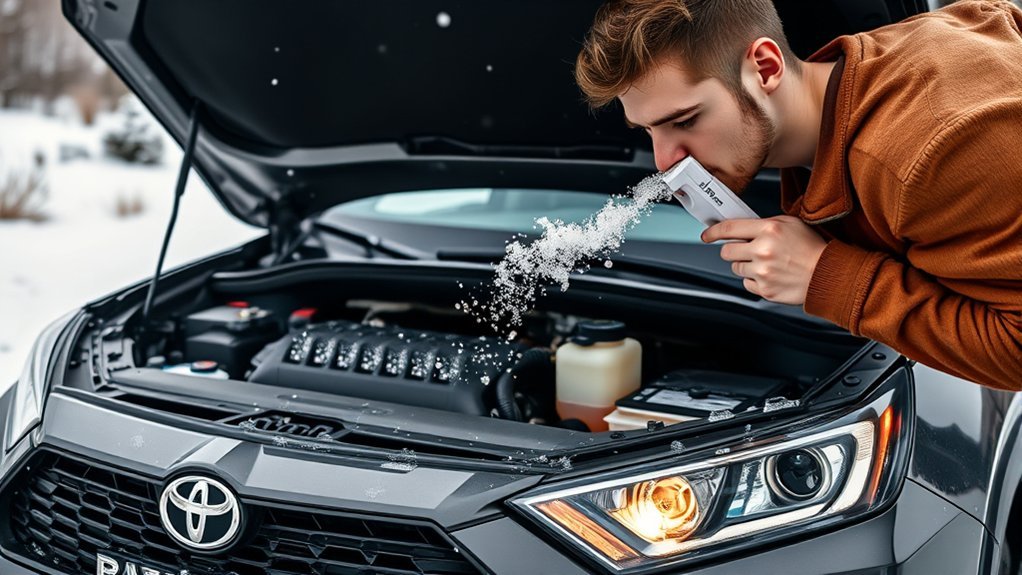
As winter approaches, you need to check essential fluids to guarantee your RAV4 runs smoothly. Start by inspecting the coolant and antifreeze levels, making sure you have the right mixture to prevent freezing. Don’t forget to top off your windshield wiper fluid with a winter-grade solution for ideal visibility during snowy conditions.
Coolant and Antifreeze Levels
To guarantee your Toyota RAV4 performs efficiently in winter conditions, checking your coolant and antifreeze levels is essential. Start by ensuring the coolant level meets the manufacturer’s specifications to prevent engine overheating or freezing. A 50/50 mixture of antifreeze and water offers ideal protection against harsh temperatures and corrosion. Regularly inspect for leaks in the cooling system; even minor leaks can lead to significant coolant loss. For peace of mind, conduct antifreeze testing with a hydrometer to confirm its freezing point withstands your area’s coldest temperatures. Don’t forget to replace your coolant every two to three years to keep your engine running smoothly and free of contaminants. Prioritize coolant maintenance to enjoy a worry-free winter drive!
Windshield Wiper Fluid
Keep your vision clear this winter by ensuring your windshield wiper fluid is ready for the cold. Proper winter maintenance of your wiper fluid can be a game changer for your safety. Here’s what to check:
- Fluid Type: Choose a winter-specific formula rated for low temperatures to prevent freezing.
- Fluid Level: Regularly check and top off your fluid with a winter blend containing antifreeze properties.
- Wiper Blades: Replace worn or damaged blades to enhance cleaning efficiency during ice and snow removal.
- De-Icing Agent: Use a fluid with a de-icing agent to quickly clear buildup, improving visibility.
Don’t forget to keep an extra bottle in your trunk for those unexpected weather changes!
What to Pack in Your Winter Survival Kit
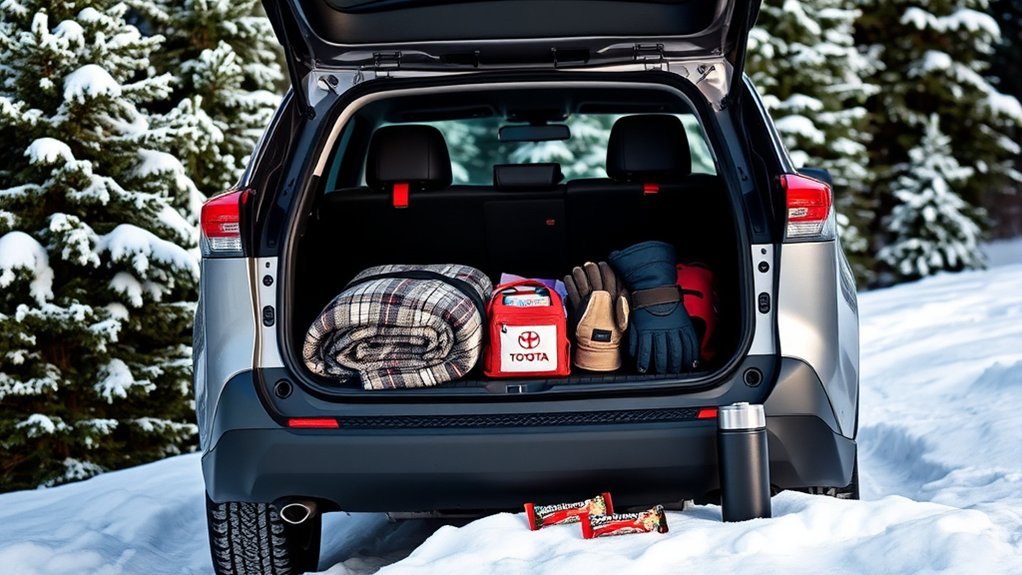
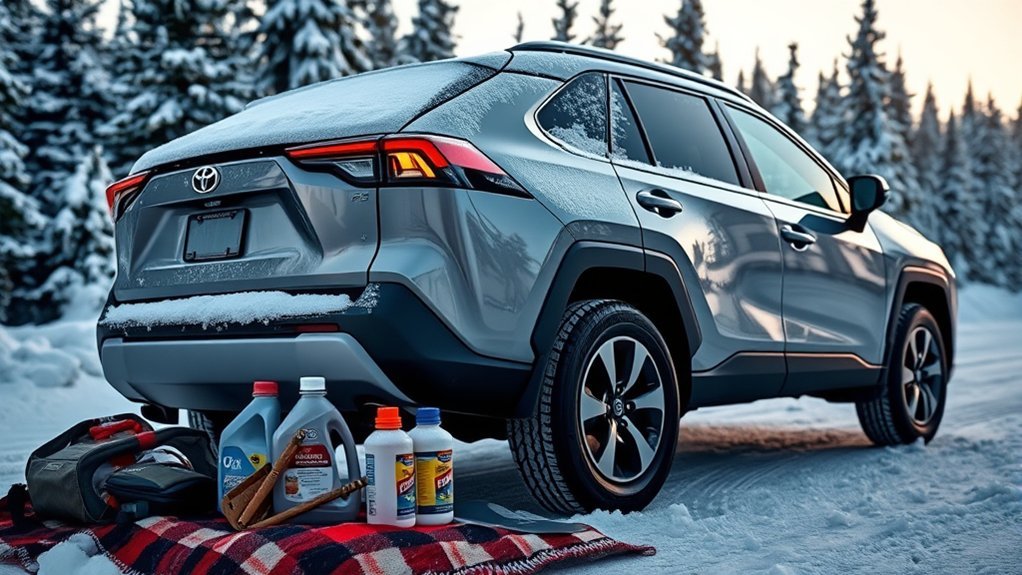
When unexpected winter weather strikes, having a well-prepared survival kit can make all the difference. Start with non-perishable food and water in your food storage; these essentials keep you sustained during delays or emergencies. Pack extra warm clothing, including gloves, hats, and blankets, to maintain your body heat if you find yourself stranded.
Don’t forget to include crucial emergency tools like an ice scraper, flashlight, jumper cables, and a small shovel for snow removal. These items help you tackle common winter driving challenges effectively. Add kitty litter or traction mats to improve grip if your vehicle gets stuck in snow or ice. Finally, keep emergency supplies, such as flares or warning triangles, to alert other drivers during a roadside emergency. This thorough kit guarantees you’re ready for whatever winter throws your way, giving you peace of mind and the freedom to navigate the season confidently.
Practice Safe Driving Techniques in Winter
Being well-prepared with a winter survival kit sets the stage for safe journeys, but knowing how to drive effectively in winter conditions is equally essential. To navigate winter hazards confidently, adopt these driving techniques:
- Maintain a Safe Following Distance: Keep 5-6 seconds between you and the vehicle ahead to allow for longer stopping times on slick roads.
- Gradual Control: Apply gas and brakes gently to prevent skidding; sudden movements can lead to loss of control on icy surfaces.
- Reduce Speed: Slow down when approaching stops and traffic signals; everything takes longer to react on winter roads.
- Be Aware of Black Ice: Stay alert for black ice, especially on bridges and shaded areas, where it can be nearly impossible to see.
How to Prepare for Emergencies If Stranded
While winter driving can be challenging, preparing for emergencies if you get stranded is essential for your safety. Start by keeping a well-stocked emergency kit in your vehicle. Include non-perishable food, water, blankets, warm clothing, and hand warmers for comfort. Essential tools like a flashlight, ice scraper, small shovel, and jumper cables can help you tackle unexpected situations.
Don’t forget traction aids, such as kitty litter or sand, to help gain traction in snow or ice. Familiarize yourself with local emergency contact numbers, and make sure your phone is charged for effective emergency communication. This way, you can easily reach roadside assistance if needed. Finally, pack a first aid kit and flares or warning triangles. These not only enhance your safety but also improve your visibility to other drivers, making certain you’re prepared for whatever winter throws your way.
Ensuring Visibility: Wipers, Lights, and Defrosters
Before hitting the winter roads, you need to guarantee your visibility is crystal clear. Start by inspecting your wiper blades and checking all lights for functionality, as both are essential for safe driving in snowy conditions. Don’t forget to test your defroster; it should quickly eliminate fog and frost to keep your sightlines unobstructed.
Wiper Blade Inspection
As winter approaches, making sure your Toyota RAV4’s wiper blades are in top condition is essential for maintaining clear visibility during harsh weather. Effective wiper blade maintenance guarantees streak-free performance, vital for maneuvering through winter storms safely. Here’s what you need to do:
- Inspect wiper blades for wear; replace them if they leave streaks or miss spots.
- Fill the wiper fluid reservoir with winter-grade fluid to prevent freezing.
- Check the windshield defroster to confirm it effectively clears fog and ice.
- Remove heavy snow and ice from wiper blades and the windshield before driving.
Functional Light Check
Ensuring your Toyota RAV4 is equipped with fully functional lights is essential for safe winter driving. Start by checking the light brightness of all your vehicle’s lights—headlights, taillights, and turn signals. Regular inspections help maintain peak visibility during inclement weather. If any bulbs are dim or out, it’s time for bulb replacement. Don’t forget to clear away any snow or ice buildup that could obstruct light output. Next, inspect your windshield wipers for wear; they should effectively clear the windshield for maximum visibility. Familiarize yourself with the location and operation of your light controls, allowing you to adjust settings quickly for changing winter conditions. With these checks, you’ll enhance your safety on the road.
Defroster Performance Test
After confirming that your lights are in excellent condition, it’s time to focus on the defroster. Confirming your defroster’s effectiveness is crucial for safe winter driving. Here’s how to test it:
- Check Windshield Clearance: Verify the defroster clears ice and fog from the windshield and side windows within minutes.
- Inspect Wiper Blades: Look for wear or damage. Replace them if they leave streaks, guaranteeing clarity during snow or rain.
- Test Rear Window Defroster: Ensure it’s operational to enhance rear visibility by removing frost or condensation.
- Familiarize with Controls: Adjust airflow settings for maximum fog removal and quicker clearing.
A well-functioning defroster is important—don’t overlook it!
Frequently Asked Questions
Is RAV4 Good for Winter Driving?
Yes, the RAV4 excels in winter driving with its strong performance and compatibility with winter tires. You’ll enjoy enhanced traction and stability, making it perfect for traversing snowy roads and cold weather conditions confidently.
What Should You Do to Prepare Your Vehicle for Winter Driving?
To prepare for winter driving, check your tire maintenance and adjust pressures regularly. Confirm your fluid levels, especially windshield washer fluid, are topped off with winter formulas, and inspect wipers for best visibility in harsh conditions.
Conclusion
As winter’s chill approaches, ensuring your RAV4 is ready to face the elements isn’t just wise—it’s essential. By meticulously checking your vehicle and equipping it for the season, you’re not merely preparing for the worst; you’re embracing the journey ahead with confidence. With the right tires, fluids, and safety gear, you’ll glide through challenges rather than stumble. So, gear up, stay vigilant, and let your RAV4 lead you through winter’s frosty embrace with ease.