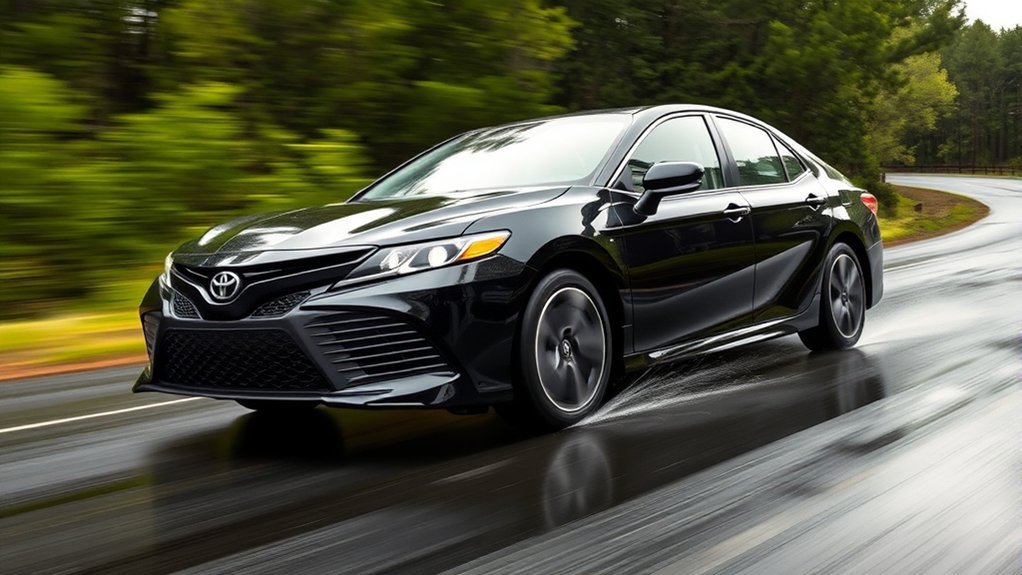
The Toyota Camry’s Traction Control System (TCS) and Vehicle Stability Control (VSC) work together to enhance your driving experience. TCS prevents wheel spin by adjusting engine power and applying brakes to individual wheels, while VSC keeps you on your intended path in slippery conditions by correcting oversteering and understeering. Key sensors monitor wheel speed, steering angle, and vehicle rotation, ensuring peak performance. Keep exploring to uncover how maintenance and features can boost your Camry’s safety and reliability.
What Is the Toyota Camry Traction Control System?

The Toyota Camry’s Traction Control System (TCS) is an indispensable component that enhances your driving experience by ensuring ideal grip on various surfaces. By monitoring individual wheel speeds, TCS detects any loss of traction and reduces engine power or applies brake pressure to the spinning wheels. This integration with the Antilock Braking System (ABS) optimizes brake management, especially during acceleration on slippery roads.
One of the key benefits of TCS is its ability to maintain vehicle stability, giving you confidence while driving. However, it does have limitations; when engaged, you might notice a slight power reduction or a buzzing sensation in the brake pedal, indicating the system’s activity. Regular maintenance is vital, as ensuring your speed sensors function properly guarantees effective operation. Embracing TCS can liberate your driving experience, offering greater control when maneuvering challenging conditions.
How TCS Prevents Wheel Spin
The Toyota Camry’s Traction Control System (TCS) actively monitors each wheel’s speed to quickly detect any loss of traction. When it senses wheel spin, TCS steps in by reducing engine power and applying brake pressure where needed, ensuring your vehicle stays stable. This seamless operation not only enhances your control but also boosts safety, especially on slippery surfaces.
System Functionality Overview
Monitoring wheel speeds is essential for the Toyota Camry’s Traction Control System (TCS) to effectively prevent wheel spin. This system detects any loss of traction and adjusts engine power or applies brake pressure to spinning wheels, enhancing grip on slippery surfaces. By using real-time data, TCS works alongside the Antilock Braking System (ABS) to maintain stability during challenging conditions.
| Aspect | Benefits | Limitations |
|---|---|---|
| Wheel Speed Monitoring | Immediate traction adjustments | May not handle extreme conditions |
| Engine Power Reduction | Prevents excessive wheel spin | Can feel abrupt in some scenarios |
| Brake Pressure Application | Enhances grip on slippery roads | Limited effectiveness on ice |
| Stability Maintenance | Improves overall vehicle control | Relies on sensor accuracy |
While TCS offers significant traction control benefits, it’s important to understand its system limitations.
Wheel Speed Monitoring
Effective traction management in the Toyota Camry hinges on the Traction Control System‘s ability to monitor wheel speeds. By ensuring wheel speed accuracy through precise sensor calibration, TCS can effectively prevent wheel spin. Here’s how it works:
- Individual Monitoring: Each wheel’s speed is tracked for discrepancies.
- Throttle Adjustment: When differences are detected, TCS instantly reduces throttle input to curb power.
- Brake Engagement: TCS can activate the Anti-lock Braking System (ABS) to apply brake pressure on spinning wheels.
- Rapid Response: This monitoring and adjustment happen in milliseconds, promoting stability.
Understanding the Importance of Vehicle Stability Control
When maneuvering through challenging weather conditions like rain or snow, having vehicle stability control (VSC) can make all the difference in maintaining control of your car. VSC benefits are substantial; this system actively prevents your vehicle from veering off its intended path by utilizing multiple sensors to assess direction and stability in real time. It corrects oversteering and understeering by selectively applying brake pressure to individual wheels, stabilizing your ride during dynamic maneuvers.
This aggressive response to potential loss of control considerably reduces the risk of accidents, giving you the driving confidence you need in adverse conditions. As VSC has become a standard feature in most new vehicles, it enhances overall safety, allowing you to navigate with peace of mind. With VSC on your side, you can embrace the freedom of driving, knowing you’ve got an advanced ally to help you stay on course.
Essential Sensors in Traction and Stability Control Systems
In the Toyota Camry, essential sensors play a crucial role in maintaining traction and stability. Wheel speed, steering angle, and yaw sensors work together to make real-time adjustments, ensuring a safe driving experience. However, if any of these sensors fail, it can lead to significant consequences, impacting your control and safety on the road.
Key Sensor Functions
To guarantee maximum traction and stability, the Toyota Camry relies on several key sensors that work together seamlessly. These sensors not only enhance your driving experience but also secure your safety. Here are the essential functions:
- Wheel Speed Sensors: Monitor each wheel’s rotational speed, enabling the traction control system to adjust brake pressure and throttle response.
- Steering Angle Sensor: Measures steering position, guiding the vehicle stability control system to correct oversteering or understeering.
- Yaw Sensor: Assesses vehicle rotation around its vertical axis, helping maintain your desired path.
- Data Integration: Combines real-time sensor data for timely corrections, critical for effective sensor calibration.
Each function plays a significant role in keeping your Camry safe and stable, even in challenging driving conditions.
Sensor Failure Consequences
Although your Toyota Camry’s traction and stability control systems are designed for peak safety, sensor failures can lead to serious consequences. Wheel speed, steering angle, and yaw sensors are crucial for maintaining control. When these sensors fail, you risk losing traction or experiencing unpredictable handling, making driving dangerous.
| Sensor Type | Consequence |
|---|---|
| Wheel Speed Sensor | Loss of traction control |
| Steering Angle Sensor | Incorrect vehicle direction assessment |
| Yaw Sensor | Delayed stability corrections |
| Common Failures | Deactivation of safety systems |
| Sensor Diagnostics | Essential for timely failure prevention |
Regular sensor diagnostics can help catch issues early, ensuring safety systems like ABS, TCS, and VSC function correctly. Don’t overlook the importance of prompt replacements!
Common Issues With TCS and VSC in the Toyota Camry
While driving your Toyota Camry, you might encounter issues with the Traction Control System (TCS) and Vehicle Stability Control (VSC) that can compromise your vehicle’s performance. Here are some common problems to watch for:
While driving your Toyota Camry, be aware of potential issues with TCS and VSC that can affect performance.
- Speed Sensor Failures: These can disrupt TCS and VSC’s ability to monitor wheel performance effectively.
- Steering Angle Sensor Issues: Though less frequent, a failed sensor can hinder the detection of steering input changes.
- Warning Lights Activation: If the check engine light comes on, TCS and VSC may be disabled until the underlying issue is addressed.
- Contaminated Brake Fluid: Regular maintenance is essential; dirty fluid can lead to actuator failure.
For effective TCS troubleshooting and VSC diagnostics, pay attention to warning lights and schedule routine checks. Timely attention can prevent severe issues, helping you maintain your Camry’s traction and stability control systems.
How Warning Lights Indicate System Functionality
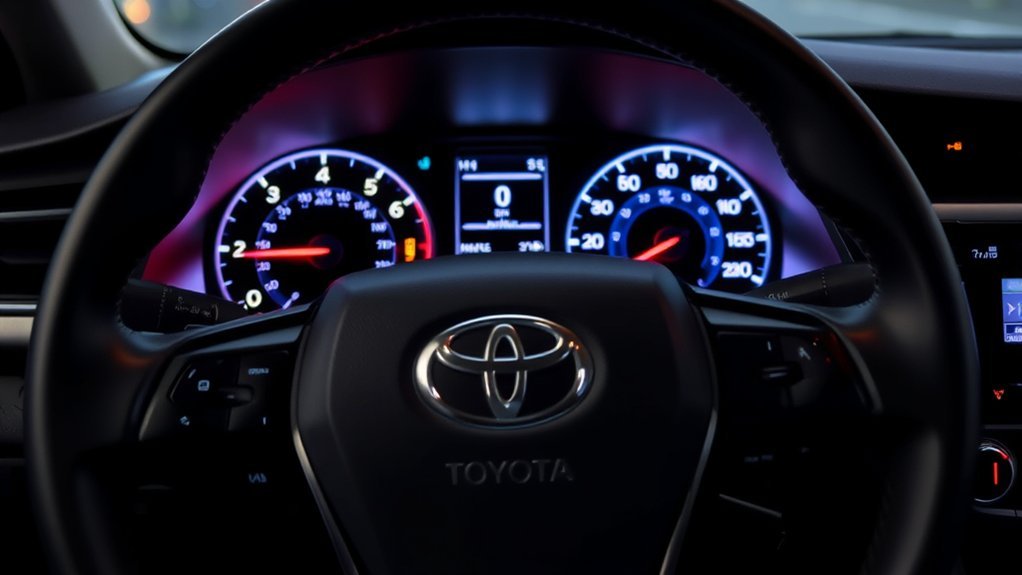
How can you guarantee your Toyota Camry’s traction and stability systems are functioning properly? Understanding warning light meanings is essential. When the Traction Control System (TCS) and Vehicle Stability Control (VSC) lights illuminate, it often indicates a problem, especially if the check engine light is on. This suggests these systems are temporarily disabled until you address the underlying issue. A lit VSC light typically means the system is actively working to maintain stability due to traction loss.
If you notice these lights on without any driving issues, it could point to sensor diagnostics failures, like those in the wheel speed or steering angle sensors. Regular diagnostics and maintenance checks can help prevent unnecessary warning lights, ensuring your systems remain functional. Staying proactive not only enhances your driving experience but also empowers you with the freedom of knowing your vehicle is safe and reliable.
Maintenance Tips for the Camry’s Safety Systems
To keep your Toyota Camry’s traction and stability control systems in top shape, regular maintenance is important. By staying proactive, you can guarantee these safety features work effectively. Here are some key tips:
- Inspect and Clean Wheel Speed Sensors: Dirt can skew readings, affecting traction control performance.
- Maintain Brake Fluid: Replace contaminated fluid promptly to keep the ABS and traction systems functioning smoothly.
- Test Brake Fluid Moisture Content: Regular testing helps determine when to replace it, safeguarding system integrity.
- Check Steering Angle Sensor: Proper alignment is essential; a malfunction can disable your traction control.
Following these steps not only enhances safety but also liberates you from potential driving hazards. Remember, sensor calibration and brake maintenance are crucial for your peace of mind behind the wheel. Keep your Camry running safe and sound!
The Role of VSC in Adverse Weather Conditions
When driving in adverse weather conditions, the Toyota Camry’s Vehicle Stability Control (VSC) system plays an essential role in keeping you safe. This advanced system actively monitors your vehicle’s direction and wheel speed, detecting any loss of traction—critical when traversing rain or snow. With multiple sensors, including yaw and steering angle, VSC determines your intended path and makes real-time adjustments to maintain stability.
In slippery conditions, VSC effectiveness shines as it applies brake pressure to individual wheels, correcting oversteering or understeering. This aggressive reaction provides swift interventions that can notably reduce accident risks during tricky maneuvers. By enhancing overall stability, VSC not only keeps you on your intended trajectory but also empowers you with confidence in challenging driving environments. Trusting this system means you’re better equipped to handle adverse conditions, allowing you to focus on the freedom of the road ahead.
How to Stay Informed About Vehicle Safety Features

Staying informed about your Toyota Camry’s safety features is essential for maximizing your driving experience and ensuring your safety on the road. Here are some effective ways to stay updated:
Staying informed about your Toyota Camry’s safety features is vital for enhancing your driving experience and ensuring road safety.
- Consult Your Owner’s Manual: Familiarize yourself with the traction and stability control features and their maintenance needs.
- Monitor Dashboard Warnings: Pay attention to warning lights like the VSC or traction control indicators; they can signal issues needing immediate attention.
- Follow Automotive News: Join forums or subscribe to channels dedicated to Toyota vehicles for safety updates and feature comparisons on traction systems.
- Engage with Professionals: Talk to local automotive service experts for the latest information on safety technologies and maintenance practices.
Frequently Asked Questions
What Causes Traction Control and Stability Light to Come On?
Your traction and stability lights can activate due to issues with wheel sensors or the brake system. If the sensors malfunction or the brake actuator wears, these warning lights signal a need for immediate attention.
What Is Traction Control in a Toyota Camry?
Traction control in your Toyota Camry enhances grip by reducing engine power and applying brakes when wheel spin occurs. While it benefits slippery conditions, remember it has limitations and shouldn’t replace cautious driving practices.
How Does Toyota Vehicle Stability Control Work?
Toyota’s Vehicle Stability Control uses sensor calibration to monitor your vehicle’s dynamics. When it detects loss of traction, the braking system applies pressure to individual wheels, helping you maintain control and enhancing safety during challenging conditions.
Conclusion
In the dance between traction and stability, your Toyota Camry stands as a steadfast partner. With its advanced systems keeping you grounded, you can glide confidently through rain-soaked streets or navigate icy turns. By understanding and maintaining these features, you guarantee a safer ride, like a well-tuned instrument playing in harmony with the road. So, embrace the technology beneath your wheels, and let your Camry lead you smoothly through every twist and turn life throws your way.