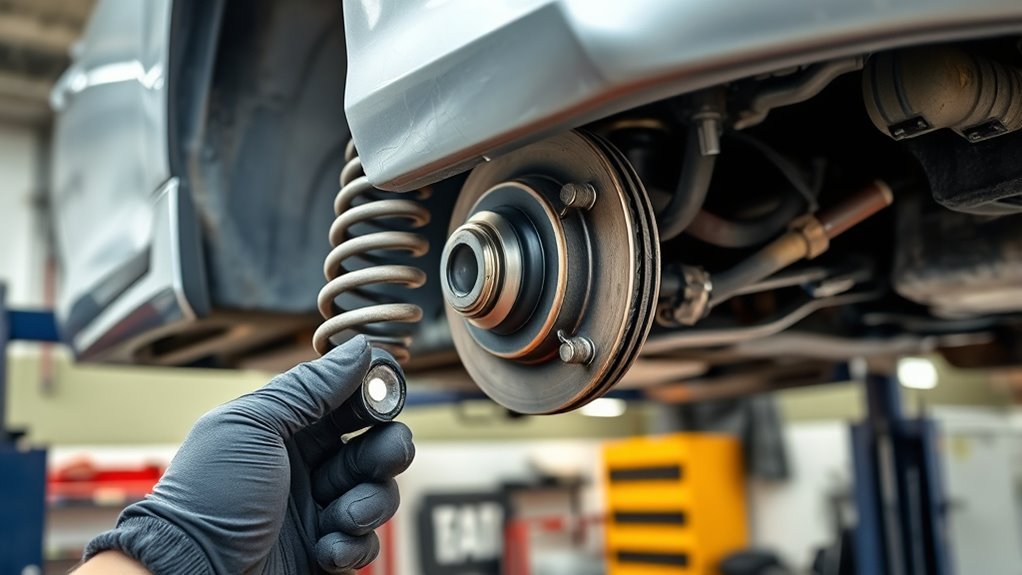
Your Camry’s shocks and struts generally last about 50,000–100,000 miles, but your driving style, road quality, load, and alignment can cut that considerably. You’ll see excessive bounce, fluid leaks, sway, or unusual noises when damping fails, and struts (front) carry structural loads so they cost more and usually get replaced in pairs. Inspect for seal leakage, damaged boots and loose mounts, and follow interval checks—keep going to get specific tests, costs, and replacement guidance.
How Long Do Camry Shocks & Struts Last? (Quick Answer)
Although conditions vary, Camry shocks and struts typically last about 50,000–100,000 miles depending on driving habits and road quality. You should treat that range as a guideline: aggressive driving, poor roads, or deferred maintenance will compress shock longevity toward the lower bound, while cautious use and inspections extend service life. Monitor for excessive bouncing, fluid leaks, and unusual noises; those symptoms indicate declining strut performance and imminent failure. Replace in matched pairs to preserve balanced handling and predictable stability—mixing old and new units undermines control. You can prolong component life by scheduling regular inspections, addressing wheel alignment, and avoiding sustained heavy loads. If you ignore wear, repair costs compound and vehicle safety degrades, limiting your mobility. Act decisively: plan replacements proactively based on observed degradation and mileage, not only on time, so you retain control, reduce long-term expense, and preserve the liberated experience of confident, safe driving.
How Camry Shocks Differ From Struts
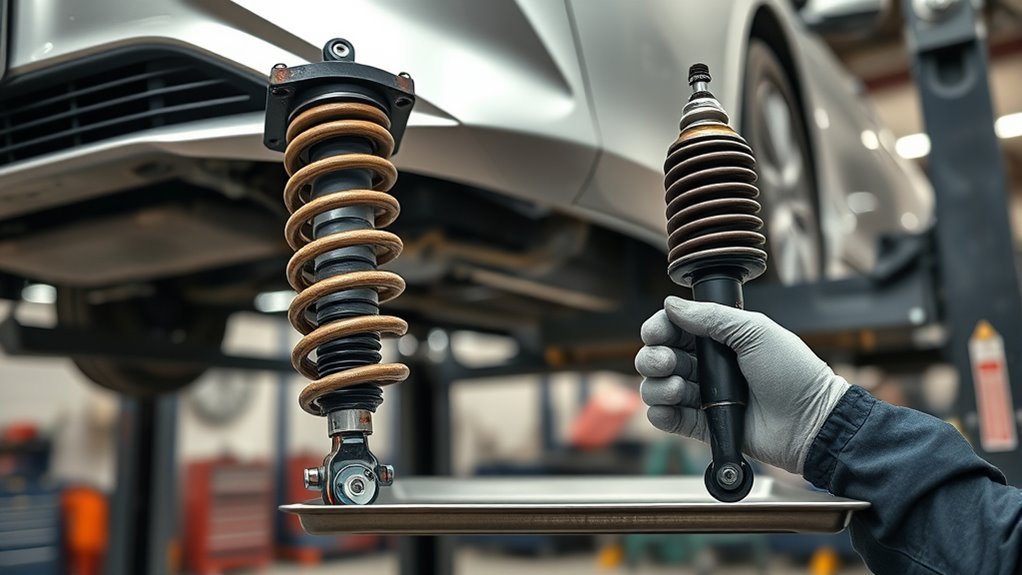
You’ll need to separate function from structure when comparing Camry shocks and struts: shocks absorb impacts while struts also carry structural loads and preserve alignment. Note the mounting and design differences — shocks are often rear-mounted and replaceable individually, struts integrate with the front suspension and combine spring and damper duties. Finally, factor replacement practices and costs: shocks can be swapped one at a time, struts are usually replaced in pairs and typically cost more due to labor and alignment requirements.
Function vs Structure
Think of shocks as the Camry’s motion dampers and struts as load-bearing alignment components: shocks absorb vertical energy from bumps to reduce oscillation, while struts combine damping with structural support, carrying suspension and vehicle weight and preserving steering and camber geometry. You’ll rely on shocks to tune ride comfort and maintain performance balance; they’re non-structural, usually rear-mounted, and primarily control rebound and compression. Struts, conversely, enforce structural integrity and alignment—front-mounted, they stabilize wheel geometry and bear loads that affect steering feedback. Inspect both regularly: excessive bounce, uneven tire wear, or fluid leakage signal degradation. Since lifespan varies with use (roughly 50k–100k miles), proactive replacement preserves control and frees you from constraint by failing suspension.
Mounting And Design
Mounting and design determine how shocks and struts perform under load: in the Camry, shocks mount separately from the suspension and act purely as dampers, while struts are integrated into the suspension assembly and carry structural loads through a top mount and lower attachment that preserve wheel alignment and steering geometry. You’ll notice shocks focus on absorbing impacts; their isolated mounting techniques let you replace units individually and tune damping without altering geometry. Struts, often MacPherson at the front, embody design innovations that combine spring seat, damper, and steering pivot into one compact, load-bearing package, reducing body roll and improving tire contact. You benefit from greater handling precision, but you must respect the strut’s structural role when diagnosing or servicing the system.
Replacement And Costs
While both dampers and struts wear on a similar schedule, replacing them affects cost and vehicle function differently: shocks on a Camry typically run about $300 for a pair, since they only dampen impacts and don’t carry structural loads, whereas strut replacement — because struts integrate the spring seat and steering pivot and require more labor and parts — can push total costs to under $1,000. You’ll plan replacements between 50,000–100,000 miles, influenced by roads and driving style, and you should replace in pairs to maintain balanced handling and tire wear. Follow TSB-0145-11 for acceptable oil seepage limits before replacement. For liberation-minded owners, weigh suspension upgrades against these cost comparisons and necessary alignments to optimize control and autonomy.
5 Factors That Shorten Camry Shock/Strut Life
If you regularly drive on rough roads, subject the Camry to hard braking or aggressive acceleration, or carry loads beyond its rated capacity, you’ll noticeably shorten the service life of its shocks and struts. You need to treat the suspension as a load-bearing precision system: repetitive impacts, speed over bumps, and overloads accelerate seal wear, fluid loss, and fatigue failure. Consider suspension upgrades only after addressing harm vectors; upgrades won’t compensate for poor driving techniques.
- Road quality — Potholes, broken pavement, and repeated high-speed impacts increase dynamic stress cycles, reducing expected life by an order of magnitude compared with ideal conditions.
- Operator input — Frequent hard braking/acceleration and speed over obstacles spike transient loads, inducing premature damping and mounting failures.
- Load and alignment — Excess weight, towing beyond spec, uneven tire wear, or misalignment amplify side loads and uneven stroke wear, collapsing service intervals.
You’ll extend life by eliminating abuses, aligning tires, and choosing proven upgrades judiciously.
Quick Visual & Drive Tests for Camry Shocks/Struts
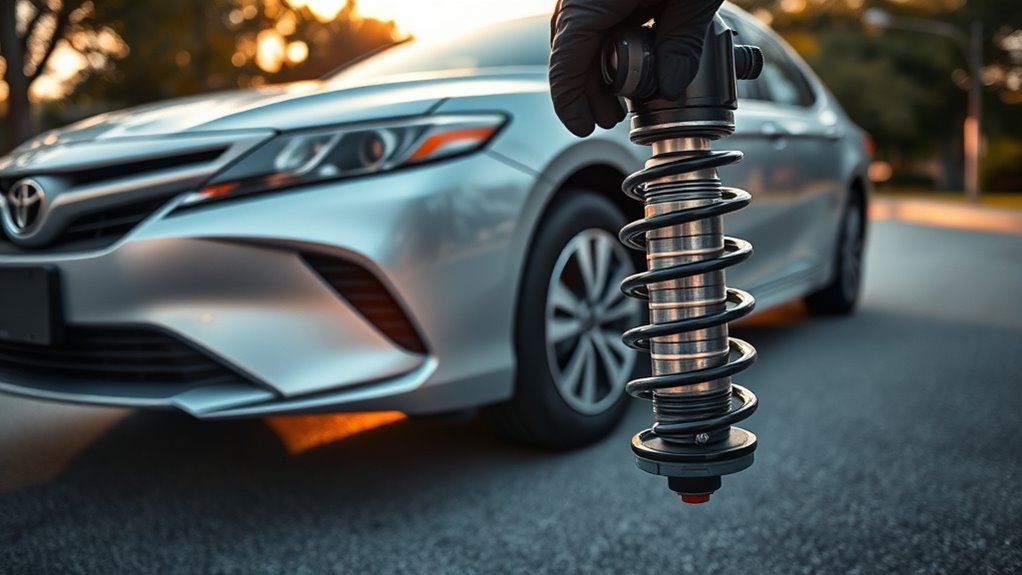
A quick pre-drive inspection and a short road test will reveal most Camry shock and strut problems: look for oil leaks or damaged boots at each strut, watch for excessive bounce or sway over bumps, note any pronounced body roll or nose-dive during braking, listen for clunks on compression/rebound, and check tires for cupping—each symptom maps to specific failure modes (seal leakage, loss of damping, broken mounts, or worn bushings) that guide further diagnostic steps.
Use focused visual inspections before driving: scan each strut for fluid, torn boots, or loose fasteners. Then perform controlled drive tests: hit a known bump, execute a sharp turn, and do a firm stop. Log responses: rebound time, lateral roll, nose-dive magnitude, and any discrete noises.
| Test | Symptom | Likely Cause |
|---|---|---|
| Visual | Fluid/boots | Seal failure |
| Bump | Excess bounce | Loss of damping |
These steps let you decide repair, upgrade, or liberation from unsafe components.
Oil Seepage: Normal vs. Replace – What to Look For
Having identified potential damping failures during your ride checks, next inspect the struts for oil seepage to determine whether service or replacement is warranted. You’ll judge by location and quantity: small weepage from hydraulic shocks’ seals is normal wear and won’t shorten shock absorber lifespan immediately, but progressive leakage is a different matter.
After ride checks, inspect struts for oil seepage—small weepage is normal, progressive leakage requires service or replacement.
- Measure: level 1 seepage (light film) on the shaft or body is acceptable; log it and monitor oil seepage indicators over time.
- Thresholds: oil dripping below the spring perch on MacPherson struts, or freestanding shocks soaked in oil, means internal seal failure — replace immediately to prevent control loss.
- Action: avoid premature replacement; track seepage trends and prioritize components showing increasing output loss or heavy leakage to protect adjacent suspension parts.
Be precise, emancipate your maintenance choices by basing interventions on observable oil patterns and their impact on shock absorber lifespan.
Other Warning Signs: Bouncing, Leaning, Noises, Tire Cupping
Three clear symptoms — excessive bouncing, pronounced body lean, and rhythmic tire cupping — directly signal compromised shock or strut performance and warrant prompt inspection. You’ll recognize bouncing symptoms as repeated vertical oscillation after a disturbance; that persistence degrades control and ride comfort and implies hydraulic or gas damping loss. Pronounced body lean during cornering or pitch on acceleration/braking reveals reduced lateral and longitudinal stabilization capacity, increasing rollover and traction risk. Noise indicators include clunks or metallic bangs over bumps and visible fluid leaks beneath the vehicle; both denote internal component failure or mounting issues needing immediate attention. Rhythmic tire cupping — scalloped tread wear patterns — maps directly to suspension-induced wheel hop and inadequate damping, accelerating tire replacement and undermining steering precision. Act decisively: document symptoms, avoid high-speed operation, and schedule a suspension diagnostic. Reclaim control by addressing worn shocks or struts before secondary systems incur greater damage.
Toyota TSB Guidance for Camry Shock/Strut Replacement
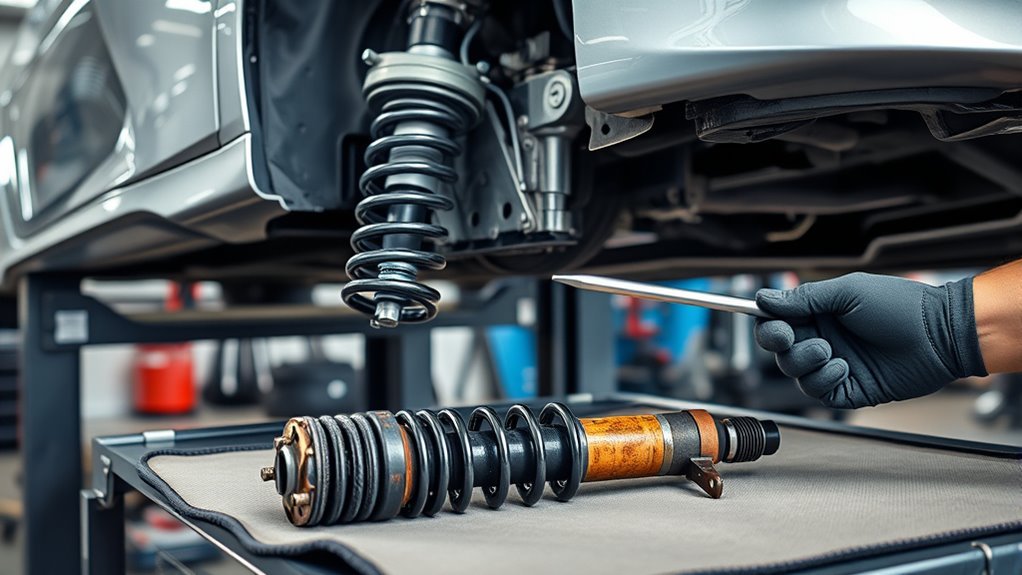
Refer to Toyota TSB‑0145‑11 for the quantified criteria technicians use to decide Camry shock/strut replacement for 2006–2012 models. You’ll note the guidance distinguishes normal wear — minor oil seepage on the shock body — from failure conditions, specifically oil dripping below the spring perch, which mandates replacement. Apply the TSB’s cost‑benefit framing when evaluating borderline seepage to avoid unnecessary parts changes.
Toyota TSB Criteria
How do you determine when a Camry’s shocks or struts truly need replacement? You’ll apply Toyota TSB-0145-11 criteria to balance shock absorber maintenance with cost-effective decisions and TSB compliance. The bulletin defines acceptable wear limits, flags significant leakage, and guides techs to avoid premature swaps.
- Inspect leakage: minor seepage is allowed; oil dripping below the spring perch mandates replacement.
- Assess function: measurable damping loss, abnormal rebound, or handling degradation per TSB metrics requires service.
- Document evidence: record visual findings, ride tests, and customer input to guarantee transparent decisions and community knowledge sharing.
You act as an informed steward—following precise TSB criteria liberates owners from unnecessary expense and preserves vehicle integrity.
Oil Seepage Threshold
When you’re inspecting Camry struts and shocks, Toyota’s TSB-0145-11 distinguishes acceptable minor seepage from leakage that mandates service: you should accept light oil seepage on the piston boot as normal aging, since it doesn’t immediately degrade shock performance. Replace McPherson struts when oil drips below the spring perch—this denotes seal failure and measurable loss of damping control. For freestanding shocks, substitution is required if units are oil-drenched; saturation correlates with internal collapse and compromised shock performance. Major leakage, defined by significant drips down the shock body, requires immediate replacement to preserve handling and safety. The TSB’s threshold aims to prevent needless parts changes while empowering you to act decisively when leakage indicates true functional failure.
Typical Camry Repair Costs : When to Replace in Pairs
A practical rule for Toyota Camry suspension work is to replace shocks or struts in pairs (both fronts or both rears) to preserve balanced handling and predictable response; individual replacement can introduce uneven damping that compromises stability and accelerates tire wear. You’ll apply replacement timing and cost comparison to decide when to act: struts typically run about $300 each, so paired front or rear replacement approaches $600 plus labor and alignment, with total bills sometimes exceeding $1,000.
- Estimate: OEM/standard Camry struts ~$300 each; pair cost before labor ≈ $600; final invoice often >$1,000 after parts, labor, and alignment.
- Risk calculus: mismatched damping degrades control and speeds tire wear—replace pairs to maintain liberation from reactive, unsafe handling.
- Luxury variant note: costs escalate—suspension work for higher-trim models can reach $1,500–$2,600+, so factor that in during cost comparison and scheduling.
How Driving and Maintenance Extend Suspension Life
You’ll extend Camry suspension life by combining disciplined driving habits, scheduled maintenance, and route selection. Avoiding high-speed impacts with potholes and limiting vehicle load reduces shock and strut stress, while following owner’s manual service intervals for inspections, alignment, and tire care prevents accelerated wear. Regularly inspect for noise, uneven tire wear, or leaks so you can address issues promptly and adjust driving or maintenance as road conditions require.
Driving Habits Impact
Because aggressive inputs—rapid acceleration, hard braking, and high-speed impacts over bumps—amplify loads on shocks, struts, and mounts, altering your vehicle’s dynamic balance and accelerating wear, you need to adopt smoother driving and disciplined maintenance to preserve suspension life. You’ll change outcomes by applying controlled driving techniques that reduce suspension stress and distribute loads predictably. Monitor tire pressure and alignment; small deviations amplify component fatigue. Perform visual checks for leaks and unusual noises to catch failure modes early.
- Reduce impulse loads: accelerate and brake gradually to lower peak forces.
- Approach bumps and potholes with reduced speed and angle to limit impact energy.
- Maintain correct tire pressure and alignment to minimize asymmetric loading and wear.
These actions empower you to extend service life reliably.
Maintenance Intervals Matter
Shifting from driving technique to scheduled care, follow the owner’s manual service intervals to maximize your Camry’s suspension life; routine maintenance can push component longevity well into the 50,000–100,000 mile range. You control longevity: inspect shocks, seals, and mounts regularly, rotate tires per maintenance schedules, and correct alignment to prevent uneven wear. Detect leaks or noise early to avoid cascading failures. If you pursue suspension upgrades, integrate them into service plans and adjust intervals accordingly. This disciplined approach frees you from unexpected breakdowns and preserves handling fidelity.
| Task | Interval | Purpose |
|---|---|---|
| Visual inspection | Every oil change | Catch leaks/noise |
| Tire rotation | 5,000–7,500 mi | Even wear |
| Alignment check | Annually | Correct handling |
| Component replace | 50k–100k mi | Restore performance |
Road Conditions Influence
When you regularly drive on rough or unpaved roads, suspension components endure higher cyclic loads and abrasive impacts that can halve expected service life to around 50,000 miles; conversely, steady maintenance—timely inspections, fluid checks, proper inflation and alignment—reduces peak stresses and helps shocks and struts approach their 100,000-mile potential. You can control factors that determine suspension wear by adjusting driving and upkeep. Reduce road impact through deliberate choices and routine checks.
- Inspect: schedule visual and functional checks after harsh trips; catch seals, mounts, and bushings early.
- Maintain: keep fluids, tire pressure, and alignment within spec to distribute loads evenly.
- Drive: avoid aggressive acceleration, hard braking, and high-speed pothole impacts to preserve components.
Inspect Yourself or Hire a Shop: DIY, Dealer, or Indie Pros
If you track mileage and scan for visible signs like uneven tire wear, fluid spots, or excessive bouncing, you can catch worn shocks and struts before they compromise handling or cause costly secondary damage. You can perform a basic DIY Inspection: visually check tires, look for leaking dampers, and push down on each corner to gauge rebound. These checks are limited—components sit under the car and subtle degradation escapes unaided senses.
For certainty, pursue a Professional Evaluation. Dealers and independent shops both offer calibrated tests and lift access; technicians quantify damping performance and inspect mounts, bushings, and hardware. Dealers may use OEM procedures; independents often provide lower labor rates and faster scheduling. Track the 50k–100k mile guideline and your road-condition history to prioritize service. Choose autonomy by learning to spot signs, but accept expert assessment when data or safety margins are tight. Combining DIY Inspection with targeted Professional Evaluation maximizes control and minimizes unexpected failures.
Frequently Asked Questions
How Long Does a Toyota Camry Suspension Last?
You’ll typically get 50,000–100,000 miles from Camry suspension components; regular suspension maintenance tips extend life, and you’ll watch for signs deterioration like bouncing or leaks, replacing shocks/struts in pairs to preserve control.
Can Shocks Last 150,000 Miles?
Yes — shocks can reach 150,000 miles, but you’ll likely see degraded ride and safety; prioritize shock maintenance, inspections and consider performance upgrades to restore handling, prolong lifespan, and reclaim confident, liberated vehicle control.
How Long Does Factory Suspension Last?
Roughly 50,000–100,000 miles, though it can vary. You’ll want suspension maintenance tips, spot signs replacement needed like leaking fluid or excessive bounce, and act proactively so you’re freed from unexpected failures.
Conclusion
So your Camry’s shocks and struts won’t outlive your optimism, but they’ll do a solid job if you treat them right: expect 50–100k miles, replace bad units in pairs, and don’t ignore oil seepage or clunks. You can DIY basic checks, but get a shop for alignment and worn-mount replacement. Think of maintenance as preventive sarcasm—pay now, avoid dramatic roadside revelations later—and follow Toyota’s TSBs for the smartest, least theatrical fixes.