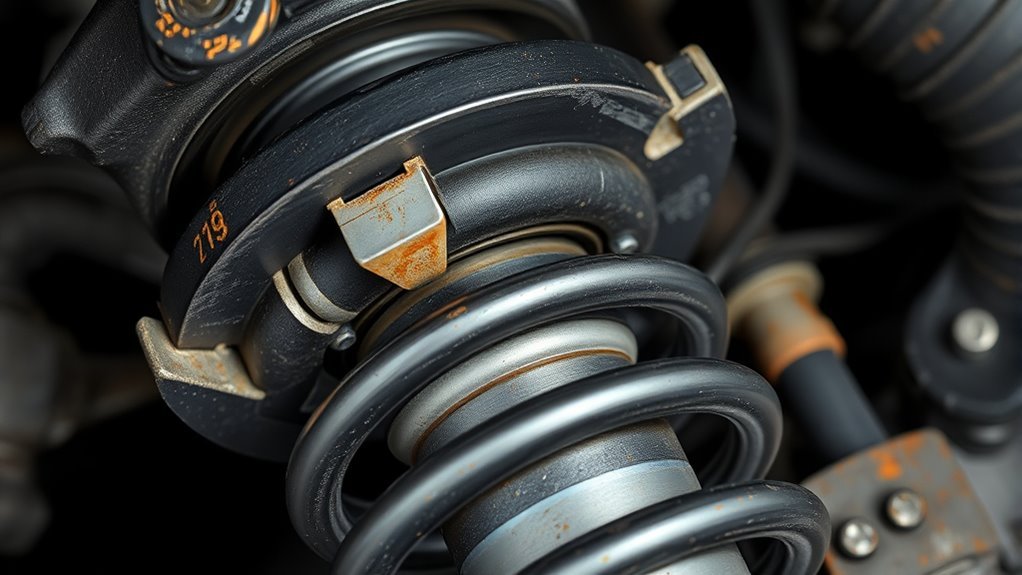
You’ll notice strut mount failure on a Camry through loud clunks or pops over bumps and during turns, uneven or cupped front tire wear, and a bouncy, unstable front end with pronounced dive under braking. Visually inspect for cracked rubber, flattened isolators, or hydraulic oil around the mount. A quick bounce test and careful wheel checks help confirm symptoms, but proper replacement and post-install alignment are essential — keep going to learn diagnostic and repair steps.
Quick Answer: 3 Immediate Signs Your Camry Strut Mount Is Failing
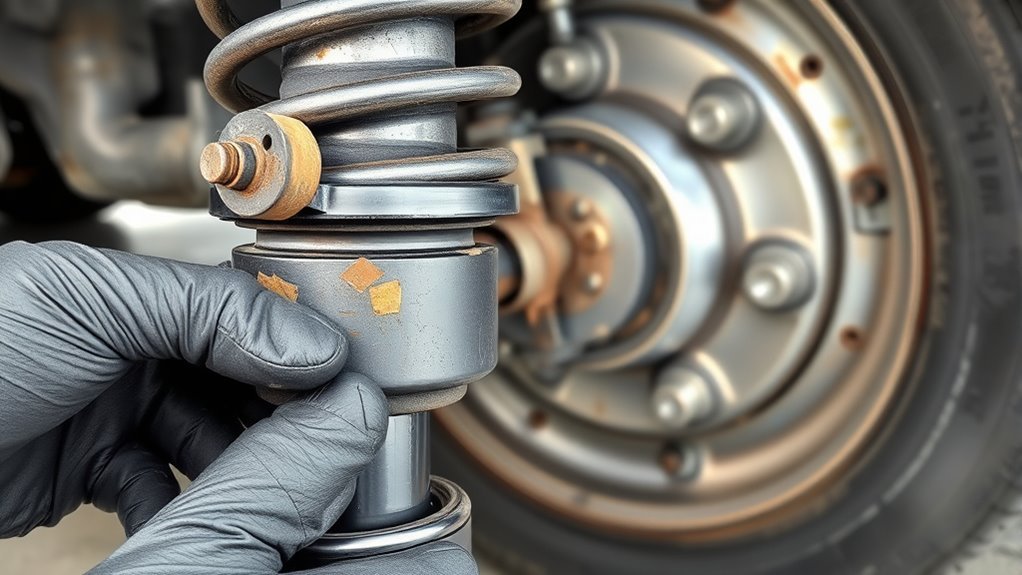
Noise, uneven tire wear, and a bouncy ride are the three immediate signs that your Camry’s strut mount may be failing. You’ll hear clunks or rattles over bumps when components loosen or bearings wear; those noises tell you the mount’s integrity is compromised. Check tires for cupping or uneven wear—misaligned damping lets tires contact road irregularly, shortening tread life and reducing control. A bouncy ride with excessive rebound after impacts points to poor shock absorption at the mount, letting the vehicle continue oscillating instead of settling.
Also watch for front-end dive during hard braking; that tilt signals reduced stability as mounts fail to anchor the struts. Hydraulic oil leaks near the mount mean seal failure and immediate inspection. When replacing, consider strut mount materials—rubber versus bearing designs—and compare strut mount brands for load ratings, corrosion resistance, and warranty. Choose parts that restore control and free you from recurring failures.
How Camry Strut Mounts Work and Why They Matter
If you’ve noticed clunks, uneven wear, or a bouncy ride, it helps to know how the strut mount actually functions: the mount bolts the strut assembly to the chassis while isolating road shocks and allowing steering movement, so it bears both vertical loads and directional forces. You rely on that connection for control; when the mount performs, the strut assembly function is predictable and the suspension soaks impacts without transferring harshness to the cabin. The rubber or polyurethane cushion in the mount damps vibration, reduces noise, and preserves alignment, which preserves ride comfort importance and vehicle stability.
A healthy strut mount secures the strut, soaks shocks, and preserves steering, comfort, and tire life.
You should inspect mounts regularly because failure degrades damping and stresses the strut, steering, and tires. Keep freedom of motion and control by replacing worn mounts promptly.
- Frustration: a failing mount steals smoothness and control.
- Relief: a proper mount restores composed handling.
- Empowerment: timely maintenance frees you from avoidable failures.
Top Visual Signs of Camry Strut Mount Failure
Check the strut mount area for visible oil leaks that indicate a compromised seal or damaged shock absorber. Inspect the rubber isolator for cracks, tears, or severe hardening that reduce damping and mounting integrity. If you see oil contamination or split/worn rubber, the mount should be serviced to prevent further suspension and steering problems.
Visible Oil Leaks
When you spot hydraulic fluid pooling or a wet, oily film around the Camry’s strut mount, the seal has likely failed and the strut’s damping performance is compromised. You should treat visible oil leaks as a primary oil leak sources indicator — leaking seals reduce damping, produce a bouncy ride, and accelerate uneven tire wear. Inspect frequently as part of strut mount maintenance to catch failure early and reclaim control of your drive.
- Shocked by sticky stains on the wheelwell? Act now.
- Frustrated with a floating, unsafe ride? Don’t ignore it.
- Angry at premature tire wear? Fix the root cause.
Address leaks immediately: replace failed seals or the strut assembly to restore handling and freedom.
Cracked Or Worn Rubber
Visible oil around the mount often comes with another clear sign: cracked or worn rubber in the strut mount. You’ll spot splits, separations, or flattened sections in the rubber boot during a visual inspection. That deterioration undermines strut mount durability and reduces vibration reduction, so you’ll feel more noise and trembling through the chassis. Ignoring worn rubber lets misalignment develop, causing uneven tire wear and compromised stability. You may hear clunking over bumps because the mount no longer secures the strut. Check the rubber regularly as a preventative measure; replacing damaged mounts restores vibration reduction and handling, and protects steering geometry. Stay proactive—you’ll reclaim control and avoid cascading suspension failures by addressing rubber wear early.
Driving Symptoms That Point to a Bad Strut Mount
If your Camry feels excessively bouncy in the front after hitting bumps or potholes, the strut mounts may no longer be damping properly and are allowing extra suspension travel. You’ll also notice a distinct clunking or knocking during turns as the worn mount lets the strut move against its housing. Both symptoms degrade handling and should prompt a suspension inspection.
Excessive Front Bouncing
Because the strut mount connects the strut to the chassis and cushions impacts, worn mounts let the Camry’s front end bounce excessively over bumps and rough pavement. You’ll notice altered bouncing dynamics and reduced strut performance: the vehicle rebounds more, settles slower, and feels disconnected from the road. That loss of control undermines confidence and freedom behind the wheel.
- You feel each bump as amplified motion — unsettling and unsafe.
- The front end seems loose, compromising steering precision and courage.
- Routine drives become tense; you want stability, not surrender.
Inspect mounts if bounce increases during normal driving. Failing mounts can accelerate tire wear and handling degradation. Replace degraded mounts to restore crisp strut performance and reclaim liberation on every road.
Clunking During Turns
When you hear a distinct clunk while turning, it often means the Camry’s strut mount is worn or loose and letting the strut shift out of proper alignment. You’ll feel the impact through the steering and notice reduced handling stability; clunks usually intensify with steering input. That noise signals compromised suspension alignment and a weakened connection between strut and body. If you also get a bouncy ride or uneven tire wear, the mount’s failing and other suspension parts will follow. Inspect mounts, replace worn units, and restore precise geometry to reclaim confident control. Regular checks protect tire life and safety, helping you break free from avoidable failures and maintain liberated, reliable driving.
| Symptom | Cause | Action |
|---|---|---|
| Clunking | Worn/loose mount | Inspect/replace |
| Vibration | Shifted strut | Realign |
How to Diagnose Camry Strut Mount Problems at Home Safely
Although strut mount faults can mimic many suspension issues, you can confidently check for them at home with a few safe, systematic steps. Start with a focused DIY inspection: listen for clunks when turning or hitting bumps, then visually examine strut mount materials for cracks, separations, or hydraulic oil leaks that indicate seal failure. Use gloves, wheel chocks, and the parking brake.
Perform a bounce test at each front corner—push down firmly and release; excessive rebound points to worn struts and mounts. Inspect tires for uneven wear or cupping that suggests alignment shifts from faulty mounts. If you find damage, don’t drive aggressively; seek repair to reclaim control.
- You’ll feel empowered by clear evidence.
- You’ll cut costs by identifying issues early.
- You’ll protect yourself and others by avoiding risky driving.
These steps are technical, practical, and liberating—letting you take charge of safety without unnecessary tools.
Suspension Noises That Confirm a Strut Mount Issue
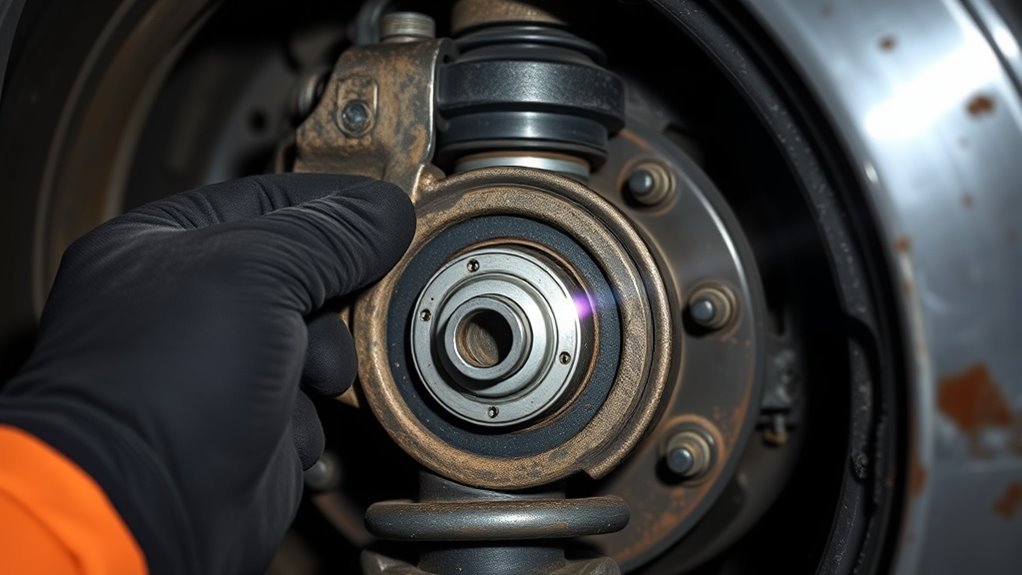
1 clear, distinct sound pattern can point you straight to a failing strut mount: clunks or bangs over bumps, pops on sharp turns, and knocking on rough pavement all indicate the mount isn’t securing or isolating the strut properly. You should treat these noises as actionable data during suspension diagnostics. Clunking or banging over bumps often means the mount is loose or worn and compromises stability; popping on turns signals the mount isn’t supporting lateral loads; knocking over uneven surfaces suggests the rubber isolator has deteriorated. Excessive noise under braking also fits this profile, showing the mount fails to absorb deceleration shock. For efficient noise troubleshooting, reproduce sounds at low speed and note where they originate (front/rear, left/right). Inspect mounts visually and feel for play in the strut top. Document findings, then act—repair or replace mounts to reclaim control and mobility. Regular checks let you liberate yourself from avoidable failures and maintain confident handling.
Risks of Ignoring Camry Strut Mount Failure
If you ignore a failing strut mount on your Camry, you’ll quickly compromise the car’s stability and handling—making loss of control more likely, especially during emergency maneuvers or abrupt steering inputs. You’ll feel excessive bouncing and a rough ride that erodes passenger safety and comfort. These symptoms aren’t just annoying; they create tangible safety concerns and expose you to avoidable risk.
Ignoring the issue also causes irregular tire wear and accelerates damage to adjacent suspension parts, increasing downtime and the overall cost implications for repairs. You deserve freedom from needless breakdowns and liability.
- Fear of a sudden skid or loss of control that traps you in traffic or hazardous conditions.
- Anger at mounting repair bills and wasted time when small fixes become major overhauls.
- Urgency to avoid risking loved ones because of deferred maintenance.
Acting sooner preserves your mobility and autonomy; neglecting strut mounts limits both.
Maintenance, Repair, and Replacement Options for Camry Strut Mounts
When you spot clunks, steering vibrations, or visible wear on a Camry’s strut mounts, schedule a prompt inspection and plan for coordinated repair or replacement to restore suspension integrity. You’ll perform regular strut mount maintenance by visually checking rubber deterioration, metal corrosion, and hearing for clunks during turns; factor in driving conditions and mileage to set inspection intervals. Minor wear may respond to cleaning, lubricating adjacent components, and tightening fasteners, but structural or noise symptoms demand component replacement. Replacement options include OEM mounts, high-quality aftermarket units, or complete strut-and-mount assemblies; you should favour paired replacement of mounts with struts to preserve suspension dynamics. Because disassembly of the suspension is required for safe, accurate installation, professional assistance is recommended to control torque specs, spring compression, and correct seating. Choose parts with clear specifications and warranties, document service history, and schedule periodic checks so your Camry remains safe and free to move as you intend.
After Replacement: Alignment, Testing, and When to Call a Pro
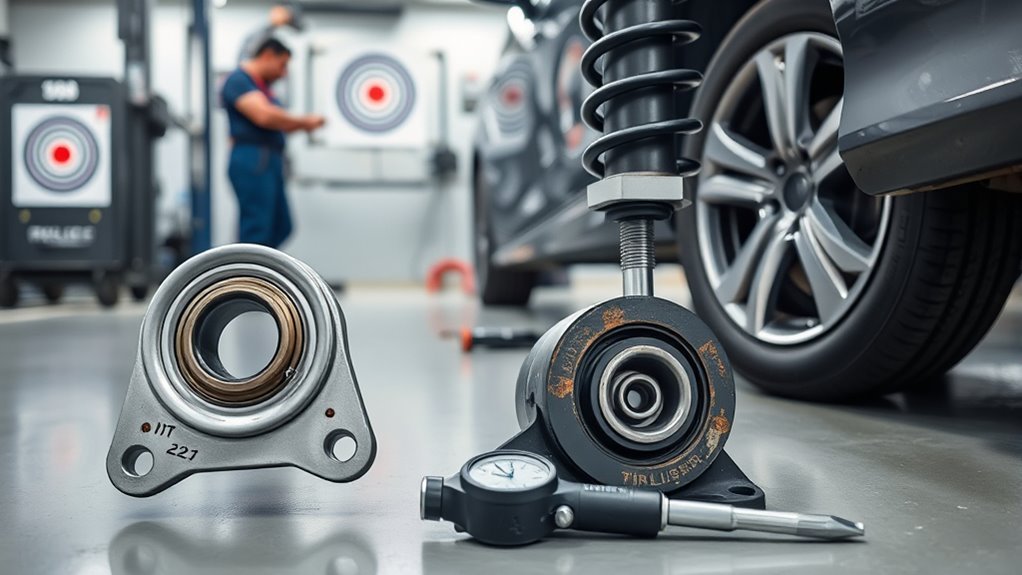
Although the new mounts and struts restore component integrity, you must follow with a professional wheel alignment and systematic road tests to verify geometry and ride quality. The alignment importance can’t be overstated: it prevents uneven tire wear, restores steering center, and lets the suspension do its job. After alignment, perform controlled handling tests over varied surfaces — smooth, chipped, and uneven — to confirm damping and mount isolation. You should notice firmer control and quieter operation; those gains signal a correct install.
If anomalies remain — clunks, pull, or wandering — don’t ignore them. Regular inspections after replacement help catch early wear or misalignment before it compromises safety.
- Reclaim confidence: precise alignment returns predictable steering and tire life.
- Test boldly: structured handling tests reveal hidden faults.
- Call a pro: persistent noise or abnormal behavior means expert diagnosis.
Act decisively; that freedom from worry is the payoff for strict post-replacement protocol.
Frequently Asked Questions
Can I Drive With a Bad Strut Mount?
You shouldn’t drive with a bad strut mount; strut mount symptoms like clunking, vibrations, and a bouncy ride compromise driving safety. Get inspections and prompt replacement to protect stability, avoid further suspension damage, and regain freedom.
How Do I Know if I Need Strut Mounts?
You’ll need strut mounts when strut mount symptoms appear: bouncy ride, clunks, uneven tire wear, braking dive, or visible cracks/rust. Do a strut mount inspection—probe mounts, check play and alignment; don’t ignore freedom-compromising faults.
What Does It Feel Like When Struts Go Bad?
You’ll feel looseness, bouncy rides, and handling issues like nose-dive braking; you’ll hear clunks, notice uneven tire wear and possible hydraulic leaks—these strut symptoms warn you to act, reclaim control, and free yourself from unsafe driving.
Conclusion
Keep an eye on uneven tire wear, clunking over bumps, and steering shimmy—they’re the top signs your Camry’s strut mount is failing and need prompt attention. Don’t let a small problem snowball into a safety issue: replace worn mounts, get a proper alignment, and test-drive under varied conditions. If noises or handling problems persist after DIY checks, call a pro—better to fix it right the first time than pay twice later.