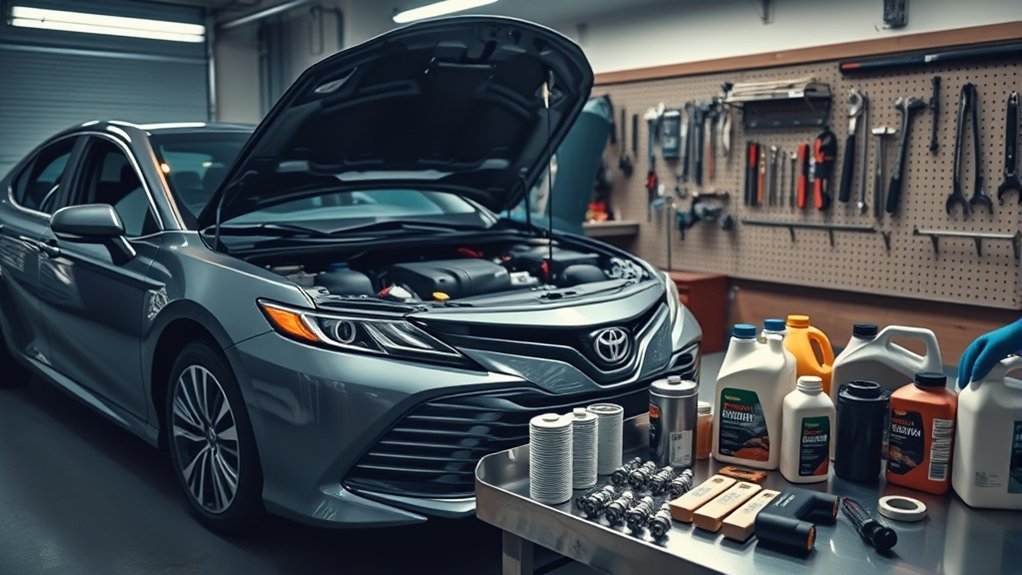
If you drive a Toyota Camry in severe conditions—dirt roads, heavy loads, short cold trips, or mountains—you should tighten service intervals and get oil changes every 5,000–7,000 miles or every six months, rotate tires, and inspect brakes, belts, fluids, and tire pressure at each visit. At 15k change air and cabin filters; at 30k inspect suspension and drive systems; at 60k replace spark plugs and check coolant. Continue for detailed checklists and scheduling tips.
When to Use the Toyota Camry Severe-Driving Schedule

If you regularly drive on dirt roads, haul heavy loads, make frequent short trips in freezing weather, or operate in mountainous terrain or extreme conditions, use the Camry’s severe-driving maintenance schedule; these conditions increase wear and demand more frequent service. You’ll switch to severe driving when your patterns match listed criteria: repeated short cold trips, heavy payloads, extensive idling (delivery use), unpaved routes, steep grades, or extreme climates. The maintenance importance is clear: increased engine strain and component wear require tighter service intervals—typically oil changes every 5,000–7,000 miles and more frequent inspections. Consult your owner’s manual or a qualified technician to verify qualification and tailor intervals to your environment. You’re responsible for proactive scheduling: log conditions, compare them to manual thresholds, and authorize the adjusted plan. This preserves reliability, maximizes lifespan, and keeps you free from breakdowns that constrain mobility. Adopt the severe-driving schedule when justified; it’s preventive control, not optional risk.
Every 5,000 Miles / 6 Months : Oil, Tires, and Quick Checklist
Every 5,000 miles or every 6 months, perform an oil change with a new filter, rotate the tires, and run a quick multi-point inspection to catch early wear or leaks. You’ll preserve engine health and maintain control under severe-driving conditions by following this cadence. Replace the oil filter every service to keep contaminants from degrading performance. Execute tire rotation to equalize wear patterns and extend tire life.
Every 5,000 miles (or 6 months), change oil and filter, rotate tires, and run a quick multi-point inspection.
- Change engine oil and install a new oil filter to spec.
- Perform tire rotation and verify alignment indicators.
- Check brake fluid, coolant, washer fluid levels; top as needed.
- Inspect tire pressure, tread depth, brakes, lights, and belts.
You should act decisively: correct low pressure, marginal tread, or fluid deficits immediately. This regimen minimizes failure risk and keeps you free to move without mechanical constraint. Stay disciplined; routine attention every 5,000 miles is the most effective resistance against roadside immobilization.
Every 15,000 Miles : Air Filters, Cabin Filter, and Visibility Items
At 15,000 miles, inspect and replace the engine air filter and cabin air filter as needed to preserve fuel economy, protect engine performance, and maintain interior air quality. You’ll perform targeted filter maintenance: remove and examine both filters for clogging, tears, or heavy contamination. A restricted engine air filter lowers airflow, raising fuel consumption and stressing the intake system; replace it to restore power and efficiency. The cabin filter affects air quality and passenger comfort—swap it to sustain clean ventilation and reduce allergens.
Simultaneously verify visibility systems: check windshield wipers for blade wear, replace if streaking or splitting appears, and top washer fluid with a winter or all-season solution suited to your climate. Test the washer pump and spray pattern to guarantee full windshield coverage. These actions are straightforward, protect your autonomy on the road, and reduce risk in adverse weather. Execute them every 15,000 miles to keep systems reliable and responsive.
Every 30,000 Miles : Brakes, Suspension, and Drive-System Inspection
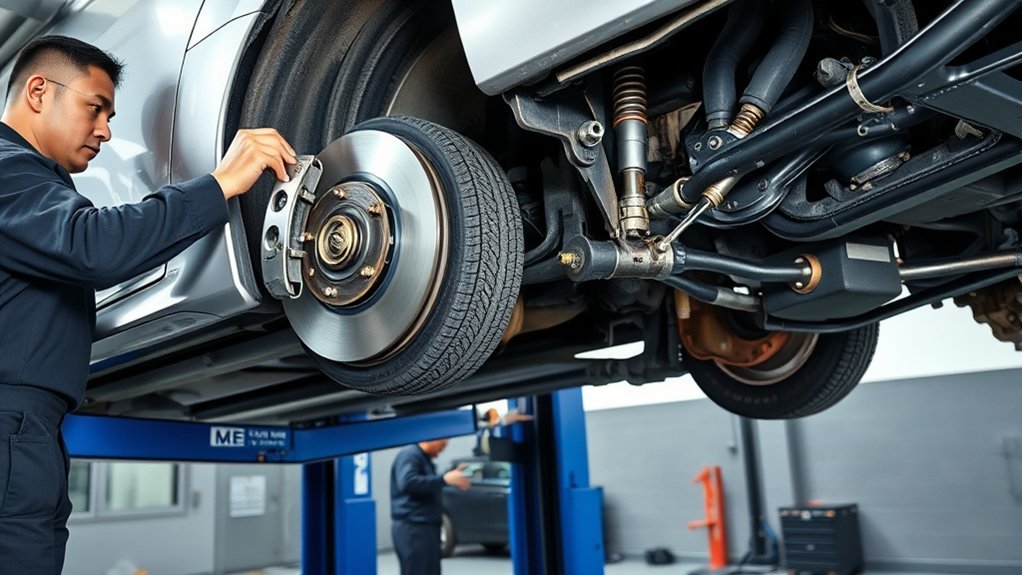
After handling filters and visibility, plan a 30,000-mile service that inspects braking components, suspension, steering, and drive systems to confirm safety and reliability. You’ll get a focused evaluation that preserves control and freedom on the road. Brake maintenance targets pads, rotors, calipers, and hydraulic lines to confirm stopping power and detect uneven wear. Suspension care examines shocks, struts, bushings, and ball joints to maintain handling and ride quality. Drive belts and hoses receive a visual and tactile check for cracks, glazing, or leaks that threaten mission-critical systems.
- Inspect brake pads and rotors for thickness, scoring, and runout.
- Check calipers, lines, and fluid level for leaks or contamination.
- Examine suspension components and steering linkage for play and deterioration.
- Inspect belts and hoses for wear, soft spots, and secure routing.
You’ll identify faults early, prevent breakdowns, and retain authority over vehicle performance—practical, precise maintenance that supports independence.
At 60,000 Miles : Spark Plugs, Coolant, and Belt Inspections
Regularly at 60,000 miles you should replace spark plugs on the 3.5L V6, inspect drive belts for wear, and perform a coolant system check — including a flush if needed — to preserve engine performance and prevent overheating. You’ll schedule spark plug replacement for the V6 now; it restores ignition efficiency, reduces misfires, and keeps fuel delivery predictable under load. If you drive the 2.5L 4-cylinder, note its plugs are due much later (144 months/120,000 miles), so don’t replace unnecessarily. Inspect drive belts for cracks, glazing, or looseness; a failed belt compromises alternator, power steering, and A/C systems and limits your autonomy. Execute cooling system maintenance: pressure-test the system, inspect hoses and the thermostat, and flush and refill coolant to prevent corrosion and overheating. Use OEM-spec fluids and torque values, document service, and act decisively on any anomalies. This regimen preserves reliability and gives you control over long-term vehicle performance.
90,000+ Miles : Drive Belts, Vacuum Pump, and Major Replacements
Starting at 72 months (60,000 miles) you should inspect the drive belts every 18 months or 15,000 miles to catch wear, cracking, or tension loss before they affect engine accessories. For Toyota’s 3.5L V6, plan a vacuum pump replacement for the brake booster at 144 months (120,000 miles); for the 2.5L 4‑cylinder, inspect the vacuum pump at the same interval and replace spark plugs at 144 months (120,000 miles) to preserve efficiency. Following these schedules prevents failures and maintains reliable brake assist and accessory operation.
Drive Belt Inspection & Replacement
At 60,000 miles (72 months) and every 15,000 miles or 18 months thereafter, inspect all drive belts, tensioners, and related components to catch wear, cracking, glazing, or misalignment before they cause engine or accessory failure. You’ll enforce drive belt maintenance and inspection frequency to protect engine function and freedom from roadside breakdown. Inspect visually and by hand for glazing, fraying, or uneven wear; check tensioner operation and pulley alignment; listen for squeal under load; verify routing and mounting hardware.
- Visual check: cracks, frays, glazing
- Tensioner: smooth travel, correct tension
- Alignment: pulleys concentric, no wobble
- Replace: at first sign of damage or per OEM interval
Act decisively: replace compromised belts immediately to preserve reliability and autonomy.
Vacuum Pump & Brake Booster
Check the vacuum pump and brake booster at the 120,000-mile (144-month) service interval to verify consistent brake assist and prevent vacuum-related failures. You’ll replace the vacuum pump on 3.5L V6 models at that interval; 2.5L 4-cylinder cars require inspection then as well. Prioritize vacuum maintenance to preserve brake performance and avoid sudden assist loss. Inspect drive belts starting at 60,000 miles (72 months) and every 15,000 miles (18 months) afterward; worn belts can compromise accessory-driven pumps and ancillaries. Follow manufacturer intervals for belt and pump work to maintain safety margins. If you’re committed to freedom behind the wheel, adhere to these technical checks: timely vacuum pump replacement, disciplined belt inspection, and prompt corrective action to sustain reliable braking and vehicle control.
Special-Condition Checks : Dusty Roads, Heavy Loads, Short Cold Trips, and Idling
If you frequently drive on dusty roads, inspect air filters, seals, and cabin intake for dust ingress and replace filters more often. When carrying heavy loads, check suspension, brakes, tire wear, and transmission fluid for accelerated stress and service components as needed. For short cold trips, monitor oil condition and condensation-related issues and consider shortened service intervals per the owner’s manual or a technician’s advice.
Dust Ingress Inspections
When you frequently drive on dusty roads or operate under heavy loads, perform targeted dust ingress inspections more often to prevent air-filter clogging, accelerated suspension wear, and compromised brake performance. You’ll prioritize dust filter maintenance and regular air quality checks to preserve engine breathing and cabin safety. Inspect intake housings, seals, and chassis joints for breaches; check brake components and suspension boots for abrasive contamination; and verify cabin filter condition to maintain occupant health. Follow owner’s manual intervals and advance service if you run short trips or idle extensively.
- Inspect air filter and housing for packing and tears.
- Check suspension boots, shock mounts, and bushings for abrasion.
- Examine brake calipers, pads, and dust shields for grit accumulation.
- Verify cabin filter and ventilation seals for airtight integrity.
Load-Related Service Checks
Because special operating conditions accelerate wear, you should increase the frequency and scope of inspections for dusty roads, heavy loads, short cold trips and extended idling to protect engine, brake, suspension and filtration systems. Inspect and replace air filters more often on dusty routes to preserve combustion efficiency and avoid particulate-induced damage. Monitor oil quality and change intervals when idling frequently; extended idle degrades oil additives faster. Verify suspension components and brakes each time load capacity increases; heavy loads alter wear patterns and demand shorter service intervals. Check fluid levels and contamination after repeated short cold journeys, and adjust maintenance frequency to reflect these stresses. Document service actions and set a strict schedule to keep the Camry reliable and free from preventable failure.
Cold Short-Trip Care
Although short cold trips can seem harmless, they prevent your Camry’s engine from reaching full operating temperature and accelerate wear on oil, rings, and exhaust components, so you should treat them as a maintenance stressor. You’ll debunk maintenance myths by acting proactively: repeated sub‑5‑mile trips in freezing weather accelerate oil contamination and combustion residue, so increase oil change frequency and inspections. If you face dusty roads, heavy loads, or extensive idling, adapt service intervals to preserve performance and freedom from breakdowns. Consult the owner’s manual or a technician to tailor plans.
- Increase oil change cadence for cold engine abuse
- Inspect brakes and suspension under heavy loads
- Replace air and cabin filters on dusty routes
- Schedule checks for vehicles with prolonged idling
How to Schedule Service and What to Tell the Technician for Severe-Driving Care
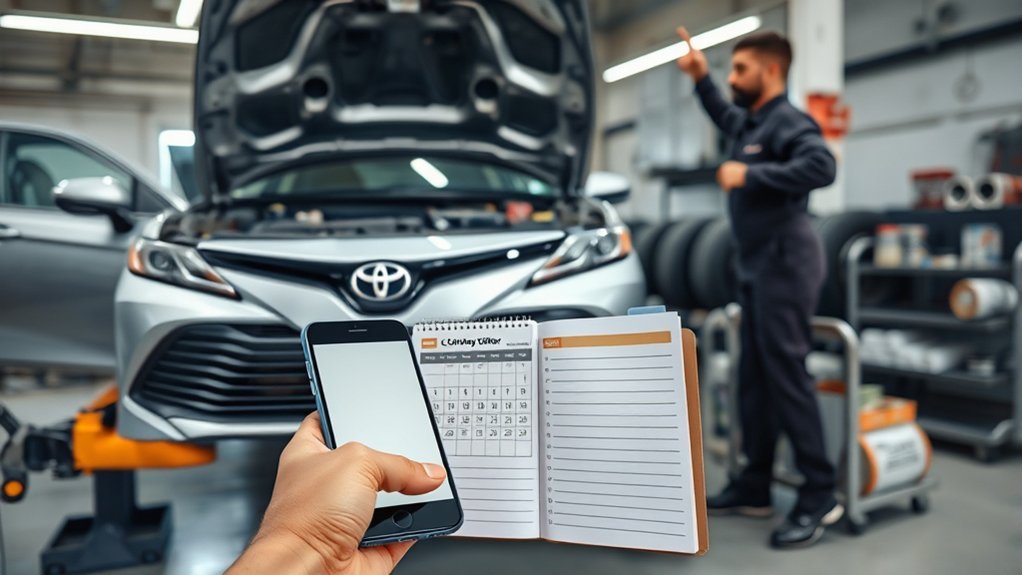
1 clear action will keep your Camry reliable under severe-driving conditions: schedule service every 5,000 miles or every 6 months and tell the technician about the specific stresses your vehicle faces. Use service reminders and clear technician communication to reinforce that cadence. Book appointments proactively and flag your vehicle as “severe-use” in service notes.
When you arrive, state conditions concisely: frequent dirt or dusty roads (request more frequent oil changes and air-filter inspections), regular heavy loads (ask for suspension and brake checks), short cold trips (request engine and battery health inspections), and extensive idling (prioritize engine-component and fluid-level checks). Confirm which items the shop will advance in frequency and get a written revised maintenance plan.
Insist on measured outcomes: documented intervals, parts inspected, and any corrective actions. This empowers you to reclaim control of maintenance, guarantees transparency, and keeps your Camry durable under harsh use.
Frequently Asked Questions
What Are the Major Service Intervals for a Toyota Camry?
You should service your Camry every 5,000 miles or 6 months, inspect major systems every 30,000 miles, replace spark plugs at 60k/120k depending on engine, and change coolant at 120k for peak engine performance, maintenance tips included.
What Are the Severe Driving Conditions for Toyota?
Think of your Camry as a battle-hardened soldier; you’ll face extreme temperatures, heavy traffic, frequent short trips, dusty or dirt roads, heavy loads and extensive idling — conditions that’ll demand stricter, more frequent maintenance to keep it free.
At What Mileage Does Toyota Recommend Transmission Flush?
Toyota generally recommends a transmission flush every 30,000–60,000 miles; you’ll extend transmission lifespan by using correct fluid types, checking levels under severe conditions, and following the owner’s manual for liberation through vehicle reliability.
Conclusion
So you’ll follow the “severe” schedule like it’s optional—until the Camry proves otherwise. Stick to 5,000‑mile oil and tire checks, swap filters and inspect visibility at 15k, audit brakes and suspension at 30k, change plugs and coolant at 60k, then tackle belts and big replacements by 90k. Mention dusty roads, heavy loads or lots of idling when you schedule. Do that, and the car won’t surprise you—because breakdowns aren’t polite.