

A Toyota Camry needs scheduled service every 5,000 miles or 6 months, whichever comes first. Most visits include tire rotation and inspections; many late-model Camrys use a 10,000-mile/12-month oil interval under normal conditions. Your exact checklist changes by model year, engine, drivetrain, and driving conditions, so use this mileage guide to plan and your Toyota warranty and maintenance guide to confirm.
Quick Answer
Service a Toyota Camry every 5,000 miles or 6 months, whichever comes first. Rotate the tires and complete the listed inspections at each visit. Many late-model Camrys use a 10,000-mile/12-month oil interval under normal conditions; use a 5,000-mile interval only when your year-specific Toyota guide requires it for your driving conditions.
Key Takeaways
- Use the 5,000-mile/6-month schedule as your main reminder for inspections, tire rotation, and service checks.
- For many late-model Camrys, the normal oil and filter interval is 10,000 miles or 12 months. The shorter interval and qualifying conditions vary by model year.
- At 30,000 miles, expect filter replacement and deeper inspections. At 60,000 miles, check model-specific items such as 2GR-FKS V6 spark plugs and severe-use AWD or transmission-fluid service.
- The 2025 schedule lists initial engine-coolant service at 100,000 miles, spark plugs at 120,000 miles, and initial inverter-coolant service at 150,000 miles.
- Keep receipts, mileage, dates, part numbers, and notes. A clean service history helps with warranty questions, resale value, and future diagnosis.
At a Glance
| Time Required | Varies by service item; quick owner checks take less time than tire rotation, oil service, or a major inspection |
| Difficulty | Basic checks are owner-friendly; lifting, fluid replacement, brake work, and hybrid-system work require proper tools and experience |
| Tools Needed | Owner’s manual, tire-pressure gauge, tread-depth gauge, service log, torque wrench, jack and jack stands if rotating tires |
| Cost | Varies by model year, parts, region, and shop; get an estimate before major services |
How Often Should You Service a Toyota Camry?

Toyota’s factory schedule is built around a simple rule: service your Camry every 5,000 miles or 6 months, whichever comes first. If you reach 5,000 miles before 6 months, schedule the service by mileage. If 6 months arrives first, schedule it by time even if you drove fewer miles.
That 5,000-mile visit does not always mean an oil change. For many late-model Camrys, the 5,000-mile service includes tire rotation, fluid-level inspection, wiper inspection, brake inspection, and maintenance-reminder reset. The oil and filter are commonly replaced at 10,000 miles or 12 months under normal service, while Toyota-listed special operating conditions can require oil and filter replacement every 5,000 miles or 6 months. Check your exact guide through Toyota Owners Manuals and Warranties.
Note: The U.S.-market 2025 Camry uses a hybrid powertrain. Older Camrys may have a 2.5L four-cylinder, hybrid system, 3.5L V6, front-wheel drive, or all-wheel drive, so mileage items vary by model year and powertrain.
Which Schedule Applies to Your Camry?
- 2025 U.S. Camry: Use the hybrid schedule. Normal oil service is listed at 10,000 miles/12 months, initial engine-coolant service at 100,000 miles, spark plugs at 120,000 miles, and initial inverter-coolant service at 150,000 miles.
- 2018–2024 2.5L or hybrid: Use the guide for the exact year. The normal oil interval is commonly 10,000 miles/12 months, but the conditions that trigger shorter service vary by year.
- 2018–2024 3.5L V6 with the 2GR-FKS engine: Toyota lists spark plug replacement at 60,000 miles.
- AWD models: Follow the AWD-specific inspection and fluid items. Special operating conditions can add rear-differential, transfer-case, or automatic-transmission-fluid service.
Toyota Camry Maintenance Schedule by Mileage
Use this table as a planning guide, then verify the final checklist in your year-specific Toyota maintenance guide. The intervals summarize the 2025 hybrid schedule and important differences found in 2018–2024 four-cylinder, hybrid, 2GR-FKS V6, and AWD schedules.
| Mileage / Time | What to Do | Important Notes |
|---|---|---|
| 5,000 miles / 6 months | Rotate tires, inspect fluid levels, inspect wipers, inspect brakes, check floor mat installation, reset maintenance reminder. | Oil/filter is due at 5,000 miles only when the exact year-specific guide requires it for listed special operating conditions. |
| 10,000 miles / 12 months | Repeat 5k checks, replace engine oil and filter on many late-model Camrys, rotate tires, replace cabin air filter where scheduled. | Use the viscosity, specification, and capacity in the owner’s manual for your exact model year and powertrain. |
| 15,000 miles / 18 months | Rotate tires and inspect brakes, fluids, wipers, steering, suspension, drive-shaft boots, and related components where listed. | A good checkpoint for tire wear, brake condition, and alignment symptoms. |
| 30,000 miles / 36 months | Replace engine air filter where scheduled, replace cabin air filter where scheduled, replace oil/filter if due, rotate tires, inspect fluids and drivetrain components. | A common “deeper inspection” milestone for filters, brakes, steering, suspension, coolant condition, and transmission leakage checks. |
| 60,000 miles / 72 months | Perform major inspection, replace filters where due, inspect belts, brakes, steering, suspension, transmission, coolant, exhaust, and AWD items if equipped. | 2018–2024 Camrys with the 2GR-FKS V6 list spark plugs at 60k. The 2025 guide also adds certain fluid replacements at 60k under listed severe-use conditions. |
| 100,000 miles / 120 months | Inspect major systems and replace engine coolant where scheduled. | Do not assume spark plugs are due at 100k; many late-model Camrys list them at 120k. |
| 120,000 miles / 144 months | Replace spark plugs on many four-cylinder and hybrid Camrys, including the 2025 Camry schedule; repeat filters, fluids, tire rotation, and inspections. | Use the same plug type as originally equipped and follow Toyota torque specs. |
| 150,000 miles / 180 months | Continue recurring 5k/10k service. On the 2025 schedule, engine coolant reaches its next interval and inverter coolant is initially replaced at 150,000 miles. | Hybrid cooling circuits are model-specific; confirm the correct coolant circuit, fluid, and interval before service. |
[Products Worth Considering]

This complete ignition kit includes six direct replacement coil packs and six pre-gapped iridium spark plugs designed for select Toyota and Lexus 3.5L V6 vehicles. It can help address misfires, rough idle, hard starting, hesitation, and check engine light issues caused by worn ignition components while supporting smooth, reliable engine performance. Built for easy installation and backed by testing, warranty coverage, and technical support, it is a convenient tune-up solution.

This dial type tire tread depth gauge helps you quickly check tread wear on motorcycles, cars, trucks, and buses with easy-to-read 1/32-inch increments. Its colorful zone markings make it simple to assess tire condition for safer driving in different weather, while the durable zinc cast body and legible dial provide dependable everyday use.

This 12-pack oil filter and drain plug washer set is designed for a wide range of Toyota and Scion vehicles, helping support clean oil flow and dependable engine performance. It replaces several common OE part numbers and offers an easy-fit solution for routine maintenance. Built with corrosion-resistant materials and efficient filtration, it helps keep engine contaminants out and supports longer service life.
0–30,000 Mile Maintenance Checklist
The first 30,000 miles set the baseline for tire wear, oil-change history, filter condition, brake condition, and fluid checks. Keep each receipt and write down the date, odometer reading, work performed, oil type, filter part number, and any inspection notes.
[Products Worth Considering]

These replacement windshield wiper blades are designed for Toyota Camry models from 2018 through 2024, delivering a precise fit for reliable all-weather visibility. Built with durable rubber and a beam-style design, they help resist cracking and ensure even pressure across the windshield for smoother, clearer wiping. The complete front set is made for easy home installation without special tools, making maintenance simple and convenient.

This dual filter kit helps keep your vehicle running and riding cleaner by replacing both the engine air filter and cabin air filter at the same time. It is designed for a range of Toyota and Lexus hybrid models, helping support engine performance while reducing odors and airborne particles inside the cabin. Built with high-quality filtration materials, it offers a convenient maintenance solution for routine filter replacement.

This LUMITECO tire tread depth gauge set makes it easy to monitor tire wear and maintain safer driving performance. The color-coded scale provides quick, easy-to-read measurements, while the compact pocket-size design and included clip make it convenient to keep in your vehicle or toolbox. Suitable for cars, trucks, motorcycles, and more, it offers a simple reusable way to check tread depth whenever needed.
Does a Toyota Camry Need an Oil Change Every 5,000 or 10,000 Miles?
For many late-model Camrys, the normal oil and filter interval is 10,000 miles or 12 months. The shorter 5,000-mile/6-month interval is not a blanket rule. In the 2025 guide, it applies when most driving is on dirt, dusty or muddy roads, or roads with melted snow. Some 2018–2024 guides also list towing or heavy loading, repeated short trips in freezing weather, and extensive idling or low-speed commercial use. Check the conditions in the guide for your exact year.
When changing oil, use the viscosity, oil specification, and capacity listed in the owner’s manual for your exact model year and powertrain. Toyota’s maintenance guide directs owners to the Owner’s Manual for oil selection, so do not copy the oil grade or fill quantity from another Camry year.
- Let the engine cool enough to work safely, then drain the used oil into an approved container.
- Replace the oil filter and drain-plug gasket if required.
- Reinstall the drain plug using the correct torque from Toyota service information.
- Refill with the owner’s-manual-specified oil type and amount.
- Start the engine, check for leaks, shut it off, wait a few minutes, and recheck the level.
- Reset the maintenance reminder only after the service is complete.
- Recycle used oil and filters through an approved collection site.
Warning: Do not work under a Camry supported only by a jack. Use rated jack stands on solid ground, keep clear of hot exhaust and oil, and never touch orange high-voltage hybrid cables or hybrid battery components.
How Often Should You Rotate and Inspect Toyota Camry Tires?
Rotate the tires every 5,000 miles or 6 months unless your owner’s manual or tire manufacturer says otherwise. Follow the correct pattern for your drivetrain and tire type, then torque the lug nuts to the specification for your wheel and model year.
Check tire pressure at least monthly when the tires are cold. NHTSA defines cold tires as tires on a vehicle that has not been driven for at least three hours. Use the pressure on the driver’s door-jamb placard, not the maximum pressure printed on the tire sidewall. Inspect tread depth and tire condition, including cuts, punctures, bulges, scrapes, cracks, and bumps. Replace a tire when its tread reaches 2/32 inch.
Pro Tip: Write the tread depth for each tire in your service log. If the front tires wear faster on one edge, you may catch an alignment or suspension issue before it ruins a full tire set.
30,000–60,000 Mile Service: Filters, Fluids, Brakes, and Belts
Between 30,000 and 60,000 miles, the Camry maintenance schedule moves beyond basic checks. This is when filters, brake inspections, steering and suspension checks, fluid inspections, drivetrain inspections, and model-specific items become more important.
- Engine air filter: Often replaced around 30,000 miles on late-model schedules, sooner if dusty driving is common.
- Cabin air filter: The 2025 schedule lists replacement every 10,000 miles/12 months. Other years vary, and dust or heavy traffic may justify more frequent replacement.
- Brake system: Inspect pads, discs, lines, hoses, parking brake operation, and brake-fluid condition.
- Cooling system: Inspect coolant level, condition, freeze protection, radiator, condenser, hoses, and signs of leaks.
- Transmission and drivetrain: Inspect for leakage and follow the year-specific fluid schedule. AWD models add rear-differential, transfer-case, or other drivetrain items that front-wheel-drive cars do not.
- Hybrid components: On the 2025 Camry, inspect the HV battery cooling intake filter at recurring 5,000-mile checkpoints and clean it at 20,000-mile intervals. Keep the intake area clear of lint, pet hair, and cargo. See the Camry hybrid battery cooling system guide for the system layout and warning signs.
[Products Worth Considering]

This A-Premium cartridge engine oil filter is designed for a wide range of Toyota and Lexus vehicles, helping support cleaner oil flow and dependable engine protection. With high filtration efficiency and included O-rings, it offers a practical replacement solution for routine maintenance. Built for extended service intervals, it is suitable for conventional or synthetic oil applications.

KAX CA10171 premium engine air filter is designed as a direct replacement for select Toyota Camry and Venza models, helping maintain clean airflow to protect critical engine components. Its high-performance filter media delivers strong filtration efficiency and long service life for dependable everyday driving. With a precise rectangular fit and easy replacement design, it supports better acceleration, consistent performance, and improved fuel economy.
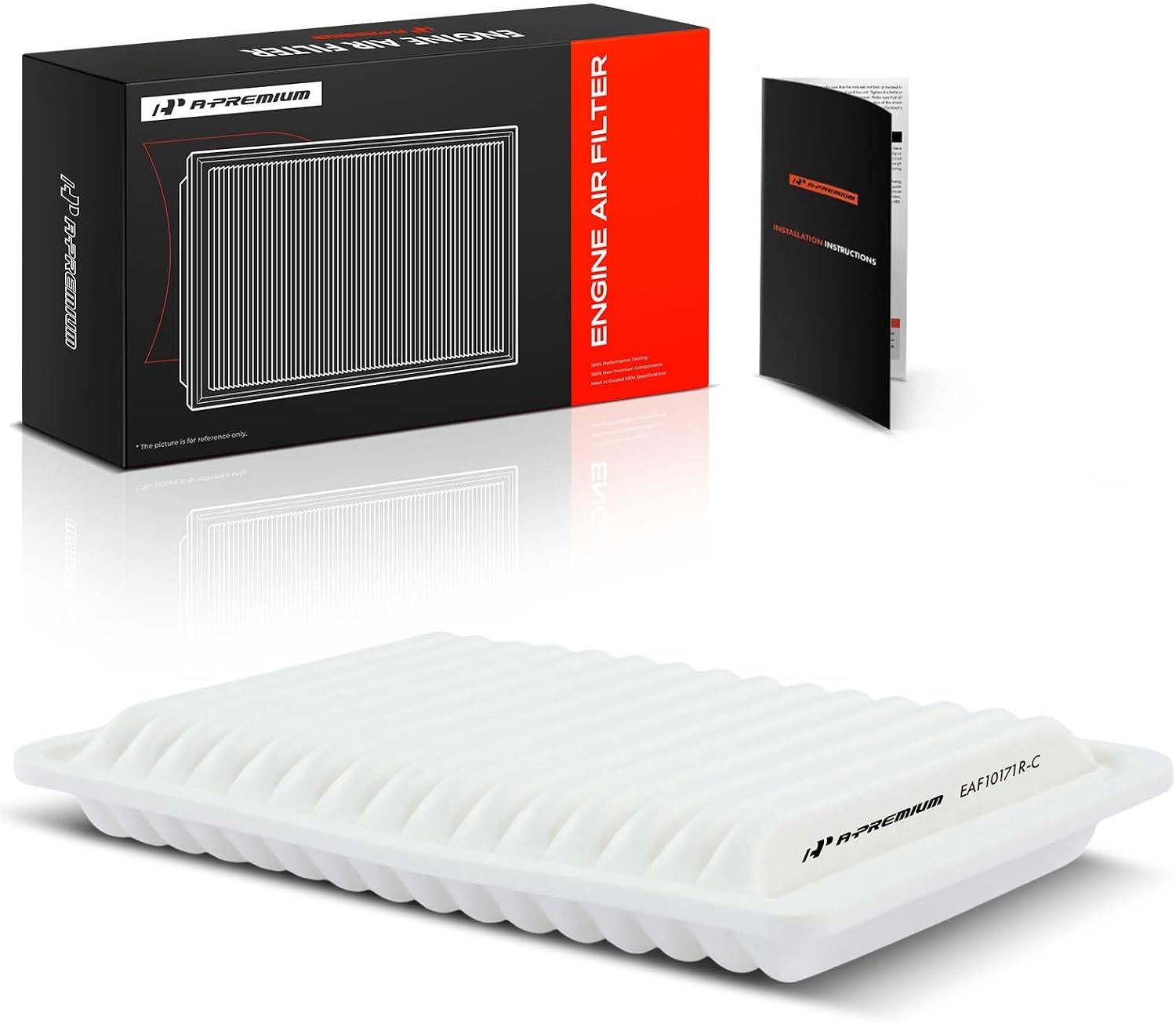
This A-Premium engine air filter is designed to help Toyota Camry and Venza models maintain cleaner airflow and stronger engine performance. Its fine filtration media captures debris while keeping air moving efficiently, and the rectangular, front-mounted design offers a direct replacement fit for select vehicles. Replace it regularly to support engine efficiency and cleaner intake air.
When Does a Toyota Camry Need Transmission Fluid Service?
Toyota does not use one universal transmission-fluid replacement interval for every Camry. The 2025 guide schedules inspections and adds automatic-transmission-fluid replacement at 60,000 miles when most driving involves towing, a car-top carrier, or heavy vehicle loading. Other years and transmissions use different inspection or replacement rules, so avoid a generic “flush every X miles” package unless it matches your guide or a documented inspection finding.
If you own a 2018–2024 Camry with the 3.5L 2GR-FKS V6, Toyota’s maintenance guide lists spark plug replacement at 60,000 miles. Four-cylinder and hybrid Camrys often use a later interval, commonly 120,000 miles, but the exact answer depends on the model year and engine.
60,000, 100,000, and 120,000 Mile Tasks
Higher-mileage service protects expensive parts: cooling systems, ignition components, belts, brakes, suspension, steering, transmission, and hybrid cooling circuits. Do not rely on a generic internet schedule alone at these milestones. Use your VIN, year, engine, and drivetrain to confirm what Toyota requires.
What Is Included in a Toyota Camry 60,000-Mile Service?
At 60,000 miles, perform the major inspections listed for your model year. Common items include oil and filter if due, tire rotation, engine and cabin air filters, brakes, fluids, steering, suspension, drive-shaft boots, exhaust, radiator/condenser, and transmission leakage. The 2018–2024 Camry with the 2GR-FKS V6 also lists spark plug replacement at this mileage.
What Is Included in a Toyota Camry 100,000-Mile Service?
At 100,000 miles, the Camry needs the scheduled inspections for its model year. On the 2025 schedule, initial engine-coolant replacement is listed at 100,000 miles or 120 months, then at recurring intervals afterward. Inspect belts, hoses, brakes, suspension, steering, drivetrain seals, tires, and hybrid cooling components where listed. Use the Camry serpentine belt guide if you find cracking, glazing, noise, or tracking problems.
What Is Included in a Toyota Camry 120,000-Mile Service?
At 120,000 miles or 144 months, many four-cylinder and hybrid Camrys, including the 2025 Camry schedule, call for spark plug replacement. Use the same type of plugs as originally equipped, follow the correct gap and torque procedure, and avoid mixing aftermarket parts with different replacement intervals unless the part maker’s schedule is documented.
The best Camry maintenance schedule is not just mileage-based. It is mileage, time, model year, drivetrain, engine type, and driving-condition based.
When Should You Use the Severe-Driving Maintenance Schedule?

Toyota’s special-operating-condition list changes by model year. Apply the additional service only when most of your driving matches a condition listed in your exact guide, not after one occasional trip. The 2025 schedule and the 2018–2024 schedules do not use identical triggers, so do not copy a severe-use checklist from another Camry year.
Examples include:
- Dirt, dusty or muddy roads, or roads with melted snow: The 2025 guide lists additional 5,000-mile oil service and more frequent inspections for relevant filters, steering, suspension, and drive-shaft components.
- Repeated short trips in freezing weather: This appears in some 2018–2024 guides as a reason for shorter oil intervals. Confirm that your model year lists it.
- Extensive idling or low-speed commercial use: Some earlier late-model guides list taxi, police, delivery, or similar use as a shorter oil-service trigger.
- Heavy loading, car-top carrier use, or towing where permitted: Depending on the year, Toyota may add oil, chassis-fastener, automatic-transmission-fluid, or AWD-fluid service.
- AWD use in harsh conditions: Follow the rear-differential, transfer-case, drive-shaft, and fastener checks listed for your exact AWD system.
Note: Not every Camry is designed for towing. Check the owner’s manual before towing, carrying heavy loads, or using a roof-mounted carrier.
Seasonal Camry Checks: Winter and Summer Prep
Seasonal checks do not replace scheduled maintenance, but they help prevent weather-related failures. Do them before the first major cold snap and before summer heat or long road trips.
Winter Readiness Checklist
Before winter, focus on traction, visibility, batteries, coolant, and emergency supplies.
- Check tire pressure cold and adjust to the door-jamb placard.
- Inspect tread depth and sidewalls; consider winter tires if snow and ice are common where you drive.
- Check brake response, pad wear, and rotor condition.
- Confirm coolant level and freeze protection match Toyota specifications.
- Replace worn wiper blades and use low-freeze washer fluid.
- Check headlights, brake lights, turn signals, emergency flashers, and interior lights.
- Keep a winter kit with an ice scraper, small shovel, jumper cables, flashlight, warning devices, first-aid kit, blanket, phone charger, water, food, and needed medicine.
Summer Cooling Inspection
Summer heat stresses coolant, tires, air conditioning, and batteries. Before long drives, inspect the radiator, condenser, coolant level, coolant condition, hoses, and visible leaks. Confirm the A/C cools normally and address weak cooling before extreme heat arrives. Review the Camry radiator hose warning signs if you see swelling, cracking, seepage, or dried coolant residue.
Check tire pressure again as temperatures rise. Underinflated tires build heat faster and can wear unevenly. Also confirm windshield washer fluid, brake-fluid level, engine-oil level, and the condition of belts and hoses.
Maintenance Records, Reminders, and DIY Safety
Good records are part of good maintenance. For every service, record the date, mileage, service performed, parts installed, oil type, filter brand or part number, tire tread depths, tire pressures, and any technician notes. Keep receipts in a folder or scan them into cloud storage. For long-term planning, see how maintenance history affects Toyota Camry lifespan.
Factory Schedule vs. Dealer Recommendations
Toyota notes that a dealer may recommend maintenance more often than the factory schedule and that those extra services are not required to maintain warranty coverage. Before approving an added service, ask which Toyota interval or inspection finding supports it, what fluid or part will be used, and whether the recommendation applies to your model year and driving conditions.
The Camry’s maintenance reminder is a scheduled-service reminder, not always a sign that something is broken. Reset it only after the required service is complete. If a warning light appears for oil pressure, charging system, brakes, hybrid system, coolant temperature, or check engine, treat it differently from a routine maintenance reminder and diagnose it promptly.
DIY maintenance is reasonable for owners with the right tools and experience, but some tasks should be left to a qualified technician. Hybrid high-voltage components, brake hydraulic work, air-conditioning service, sealed drivetrain leakage, coolant replacement, and torque-critical repairs can create safety and warranty problems if done incorrectly.
Frequently Asked Questions
What is the recommended maintenance schedule for a Toyota Camry?
Service a Toyota Camry every 5,000 miles or 6 months, whichever comes first. At those visits, rotate tires and inspect fluids, brakes, wipers, and key systems. Oil and filter timing depends on model year and driving conditions; many late-model Camrys use 10,000 miles or 12 months under normal service.
Does a Toyota Camry need an oil change every 5,000 or 10,000 miles?
Many late-model Camrys call for oil and filter replacement every 10,000 miles or 12 months under normal conditions. Use the shorter interval only when the year-specific Toyota guide lists it for the conditions that make up most of your driving.
What is the 10K maintenance on a 2025 Camry?
For a 2025 Camry, the 10,000-mile/12-month service commonly includes oil and filter replacement, tire rotation, cabin air filter replacement, fluid-level inspection, wiper inspection, brake inspection, floor mat check, and maintenance-reminder reset. Confirm the exact checklist in the 2025 Toyota Camry Warranty & Maintenance Guide.
What happens at 30,000 miles on a Toyota Camry?
At 30,000 miles, expect a deeper service: tire rotation, oil and filter if due, engine air filter replacement where scheduled, cabin air filter replacement where scheduled, brake inspection, fluid inspection, steering and suspension checks, drivetrain leakage inspection, and hybrid or AWD checks if equipped.
What is the 100,000-mile service on a Toyota Camry?
The 100,000-mile service includes the inspections listed for the model year plus coolant service where scheduled. On the 2025 Camry schedule, initial engine-coolant replacement is listed at 100,000 miles or 120 months. Many four-cylinder and hybrid schedules list spark plugs later, at 120,000 miles.
When should Toyota Camry spark plugs be replaced?
Spark plug timing depends on engine and model year. The 2018–2024 Camry with the 2GR-FKS V6 lists spark plug replacement at 60,000 miles, while many four-cylinder and hybrid Camrys, including the 2025 schedule, list replacement at 120,000 miles.
How often should Toyota Camry transmission fluid be changed?
Toyota does not use one replacement interval for every Camry. Follow the transmission-specific inspection and replacement items in your year’s guide. For the 2025 Camry, automatic-transmission-fluid replacement is listed at 60,000 miles under certain special conditions such as towing, car-top carrier use, or heavy loading.
How often should the Camry hybrid battery cooling intake filter be cleaned?
On the 2025 Camry schedule, inspect the HV battery cooling intake filter at recurring 5,000-mile checkpoints and clean it at 20,000-mile intervals. Other hybrid model years can differ, so verify the exact interval and keep the intake free of lint, pet hair, and cargo.
Are dealer-recommended services required to keep the Toyota warranty?
Toyota states that dealers may recommend maintenance more often than the factory schedule and that those additional services are not required to maintain warranty coverage. Ask the adviser to connect each recommendation to your Toyota guide or to a documented inspection result.
Conclusion
Follow the Toyota Camry maintenance schedule by both mileage and time. Start with the 5,000-mile/6-month service rhythm, then match oil, filters, coolant, spark plugs, hybrid, transmission, and AWD items to your exact year and powertrain. Before your next visit, open the Toyota guide, compare it with your odometer and driving conditions, and approve only the services that are due or supported by an inspection. Keep the receipt and service details for the next interval.
Sources
- Toyota 2025 Camry Warranty & Maintenance Guide — 5,000-mile service rhythm, 2025 Camry maintenance items, oil/filter timing, coolant, hybrid, AWD, and spark plug intervals.
- Toyota 2024 Camry Warranty & Maintenance Guide — older 2018–2024 style maintenance context, including 2GR-FKS V6 spark plug timing.
- Toyota Owners Manuals and Warranties — official Toyota manual lookup by vehicle and model year.
- NHTSA TireWise — tire maintenance, tread, pressure, tire aging, and tire safety guidance.
- NHTSA Winter Driving Tips — winter tire pressure, wipers, coolant, lights, and emergency kit recommendations.
- Ready.gov Car Safety — emergency car kit and severe-weather travel preparation.



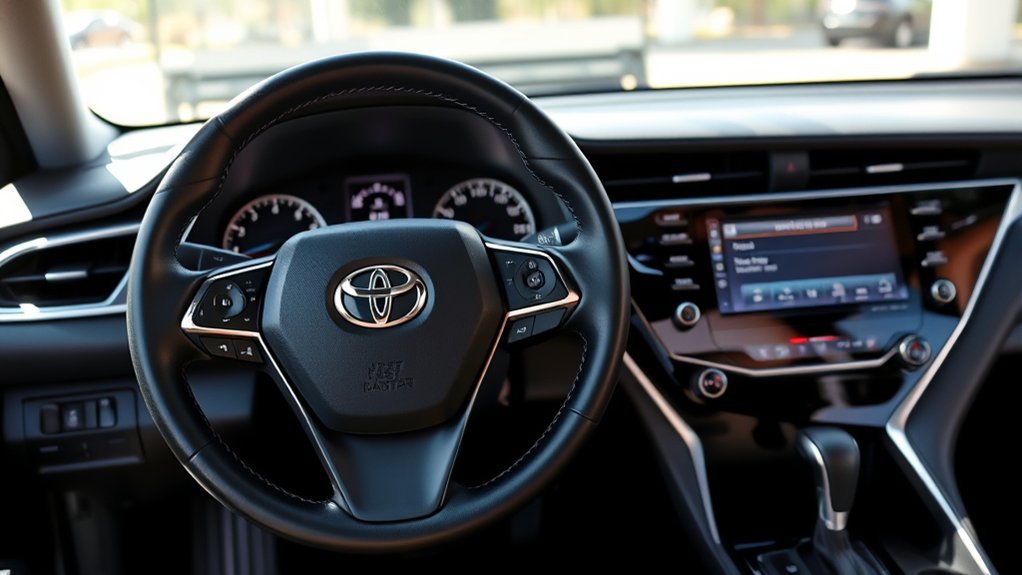

[…] This article uses the official 2025 U.S. Camry guide for concrete examples. Older Camrys use different engines, displays, and maintenance schedules. Use your VIN and model year to open the correct owner’s manual and maintenance guide before you reset anything. For a mileage-by-mileage overview, see the Toyota Camry maintenance schedule guide. […]
[…] months. This coolant interval is one piece of a much longer service timeline — see the full Toyota Camry maintenance schedule by mileage for everything else due alongside […]
[…] full 5,000-mile/6-month factory service schedule and what’s checked at each interval, see the Toyota Camry Maintenance Schedule guide; hybrid owners can also check the Camry Hybrid maintenance guide for regenerative-braking-specific […]