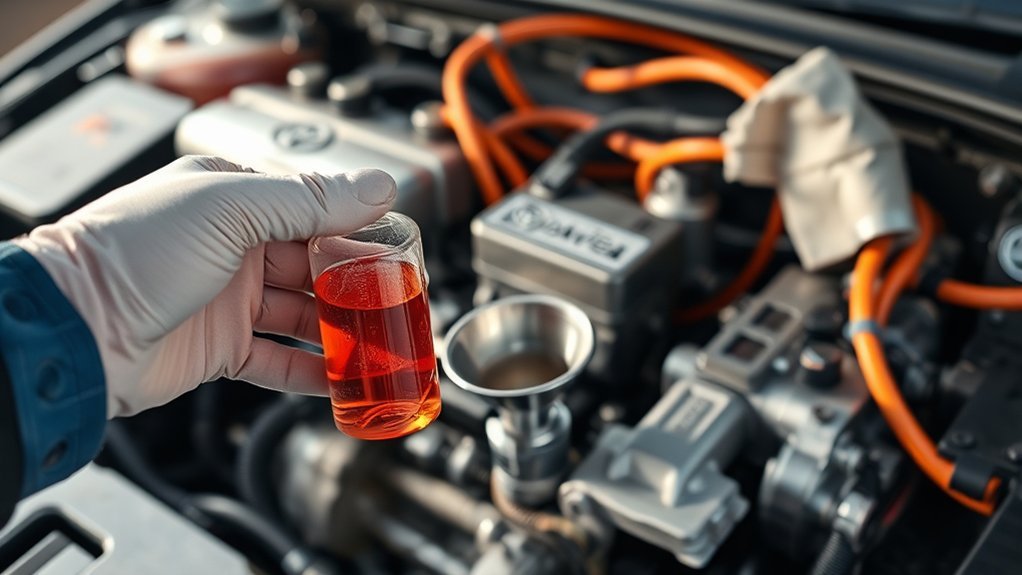
Your Camry Hybrid uses a Toyota Genuine ATF WS fluid in its eCVT to control hydraulics, friction and cooling—using the wrong oil can cause shudder, erratic RPMs or damage. The unit holds about 4.1 qts, has no dipstick, and is serviced via lower drain and higher fill ports using the overflow method; a pump and proper tools are needed for DIY. Change intervals range 50–60k miles (90–100k for light use), and fluid analysis guides timing if you want more detail.
What the Camry Hybrid eCVT Is and Why Its Fluid Matters
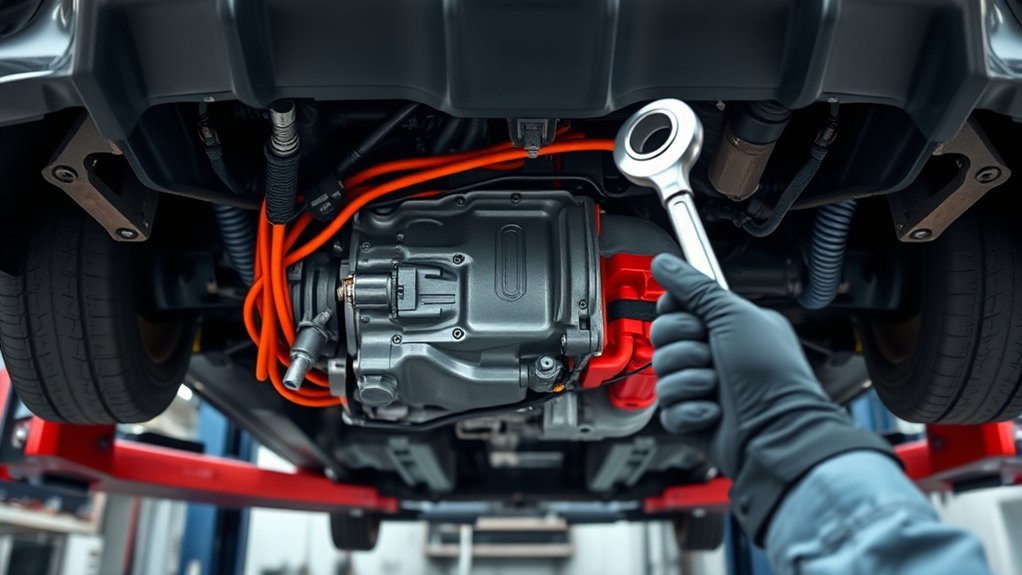
Because the Camry Hybrid uses an electronically controlled continuously variable transmission (eCVT) rather than a conventional stepped automatic, its fluid plays a different and critical role in operation and longevity. You’ll find the eCVT advantages include smooth, efficient power blending between the engine and electric motor and fewer mechanical gears to wear, but that design concentrates reliance on the transmission fluid for hydraulic control, friction properties, and cooling. There’s no dipstick, so you can’t eyeball levels; you must follow prescribed service procedures and intervals—typically 50,000 to 100,000 miles depending on use—to avoid degraded performance. Using incorrect fluid risks shifting anomalies and component damage. Prioritize scheduled fluid maintenance and insist on the correct specification to preserve efficiency and prevent costly repairs. That disciplined approach frees you from unexpected failures, extends the eCVT’s life, and keeps the Camry Hybrid operating as an emancipating, low-friction machine.
Required Fluid: Toyota Genuine ATF WS for Camry Hybrid eCVT
Having covered why the eCVT depends on fluid for hydraulic control and cooling, you should use Toyota Genuine ATF WS in the Camry Hybrid: this synthetic, World Standard formulation is engineered for the eCVT’s friction, pressure and thermal demands. You’ll rely on ATF WS because fluid compatibility is critical—non‑OEM fluids can alter frictional coefficients, cause improper clutch engagement, and reduce component life. The eCVT holds about 4.1 quarts (3.88 liters); ATF WS is formulated to remain stable over long intervals and, under normal use, is intended to last the vehicle’s life.
For freedom from avoidable failures, plan service every 60,000 miles to remove contaminants that degrade control and cooling. When you change fluid, fully drain and refill to the proper volume and replace the transmission filter if accessible. Follow these maintenance tips precisely to preserve shift quality, protect internals, and keep your Camry Hybrid operating reliably without compromise.
Where the eCVT Drain and Fill Ports Are : No Dipstick
You’ll find the eCVT’s drain port on the lower transmission casing and the fill port higher on the housing, both accessed from beneath the vehicle. Because there’s no dipstick, you’ll drain most old fluid through the drain hole and refill precisely through the fill hole following the service manual’s procedure. We’ll cover how to verify level and perform the service steps required to check fluid correctly without a dipstick.
Location Of Drain Port
On the Camry Hybrid’s eCVT, the drain and fill ports are machined into the transmission case—one at the lowest point for complete drainage and one higher up for accurate refilling—since there’s no dipstick to indicate fluid level. You’ll find the drain port location at the transmission’s lowest accessible face, designed to let gravity remove old fluid fully during service. Use the manufacturer’s service manual and proper tools to access it safely; these maintenance tips free you from guesswork and preserve performance. Visualize the process:
- Low port on case bottom — complete drain.
- Drain plug with crush washer — seal integrity.
- Access cleared by removing splash shield — reachability.
- Torque and washer replacement — correct reassembly.
Follow specs precisely to maintain liberation through reliable maintenance.
Location Of Fill Port
One clear access point for refilling the Camry Hybrid’s eCVT sits on the transmission’s side and requires a specific long, narrow fill tool to reach and set the level precisely. You’ll find the fill hole positioned above the drain hole; fill port accessibility depends on lifting the vehicle and removing obstructing components per the service manual. During a service, you drain most fluid through the drain port, then introduce Toyota Genuine ATF WS through the side fill hole until the correct quantity exits the fill opening at the prescribed temperature. You’ll follow torque specs and sealing procedures to avoid leaks. This design eliminates a dipstick, so disciplined fluid level maintenance via the designated fill port and procedural adherence preserves transmission longevity and your freedom from premature failures.
Checking Without Dipstick
Because the Camry Hybrid’s eCVT has no dipstick, you check and set fluid level using the transmission’s drain and fill ports on the casing; you drain through the lower port, refill through the side fill port with the specified Toyota ATF WS, and confirm level by seeing fluid exit the fill opening at the prescribed temperature and vehicle position. You’ll follow the service manual’s sequence to avoid overfill or air entrapment. Regular fluid maintenance preserves hybrid performance and prevents contamination-related failures.
- Locate casing drain (lower) and fill (side) ports.
- Drain old fluid completely, capture for inspection.
- Refill with Toyota ATF WS until fluid flows from fill port.
- Verify level and temp per manual, road-ready for liberated driving.
How to Change the eCVT Fluid (DIY Overflow Method)
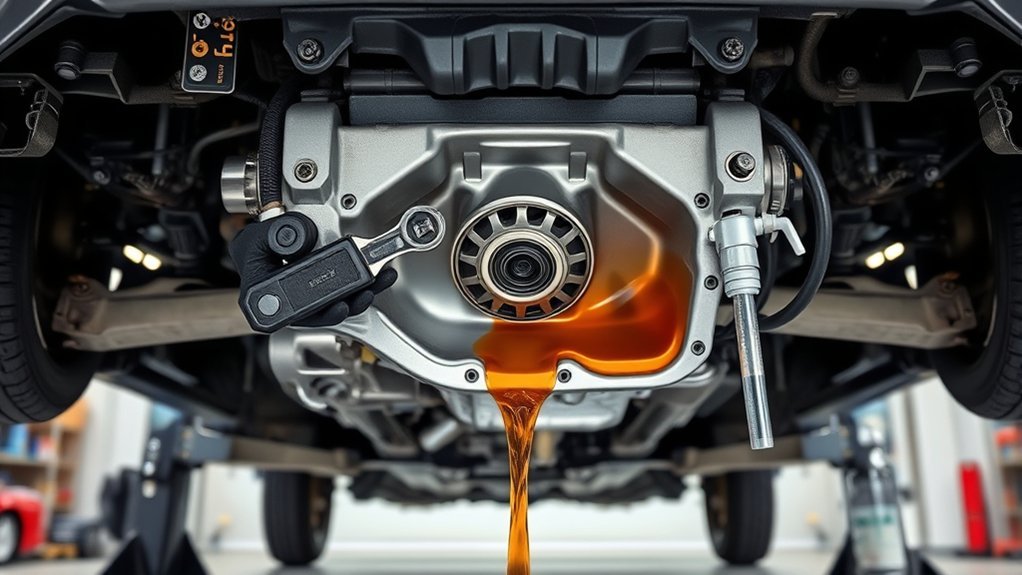
Before you begin, gather Toyota Genuine ATF WS, the correct drain and fill tools, and jack stands so you can safely access the eCVT drain and fill plugs; you’ll drain the old fluid, refill until it overflows, and optionally replace the filter if it’s accessible. Use proven fluid change techniques: locate drain and fill holes, position a drain pan, and fully remove the drain plug to expel old fluid. Once drained, reinstall the drain plug and refill through the fill hole with ATF WS until fresh fluid flows from the fill port—overflow confirms correct level. If the transmission filter is reachable, remove and replace it to prevent contamination. After refilling, torque plugs to spec, lower the vehicle, and verify there are no leaks. These maintenance tips empower you to keep your eCVT functioning reliably and resist dependence on costly shop visits. Work methodically, follow torque and safety specs, and discard used fluid per local regulations.
Recommended Change Intervals and Real‑World Variations
Although Toyota’s official guidance often spaces eCVT fluid changes out toward 90,000–100,000 miles, many technicians and owners recommend servicing around 50,000–60,000 miles to reduce early wear and contamination. You’ll choose a strategy that matches your use: conservative owners and heavy-duty drivers often prefer earlier service; others follow Toyota’s extended interval.
Think regarding clear maintenance tips and measurable fluid change frequency goals:
- Baseline service at 50,000–60,000 miles for proactive protection.
- Dealers’ interval at 90,000–100,000 miles if your driving is light and monitored.
- Early follow-up after first change when metal particles appear, then adjust interval.
- Use fluid analysis (e.g., Blackstone Labs) to guide future timing.
You want control and freedom from sudden failures; regular checks and analysis give objective data. Be decisive: shorter intervals buy insurance, while informed monitoring lets you extend service when conditions justify it.
How to Spot Fluid Trouble : Symptoms, Color, and Metal Particles
When you suspect transmission trouble, check for three clear indicators: symptoms while driving, fluid color, and metal contamination. You’ll notice delayed engagement when shifting or erratic RPM fluctuations under acceleration; these point to low fluid or valve body/solenoid faults and demand immediate transmission maintenance. Unusual humming or whining—often between 40–60 km/h—also flags eCVT concerns that you shouldn’t ignore.
Inspect fluid color: healthy fluid is clear red. Dark or brown fluid signals fluid contamination and the need for servicing. Pull a sample during a routine check or have a lab analyze it.
Metal particles in the fluid are a critical red flag. Even small ferrous debris found on a magnet or in analysis indicates internal wear and potential failure if left unchecked. If you detect contaminants, escalate from simple fluid replacement to diagnostic teardown planning. Acting decisively preserves mobility and prevents costly loss of freedom caused by catastrophic transmission failure.
Cost, Parts, and Tools to Budget for an eCVT Fluid Change
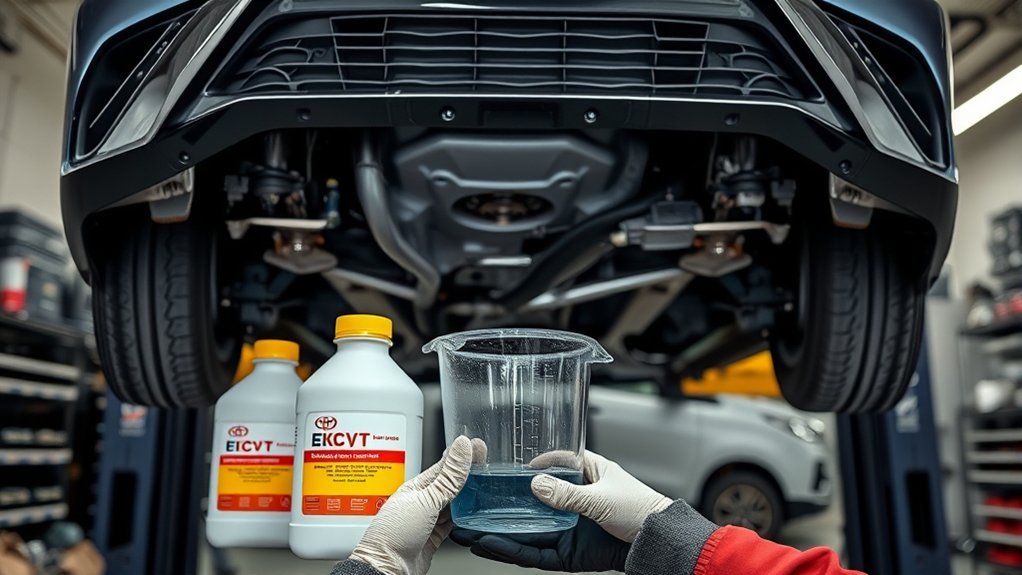
Budgeting for an eCVT fluid change on a Toyota Camry Hybrid means planning for both parts and a few specialty tools: expect about $80 total at a shop (labor and materials), or roughly $45 per gallon for Toyota Genuine ATF WS if you buy fluid yourself, noting the eCVT holds about 4.1 quarts (3.88 L) so you’ll need roughly one gallon to cover a full service and waste. You’ll also budget for possible filter access or replacement and a fluid pump for DIY access since there’s no dipstick.
- Fluid: ~1 gallon Toyota ATF WS (~$45)
- Specialty tool: fluid pump / siphon
- Optional: transmission filter or gasket if accessible
- Shop labor: ~$35–$40 (to reach ~$80 total)
Use fluid maintenance tips: measure precisely, capture waste, and discard properly. For liberation-minded owners, cost saving strategies include buying one genuine gallon and investing in a quality pump to do the service yourself while keeping service records for resale.
When to Get Fluid Analysis and How to Use the Results
Why get a fluid analysis after your first eCVT service? You should arrange one around the first fluid change—typically near 50,000 miles—to quantify wear particles and validate fluid condition. Sending a sample to Blackstone Labs gives objective fluid analysis benefits: detection of metal particles, contaminants, and additive depletion.
Use the report to gain maintenance insights. Compare particle counts and spectrometric data with baseline results to spot trends. If iron or copper rises, plan earlier intervention; if levels stay low, you can extend intervals confidently. Early changes followed by analysis reveal clearer wear patterns, so you’ll learn how your driving habits and conditions affect the eCVT.
Share anonymized results within owner communities to amplify collective knowledge and refine recommended schedules. Track each report in a simple log: date, miles, key contaminants, and recommended interval. That disciplined approach liberates you from guesswork and converts data into decisive maintenance actions.
Frequently Asked Questions
Do Hybrids Need Transmission Fluid?
Yes — you need transmission fluid for hybrid maintenance and transmission care; you’ll use specified eCVT fluid (Toyota WS for Camry), change it around 50–60k miles, and stay proactive to preserve performance and freedom.
What Kind of Transmission Fluid Does a Toyota Camry Hybrid Take?
You should use Toyota Genuine ATF WS; it’s the required fluid type for Camry Hybrid eCVT. For maintenance tips, drain full capacity every ~60,000 miles, avoid non‑OEM fluids to prevent damage.
What Happens if There Is Low Transmission Fluid in a Camry Hybrid?
You’ll experience transmission issues: delayed engagement, overheating and humming, erratic RPMs and potential premature failure; check for fluid leaks, act promptly to restore levels, preserve mobility, and reclaim control over your vehicle’s performance.
Is Toyota CVT Fluid Lifetime?
No — CVT fluid isn’t strictly lifetime; you should follow CVT maintenance tips and consider Fluid change intervals around 50k–100k miles. You’ll proactively protect the transmission, preserve performance, and reclaim control over vehicle longevity.
Conclusion
You now know the Camry Hybrid’s eCVT needs Toyota Genuine ATF WS, has no dipstick, and uses an overflow‑style drain/fill—so don’t guess. Change intervals vary; watch for dark fluid, burning smell, or metal filings. DIYs can save money if you follow the overflow procedure precisely; otherwise get a pro and consider fluid analysis when symptoms appear. Treat the eCVT fluid like a heartbeat—ignore it and trouble arrives fast. Stay proactive and precise.