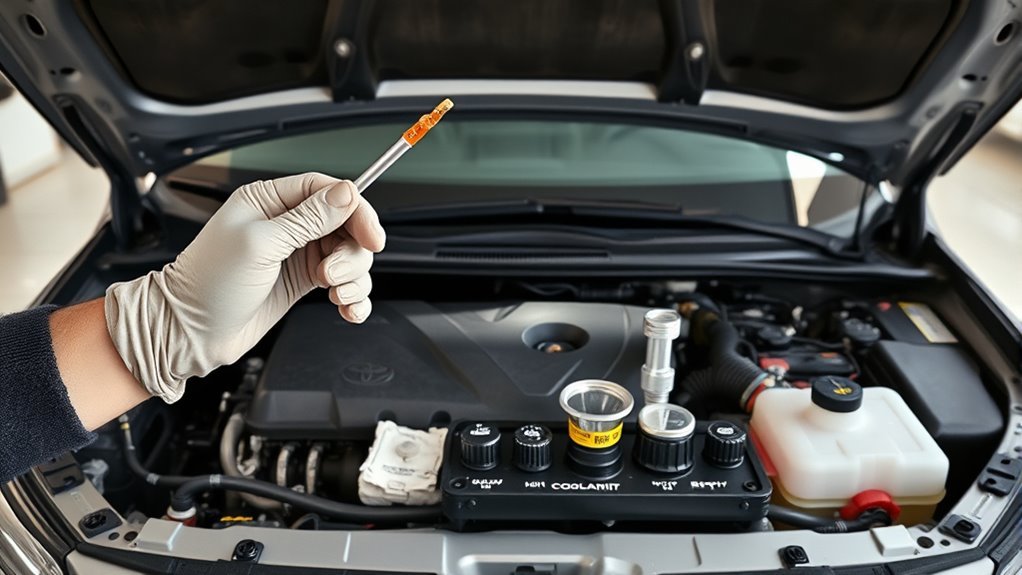
You’ll inspect your Camry’s fluids methodically to spot low, dirty, or leaking systems: check engine oil with the yellow dipstick (aim mid-range, use 0W‑20), verify coolant in the translucent overflow tank, warm and inspect transmission fluid color and level, confirm brake fluid at MAX and test moisture, and top washer fluid with seasonal solution. Use gloves, eye protection, a funnel, and level parking; document findings and schedule fixes. Keep going to get step‑by‑step procedures and intervals.
What This Checklist Fixes: Common Camry Fluid Problems
While you perform routine checks, this checklist targets the fluid issues that most commonly degrade Camry reliability: low or dirty engine oil, coolant loss in the closed system, degraded or misleveled transmission fluid, contaminated or low brake fluid, and empty washer reservoir. You’ll prevent engine wear by verifying the Camry holds about 4.5 quarts of 0W-20 and replacing oil that’s dark or low. You’ll monitor the coolant overflow—any loss in a closed system signals leaks that demand immediate repair. You’ll confirm transmission fluid is bright red and at the correct level to avoid harsh shifts and expensive failures. You’ll inspect brake fluid for contamination or low marks because compromised fluid reduces stopping power. You’ll keep washer fluid topped to preserve visibility and control in adverse weather. This checklist gives direct fluid maintenance steps and concise troubleshooting tips so you can act decisively, reclaim control of vehicle reliability, and avoid being sidelined by predictable, preventable failures.
Prepare Your Camry: Tools, Safety, and Parking
Now that you know which fluid issues to catch, gather the right tools and set up a safe workspace before you start. You’ll control the process by prioritizing tool selection and clear safety practices: pick a clean cloth, a funnel, and the 6 mm Allen socket required for the transmission fluid check. Park on a flat surface so dipstick and reservoir readings are accurate. Turn the engine off and let it cool 15–20 minutes before touching engine oil or coolant to avoid burns. Use safety glasses and gloves when handling brake fluid or coolant.
- Clean cloth for wiping dipsticks and caps
- Funnel sized for each reservoir to prevent spills
- 6 mm Allen socket for transmission fill/inspection
- Flat parking spot or level driveway for true readings
- Safety glasses and chemical-resistant gloves
Follow dipstick and reservoir markings precisely, always check oil and coolant with the engine off, and maintain disciplined safety practices to keep your freedom to DIY.
Quick Safety Tips Before Any Fluid Check
Before you start any fluid check, park on level ground, shut the engine off, and wait 15–20 minutes so fluids settle and hot parts cool. You’ll approach each reservoir with intention: verify the vehicle is secured and in gear or park, and set the parking brake. Put on appropriate safety gear—nitrile gloves and eye protection—to minimize exposure during fluid handling and to assert control over hazards.
Inspect dipsticks and reservoir caps for damage or contamination before opening. Wipe caps and dipsticks clean with a lint-free cloth to avoid introducing debris. Consult the owner’s manual for specified fluid types, levels, and capacities so you measure against the correct standards. Work methodically: one fluid at a time, note readings, and reseal caps securely. If a level or condition looks abnormal, don’t improvise repairs; seek professional service. These steps keep you safe and maintain your Camry’s freedom to perform.
Check Engine Oil With the Yellow Dipstick
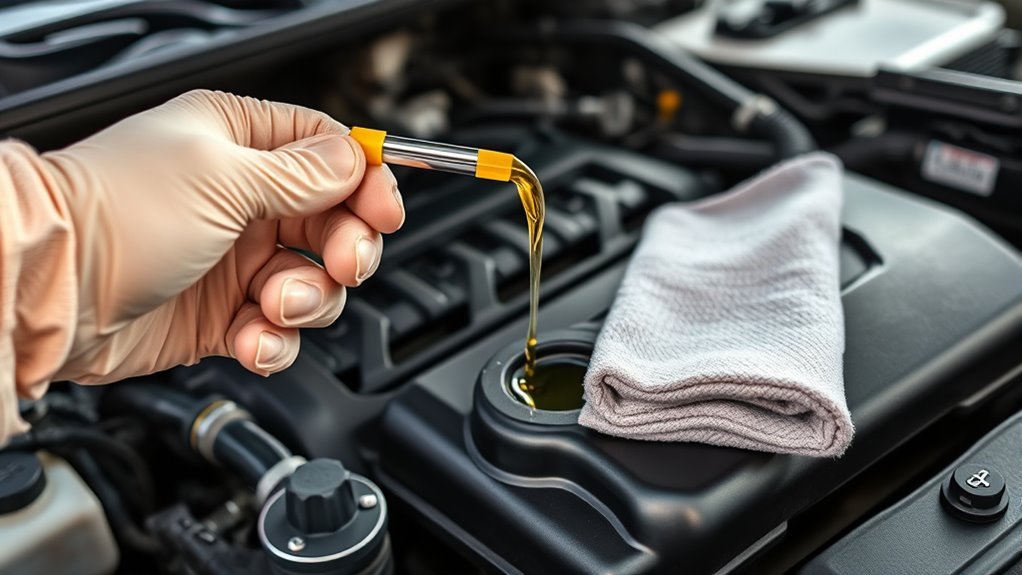
Locate the yellow dipstick near the exhaust manifold, pull it out, and wipe it clean before reinserting. Wait with the engine off for 15–20 minutes, then remove the dipstick again and read the oil level between the two dots for low and high. If the level’s mid-range or low, note the need to top off (0W‑20 typical) and inspect for leaks.
Yellow Dipstick Location
When checking engine oil on a Toyota Camry, you’ll find the yellow-handled dipstick near the exhaust manifold on the engine’s passenger side; pull it out, wipe it clean, reinsert it fully, then remove it again to read the level. You’ll wait 15–20 minutes after shutdown so oil level stabilizes. Practice strict dipstick maintenance to get reliable readings and maintain autonomy over your vehicle.
- Locate the yellow handle near the exhaust manifold.
- Verify the car has been off 15–20 minutes before checking.
- Wipe the dipstick clean; reinsert and remove to read oil level.
- Note the two dots indicating low and high; mid-range is acceptable if change is due.
- Use 0W-20; total capacity ≈ 4.5 quarts.
Follow this methodical routine to stay liberated and in control.
Proper Oil Level Check
If your Camry has been sitting for 15–20 minutes, grab the yellow-handled dipstick by the exhaust manifold, pull it out, wipe it clean, reinsert fully, then remove it again to read the oil between the two dots—aim for a mid-range reading and top with 0W‑20 as needed (total capacity ≈ 4.5 qt). You’ll perform a disciplined check: with the engine cool and level, use a clean cloth for dipstick cleaning, confirm oil sits between low and high marks, and interpret mid-range as acceptable if service is due. Add 0W‑20 in small increments, recheck after each pour to avoid overfill. Regular inspections are a liberating practice; consistent oil maintenance tips protect the engine and prevent damage from low oil.
Inspect Engine Coolant Using the Overflow Tank
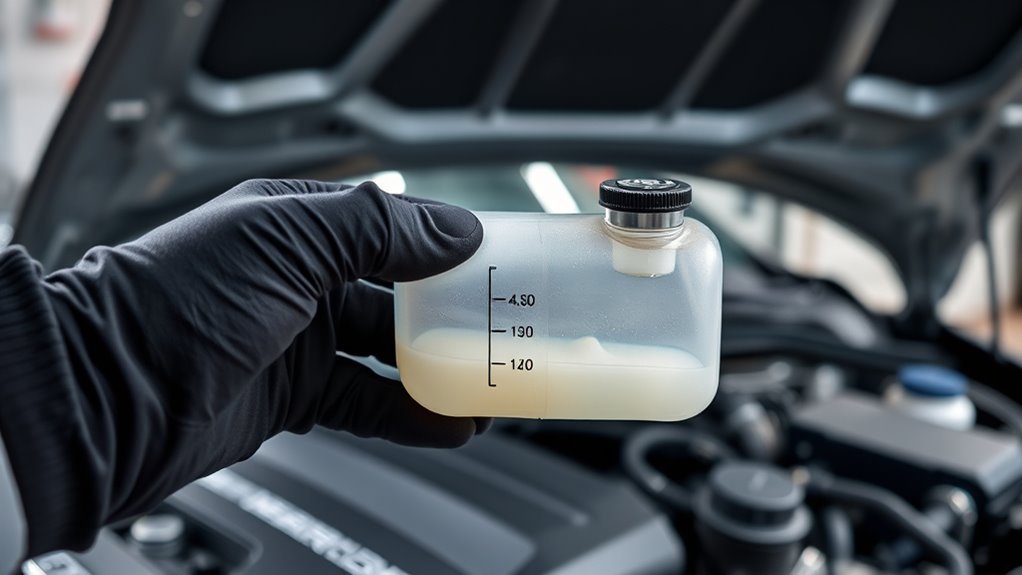
Start by checking the translucent overflow tank at ambient temperature; it should sit at roughly half full to indicate a properly sealed cooling system. You’ll perform coolant maintenance systematically, avoid opening the radiator cap when hot, and treat any low reading as a sign to investigate leaks.
- Visually confirm the overflow tank level aligns with the mid-mark; translucency lets you read level without removing the cap.
- If low, scan hoses, clamps, radiator and water pump for wet spots or residue indicating leaks.
- Top off only with the Toyota-specified coolant mixture to maintain corrosion protection and boiling point.
- After topping, run the engine to operating temperature and recheck for drops—consistent loss implies a failure in the closed system.
- Document levels and actions; persistent low levels require professional diagnosis.
You’ll protect yourself and your freedom on the road by keeping coolant maintenance disciplined and exact.
Check Transmission Fluid Level and Color
Having checked the coolant, move on to the transmission fluid: park the Camry on level ground, warm the engine to operating temperature, and keep it running while you access the transmission pan from underneath to inspect the fluid level and color. You’ll use a 6 mm Allen socket at the drain plug; when you loosen it slightly the fluid should bead bright red, signaling healthy fluid. Dark fluid or a burnt odor indicates degradation and signals the need for fluid replacement and deeper transmission maintenance review. Note the fill plug access through the driver-side wheel well; use a bendy funnel or transfer pump to add fluid precisely without overfilling. Record volume added and compare to maintenance history to decide if a full service is warranted. Regular, methodical checks prevent damage, preserve shifting quality, and free you from costly repairs. Keep tools, gloves, and a clean container ready to maintain a disciplined, liberating approach to drivetrain care.
Check Brake Fluid Level and Test Quality
Locate the brake fluid reservoir on the driver’s side near the firewall and wipe the cap area clean before opening to avoid contamination. Verify the fluid level against the MAX line—low fluid can indicate worn pads or a leak. Use a brake fluid tester to measure moisture content, since high water percentage reduces boiling point and impairs braking.
Locate Brake Fluid Reservoir
Because the brake fluid reservoir sits on the driver’s side near the firewall, you can quickly access it for routine checks; wipe the cap first to avoid contaminating the system, then inspect the fluid level against the MAX line and note any low readings that could indicate worn pads or leaks. You’ll perform reservoir inspection as part of brake fluid maintenance to preserve control and freedom on the road. Work methodically: park on level ground, cool engine, remove debris, clean cap, and use a flashlight to read markings. If fluid looks dark or low, plan topping or a flush. Use tools and testers where allowed; document findings and corrective actions to regain confidence.
- Park level, engine cool
- Wipe cap, prevent contamination
- Read MAX/min marks with light
- Note low or dirty fluid
- Record and act promptly
Test Fluid Moisture Content
After you’ve inspected the reservoir and noted level and color, check the fluid’s moisture content with a brake fluid tester to confirm its quality. You locate the driver-side reservoir, verify the level is at or above the max line, then apply a calibrated tester probe to a sample surface. Read the meter: moisture testing above recommended ppm or a high-percent reading means the fluid’s boiling point is compromised. Remember brake fluid is hygroscopic and will absorb water over time, so regular testing and scheduled replacement liberates you from avoidable failure risks. If the fluid looks dark or the tester flags high moisture, plan a system flush and fresh fill. These brake fluid tips help you detect leaks, worn components, and preserve reliable stopping power.
Top Off and Inspect Windshield Washer Fluid
Start by finding the windshield washer fluid reservoir—it’s usually marked with a windshield/water symbol—then remove the cap and check the level to guarantee adequate fluid for clear visibility. You’ll perform a quick, deliberate service: confirm cap removal, visually inspect level, add appropriate washer fluid, and reseal. This preserves clear sightlines and supports your autonomy on the road.
- Confirm reservoir location and symbol to avoid mistakes.
- Remove cap, inspect fluid level against fill indicators.
- Use seasonal washer fluid to prevent freeze and improve cleaning.
- Top off to recommended level, avoiding overfill and contamination.
- Securely replace cap to prevent spills and debris ingress.
Follow a routine fluid maintenance cadence: inspect before longer trips and in variable weather. If you repeatedly find low washer fluid, document occurrences for targeted troubleshooting later—don’t ignore patterns. You’re maintaining control: simple, repeatable checks keep visibility uncompromised and grant you the freedom to drive confidently.
Spot Leaks and When Low Fluid Means Trouble
Once you’ve confirmed washer fluid levels and ruled out simple causes for frequent top-offs, scan the vehicle for signs of leaking or falling fluid levels across systems. You’ll perform systematic leak detection: check beneath the cooling overflow for persistent low coolant, inspect around brake master cylinder and lines if brake fluid drops below the max mark, and examine the transmission pan and dipstick for dark fluid or burnt odors. Verify oil level trends; consistent drops suggest an oil leak or internal wear. For washer system losses, trace hoses and reservoir seams. Each low reading demands action: coolant and brake issues can indicate concealed component failure, transmission low levels risk gear damage, and oil loss risks engine harm. Document findings, capture photos, and prioritize repairs that restore safety and control. This procedural, empowered approach to fluid maintenance keeps you in command of vehicle reliability and reduces dependency on surprise breakdowns.
Toyota Camry Fluid Check Intervals and Replacement Timing
Because regular checks and timed replacements prevent premature wear and safety risks, follow a clear schedule for each Toyota Camry fluid: You’ll use fluid maintenance and preventative care to keep systems reliable and give yourself freedom from roadside constraints. Inspect and act on intervals below; stay methodical and decisive.
- Engine oil: check every 5,000 miles or six months; change with 4.5 qts of 0W-20 when due.
- Coolant: inspect regularly; top off overflow to about halfway if low; full change ~30,000 miles.
- Transmission fluid: check every 30,000–60,000 miles; replace sooner if fluid appears dark.
- Brake fluid: inspect at least annually; top off or flush if contaminated or low due to hygroscopic properties.
- Washer fluid: top off regularly, especially before adverse weather, to preserve visibility.
Adhere to these intervals, document each service, and prioritize preventative care. You’ll reduce failures, extend component life, and reclaim control of your driving experience.
Frequently Asked Questions
Are Synthetic Oils Safe for Older Camry Engines?
Yes, you can use synthetic oil in older Camry engines; it often improves engine performance and oil longevity, but you’ll want to verify seals, follow viscosity recommendations, and monitor leaks to preserve reliability and maintain freedom from breakdowns.
Can Aftermarket Coolant Cause Corrosion in Camry Radiators?
Yes — if you use incompatible aftermarket coolant types, you can cause corrosion in Camry radiators; you should follow radiator maintenance protocols, flush and use OEM-compatible formulas, and monitor pH and inhibitor levels to protect freedom.
How to Read Dipstick Markings on Hybrid Camry Models?
Ironically, you’ll actually need the dipstick: pull it, wipe, reinsert fully, then withdraw and read between the marks—low to full—logging dipstick maintenance. For hybrid oil checks follow OEM intervals and note the hybrid oil level precisely.
Is It Normal for New Brake Fluid to Look Slightly Discolored?
Yes — you’ll often see slight discoloration in new brake fluid; brake fluid properties and discoloration causes include additive hues, packaging residues, or minimal oxidation during storage, so test for contamination and replace only if specs fail.
Can Low Washer Fluid Trigger Dashboard Warnings?
Like a lone bulb flickering, yes — low washer fluid can trigger dashboard warning signals. You’ll monitor washer fluid maintenance, diagnose sensor faults, and take swift, methodical action to restore visibility and reclaim driving freedom.
Conclusion
You’ll go from parked calm to engine-ready in minutes: checking the yellow dipstick, peering into the translucent coolant reservoir, and confirming clear brake fluid before you drive. Simple tops-offs contrast with the urgency of a puddle or a burnt smell—routine inspection prevents roadside fixes. Methodically follow intervals, note discoloration or drops, and replace fluids per Toyota’s specs. Consistent, concise checks keep your Camry reliable and safe, avoiding sudden failures.