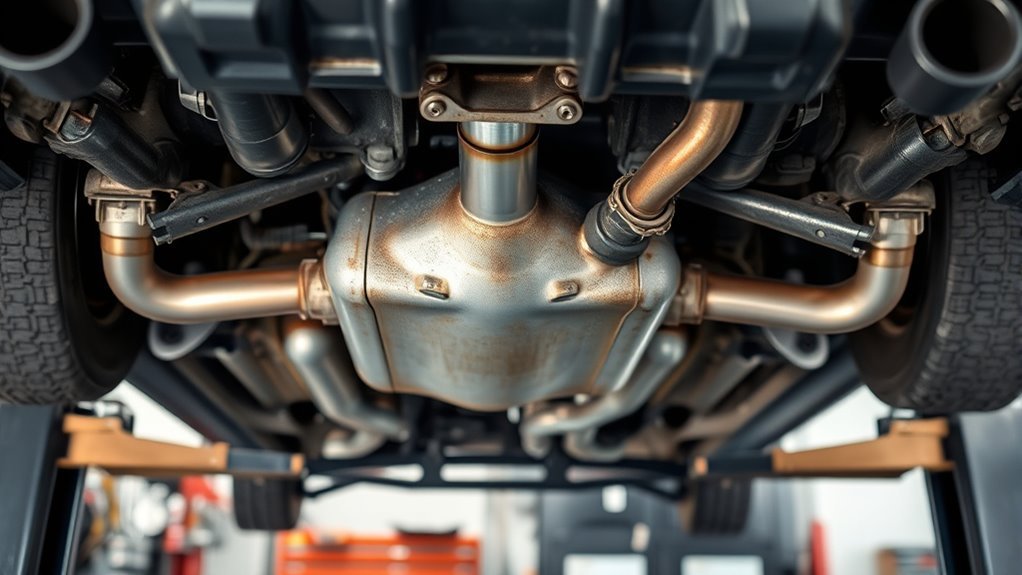
You can expect your Toyota Camry’s catalytic converter to last well beyond 10 years or 250,000 miles with good maintenance, but mileage, short trips, poor fuel, engine misfires, oil or coolant contamination, and driving style can drastically shorten it. Watch for a check-engine light (P0420), rattles, power loss, or failed emissions. Fix sensors and exhaust leaks first; OEM replacements cost more but match emissions. Keep following for practical diagnosis, replacement, and theft-prevention guidance.
Expectancy: Toyota Camry Catalytic Converter Lifespan
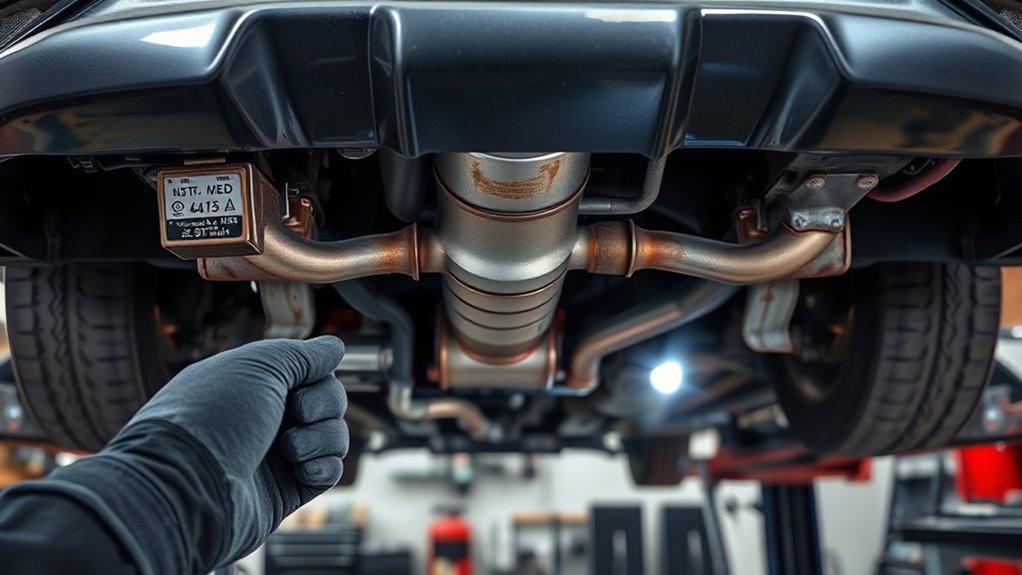
Although catalytic converters are built to last the life of your Camry, you should expect typical service life to exceed 10 years or roughly 250,000 miles when the vehicle’s maintained properly. You’ll want to treat that as a baseline, not a guarantee. Routine catalytic converter maintenance—periodic inspections, prompt address of check engine lights, and keeping engine tune-ups current—lets you catch degradation before it cascades into poorer performance or higher emissions. Fuel quality impact is real: low-grade or contaminated fuel accelerates substrate poisoning and clogging, shortening service life. In California, OEM replacements for older Camrys can approach $2,900, so preventive upkeep preserves both function and financial freedom. Monitor symptom patterns—reduced power, persistent fault codes, unusual exhaust behavior—and run diagnostics quickly. You’re aiming to minimize downtime, avoid costly swaps, and keep emissions low so your Camry serves reliably without surrendering control to preventable failures.
How Mileage, Model Year & Driving Habits Affect Life
On a 2003 Camry LE, you’ll see catalytic converter life correlate strongly with total mileage—many last up to 250,000 miles when the engine and exhaust are healthy. Short trips and stop‑and‑go driving prevent the converter from reaching ideal temperature, increasing deposits and premature degradation. Maintain tune‑ups, fix exhaust leaks, and use quality fuel to mitigate wear from driving habits.
Mileage And Wear
Mileage plays a major role in how long a 2003 Toyota Camry LE’s catalytic converter lasts: with good maintenance many last past 250,000 miles, but high-mileage use combined with short trips, frequent cold starts, aggressive acceleration, poor fuel quality, or ignored engine issues speeds up degradation. You’ll track converter performance by mileage milestones and service history; older units face more environmental wear and debris impact. Apply maintenance tips to extend life: address misfires, change oil and filters, and use quality fuel. Focus on measurable actions to reclaim control over longevity.
- Inspect after 100k miles and then every 50k.
- Prioritize engine diagnostics at first sign of trouble.
- Replace fuel/filter components if contamination appears.
Driving Habits Impact
When you drive a 2003 Camry LE with 210,000 miles, your habits directly determine how quickly the catalytic converter degrades: frequent short trips and hard acceleration cause overheating and unburned fuel to enter the cat, while sustained high-speed or heavy-load driving raises operating temperatures and accelerates thermal stress. You can extend life by adopting a controlled driving style—smooth acceleration, consistent cruising, and avoiding repeated cold starts reduce thermal cycling and contamination. Combine that with rigorous maintenance practices: timely oil changes, correct air/fuel mixture, and prompt repairs cut down on catalyst fouling. Remember environmental exposure and older model technology make the 2003 unit more vulnerable to corrosion and heat fatigue. Drive deliberately and maintain proactively to reclaim reliability and longevity.
Common Signs Your Camry Catalytic Converter Is Failing
If you notice one or more warning signs—like an illuminated check engine light (often showing P0420), reduced power and acceleration, poorer fuel economy, unusual exhaust noises such as rattling or hissing, or failing an emissions test—your Camry’s catalytic converter may be deteriorating; these symptoms indicate decreased catalytic efficiency, physical damage, or internal clogging that impair exhaust flow and emissions control.
You’ll want to assess quickly to reclaim freedom from breakdowns and excessive costs. Key indicators to monitor:
Act fast to avoid costly breakdowns—check for warning signs and run diagnostics to restore reliable performance.
- Persistent check engine light with P0420 or related codes.
- Noticeable power loss, slow acceleration, or reduced MPG.
- Rattling/hissing from the exhaust or an emissions test failure.
Respond by inspecting the exhaust system maintenance history, scanning for codes, and checking for visible damage or restrictions. Addressing a failing converter restores catalytic converter efficiency and prevents legal or environmental penalties. If you seek liberation from uncertainty, prioritize diagnostic testing and prompt repair or replacement to keep your Camry reliable.
Engine Issues and Contaminants That Damage Converters
If your Camry experiences engine misfires or runs with an incorrect air/fuel mixture, you’ll generate extreme exhaust temperatures that can overheat and crack the catalytic converter. Oil or coolant entering the exhaust will coat and poison the catalyst materials, sharply reducing conversion efficiency. Stay on a strict maintenance schedule and fix leaks or ignition faults promptly to prevent this kind of irreversible damage.
Engine Misfires And Overheating
One key cause of catalytic converter failure on Camrys is engine misfires and overheating, which drive exhaust temperatures far beyond design limits and can melt or break down the converter’s substrate. You’ll see reduced engine performance and worse fuel efficiency when misfires let unburned fuel ignite in the exhaust, spiking temperatures. Act quickly: monitor rough idling, loss of power, or check-engine lights.
- Diagnose misfires promptly with plugs, coils, and injector checks.
- Correct air/fuel mixture and address vacuum leaks to prevent overheating.
- Maintain scheduled tune-ups and replace worn ignition components.
You deserve control over your vehicle; proactive maintenance liberates you from avoidable converter damage and preserves performance and economy.
Oil/Coolant Contamination
Misfires and overheating can damage the catalyst, but oil and coolant entering the exhaust pose a different, equally serious threat to your Camry’s catalytic converter. You’ll see oil contamination produce heavy soot that clogs catalyst channels, lowering conversion efficiency and accelerating failure. Coolant intrusion creates localized overheating inside the converter, thermally degrading the washcoat and substrate until they break down. You prevent escalation by practicing oil leak prevention and routine coolant leak detection: inspect valve cover gaskets, PCV system, head gaskets, and hoses; monitor dipstick and coolant reservoir levels; address any pressure or smoke symptoms immediately. Left unresolved, contamination ruins the converter and invites broader engine damage. Take decisive maintenance steps to reclaim control and extend catalytic service life.
How to Diagnose a Clogged or Bad Camry Catalytic Converter
Wondering how to tell whether your 2003 Camry’s catalytic converter is failing? Start by scanning the exhaust system for obvious restrictions and listening for atypical noises. An illuminated check engine light with code P0420 points to converter inefficiency; use diagnostic tools (OBD-II scanner, backpressure gauge) to confirm. Reduced engine power, poor fuel economy, stalling, or hard starting also warrant inspection.
Use a targeted, stepwise approach:
- Read codes with an OBD-II scanner and note P0420 or related entries.
- Measure exhaust backpressure and compare to spec; high backpressure suggests clogging.
- Verify emissions results and cross-check upstream/downstream O2 sensor readings to rule out sensor or manifold faults.
You’ll liberate yourself from guesswork by combining codes, physical tests, and emissions data. If diagnostics point to the converter after excluding sensors and leaks, replacement becomes the logical, empowered next step.
Repair O2 Sensors & Exhaust Leaks vs. Replace the Converter
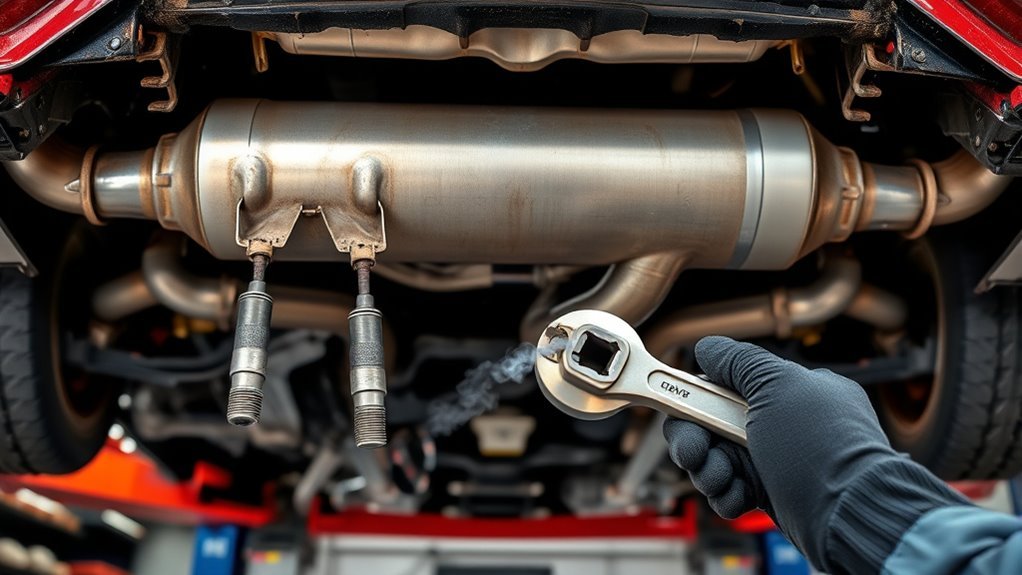
Before you decide to replace the catalytic converter, fix any faulty O2 sensors and seal exhaust leaks, because those issues often mimic converter failure and can cause overheating or clogging if left unaddressed. You’ll run sensor diagnostics first — O2 sensor faults skew air/fuel feedback, driving rich conditions that clog or overheat the converter. Check exhaust integrity visually and with smoke or pressure tests; leaks introduce unburned fuel and contaminants that accelerate degradation.
Weigh repair vs replacement: repairing sensors and leaks is cheaper, restores proper combustion control, and can free you from premature converter replacement. Address engine misfires and related codes promptly to protect downstream emissions hardware. Regular maintenance preserves converter life and avoids a costly $2,900 swap. You want freedom from unnecessary parts expenses; precise sensor diagnostics and exhaust integrity checks give you that control.
| Step | Action | Outcome |
|---|---|---|
| 1 | Scan sensors | Identify faults |
| 2 | Smoke test | Locate leaks |
| 3 | Replace O2 | Restore AFR |
| 4 | Fix leak | Prevent fouling |
Replacement Options: OEM, Aftermarket, and Emissions-Compliant High-Flow
When replacing your Camry’s converter, weigh OEM units first — they’re factory‑matched and emissions‑certified but cost about $2,900 and often require special ordering. Aftermarket options can be cheaper but may be hard to source at major retailers, require exact engine family compatibility, and vary in warranty coverage. If you want more flow, consider emissions‑compliant high‑flow units but confirm California legality and that sensors or leaks aren’t the real problem before swapping parts.
OEM Replacement Considerations
Although replacing a Catalytic Converter on a 2003 Toyota Camry LE can be costly, choosing the right type—OEM, aftermarket, or emissions-compliant high-flow—directly affects cost, compliance, and performance. You’ll weigh OEM Quality and Installation Factors heavily: OEM units (~$2,900) often require special order, match engine family numbers, and minimize smog-test risk when installed correctly. Emissions-compliant high-flow units give a performance-minded alternative while staying within regulatory bounds. Aftermarket availability is limited at major retailers, so sourcing matters.
- Confirm engine family number compatibility.
- Prioritize genuine OEM Quality if smog compliance is essential.
- Consider emissions-compliant high-flow for balanced performance and legality.
Choose deliberately to liberate yourself from repeat failures and fines.
Aftermarket Fit And Warranty
Choosing an aftermarket catalytic converter for your 2003 Camry LE requires verifying fit and warranty details up front, since compatibility with the engine family number and certified emissions coverage are nonnegotiable for legal and functional reasons. You’ll check aftermarket compatibility against the Camry’s exact engine family number; major retailers may not stock compliant units, so plan for special sourcing. Inspect certification labels and CARB or EPA paperwork before purchase to guarantee smog-test acceptance. For warranty evaluation, read terms for defects, emissions compliance, and prorated coverage periods; note exclusions for misuse or improper installation. If warranty or compatibility falls short, don’t compromise—either source OEM through a dealer or insist on a documented, certified aftermarket unit that protects your rights.
Emissions-Compliant High-Flow
If you want better flow without losing legality, consider emissions‑compliant high‑flow converters that keep required catalytic substrate and certification while reducing backpressure and improving throttle response. You’ll get measurable performance benefits while staying inside emissions regulations, but you must verify fitment and certification for your 2003 Camry LE engine family. Diagnostics should confirm the converter is the problem, not sensors or exhaust leaks.
- Confirm engine family number and CARB/EO certification.
- Compare flow specs and substrate type to OEM.
- Validate vendor support and warranty for installation.
Supply can be limited; OEMs cost ~ $2,900 and aftermarket inventories vary, so research sellers who guarantee compliance. Choose a high‑flow unit to liberate performance without risking legality.
Cost and Timeline to Replace a Catalytic Converter on a 2003 Camry
When you need to replace the catalytic converter on a 2003 Camry LE, expect the OEM part to cost roughly $2,900 (dealer special order) plus about $100–$200 in labor, and plan for a 1–3 hour shop visit depending on access and complications. You’ll want a clear cost analysis before ordering parts; verify engine family compatibility for smog, and run a full diagnosis to catch root causes that could repeat the failure. For liberation-minded drivers, choose solutions that restore reliable emissions control without unnecessary expense.
| Item | Typical Cost | Time |
|---|---|---|
| OEM converter (dealer) | $2,900 | special order lead time |
| Labor | $100–$200 | 1–3 hours |
| Diagnostic scan | $50–$150 | 0.5–1 hour |
| Aftermarket option* | varies | check compatibility |
Installation tips: bring engine family info, insist on bolt-on procedures to preserve exhaust integrity, and confirm post-install smoke/test readiness to pass smog.
Theft Risk, Legal Issues, and Protection for Camry Catalytic Converters
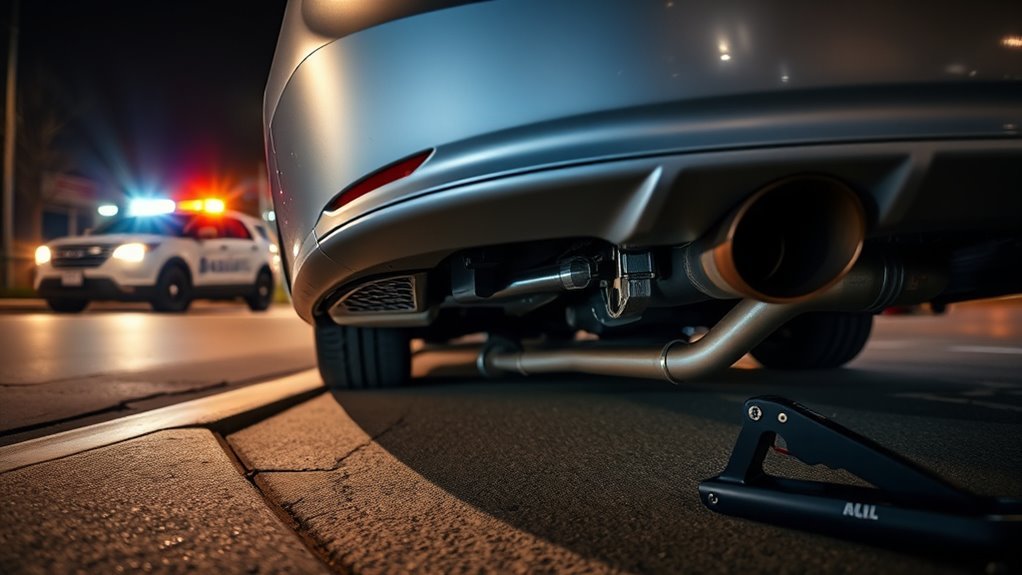
Knowing the replacement cost can reach nearly $2,900, theft becomes a financial as well as mechanical concern for Camry owners. You face elevated risk—older Camrys with valuable catalytic metals are targeted—so you should act deliberately. In California, driving without a catalytic converter violates emissions law; ignorance won’t shield you from legal consequences or fines. Use practical, proven defenses to reclaim control.
- Install a welded protective cage or aftermarket shield to impede quick removal.
- Fit motion-sensor alarms or tilt sensors that trigger on undercarriage disturbance.
- Monitor local crime reports and park in well-lit, populated areas or garages.
Prioritize theft prevention with devices that deter thieves rather than cosmetic fixes. Document your VIN and converter details; that aids recovery and police reports. If theft occurs, report it immediately to law enforcement and your insurer to address both criminal and regulatory fallout. Stay proactive and liberated—secure the component that keeps your Camry legal and functioning.
Maintenance Habits to Maximize Your Camry’s Converter Life
To maximize your Camry’s catalytic converter life, inspect it regularly and keep the engine properly tuned so fuel trim and ignition timing stay within spec; an incorrect air/fuel ratio or persistent misfire will overheat and clog the catalyst. You should monitor for rattles, reduced power, or a sulfur smell and act fast. Prioritize catalytic converter maintenance by fixing misfires, replacing worn spark plugs, and servicing the fuel system. Use high-quality fuel — fuel quality impacts deposit formation and sensor health — and avoid cheap additives that can contaminate the substrate. Protect the undercarriage from corrosion in wet climates and clear road debris promptly.
| Action | Frequency |
|---|---|
| Visual inspection & rattle check | Every oil change |
| Spark plugs & ignition check | 30k–60k miles |
| Fuel system & quality control | Continuous; top off with quality fuel |
These habits free you from avoidable failure, extend service life, and keep emissions compliant.
Frequently Asked Questions
How Long Does a Catalytic Converter Last on a Toyota Camry?
About 10 years or up to roughly 250,000 miles; you can extend life with catalytic converter maintenance, but monitor symptoms and be ready for replacement costs if needed so you stay empowered and in control.
Can a Catalytic Converter Last 200,000 Miles?
Yes — it can, if you relentlessly pursue catalytic converter maintenance, fix misfires, and protect exhaust system performance; you’ll free yourself from costly replacements, stay practical, and keep emissions control functioning well into high mileage.
How Do I Know if My Toyota Camry Catalytic Converter Is Bad?
You’ll spot symptoms present like check engine light, poor fuel economy, decreased power, unusual exhaust noise, or failed emissions; use diagnostic tools (OBD-II scanner for P0420, smoke/pressure tests) to confirm before replacing.
Can a Catalytic Converter Last 20 Years?
Yes — your catalytic converter can last 20 years, but you’ll need diligent catalytic converter maintenance to preserve exhaust system efficiency; stay proactive with tune‑ups, fuel quality, and inspections so you’re not chained to premature failure.
Conclusion
You can expect a Camry’s catalytic converter to last 70k–150k miles, but mileage, contaminants, and drive style matter. If you notice reduced power, rotten-egg smell, or a glowing exhaust pipe, diagnose with backpressure tests and OBD-II live data. For example, a 2003 Camry owner who ran prolonged short trips and ignored a misfire ruined the converter by 90k miles; replacing it with a direct-fit OEM unit restored emissions and performance. Maintain fuel/ignition systems to maximize life.