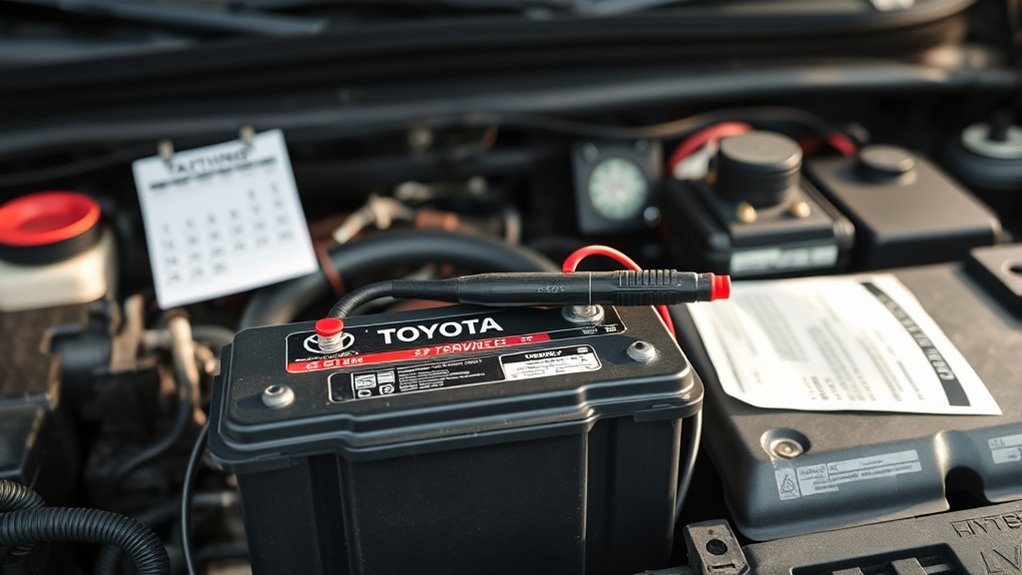
Your Camry uses a 12V lead‑acid battery for starting and accessories; if it’s a hybrid you’ll also have a high‑voltage pack. Expect the 12V to last about 3–5 years, with many owners replacing proactively at three years to avoid failures. Watch for slow cranks, dim lights, dashboard warnings or a swollen case. Test resting voltage (12.4–12.7V healthy) and load behavior; replace or upgrade to AGM/high‑CCA if performance drops. Keep going to get testing steps, upgrade options and cost guidance.
Camry Battery Types: 12V vs. Hybrid – What’s the Difference?
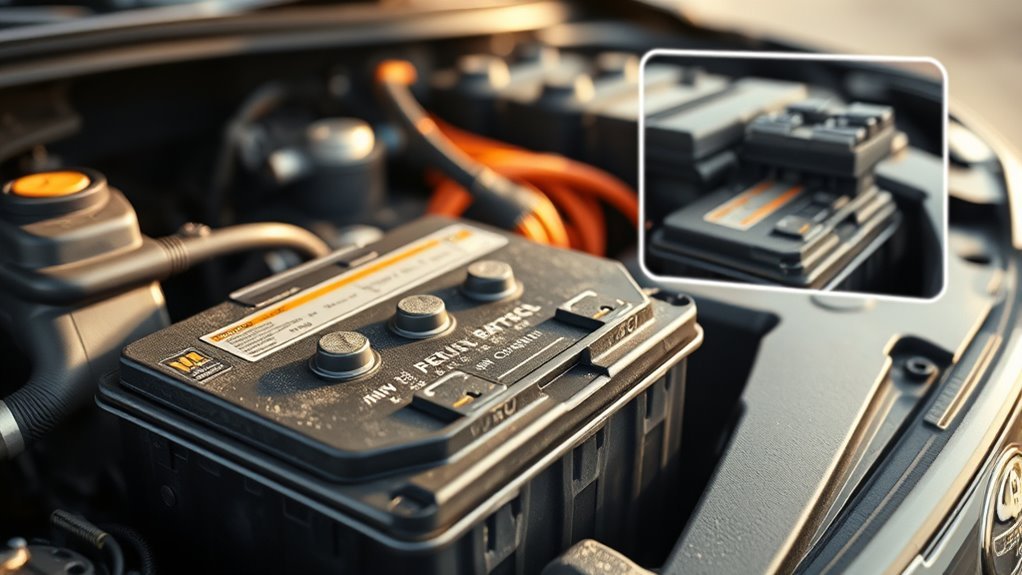
How do the two battery systems in a Toyota Camry differ in function and lifespan? You’ll find a conventional 12-volt lead‑acid battery in gasoline Camrys, tasked with starting the engine and powering accessories; it’s typically flooded lead‑acid or AGM and lasts about 3–5 years. Hybrid Camrys use a high‑voltage pack (NiMH or lithium‑ion) that drives the electric motor and boosts fuel efficiency, often enduring 8–10 years or up to ~150,000 miles. You should treat each system differently: battery maintenance tips for the 12V include periodic voltage checks, terminal cleaning, and secure mounting. For the hybrid pack, you’ll rely on hybrid technology insights—monitoring thermal management, software diagnostics, and OEM service intervals—since replacement and deep service require trained technicians. You’ll gain autonomy by understanding these distinctions: inspect the 12V yourself, but defer hybrid pack interventions to specialists to preserve performance, safety, and long‑term value.
How Long Does a Camry Battery Last?
You can expect a Toyota Camry’s 12V battery to last about 3 to 5 years under normal conditions, though proactive replacement at three years reduces failure risk. Watch for slow cranking, dim headlights, or warning lights as clear signs the battery’s degrading. Remember that climate, driving habits, and terminal maintenance materially affect lifespan and performance.
Typical Lifespan Range
Although many variables affect battery life, a Toyota Camry’s 12V battery typically lasts about 3 to 5 years under normal driving conditions. You should treat that range as a planning horizon: expect replacement between years three and five, and schedule regular inspections thereafter. Factors like extreme heat or cold, frequent short trips, and aggressive electrical use shorten service life. Apply battery maintenance tips and ideal charging practices: avoid repeated short drives, minimize parasitic drains, and guarantee the alternator and charging system keep voltage within spec. Be proactive — plan replacements on a 3–5 year cadence to maintain reliability and freedom from sudden failures. Regular checks after year three let you act on data, not surprise.
Signs Of Failure
When a Camry’s 12V battery starts failing, you’ll notice clear electrical symptoms—slow engine cranking, dim headlights, and dashboard warning lights—which typically appear as the battery approaches the 3–5 year mark. You should act decisively: longer start times or no-start events mean replacement is imminent. A swollen case signals heat damage; don’t ignore it. Regular inspections and battery maintenance tips will extend service life and prevent being stranded.
- Slow cranking at startup — inspect terminals and test voltage.
- Dim or fluctuating lights — test under load and check charging.
- Dashboard power warnings — run a system diagnostic promptly.
- Swollen or corroded case — replace immediately for safety.
Practice seasonal battery care and scheduled checks to reclaim control.
Factors That Affect
Because several variables interact to determine real-world service life, expect a Camry’s 12V battery to last roughly 3–5 years but plan sooner if conditions are harsh. You’ll find temperature effects are primary: extreme heat accelerates internal corrosion and capacity loss, while severe cold reduces available charge and strains starting power. Your driving pattern matters — frequent short trips prevent full recharge, so the alternator can’t restore capacity and the battery ages faster. Age itself is decisive; replace proactively around three years for reliability. Use maintenance tips: keep terminals clean, secure connections tight, and perform periodic voltage and load checks. Controlling heat exposure, consolidating trips, and scheduled inspections extend usable life and preserve your mobility.
Factors That Shorten Camry Battery Life
If you expose your Camry’s 12V battery to extreme heat or cold, run lots of short trips, leave the car sitting for weeks, use accessories heavily, or skip basic maintenance, you’ll shorten its service life considerably. Extreme temperatures stress lead‑acid chemistry, cutting expected life from about five years to as little as three. Short trips and prolonged inactivity prevent full recharge, accelerating sulfation and capacity loss. Heavy accessory use—cabin plug‑ins, infotainment, lights—increases depth of discharge and forces the alternator into constant recovery mode, raising electrical system impact and wear.
Extreme temperatures, short trips, heavy accessory use, and skipped maintenance can slash your Camry’s 12V battery life.
Apply targeted battery maintenance tips and habit changes to reclaim control. Focus on practical actions:
- Store or park in temperature‑moderated areas when possible.
- Combine trips or use a maintenance charger for infrequent drives.
- Limit accessory use when engine off; use energy‑efficient accessories.
- Inspect and clean terminals; test state of charge periodically.
These steps reduce premature failure and liberate you from unnecessary replacements.
Signs Your Camry’s 12V Battery Is Failing
You’ll often notice a slow engine crank when the starter draws weak current, which is a primary sign the 12V battery is losing capacity. Dimming interior and headlight output under load also indicates reduced battery voltage. If battery-related dashboard warning indicators illuminate or the car needs multiple start attempts, have the battery tested immediately.
Slow Engine Crank
When your Camry hesitates and the engine turns over slowly, the 12V battery is often the weak link, especially in cold weather where capacity drops and starting torque falls off. You’ll notice longer crank times or a struggle to start; cold weather effects make this worse. Act promptly to reclaim mobility and avoid being stranded.
- Check battery terminals for corrosion and tightness.
- Test battery voltage and cold cranking amps (CCA) under load.
- Perform biannual inspections as part of battery maintenance tips.
- Replace the battery when voltage under load falls below spec.
If slow cranking persists, have the battery professionally tested or replace it to maintain reliable starts and personal freedom on the road.
Dimming Interior Lights
Alongside slow cranking, noticeably dim interior lights are a clear sign your Camry’s 12V battery is losing capacity. If cabin lighting looks weak or fades at idle, that points to reduced charge-holding ability—one of the common dimming lights causes. You’ll often see this before complete failure, especially as a battery approaches the typical 3–5 year lifespan. Check light intensity during startup and while accessories run; compare to a known-good vehicle if possible. Regular voltage and load testing reveal degradation early, so include battery maintenance tips like scheduled health checks, clean terminals, and secure mounting to prevent vibration damage. If dimming accompanies longer starts, get a professional test and replace the battery before it strands you.
Dashboard Warning Indicators
A few dashboard indicators give you an early, actionable warning that your Camry’s 12V battery is degrading. You’ll want to act quickly to avoid getting stranded and reclaim control over reliability. Watch for dashboard alerts and distinct warning icons that signal electrical weakness.
- Slow engine crank on start — starter turnover lag means reduced battery capacity.
- Dim headlights or cabin lights — voltage drop under load shows declining output.
- Battery icon or check engine light — electronic systems flag charging or battery faults.
- Hybrid/system alerts or reduced fuel economy — 12V dysfunction can degrade drivetrain management.
Also check the battery case for swelling or deformation; physical damage plus dashboard warnings means replace the battery to restore freedom and safety.
Test Your Camry’s 12V Battery at Home
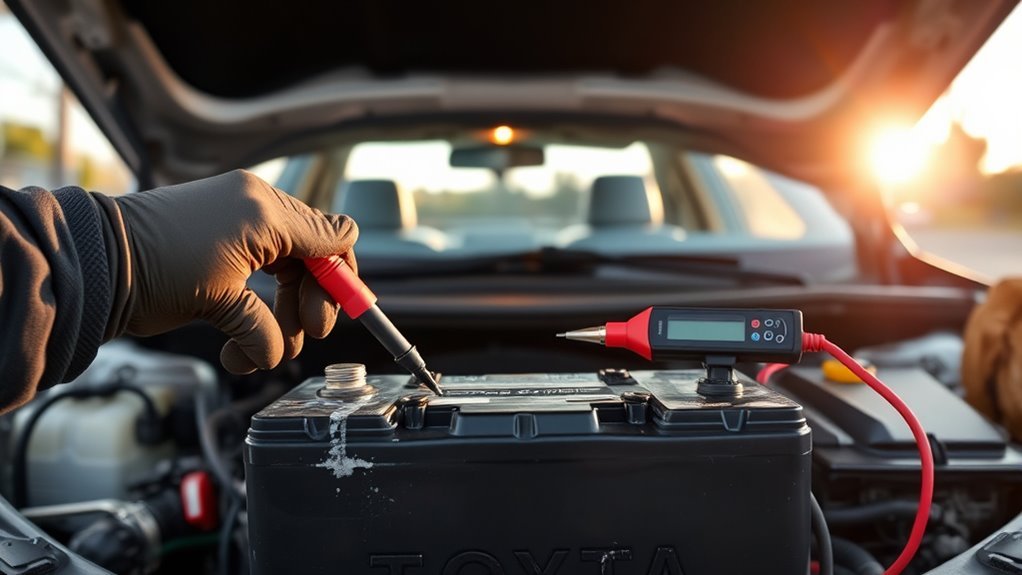
If you want to check your Camry’s 12V battery at home, start by measuring its resting voltage with a multimeter; a healthy battery should read 12.4–12.7 V with the engine off. Use basic voltage measurement techniques: set the meter to DC volts, connect red to positive and black to negative, and note the reading. That’s a fundamental battery maintenance tips step toward self-reliance.
If voltage is below 12.0 V, charge the battery or plan replacement. Perform a simple load test by switching on headlights for a few minutes, then re-measuring; a pronounced drop indicates weakening capacity. Inspect terminals for corrosion—clean buildup with a baking soda and water paste, rinse, dry, and retighten clamps to restore contact. Repeat checks every six months to catch decline early. These practical, technical steps keep you in control of reliability and reduce dependence on shops while preserving your Camry’s starting confidence.
Interpreting Battery Test Results and Next Steps
How do you read battery test numbers and turn them into clear next steps? You’ll interpret voltage, CCA, and reserve capacity to decide immediate action. A healthy 12V reads ~12.6V; under 12.4V signals charge or replacement. Low CCA reduces cold-start reliability; low reserve capacity shortens run time without the engine.
Follow this prioritized checklist to regain control:
- If voltage <12.4V — recharge and retest immediately.
- If CCA is considerably below spec — plan replacement before cold weather.
- If reserve capacity is low — limit accessory use and schedule service.
- If multiple metrics decline — replace to prevent failure.
Use battery maintenance tips: clean terminals, secure connections, and maintain testing frequency (every 3–6 months or before seasonal extremes). You’re freeing yourself from surprise failures by converting test data into a concrete plan: charge, monitor, or replace. Keep records of tests to track degradation and assert control over your Camry’s reliability.
Camry Battery Upgrade Options (Flooded, AGM, High-CCA)
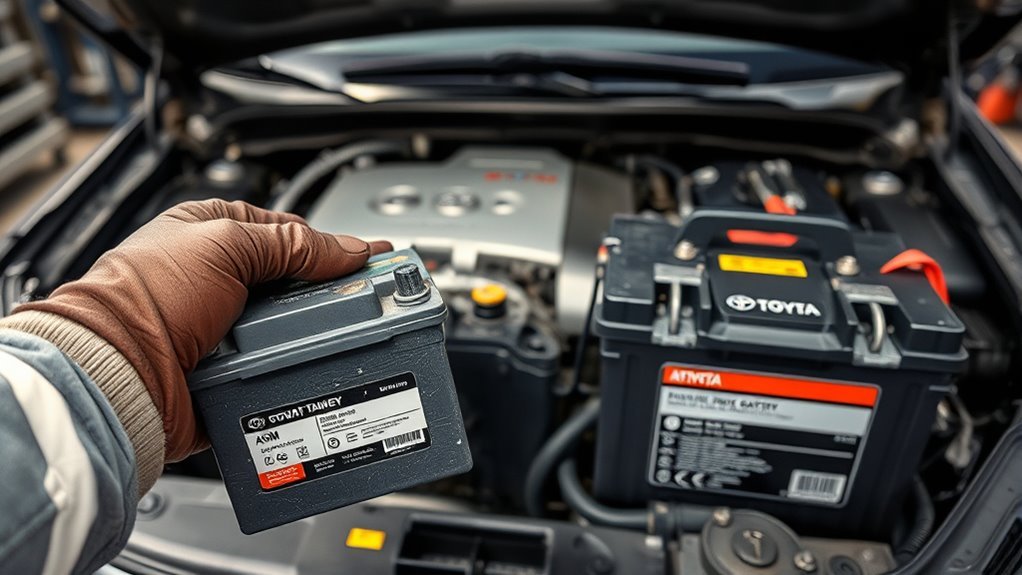
When you’re choosing an upgrade for your Camry, focus on battery chemistry, CCA rating, and physical fit to match your driving needs and climate. You’ll weigh flooded, AGM, and high-CCA options by a clear battery performance comparison: flooded lead-acid is cheapest, offers acceptable life under normal use (about 3–5 years) but needs more frequent watering and inspection. AGM delivers better cycle life (roughly 4–6 years), superior vibration resistance, and improved performance in extreme temperatures with lower self-discharge. For cold climates, select a high-CCA unit—aim for at least 650 CCA—to guarantee reliable starts. Always confirm dimensions and terminal layout match OEM specs to avoid fitment or safety problems. Adopt practical maintenance tips: secure mounting, clean terminals, and periodic load testing. Choose the chemistry and CCA that free you from roadside hassle while respecting the Camry’s physical constraints and your driving environment.
Camry Battery Replacement Cost, Labor, and Warranty
Because battery choice affects both immediate cost and long-term value, you should budget for $350–$450 for a standard flooded 12V Camry battery or $900–$1,200 for an AGM unit, plus roughly $100–$200 in dealer labor; limited warranties typically cover 12V batteries for about two years while hybrid packs carry much longer coverage (commonly 10 years or up to 150,000 miles). You’ll want OEM-spec replacements for reliability; reconditioned units can cut price about 50% and suit older cars if you accept shorter life and limited warranty.
Budget $350–$450 for standard Camry batteries, $900–$1,200 for AGM; consider reconditioned halves for older cars.
- Choose OEM or OEM-equivalent to guarantee compatibility.
- Consider reconditioned for immediate cost saving strategies.
- Factor dealer labor or independent shop rates into total cost.
- Use battery maintenance tips to extend service life and defer replacement.
Plan purchases around warranty terms, keep receipts, and document service. That gives you control over costs, preserves performance, and supports your broader goal of automotive independence.
When to Visit a Dealer or Certified Shop for Service
If your Camry shows slow cranking, dim headlights, multiple warning lights, or other electronic glitches, bring it to a dealer or certified shop for a professional battery evaluation. You’ll get accurate diagnostics and definitive guidance: technicians will perform load and state-of-charge tests, inspect terminals and charging system, and log results against manufacturer thresholds.
Plan service as the battery nears its 3–5 year replacement window; don’t wait for failure. Adopt battery maintenance tips: clean terminals, secure mounting, and record test dates. After three years, increase battery testing frequency to every six months to catch capacity loss early.
If multiple electronics act up or warning lights recur, a certified center can isolate battery faults from alternator or ECU issues, preventing misdiagnosis. Bring vehicle history and any prior test results so technicians can spot trends. You’ll leave with a clear repair plan or verified service life, preserving your autonomy on the road.
Frequently Asked Questions
How Long Does a Toyota 12V Battery Last?
About 3 to 5 years. You should follow battery maintenance tips: check terminals, test voltage, and inspect every six months after year three. Watch battery replacement signs like slow cranking, dim lights, and warning indicators to stay free.
What Is the Life Expectancy of the Battery in a Toyota Camry?
You’ll get about three to five years. Practice battery maintenance tips like regular inspections, corrosion cleaning, and limiting short trips; replacement cost varies by region and brand, so budget for timely swaps to avoid stranded dependence.
How to Know if a 12V Battery Needs to Be Replaced?
Though it looks fine, you’ll replace it when battery performance indicators fail: slow cranking, dim lights, warnings, low voltage (below 12.4V), or corrosion/swelling. Use battery maintenance tips and regular testing to reclaim reliability.
How Long Is the Toyota 12V Battery Warranty?
The Toyota 12V battery warranty is typically 2 years or 25,000 miles; hybrids have separate HV terms. You’ll want battery maintenance tips and warranty coverage details from your dealer, keeping receipts to protect your rights.
Conclusion
Think of your Camry’s 12V battery like a wristwatch spring: reliable until neglected. I once drove 30 miles with a weak battery that died at dusk—proof small parts stall everything. Most Camry 12V batteries last 3–5 years (hybrid 12V similar), but heat, short trips, and parasitic drains speed failure. Test regularly, interpret CCA and voltage, and replace with the right chemistry and warranty to avoid being stranded.