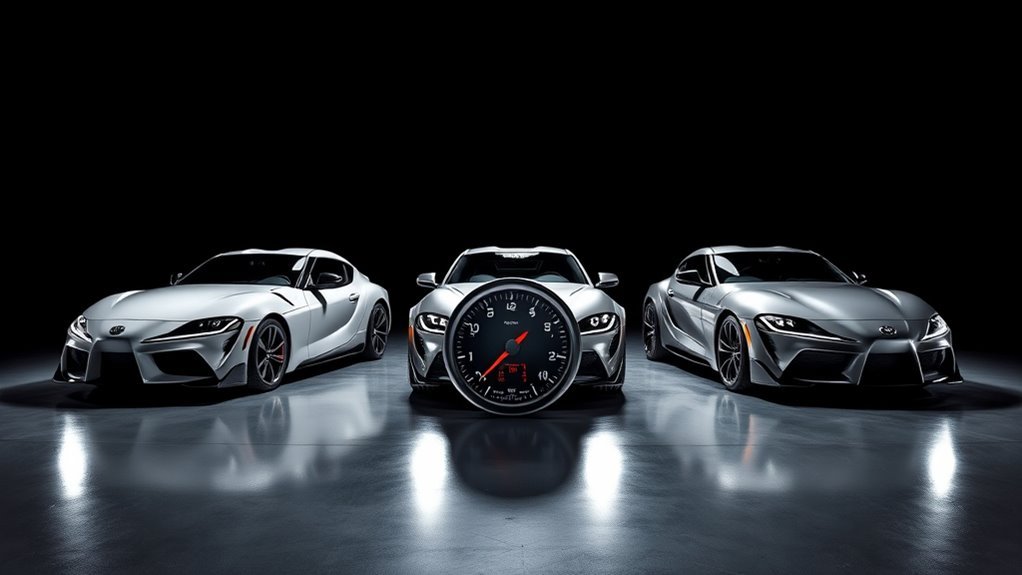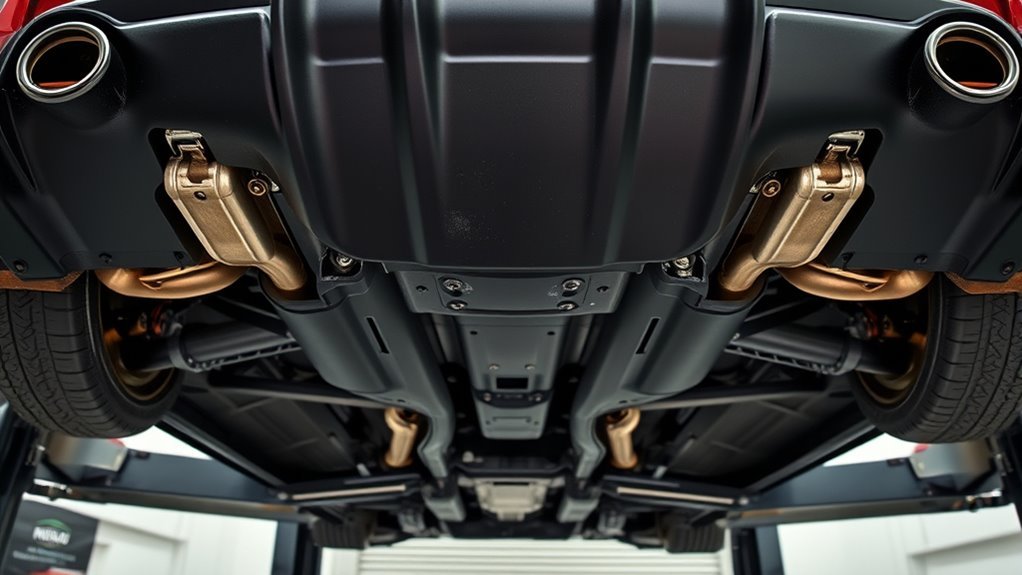
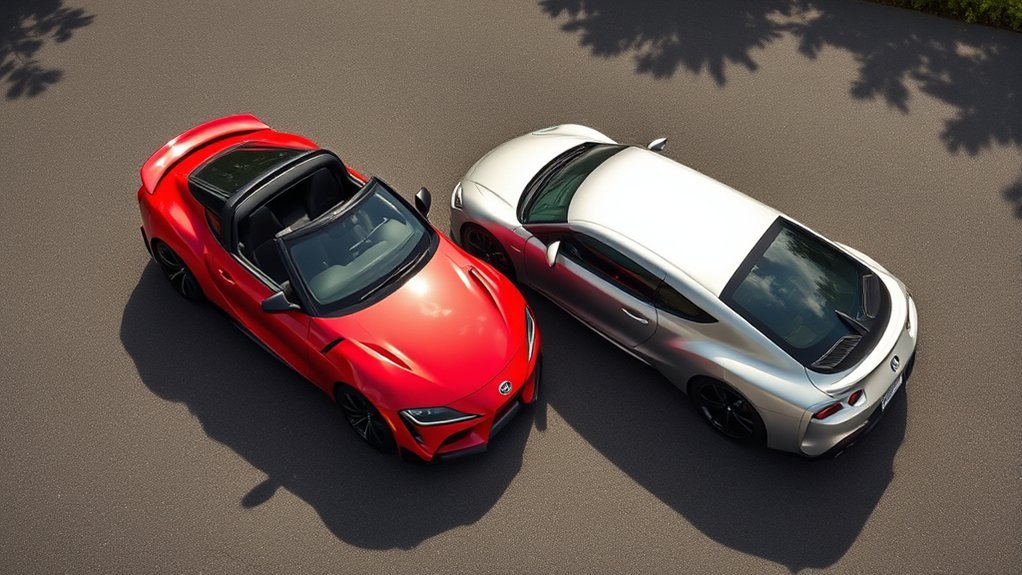
When comparing the Supra Targa roof to the fixed-roof coupe, you’ll notice key differences. The Targa offers an exhilarating open-air experience, enhancing your connection to the road. However, it can experience issues with chassis flex and wind turbulence. On the other hand, the fixed-roof coupe provides superior handling, stability, and a quieter ride. If you’re weighing the thrill of a removable roof against the performance of a hardtop, there’s much more to explore about these styles.
Understanding the Targa Roof: Benefits and Drawbacks
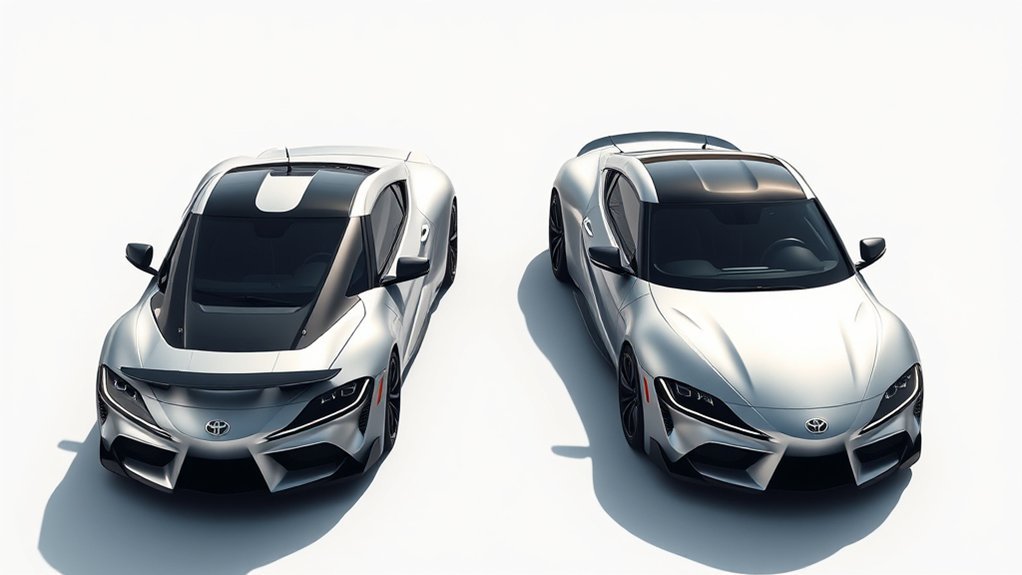
Have you ever wondered what makes a Targa roof so appealing? The Targa advantages lie in its ability to offer an exhilarating open-air driving experience, perfect for warm weather and enhancing your connection to the road. Its unique aesthetic also sets it apart, giving your ride a distinctive flair. However, it’s important to reflect on the Targa disadvantages. Removing the top can lead to chassis flex, impacting handling and performance compared to a fixed-roof coupe. Additionally, you might experience wind turbulence at high speeds, resulting in annoying rattles and noise. Maintenance can be tricky too; leaks during heavy rain may become a challenge. While the Targa roof offers freedom, it’s vital to evaluate these factors before making your choice.
Fixed-Roof Coupe: Performance and Structural Advantages
When you compare fixed-roof coupes to targa models, you’ll notice significant performance benefits. The enhanced chassis rigidity in coupes gives you better handling and stability, especially during aggressive driving. Plus, improved aerodynamic efficiency reduces wind turbulence, allowing for a smoother, faster ride.
Enhanced Chassis Rigidity
Although both targa roofs and fixed-roof coupes offer unique driving experiences, the latter stands out regarding enhanced chassis rigidity. With no removable roof panel, fixed-roof coupes minimize chassis flex, providing greater structural integrity during high-performance driving. This rigidity translates into better handling and stability, especially when maneuvering through sharp corners or accelerating at high speeds.
Moreover, the lighter structure of hardtops eliminates the need for additional bracing, further boosting overall vehicle performance. In competitive settings, the increased stiffness of a fixed-roof coupe can lead to faster lap times, as you’ll experience more consistent handling characteristics compared to targa models. Ultimately, if you crave liberation in your driving experience, a fixed-roof coupe promises enhanced performance through superior chassis rigidity.
Improved Aerodynamic Efficiency
While both fixed-roof coupes and targa models offer thrilling driving experiences, fixed-roof coupes excel in aerodynamic efficiency, greatly enhancing high-speed performance. This design prioritizes drag reduction and airflow optimization, giving you a distinct advantage on the road. Here’s how:
- Enhanced Stability: The absence of a removable roof contributes to a stiffer chassis, improving handling in aggressive maneuvers.
- Weight Savings: Hardtops typically weigh less, reducing unnecessary bulk and further optimizing performance.
- Minimized Turbulence: Streamlined profiles minimize wind turbulence, ensuring a quieter cabin at high speeds.
- Fuel Efficiency Boost: Better airflow translates to improved fuel efficiency, allowing for longer drives without compromise.
Embrace the freedom of driving a fixed-roof coupe, where efficiency meets exhilarating performance.
Targa vs. Fixed-Roof: What’s the Driving Experience Like?
How does the choice between a Targa roof and a fixed-roof coupe impact your driving experience? Opting for the Targa brings an exhilarating sense of freedom, enhancing your Targa enjoyment during warm drives. You’ll savor the open air, feeling connected to the road and environment. However, this comes at a cost: Targa models may experience chassis flex, which can affect handling and introduce rattles at higher speeds.
In contrast, a fixed-roof coupe emphasizes Coupe stability, offering a rigid structure that enhances performance and track capabilities. You’ll enjoy a quieter ride with consistent handling, ideal for pushing limits. Ultimately, it boils down to your personal preference: the thrill of open-air cruising or the precision of a stable performance machine.
Performance Differences Between Targa and Fixed-Roof Models
When you compare the performance of Targa and fixed-roof models, you’ll notice distinct differences that can greatly impact your driving experience. The Targa flexibility offers an exhilarating open-air feel, but it comes with some performance trade-offs:
- Chassis Flex: Targa’s removable roof leads to increased chassis flex, impacting handling nuances.
- Acceleration: The added weight in Targa models can result in slightly slower acceleration times.
- Stability: Fixed-roof coupes provide superior rigidity, enhancing stability during high-speed maneuvers.
- Aerodynamics: Targa models may face wind turbulence issues at higher speeds, while coupes effectively mitigate this.
Understanding these factors helps you appreciate the balance between the freedom of a Targa and the uncompromised coupe stability, guiding your choice towards the driving experience you crave.
Maintenance and Common Issues: What to Expect
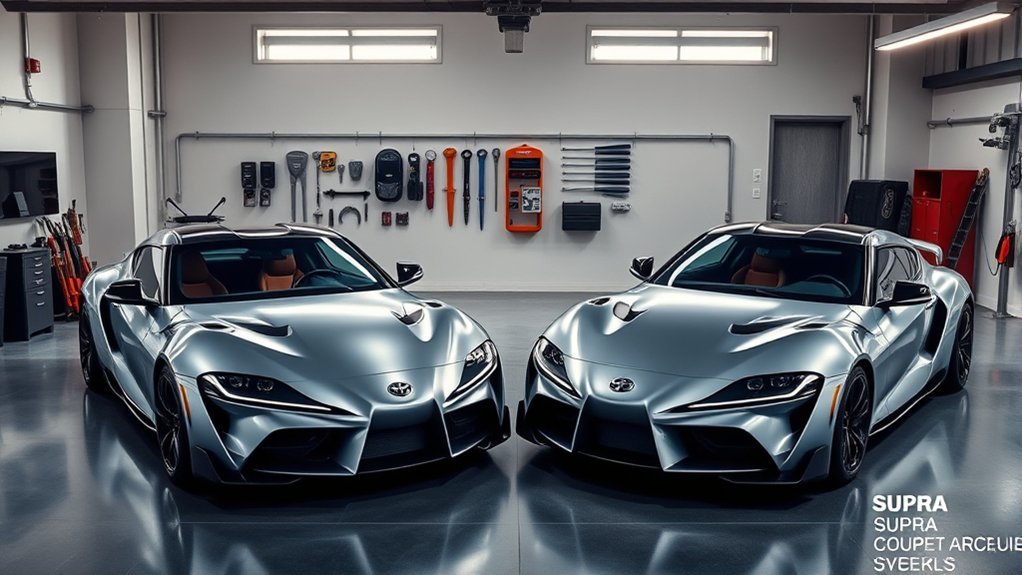
When considering maintenance for the Mk4 Toyota Supra, you’ll find distinct differences between the Targa and fixed-roof models. The Targa roof introduces potential issues like rattles and leaks, while the hardtop generally offers better durability and fewer complications. Understanding these nuances can help you better prepare for the upkeep your Supra needs.
Maintenance Needs Comparison
While targa roofs offer the thrill of open-air driving, they come with specific maintenance needs that can be quite different from those of fixed-roof coupes. To keep your targa in top shape, consider these essential tasks:
- Regular targa roof inspections to check for leaks and seal integrity.
- Monitor and maintain seals and hinges to prevent water ingress, especially during heavy rain.
- Address potential rust traps around the roof area to avoid chassis damage.
- Be aware of chassis flex issues, which may require modifications for peak performance.
In contrast, fixed roof longevity means fewer concerns, as these coupes generally maintain a rigid structure, offering better handling without the additional maintenance burden of targa models.
Common Targa Issues
Targa roofs, despite their appeal for open-air driving, come with a unique set of challenges that every owner should anticipate. One common issue is rattling, which arises from chassis flex when the roof is removed. To guarantee effective leak prevention, you’ll need to regularly maintain seals and gaskets, as leaks can become problematic during heavy rain. Additionally, pay attention to bolts during reinstallation; stripped bolts are frequent and can compromise the roof’s integrity. Rust traps around the targa area also demand your vigilance, so incorporate regular inspections and preventative rust-proofing measures. Finally, consider adding bracing to enhance rigidity, especially if you’re pushing the limits of performance. Embracing these targa maintenance practices will keep your driving experience enjoyable and secure.
Hardtop Durability Factors
Though targa roofs present unique challenges, hardtops offer a different experience regarding durability and maintenance. With their fixed design, hardtops enhance chassis rigidity, improving handling and stability. Here’s what you can expect for hardtop longevity:
- Fewer leaks: Hardtops are less prone to leaks, reducing maintenance concerns.
- Lower structural flexing: They maintain integrity during high-performance driving.
- Rust prevention: Regular inspections of wheel wells and undercarriage are essential to avoid common rust issues.
- Minimal roof component wear: Without removable sections, you face fewer parts that could fail over time.
Stay vigilant about potential rust and seal issues, especially in older models, to guarantee your hardtop remains a reliable companion on the road.
Targa vs. Fixed-Roof: Market Trends
As enthusiasts explore the market for the Mk4 Toyota Supra, they often encounter a distinct divide between Targa and fixed-roof coupe models. Targa demand tends to lag behind the desirability of coupes, primarily due to the latter’s superior structural rigidity and enhanced performance. The hardtop’s relative scarcity in the U.S. market, especially in turbo form, tends to push resale prices higher. Targa models, while more accessible and often priced lower, fluctuate in market interest influenced by pop culture phenomena like *The Fast and The Furious*. For serious enthusiasts and racers, the fixed-roof coupe remains the preferred choice, embodying a performance-oriented design that elevates its status in the competitive landscape.
Aesthetic Appeal: Style Choices for Targa and Coupe Enthusiasts
When it comes to aesthetic appeal, enthusiasts often find themselves split between the allure of the Targa roof and the sleek lines of the fixed-roof coupe. Each style evokes a distinct feeling, catering to different desires for liberation and expression.
Consider these elements:
- Targa Aesthetics: The removable panels invite the sun, enhancing the driving experience.
- Coupe Elegance: The streamlined silhouette projects a modern, aggressive stance.
- Natural Light: Targa interiors feel brighter, connecting you to the environment.
- Cohesive Design: The solid roof of a coupe offers a quieter, more unified look.
Ultimately, your choice reflects a personal journey—whether you crave the adventurous spirit of the Targa or the refined elegance of the coupe.
Choosing Your Roof Style: Versatility vs. Performance?
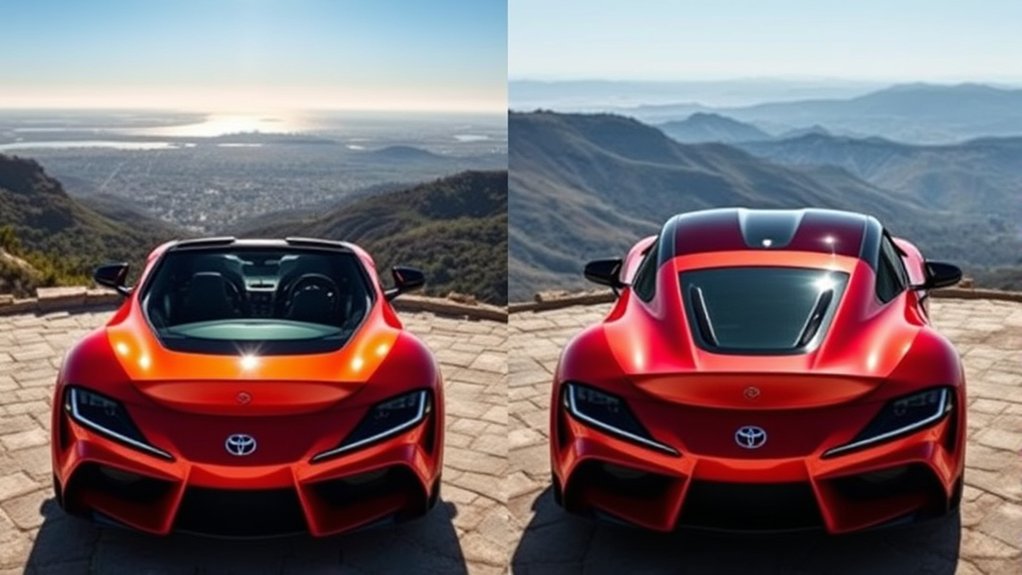
How do you balance the thrill of open-air driving with the demands of performance? If you crave Targa versatility, the joy of removing the roof on sunny days enhances your driving enjoyment. However, consider the structural integrity of a fixed-roof coupe, which excels in performance and stability. For those focused on track use, a coupe’s rigidity offers superior handling, minimizing wind turbulence. Weather considerations also play a role; while Targas can lead to leaks, coupes provide better protection against the elements. Additionally, market demand favors hardtop models, often leading to higher resale values. Ultimately, your choice reflects personal style—whether you prioritize the liberating experience of a Targa or the commanding performance of a coupe.
Frequently Asked Questions
What Is the Difference Between Targa Top and T Top?
The targa top offers structural benefits and a sleek design, enhancing your driving experience. In contrast, the T-top has a nostalgic history, featuring two panels but often struggles with sealing and rigidity.
Is a Targa Top Safer Than a Convertible?
A targa keeps a fixed windshield frame, rear section, and roof structure behind the occupants, which generally makes the body stiffer than a full convertible. Actual crash protection depends on the specific car, so check crash-test results for the exact model rather than assuming one roof type is always safer.
Conclusion
In the end, choosing between a Targa roof and a fixed-roof coupe boils down to your personal preferences. If you crave that enchanting convertible experience, the Targa’s allure may call to you. However, if you prioritize performance and structural sturdiness, the fixed-roof coupe could be your perfect pick. Ultimately, weigh the wondrous world of versatility against the thrilling tenacity of tradition, and let your driving desires dictate your decision. Enjoy the journey ahead!